
Ruins by the Sea — History & Facts
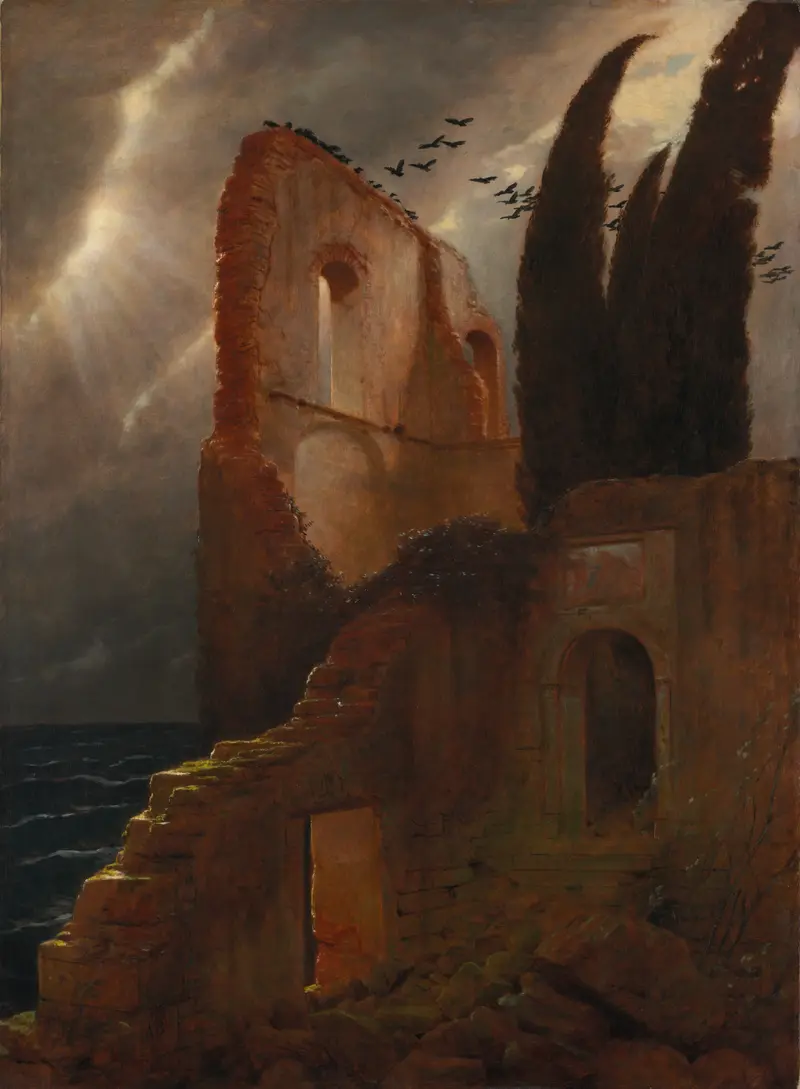
A single shaft of moonlight carves its way through the stormy blue-black sky, catching the edge of a ruined wall and guiding the eye to an empty window that once looked out over the restless sea. In Ruins by the Sea, Arnold Böcklin chooses not the drama of collapse or the bustle of life, but the quiet aftermath—a moment when nature and memory seem to hold their breath. The jagged silhouette of the ruin, stark against the illuminated clouds, suggests a story long finished, yet still present in every stone and shadow.
A flock of birds wheels above, their flight a silent punctuation in the heavy air, as if carrying secrets from the past out over the waves. Painted in 1880, this work belongs to a period when artists across Europe were drawn to the Romantic fascination with decay and the passage of time. Böcklin, a Swiss painter known for his symbolic landscapes, often set his scenes at twilight or under moonlight, using darkness not as a void but as a stage for memory and imagination. Here, the interplay of light and gloom is everything: the sea is rendered as a restless, inky expanse, while the ruin’s arch and the tall cypress trees stand as sentinels, their forms both sheltering and foreboding.
The painting’s mood is heightened by its limited palette—deep blues, earthy browns, and the faintest glimmer of white—inviting viewers to linger in its uneasy stillness. Little is recorded about the specific journey of this painting, now held in the collection documented by ETH Zurich. Yet its date and subject place it firmly within the late nineteenth-century search for meaning in lost grandeur and nature’s quiet reclamation. In an age of rapid change and industrial progress, works like this offered viewers a space to reflect on what endures and what is left behind.
The painting asks us to look again, to find the stories that linger in stone and sky.
More Artworks by Arnold Böcklin

Die Toteninsel III
Arnold Böcklin
Ruin by the Sea
Arnold Böcklin
The Sacred Grove
Arnold Böcklin
Villa by the Sea
Arnold Böcklin
The Plague
Arnold Böcklin
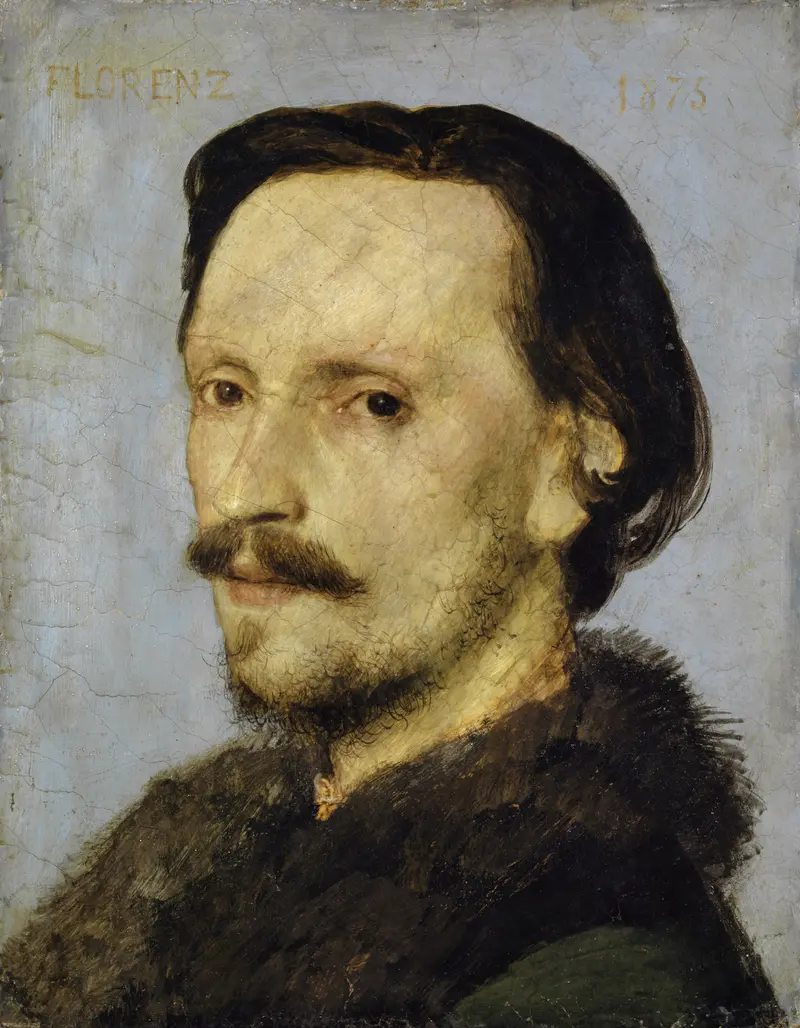
Böcklin Bildnis des Kunsthistorikers Adolph Bayersdorfer, 1875
Arnold Böcklin
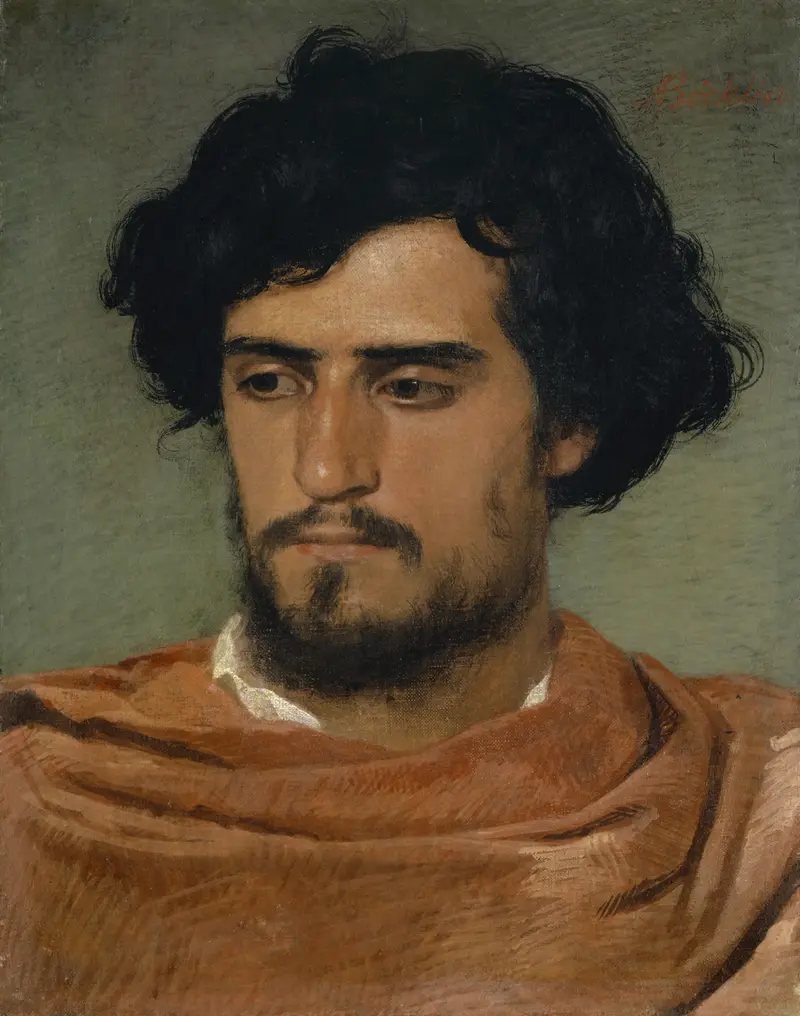
Head of a Roman
Arnold Böcklin
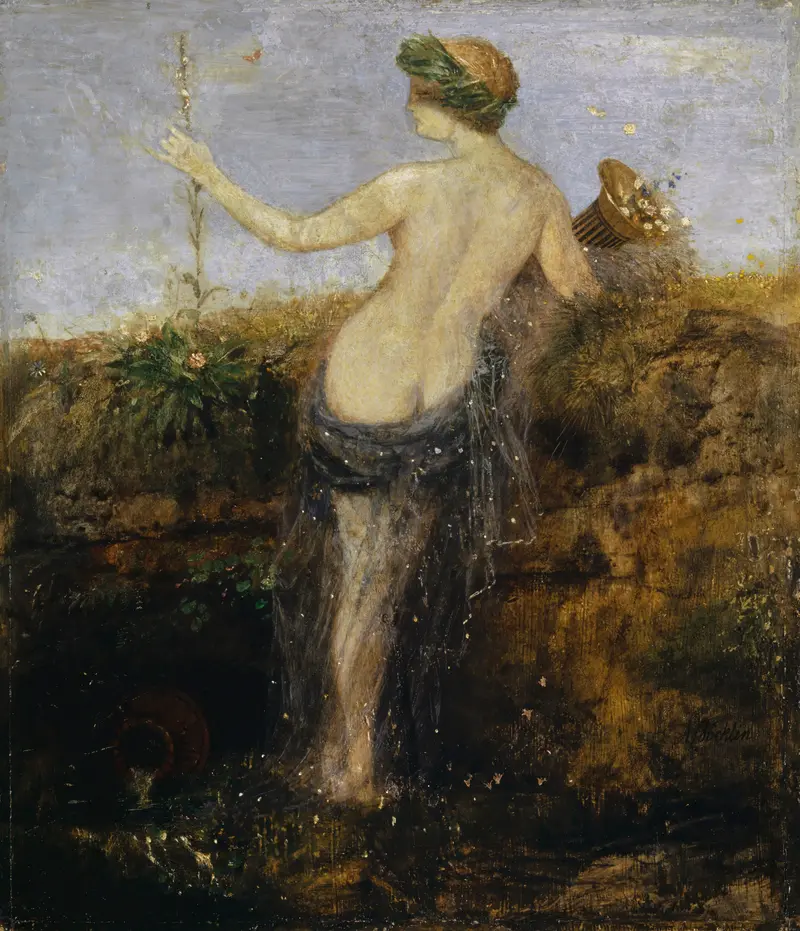
Nymphe with Horn of Plenty
Arnold Böcklin
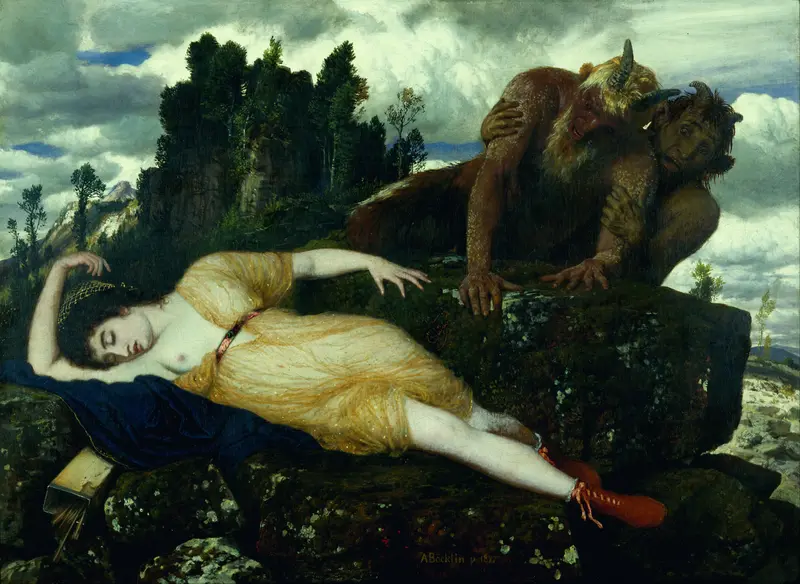
Sleeping Diana Watched by Two Fauns
Arnold Böcklin
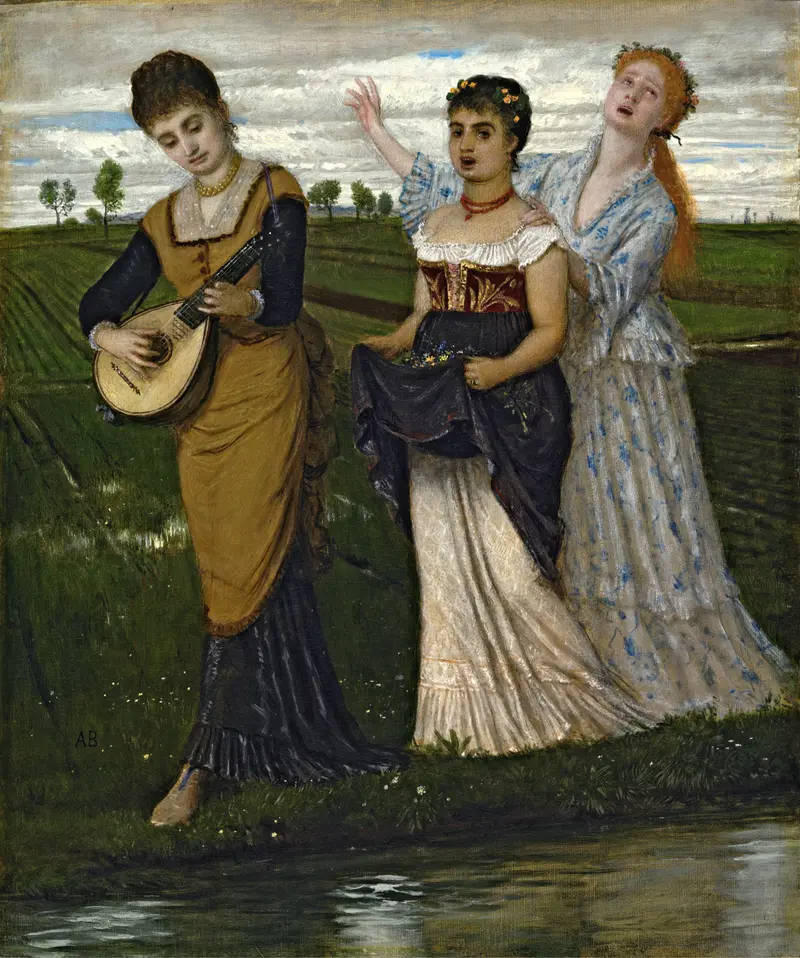
Spring (Songs of Spring)
Arnold Böcklin
More Landscape Art

The Starry Night
Vincent van Gogh

View of Delft
Johannes Vermeer

Water Lilies
Claude Monet

The Grand Canal, Venice, looking north-west from the Ca' Corner to the Ca' Contarini degli Scrigni, with the campanile of Santa Maria della Carità
Canaletto

Windsor Castle
Canaletto

The Grand Canal looking North-East from the Palazzo Dolfin-Manin to the Rialto Bridge
Canaletto