
Ruïnes van de tempel van de Zon en de Maan bij het Colosseum — History & Facts
Did the painter know this moment would outlive them? The ruins, like whispered secrets, stand resilient against the passage of time, capturing an eternal truth that transcends the ephemeral nature of existence. Look to the foreground where remnants of the ancient temple emerge, their weathered stones bathed in a warm, golden light. Notice how the artist meticulously employs chiaroscuro to create depth and texture, allowing shadows to dance across the crumbling facades, evoking a sense of mystery and reverence. The delicate brushwork draws your gaze upward to the majestic Colosseum in the background, its archways silhouetted against a softly painted sky, suggesting the grandeur of human achievement amidst the ruins of the past. Yet, within this seemingly tranquil scene lies a profound contrast between the enduring structures and the inevitable decay of time.
The juxtaposition of nature reclaiming the man-made, with vines entwining the temple stones, speaks to the tension between civilization and its transience. Each element in the composition, from the soft hues of dusk to the solemnity of the ruins, invites reflection on the legacies we leave behind and the truth of our mortality. Breenbergh created this evocative piece in a time marked by the Baroque's transition to Neoclassicism, likely while living in Italy, where he was influenced by the ruins of Roman architecture. The late 17th to early 18th centuries were characterized by a burgeoning interest in classical antiquity, prompting artists to explore themes of history, decay, and rebirth.
While he painted, a collective nostalgia for the past lingered in Europe, informing the emotional depth that resonates in this work.
More Artworks by Bartholomeus Breenbergh
Browse all →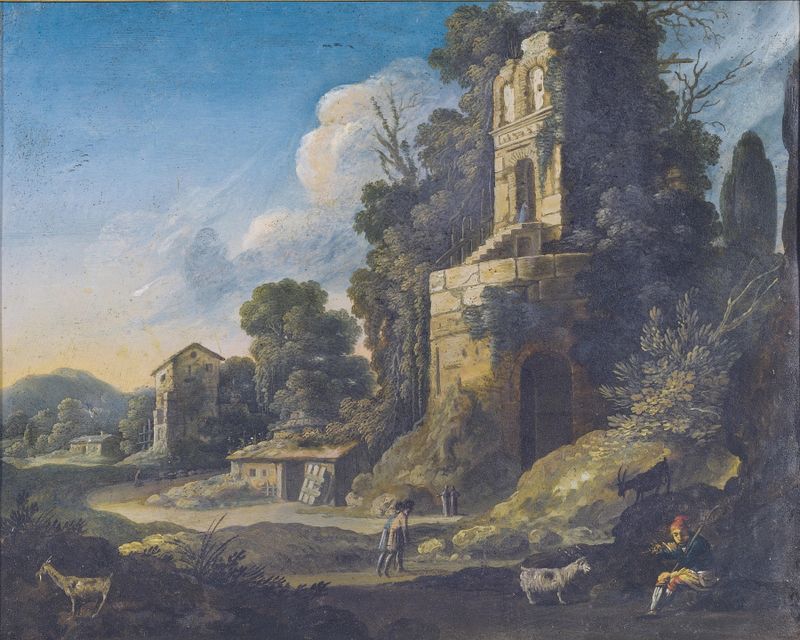
Italianate landscape with buildings and a herdsman playing pipes
Bartholomeus Breenbergh

Arcadian Landscape
Bartholomeus Breenbergh

Ruïnes van keizerlijk paleis te Rome
Bartholomeus Breenbergh

Ruïne van het Colosseum
Bartholomeus Breenbergh
Ruïnes van de stadsmuren van Rome
Bartholomeus Breenbergh
Ruïnes van een paleis te Tivoli
Bartholomeus Breenbergh

Figures Among Ruins By The Tiber
Bartholomeus Breenbergh

Italian Landscape with the Aurelian Wall
Bartholomeus Breenbergh
Ruïnes van de thermen van Caracalla
Bartholomeus Breenbergh
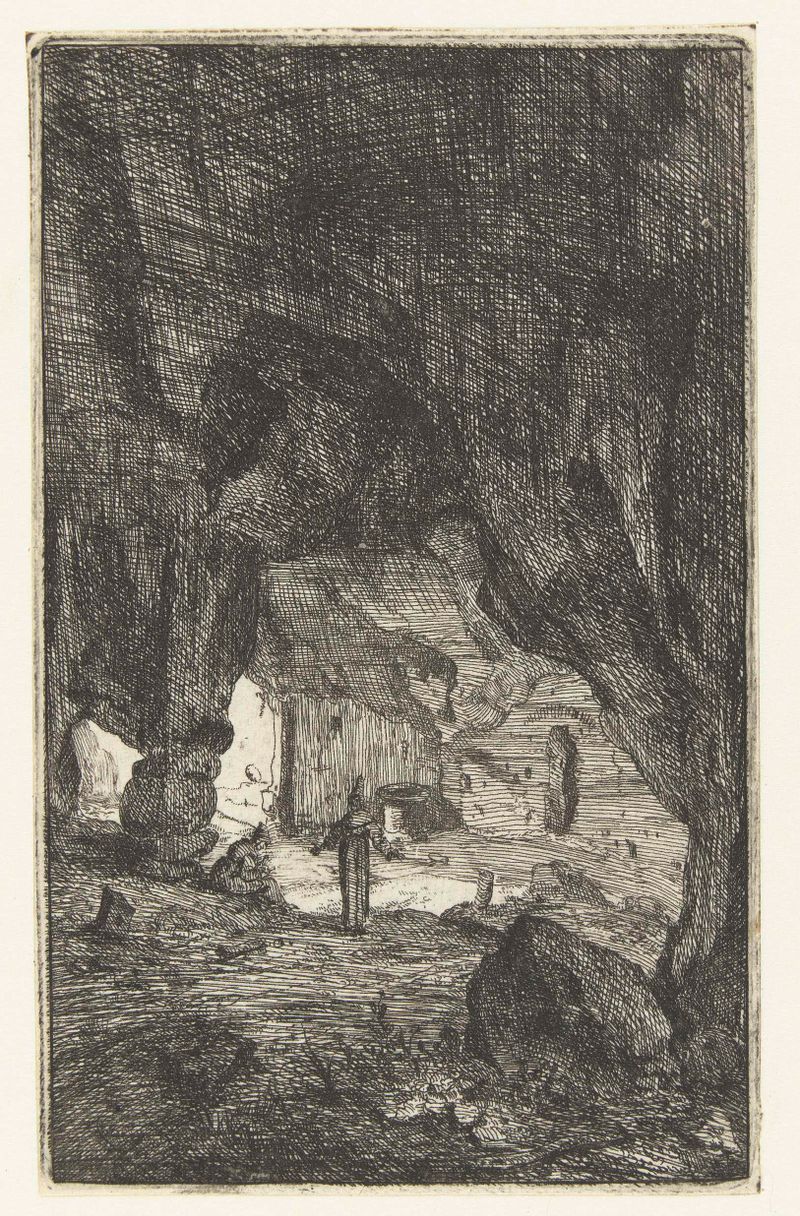
Interieur van een grot
Bartholomeus Breenbergh
More Architecture Art
Browse all →
The statue of Liberty
Frédéric Auguste Bartholdi

View of Houses in Delft, Known as ‘The Little Street’
Johannes Vermeer

View of Houses in Delft, Known as ‘The Little Street’
Johannes Vermeer

The Cathedral in Rouen. The portal, Grey Weather
Claude Monet

The yellow house
Vincent van Gogh

The Church in Auvers-sur-Oise, View from the Chevet
Vincent van Gogh