
Ruïnes van het aquaduct van Mezza Via bij Rome — History & Facts
In the ruins of an aqueduct, dreams and memories entwine, revealing a haunting beauty that echoes through time. Look to the left at the majestic arches, remnants of a once-grand structure that softly blend into the surrounding landscape. The artist employs a warm palette of ochres and greens, where sunlight bathes the stone in a golden hue, highlighting the delicate play of light and shadow. Notice how the sky transitions from a soft blue to a whisper of pink, as if the day is at the cusp of twilight, mirroring the fleeting nature of both time and beauty. The juxtaposition of the weathered stone against the lush foliage invites contemplation—nature reclaiming its space, yet still cradling the remnants of human achievement.
Each cracked arch resonates with lost grandeur, whispering tales of a civilization that thrived but has now withered. The serene water in the foreground reflects not just the aqueduct but the passage of dreams, hinting at the inevitability of decay that shadows beauty. Breenbergh painted this piece in 1640 while residing in Rome, a period marked by a resurgence of classical themes as artists sought to capture the essence of antiquity. At this time, Europe was witnessing the Baroque movement's flourish, and the artist embraced its intricacies while simultaneously exploring the weight of history.
The aqueduct stands as a metaphor for the cultural aspirations of his time, melding dreams with stark reality.
More Artworks by Bartholomeus Breenbergh
Browse all →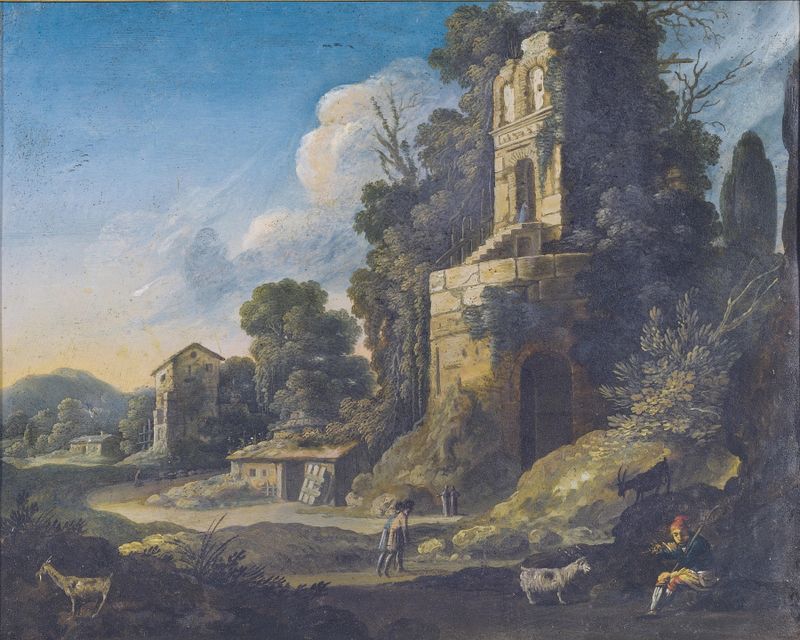
Italianate landscape with buildings and a herdsman playing pipes
Bartholomeus Breenbergh

Arcadian Landscape
Bartholomeus Breenbergh

Ruïnes van keizerlijk paleis te Rome
Bartholomeus Breenbergh

Ruïne van het Colosseum
Bartholomeus Breenbergh
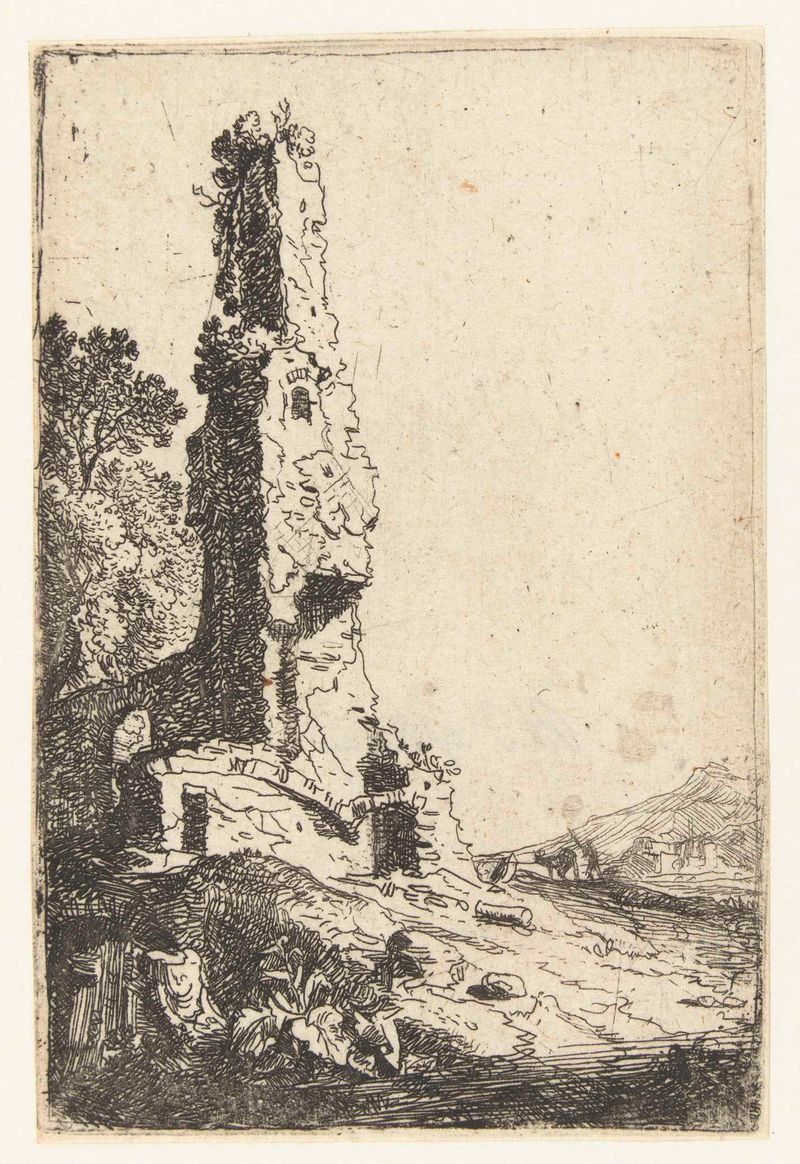
Ruïnes van de stadsmuren van Rome
Bartholomeus Breenbergh
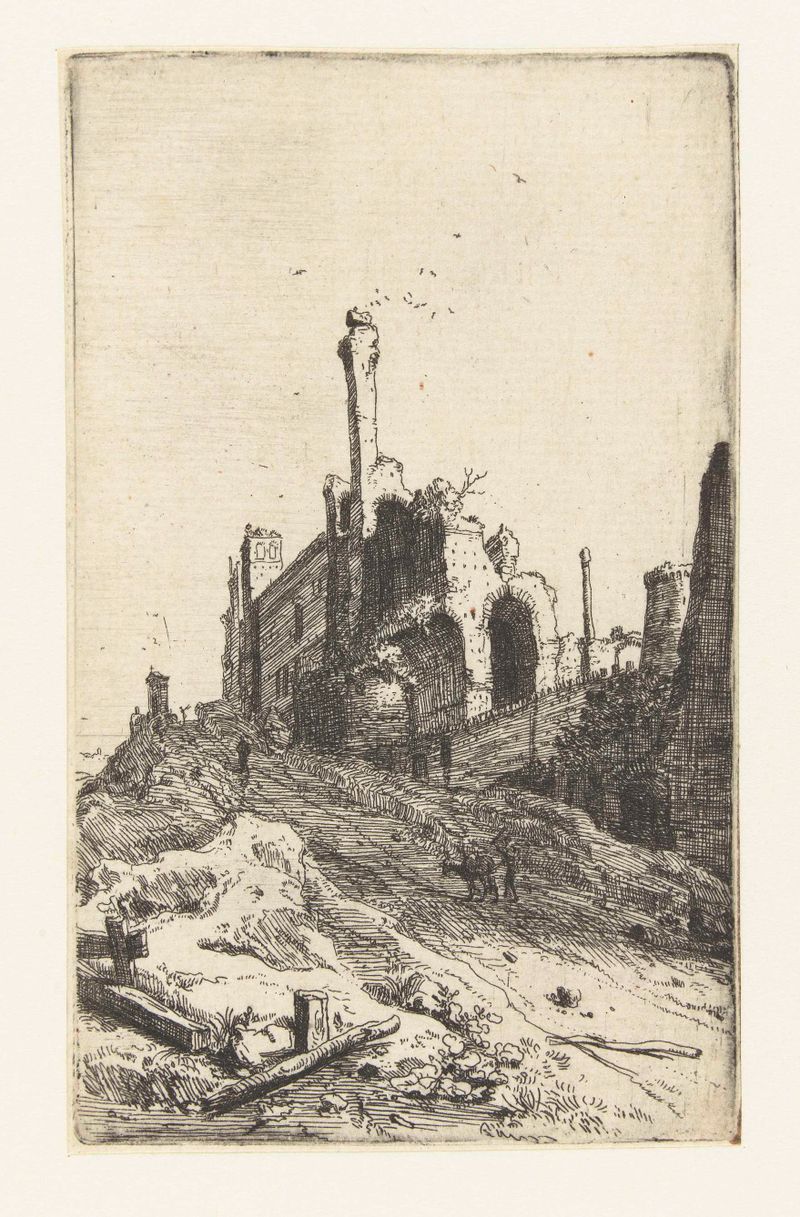
Ruïnes van een paleis te Tivoli
Bartholomeus Breenbergh

Figures Among Ruins By The Tiber
Bartholomeus Breenbergh

Italian Landscape with the Aurelian Wall
Bartholomeus Breenbergh
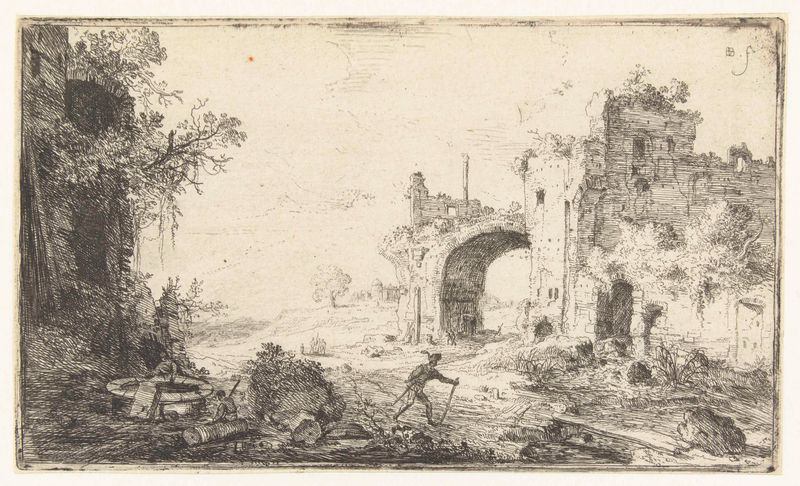
Ruïnes van de thermen van Caracalla
Bartholomeus Breenbergh
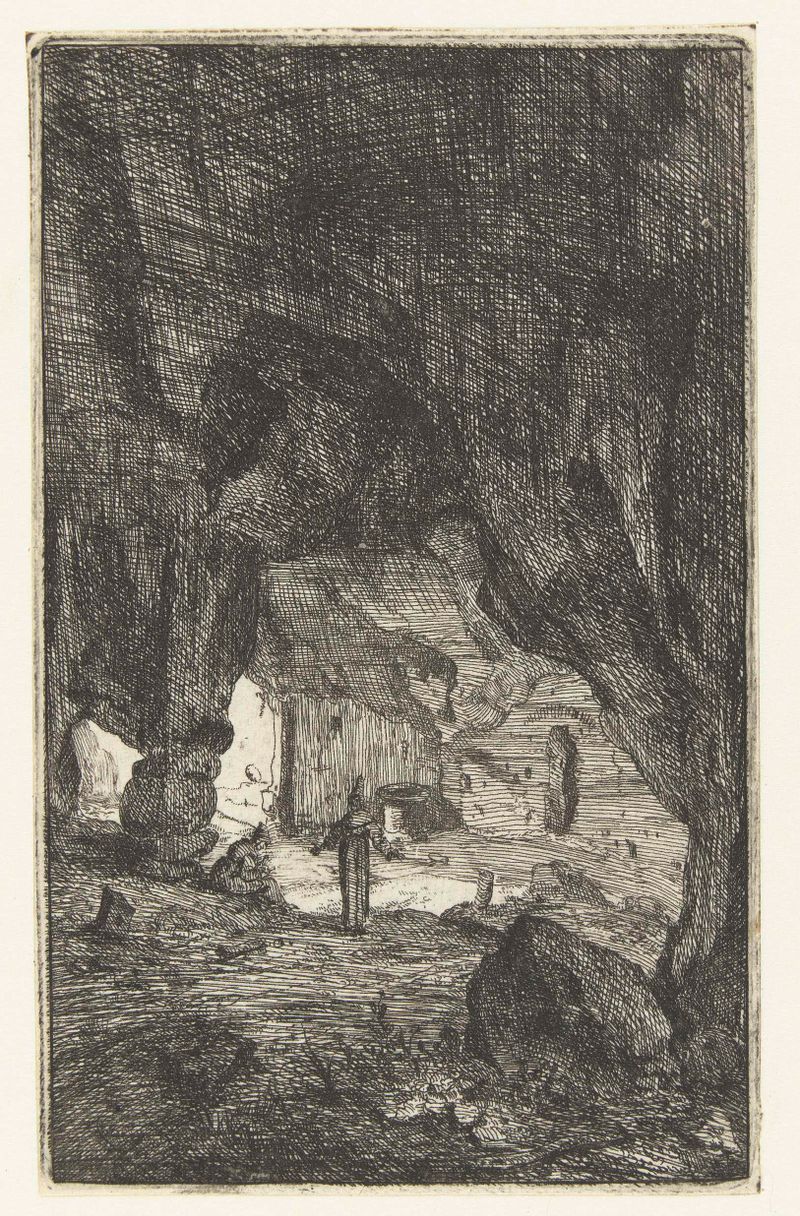
Interieur van een grot
Bartholomeus Breenbergh
More Architecture Art
Browse all →
The statue of Liberty
Frédéric Auguste Bartholdi

View of Houses in Delft, Known as ‘The Little Street’
Johannes Vermeer

View of Houses in Delft, Known as ‘The Little Street’
Johannes Vermeer

The Cathedral in Rouen. The portal, Grey Weather
Claude Monet

The yellow house
Vincent van Gogh

The Church in Auvers-sur-Oise, View from the Chevet
Vincent van Gogh