
Rynek w Kazimierzu z furą zboża — History & Facts
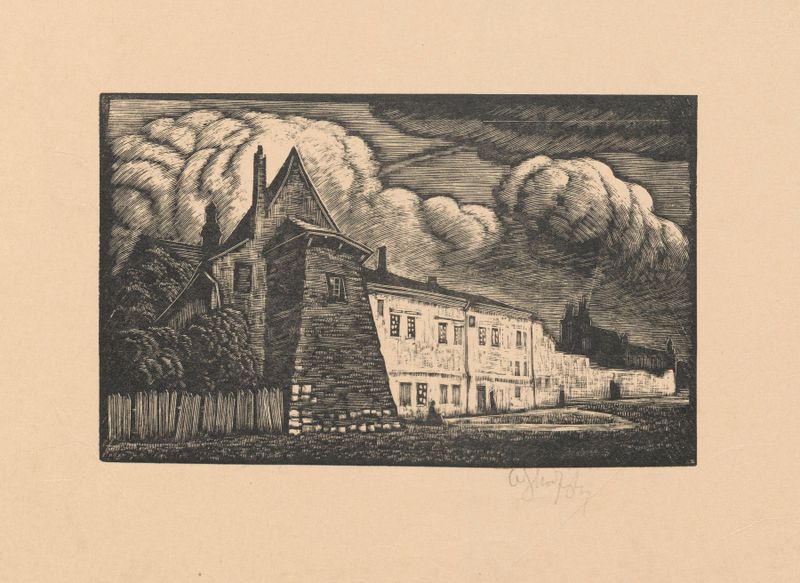
Each stroke of paint transforms raw emotion into a harmonious tableau that invites contemplation and connection. Look to the left at the vibrant figures bustling in the market, each one a testament to life’s ebb and flow. Notice how the warm colors of the wheat contrast with the cooler tones of the surrounding architecture, creating a lively dialogue between nature and urbanity. The rich textures of the grain stand out, inviting touch, while the delicate rendering of the vendor's face reveals a moment of quiet pride amidst the chaos. Deeper truths emerge beneath the surface: the juxtaposition of the simple, earthy brown of the grain with the myriad of colors worn by the townsfolk symbolizes the interconnectedness of labor and life.
The gentle yet deliberate brushwork conveys a sense of motion, suggesting that this space is alive with commerce and conversation. Each figure, while distinct, contributes to a collective narrative that echoes the rhythms of community. Władysław Skoczylas painted this piece in 1928 while residing in Poland, a period marked by significant artistic exploration and the search for national identity. At this time, he was deeply involved in the Polish avant-garde movement, aiming to capture the essence of Polish culture through his art.
This work reflects not only a personal expression but also a broader cultural renaissance, as artists sought to define their place in a changing world.
More Artworks by Władysław Skoczylas
Browse all →
Motyw ze Starego Miasta
Władysław Skoczylas
Widok Kazimierza nad Wisłą
Władysław Skoczylas
Giewont
Władysław Skoczylas
Fragment miasteczka
Władysław Skoczylas

Kościół w Dębnie
Władysław Skoczylas

Ulica w Kazimierzu
Władysław Skoczylas

Rynek w Kazimierzu nad Wisłą
Władysław Skoczylas
Kościółek w zimie
Władysław Skoczylas

Kolumna Zygmunta
Władysław Skoczylas
Motyw z Krakowa; Baszta Augustianów
Władysław Skoczylas





