
Scène de plage à Deauville — History & Facts
In Scène de plage à Deauville, the glimmer of sunlight on the water mingles with the sorrow of fleeting moments. As waves lap gently at the shore, the horizon whispers of beginnings and endings, urging us to reflect on the transience of life. Look to the left at the dappled shadows cast by the parasols, their vibrant colors contrasting with the soft, muted tones of the sandy beach. The figures, small against the vastness of the sea, are seemingly lost in their own worlds, each a tableau of individual stories woven together.
Notice how the light dances upon the water’s surface, a shimmering invitation to the viewer that captures both joy and solitude. Hidden within the scene are layers of connection and disconnection. The meticulous brushwork reveals the interplay between lively social gatherings and the solitude of nature, suggesting how one's experience can be profoundly personal, even amidst a crowd. The play of light not only illuminates the surface but also evokes a sense of awakening, as if the characters are caught in a moment of self-realization, standing at the edge of experience, contemplating their place in the world. During the late 19th century, when this work was created, Boudin was deeply immersed in the burgeoning Impressionist movement, painting en plein air to capture the shifting light of coastal life.
Living in Normandy, he was influenced by the region's landscapes and the social changes of the era, as leisure began to intertwine with the daily lives of the urban bourgeoisie. This piece reflects that transition, as both a celebration of beauty and a contemplation of the passage of time.
More Artworks by Eugène Boudin
Browse all →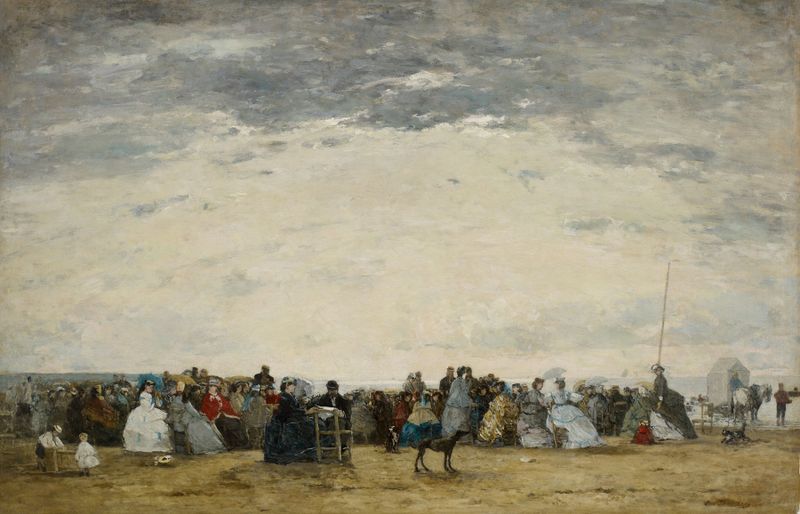
Vacationers on the Beach at Trouville
Eugène Boudin

Washerwoman near Trouville
Eugène Boudin
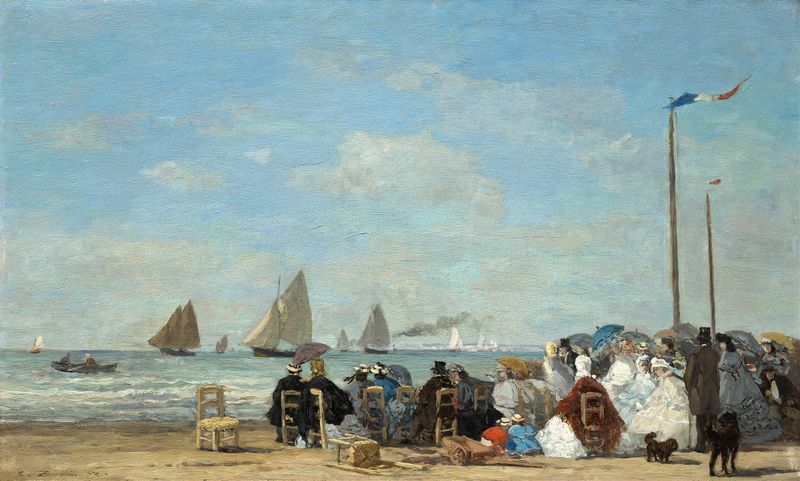
Beach Scene at Trouville
Eugène Boudin

Port aux environs d’Honfleur
Eugène Boudin

Le Faou, un coin du village
Eugène Boudin
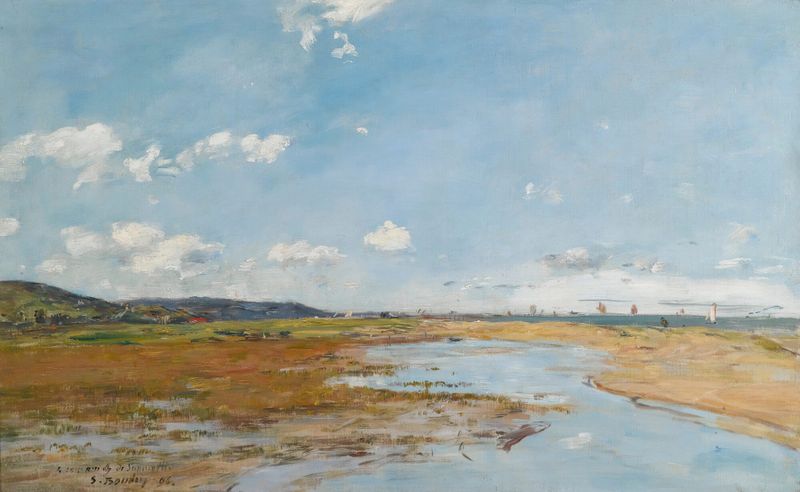
Deauville. Le Rivage
Eugène Boudin
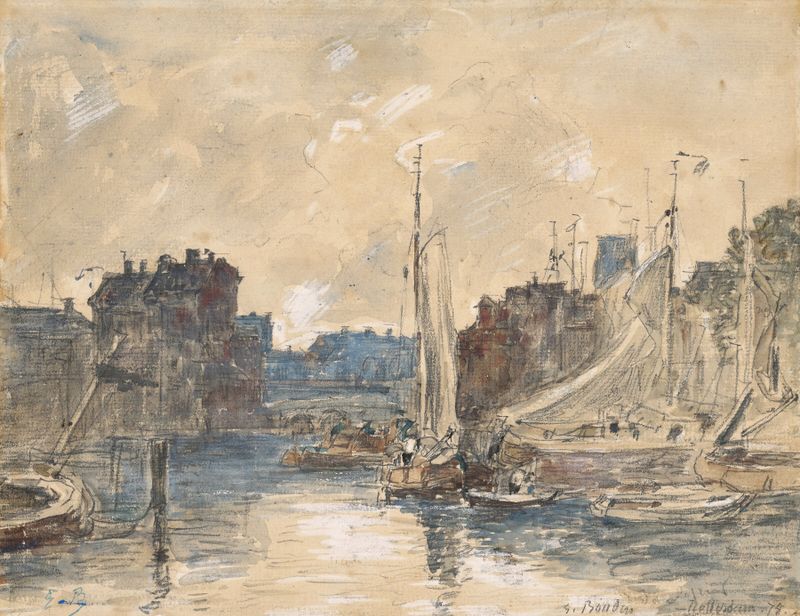
Port de Rotterdam
Eugène Boudin

View of Bordeaux, from the Quai des Chartrons
Eugène Boudin

Trouville, Scène De Plage
Eugène Boudin

Trouville, Le Port
Eugène Boudin





