
Seaside, Port of Honfleur — History & Facts
In the delicate balance of a seaside landscape, chaos finds a tranquil refuge. Beneath the shifting skies, the tumult of the sea meets the quietude of a port, revealing the duality of nature and human emotion. Look to the left where soft waves lap gently against a sandy shore, their rhythmic embrace painted in fluid strokes of blue and white. Notice how the light dances on the water’s surface, creating a shimmering path that beckons the viewer deeper into the scene.
The harbor, framed by quaint boats and the distant silhouette of buildings, is captured in muted yet warm tones, evoking a sense of nostalgia and fleeting moments. Boudin’s brushwork is both spontaneous and deliberate, imbuing the canvas with a breath of life as airy clouds drift above. Yet beneath the serene facade lies an undercurrent of tension—a chaotic interplay between nature’s unpredictable moods and the steadfastness of human endeavor. The boats bob uneasily, suggesting vulnerability amidst the vastness of the sea, while the quiet port hints at stories untold, waiting to be explored.
Each brushstroke seems to whisper of adventure, celebration, and isolation, inviting contemplation on the lives intertwined within this coastal chaos. Eugène Boudin painted this landscape around 1860, during a time when he was establishing himself as a leading figure in plein air painting. Working in Honfleur, a bustling port on the Normandy coast, he was part of an artistic movement that sought to capture natural light and atmosphere. This period in his life was marked by a desire to break free from the conventions of studio painting, embracing instead the unpredictable beauty of the world outdoors.
More Artworks by Eugène Boudin
Browse all →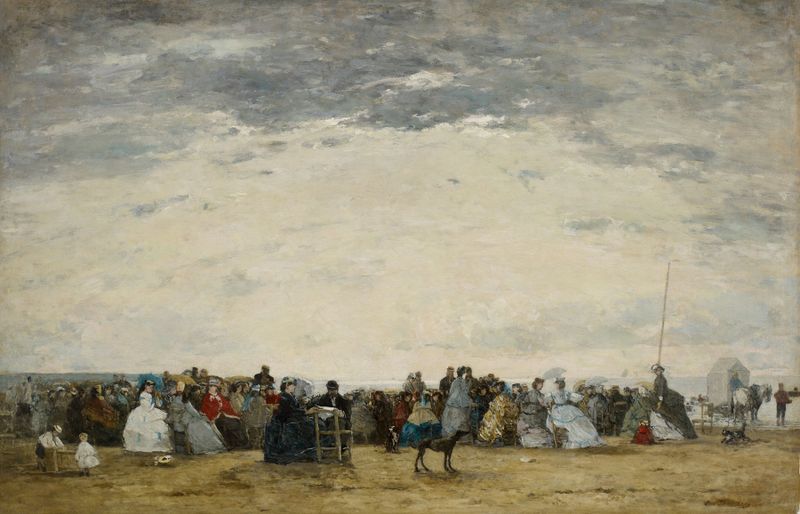
Vacationers on the Beach at Trouville
Eugène Boudin

Washerwoman near Trouville
Eugène Boudin
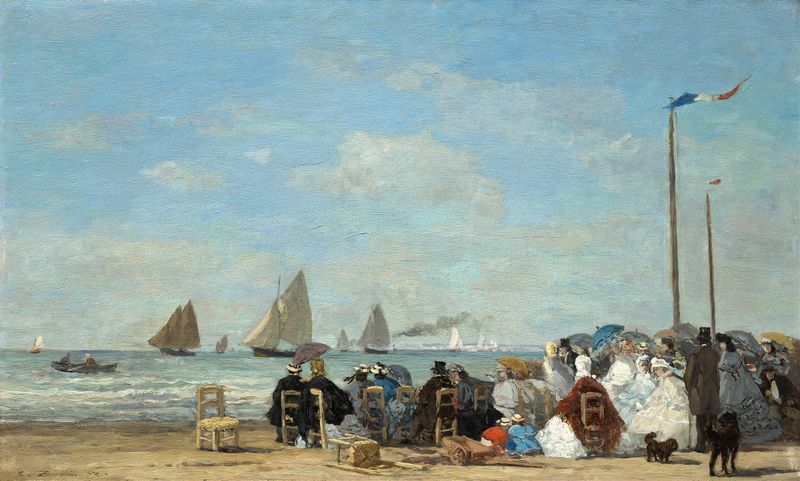
Beach Scene at Trouville
Eugène Boudin

Port aux environs d’Honfleur
Eugène Boudin

Le Faou, un coin du village
Eugène Boudin
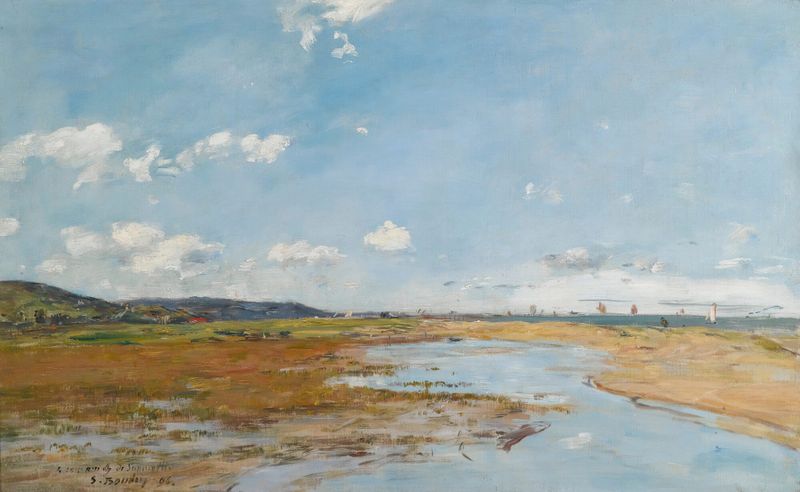
Deauville. Le Rivage
Eugène Boudin
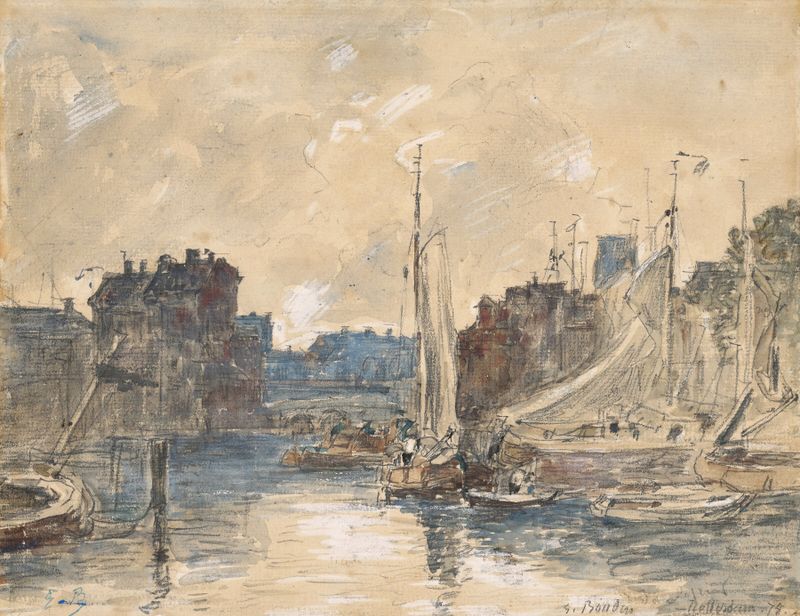
Port de Rotterdam
Eugène Boudin

View of Bordeaux, from the Quai des Chartrons
Eugène Boudin

Trouville, Scène De Plage
Eugène Boudin

Trouville, Le Port
Eugène Boudin





