
Sense of Hearing — History & Facts
What draws the eye first in Sense of Hearing is the rough warmth of camaraderie, captured in a shadowed attic where three figures are caught mid-revel. The man on the left bows a fiddle with the practiced ease of someone who plays for friends, not for courts. His companion, seated on a barrel, lifts a crumpled sheet—perhaps lyrics or a bawdy song—his mouth open in raucous accompaniment.
Between them, a woman leans in, jug in hand, her laughter nearly audible. The light, golden and low, pools around their faces and hands, inviting us to eavesdrop on this private merriment. The battered wooden planks and sagging beams frame the scene, anchoring it in the everyday world of 17th-century Dutch village life. Painted in 1635, this work by Adriaen van Ostade belongs to a tradition that celebrated the ordinary pleasures and follies of common folk.
In the Dutch Republic, artists like van Ostade found eager patrons among the burgeoning middle class, who delighted in scenes that reflected their own world—earthy, imperfect, and alive with humor. Genre paintings such as this were not grand commissions, but intimate objects meant for private enjoyment and conversation. Today, Sense of Hearing resides in the Hermitage Museum’s collection, a testament to the enduring appeal of these humble, noisy gatherings.
Let your gaze linger on the details—the crooked smiles, the clutter of jugs and stools—and imagine the music echoing through the rafters.
More Artworks by Adriaen van Ostade

Dans in de herberg
Adriaen van Ostade
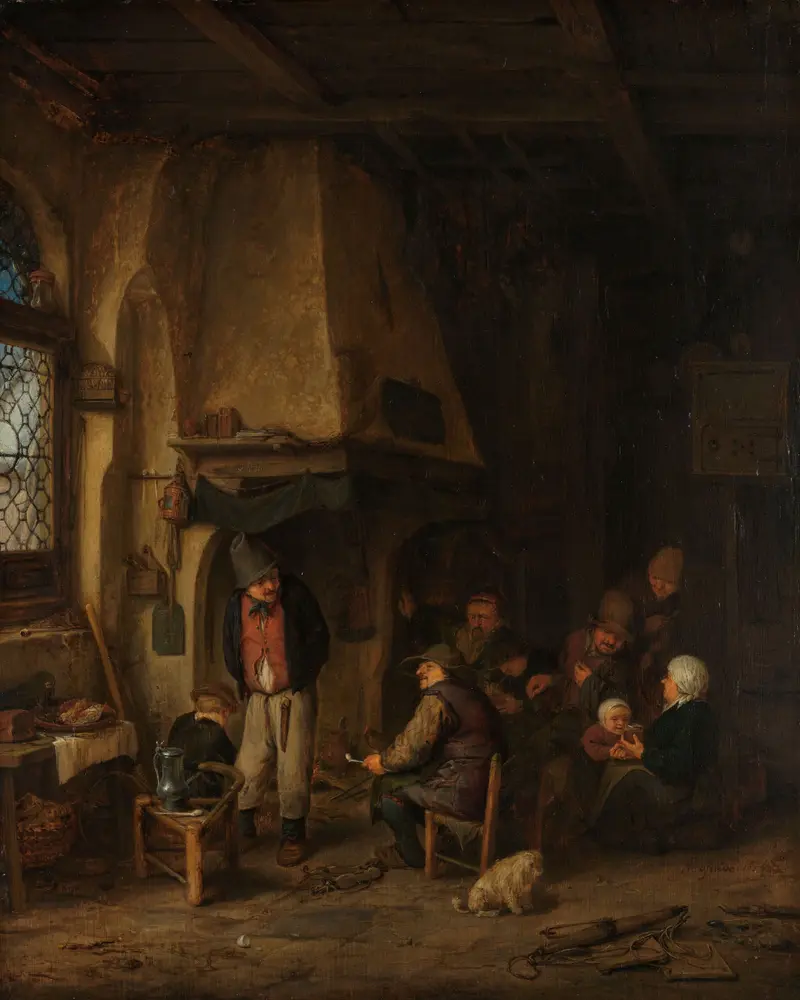
‘The Skaters’: Peasants in an Interior
Adriaen van Ostade
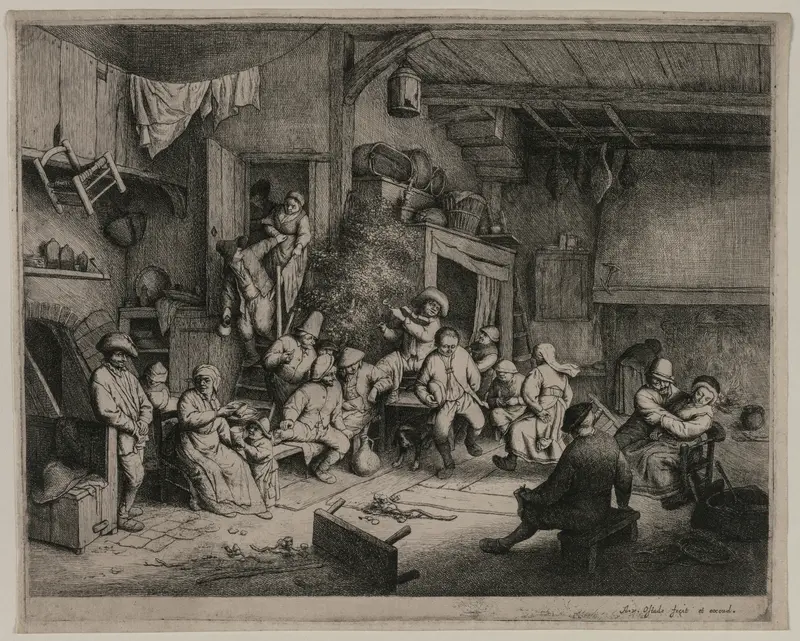
Dance at the Inn
Adriaen van Ostade
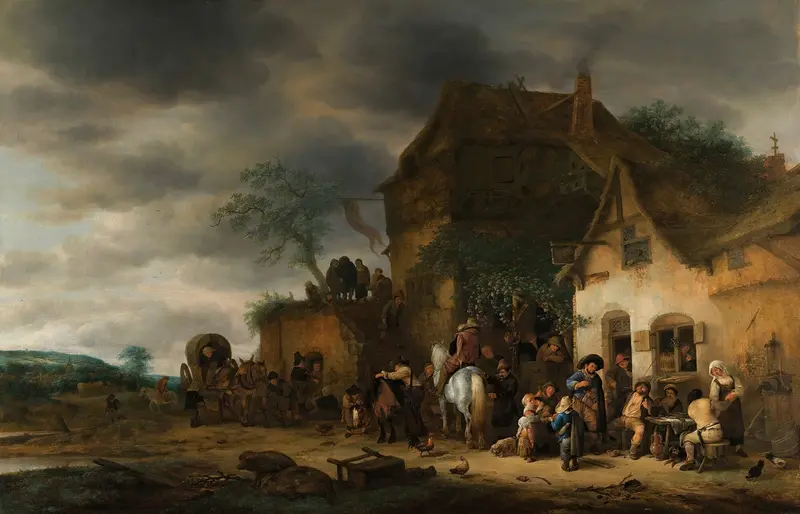
Travellers Halted At A Country Inn
Adriaen van Ostade
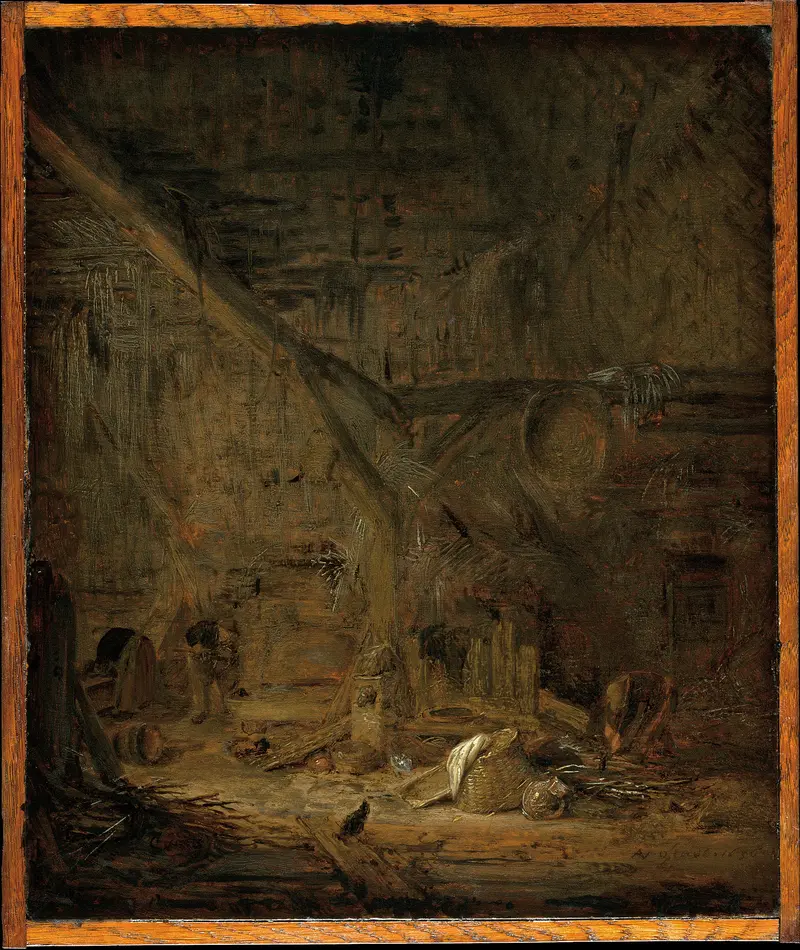
Interior of a Barn
Adriaen van Ostade
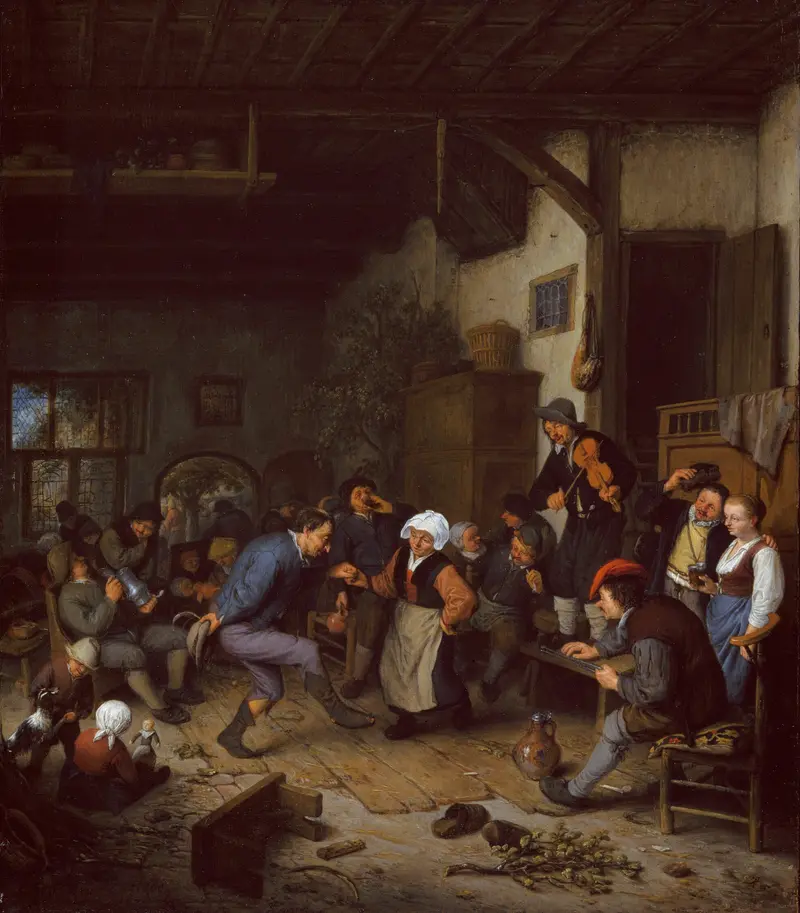
Merrymakers in an Inn
Adriaen van Ostade
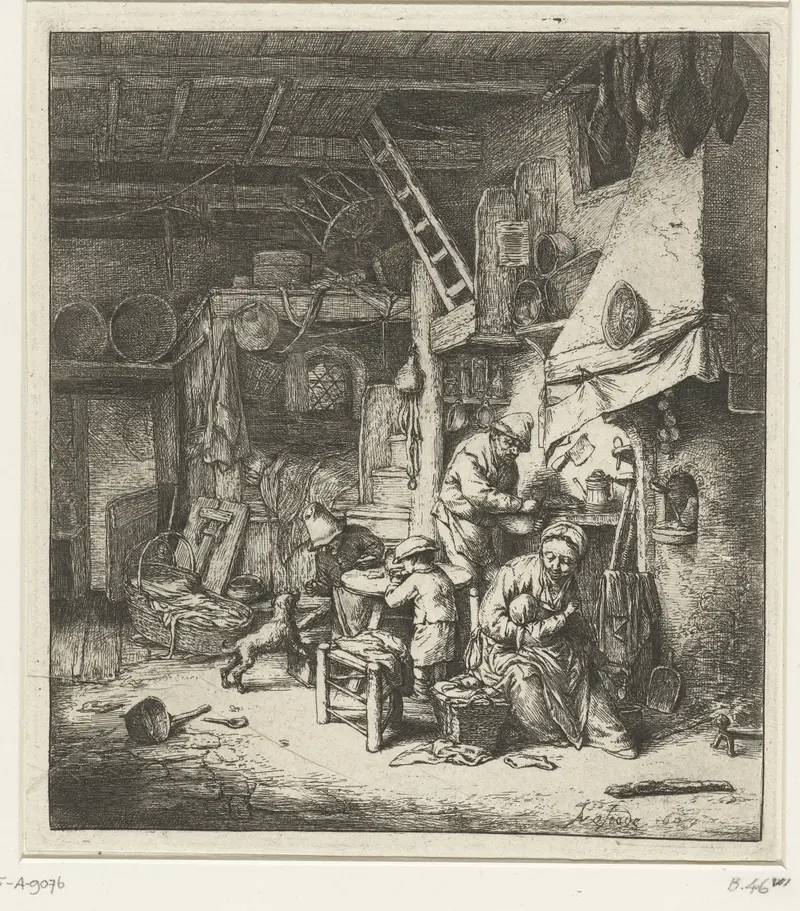
Boerengezin in interieur
Adriaen van Ostade
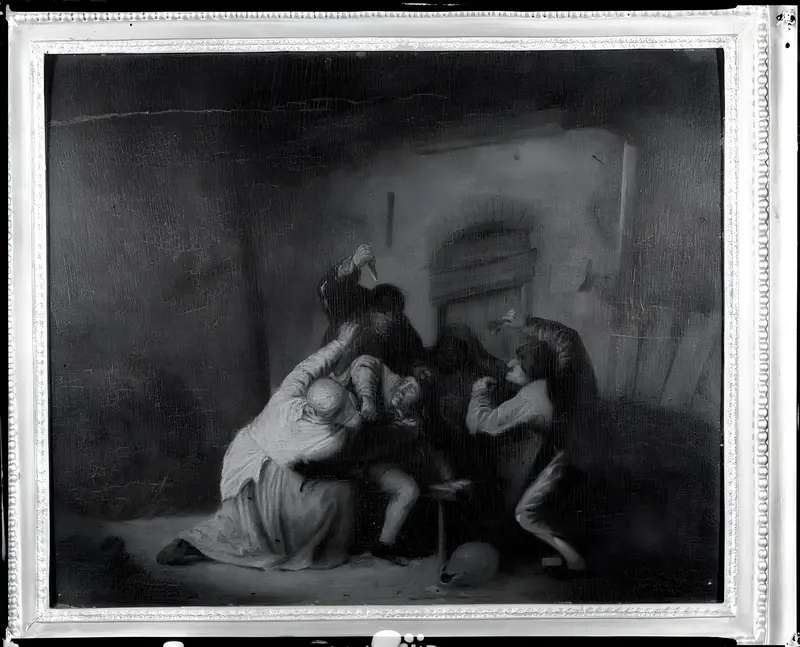
Peasants Brawling in a Tavern
Adriaen van Ostade
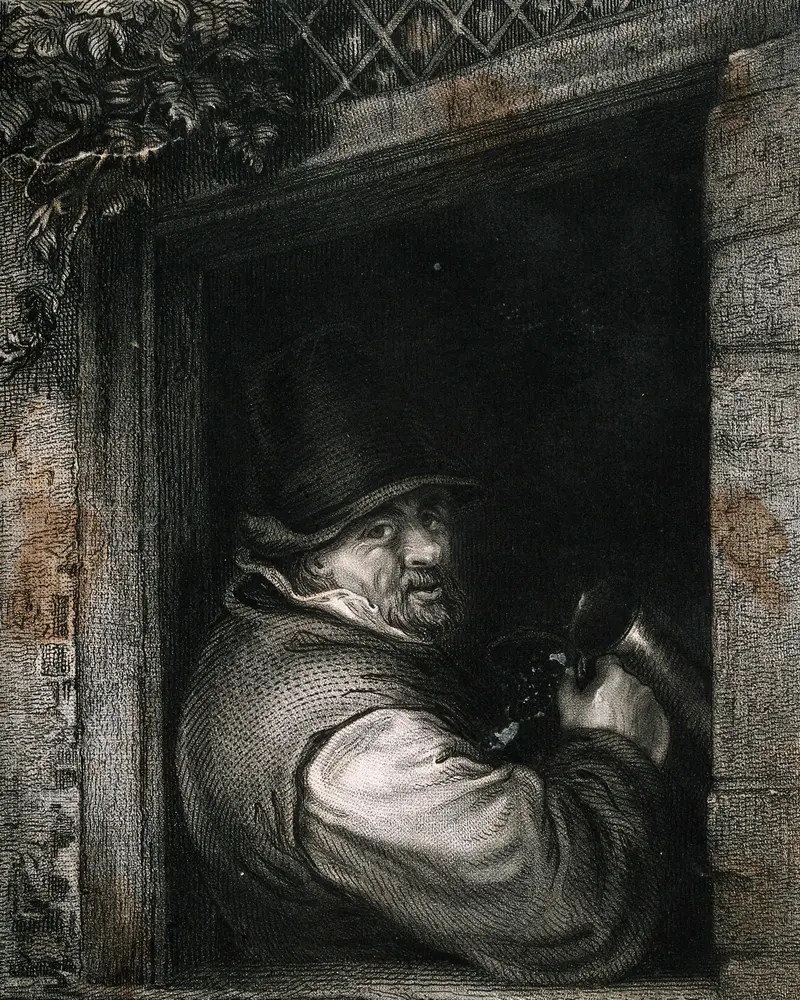
Man with a Tankard at a Window
Adriaen van Ostade
Dans in de herberg
Adriaen van Ostade
More Genre Scene Art

Banquet of the Officers of the St George Civic Guard
Frans Hals

Rembrandt and Saskia in the Scene of the Prodigal Son
Rembrandt van Rijn

Bal du moulin de la Galette
Pierre-Auguste Renoir

Quadrille at the Moulin Rouge
Henri de Toulouse-Lautrec

A Burial at Ornans
Gustave Courbet

When Will You Marry?
Paul Gauguin