
Sense of Sight — History & Facts
A shaft of golden light slices through the gloom of a humble interior, drawing your eye to a moment of quiet absorption—this is where Adriaen van Ostade excels, capturing the poetry of everyday life. The old woman at the center bends over her needlework, her concentration mirrored by the child beside her, who clutches a jug with both hands. The man, leaning heavily on his stick, seems paused mid-thought, his body language hinting at fatigue or resignation.
Every gesture and prop in this scene is deliberate: the onions strung up behind, the battered pots, the rough wooden planks—all speak of a world where survival is a daily craft, and attention to the smallest task is a virtue. Painted in 1635, Sense of Sight belongs to a Dutch tradition that delighted in scenes of peasant life, a genre that flourished in the bustling towns of the Dutch Republic. Artists like van Ostade found their patrons among prosperous burghers, who saw in these rustic interiors both a reflection of national identity and a gentle moral lesson. While history has kept few traces of this specific painting’s early journey, today it resides in the Hermitage Museum’s collection, a testament to the enduring fascination with the ordinary moments that define a culture.
Look again at the way the light falls, and notice how it not only illuminates faces and hands, but also dignifies the everyday—inviting us to linger, and to see.
More Artworks by Adriaen van Ostade

Dans in de herberg
Adriaen van Ostade
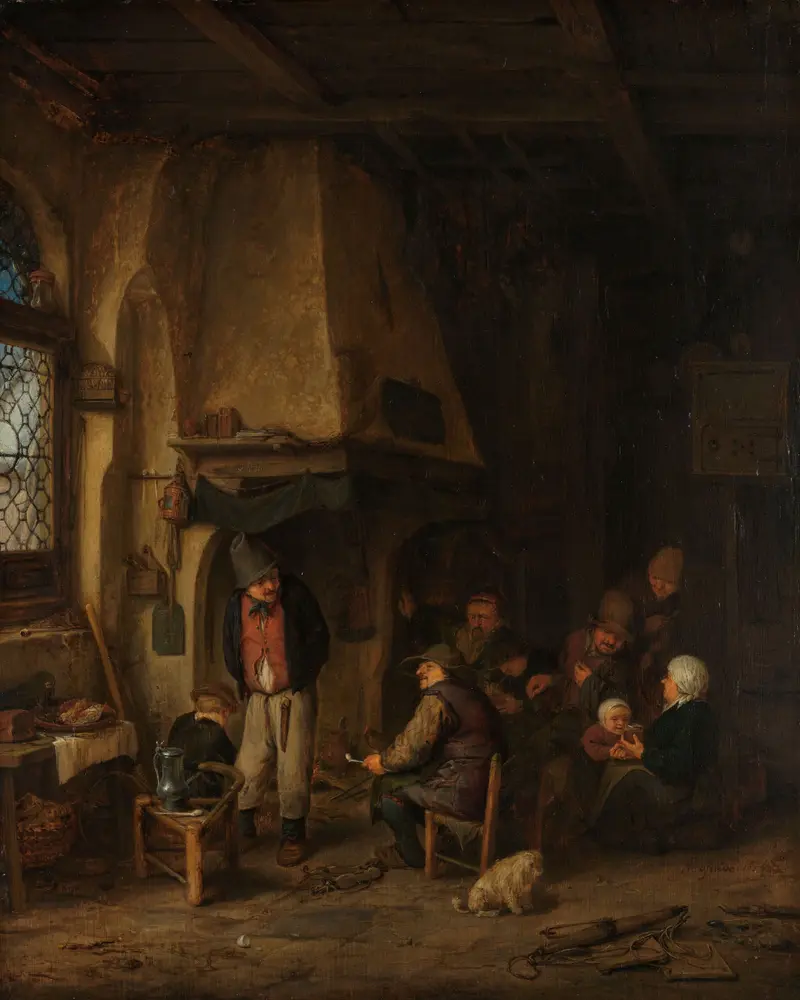
‘The Skaters’: Peasants in an Interior
Adriaen van Ostade
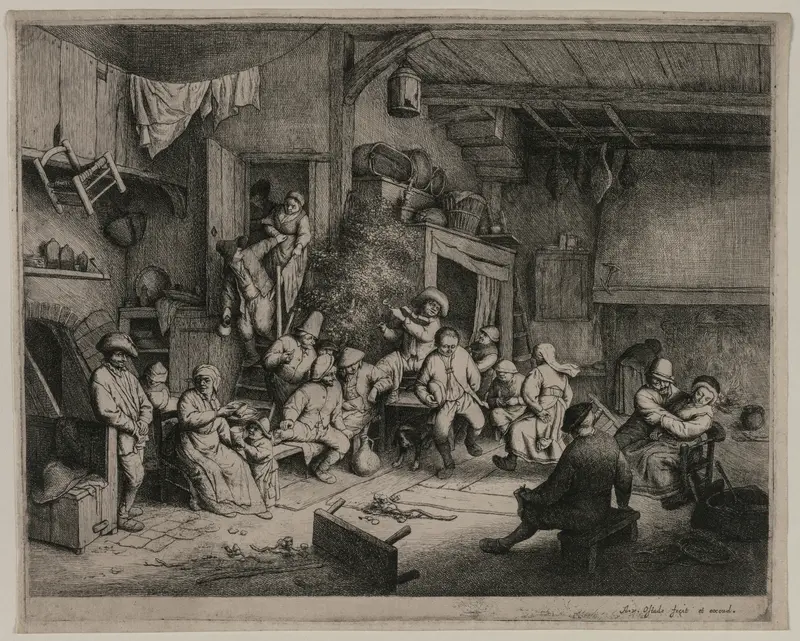
Dance at the Inn
Adriaen van Ostade
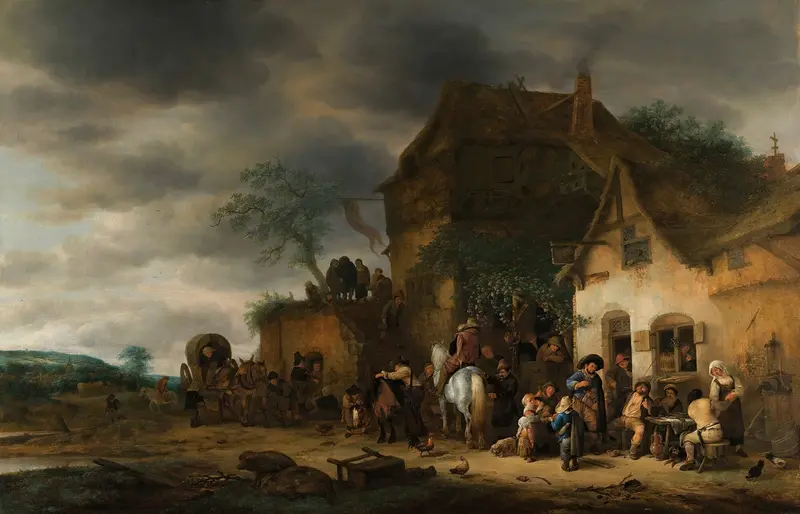
Travellers Halted At A Country Inn
Adriaen van Ostade
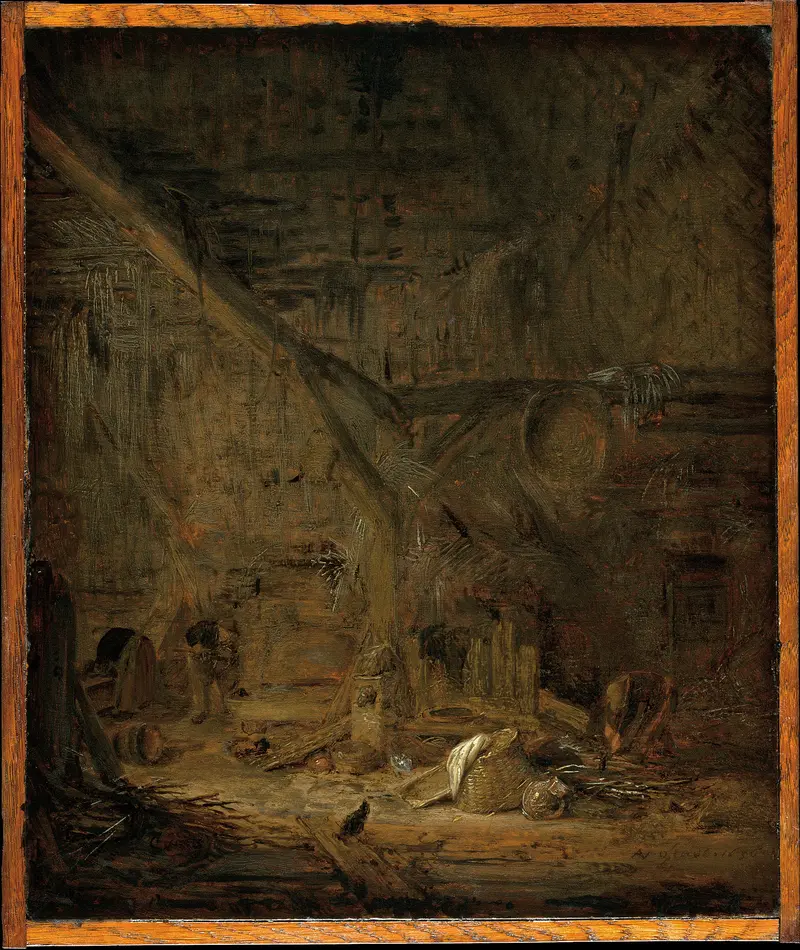
Interior of a Barn
Adriaen van Ostade
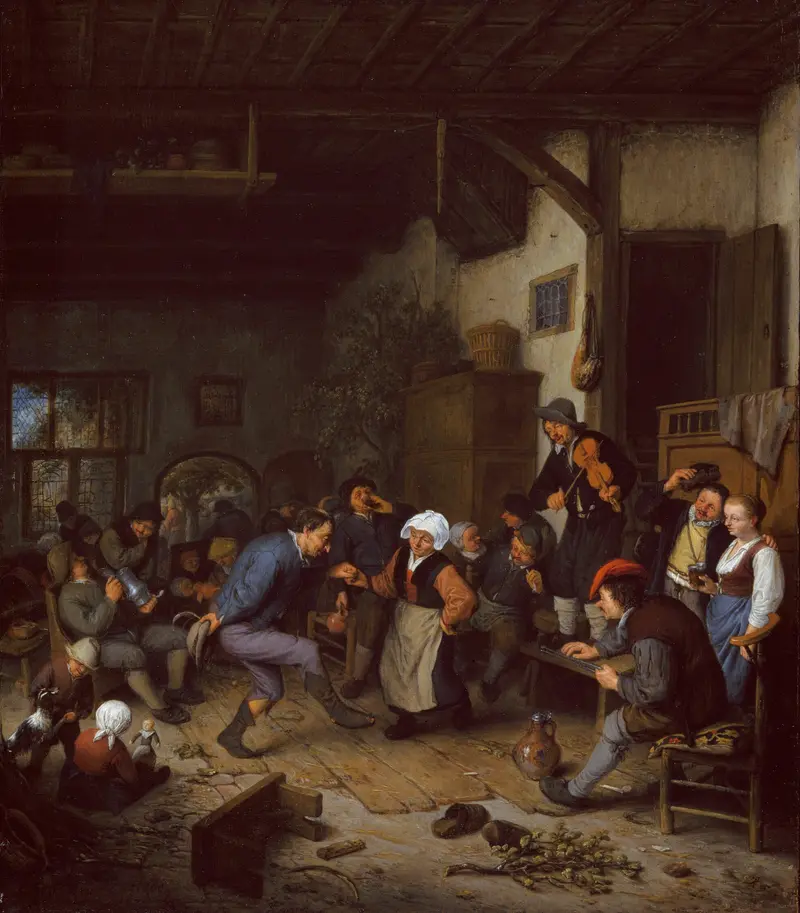
Merrymakers in an Inn
Adriaen van Ostade
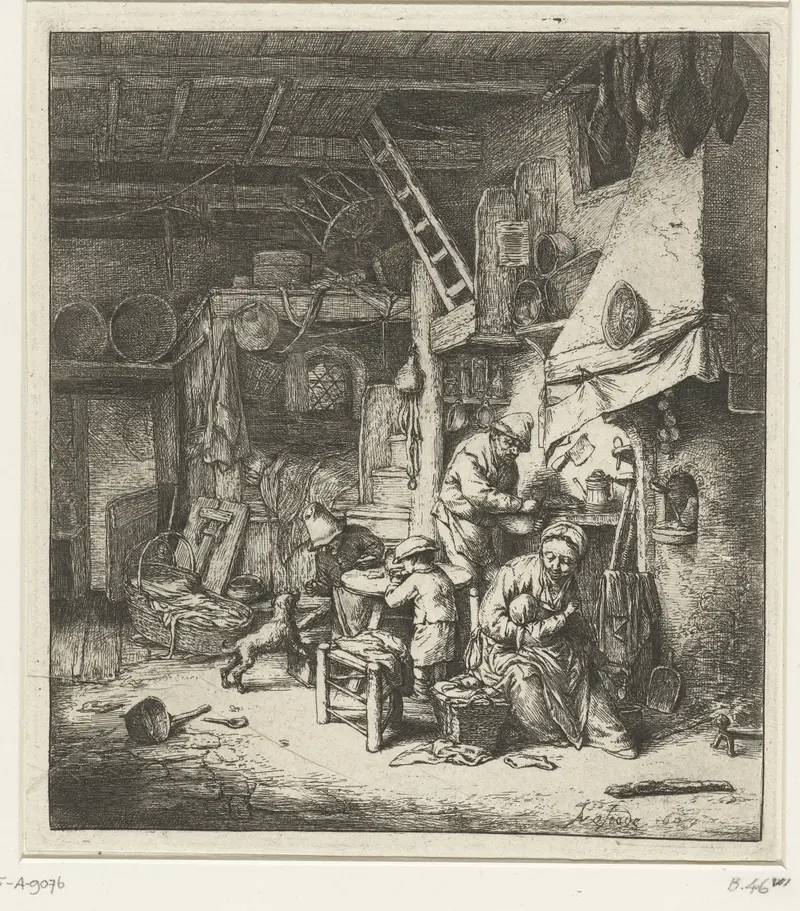
Boerengezin in interieur
Adriaen van Ostade
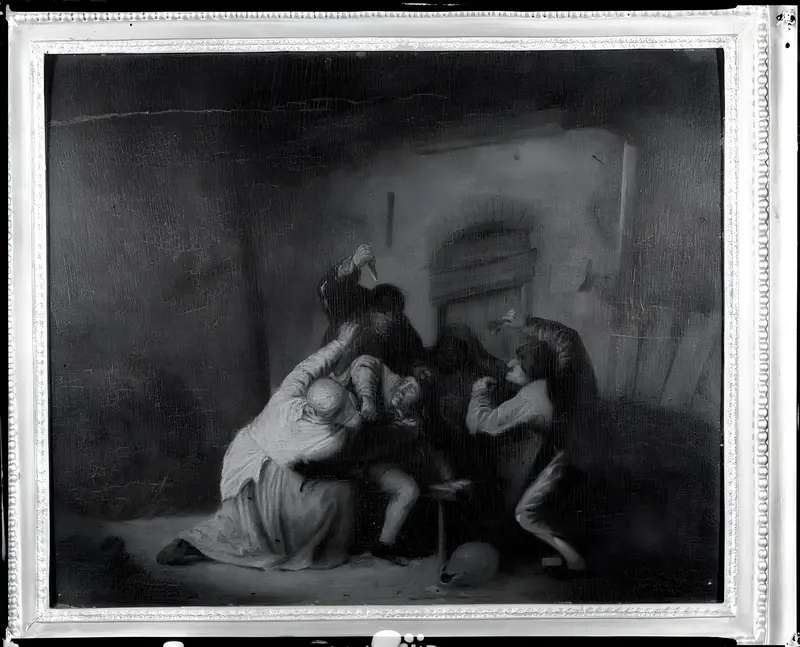
Peasants Brawling in a Tavern
Adriaen van Ostade
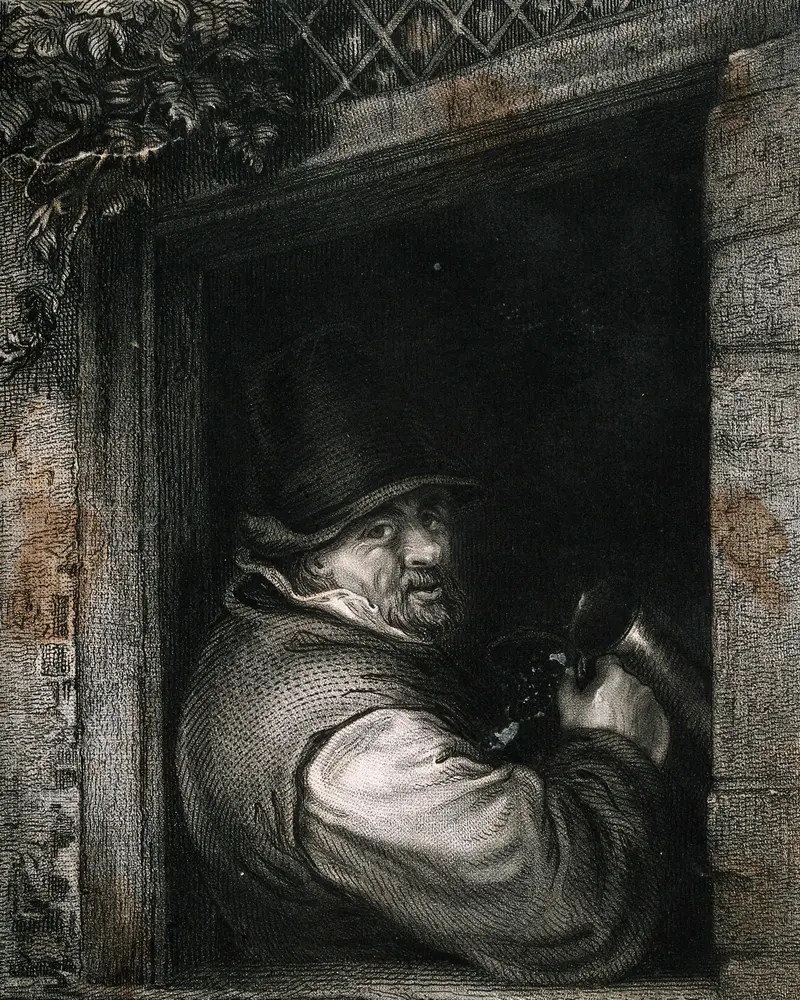
Man with a Tankard at a Window
Adriaen van Ostade
Dans in de herberg
Adriaen van Ostade
More Genre Scene Art

Banquet of the Officers of the St George Civic Guard
Frans Hals

Rembrandt and Saskia in the Scene of the Prodigal Son
Rembrandt van Rijn

Bal du moulin de la Galette
Pierre-Auguste Renoir

Quadrille at the Moulin Rouge
Henri de Toulouse-Lautrec

A Burial at Ornans
Gustave Courbet

When Will You Marry?
Paul Gauguin