
Sense of Smell — History & Facts
A waft of something pungent seems to hang in the air of this dim, raftered cottage, and you can almost see the moment it strikes the man at right—his hand clamped over his nose, his posture recoiling in comic dismay. The woman at the center, by contrast, leans into her task, holding a baby and a large, bulbous root—perhaps an onion or turnip—close to her face, her expression a blend of affection and mischief. The baby, swaddled in blue, looks on with wide eyes, caught between the adults’ exaggerated gestures.
In the shadowy background, another figure hunches over a pot, deepening the sense that this is a world shaped by earthy labor and the shared rituals of daily life. The warm, ochre light pools around the central figures, drawing the viewer into the heart of this rustic drama. Painted in 1635, Sense of Smell by Adriaen van Ostade is steeped in the everyday humor and sharp observation that defined Dutch genre painting in the seventeenth century. Scenes like this—intimate, unvarnished glimpses of peasant interiors—were prized by a rising class of urban collectors who delighted in their wit and realism.
Van Ostade was renowned for his ability to capture the moods and manners of rural folk, often with a sly nod to the senses or the follies of human nature. While history has kept few traces of this specific painting’s early journey, today it forms part of the Hermitage Museum’s digital collection, a testament to the enduring fascination of these humble, lively scenes. Look again at the interplay of gesture and gaze, and the quiet comedy of ordinary life comes alive.
More Artworks by Adriaen van Ostade

Dans in de herberg
Adriaen van Ostade
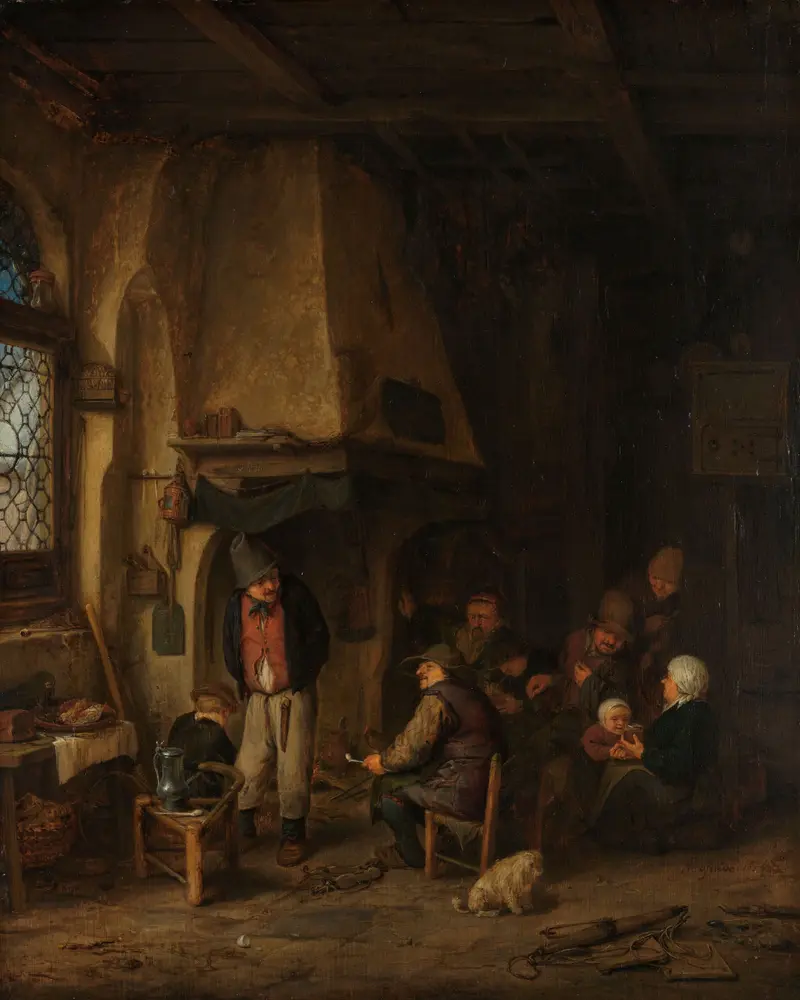
‘The Skaters’: Peasants in an Interior
Adriaen van Ostade
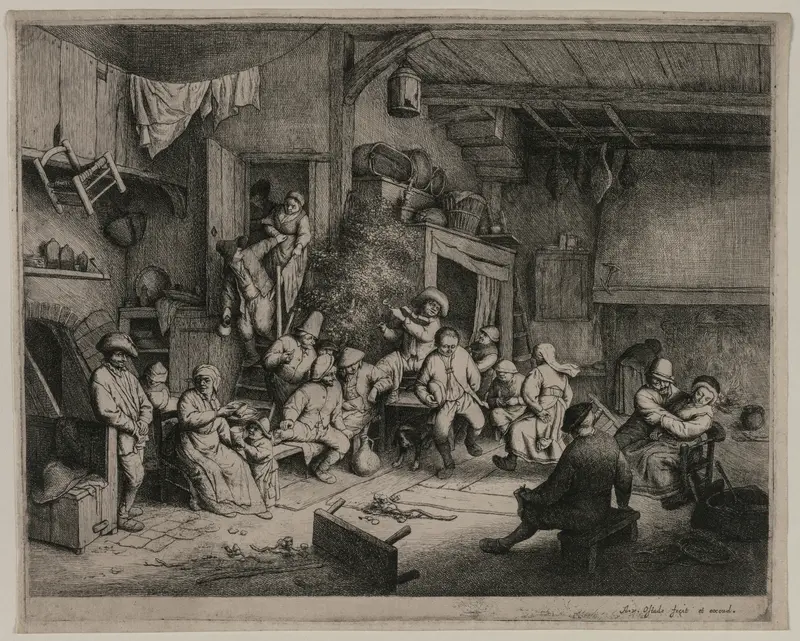
Dance at the Inn
Adriaen van Ostade
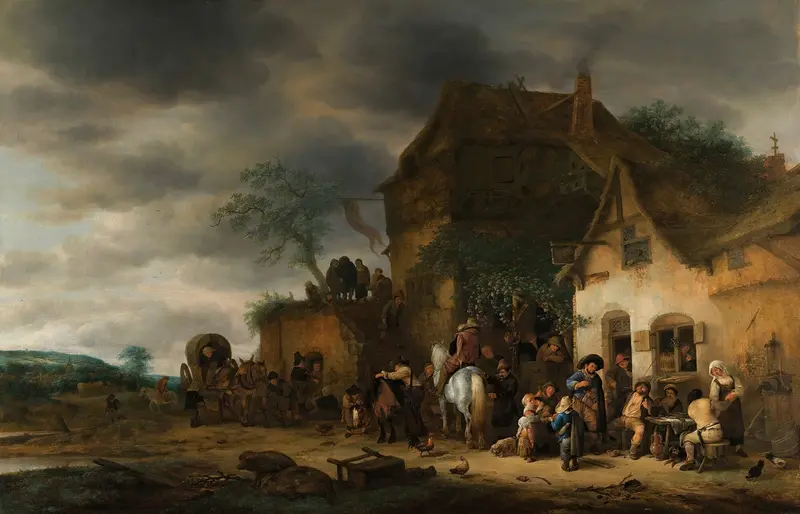
Travellers Halted At A Country Inn
Adriaen van Ostade
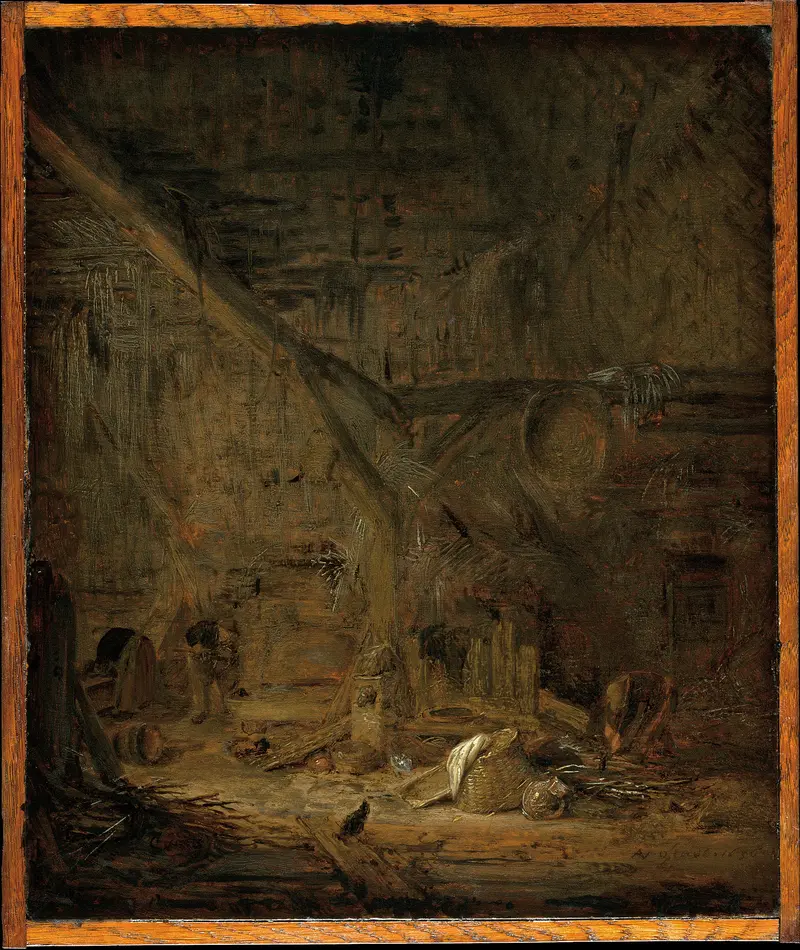
Interior of a Barn
Adriaen van Ostade
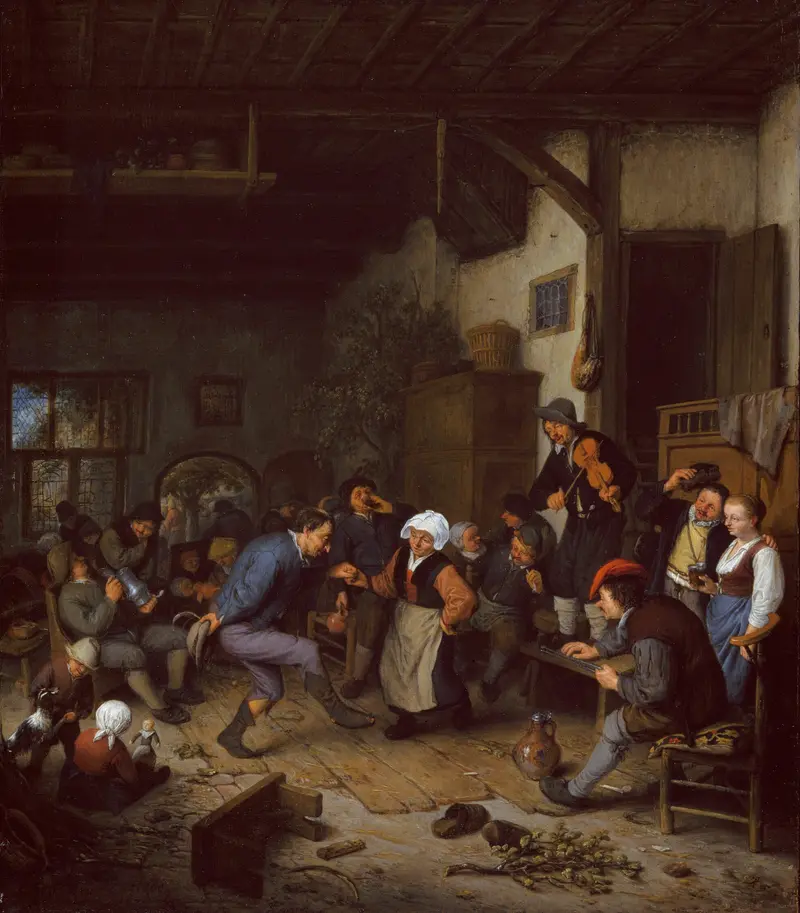
Merrymakers in an Inn
Adriaen van Ostade
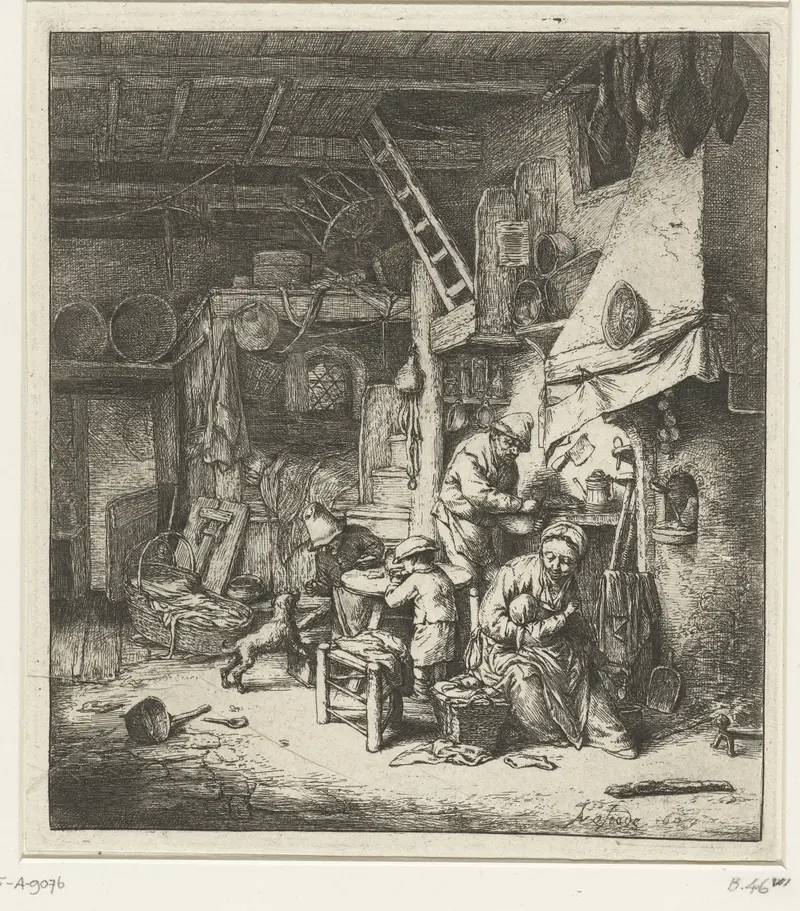
Boerengezin in interieur
Adriaen van Ostade
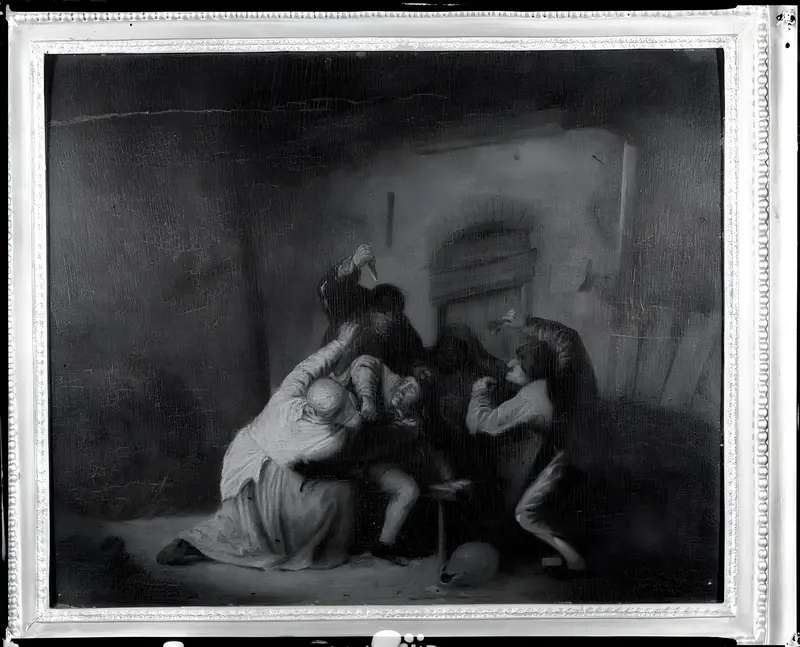
Peasants Brawling in a Tavern
Adriaen van Ostade
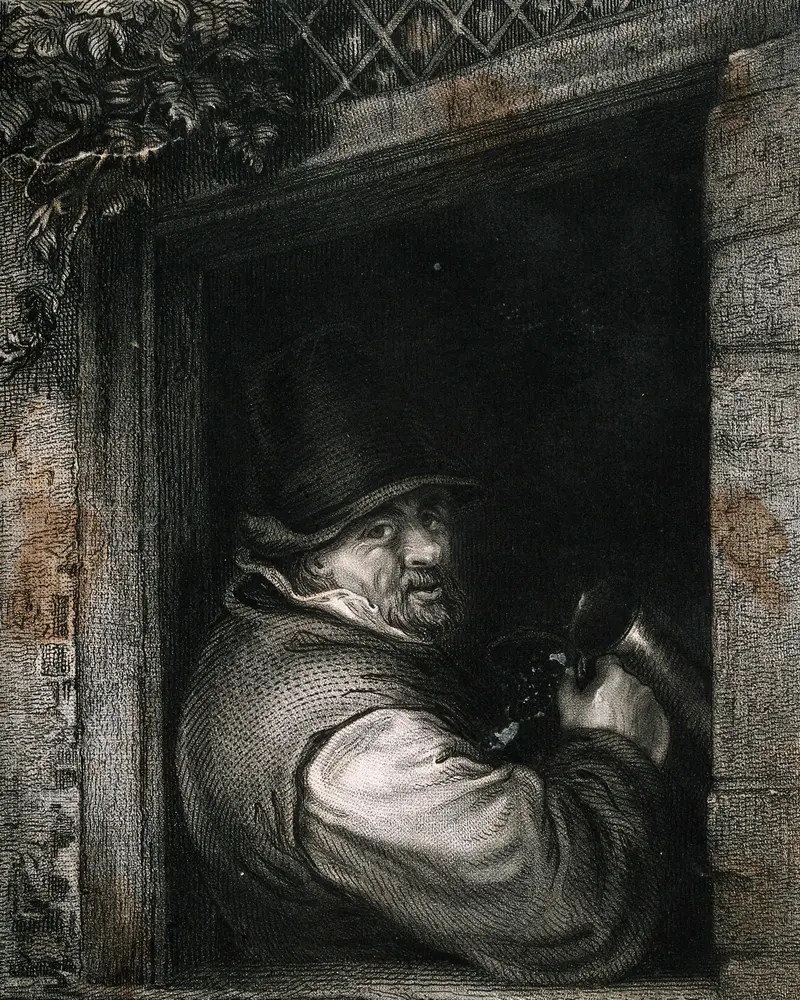
Man with a Tankard at a Window
Adriaen van Ostade
Dans in de herberg
Adriaen van Ostade
More Genre Scene Art

Banquet of the Officers of the St George Civic Guard
Frans Hals

Rembrandt and Saskia in the Scene of the Prodigal Son
Rembrandt van Rijn

Bal du moulin de la Galette
Pierre-Auguste Renoir

Quadrille at the Moulin Rouge
Henri de Toulouse-Lautrec

A Burial at Ornans
Gustave Courbet

When Will You Marry?
Paul Gauguin