
Sheep in a Stable — History & Facts
What first catches the eye is not the sheep themselves, but the way light pours over their fleece, turning wool into a living landscape of curls and shadows. The largest ram stands as a silent guardian, his spiraling horns echoing the curve of the basket and pottery at his feet. Two lambs, their bodies relaxed but their gazes alert, anchor the foreground in a moment of watchful calm.
The scattered mussel shells and broken pottery hint at a world beyond the stable—objects of daily life that suggest both abundance and fragility. Every detail, from the red cloth draped over the basket to the subtle play of shadow in the far corner, is chosen to draw the viewer into a quiet world of warmth and vigilance. Painted in 1645, Sheep in a Stable belongs to a Dutch tradition that prized the careful observation of animals and humble interiors. In the mid-seventeenth century, such scenes were often commissioned by prosperous townsfolk who found comfort and pride in the rhythms of rural life, even as cities grew and the countryside changed.
Aelbert Cuyp was celebrated for his ability to capture the golden light and tranquil order of the Dutch landscape, and here he turns that same attention to a stable’s hush. Though little is recorded about the history of this particular work, its presence in a modern collection reminds us how these quiet moments, once signs of prosperity and peace, still invite us to linger and look again.
More Artworks by Aelbert Cuyp

The Maas at Dordrecht
Aelbert Cuyp
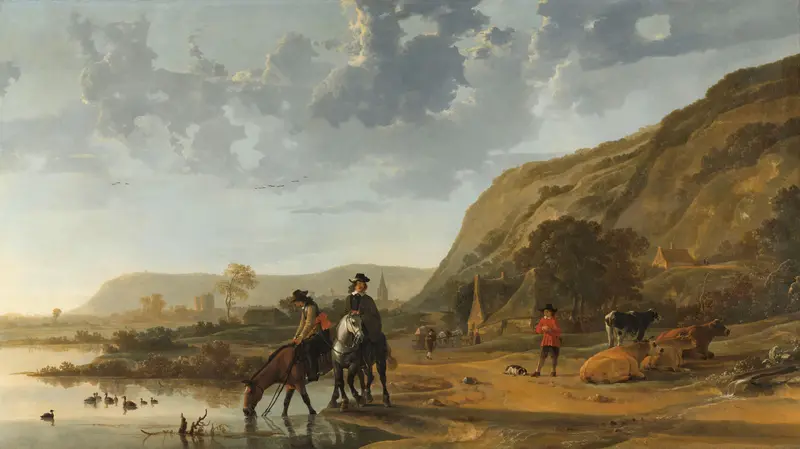
River Landscape with Riders
Aelbert Cuyp

The Maas at Dordrecht
Aelbert Cuyp
Gezicht op Dordrecht
Aelbert Cuyp
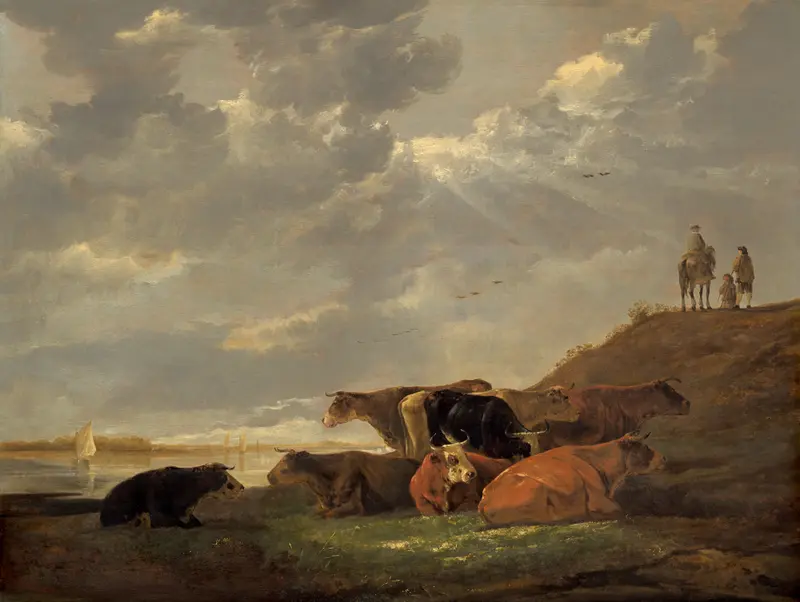
River Landscape with Cows
Aelbert Cuyp
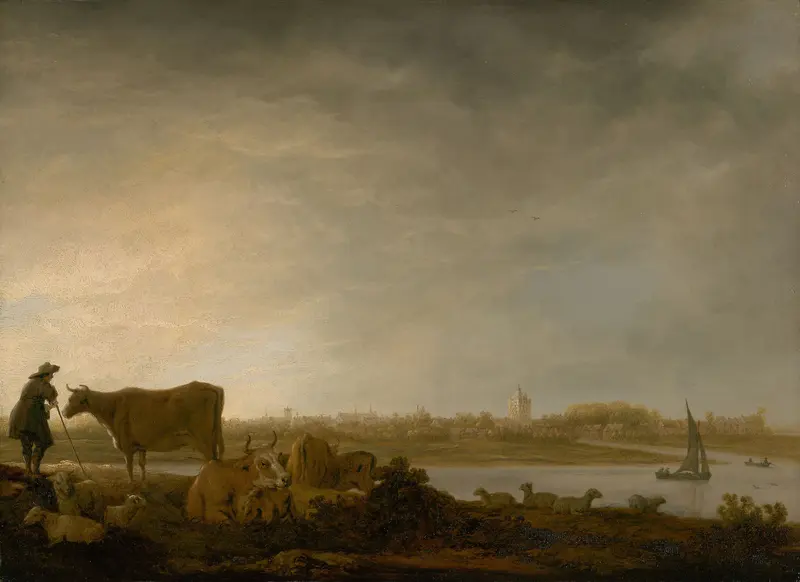
A View of Vianen with a Herdsman and Cattle by a River
Aelbert Cuyp
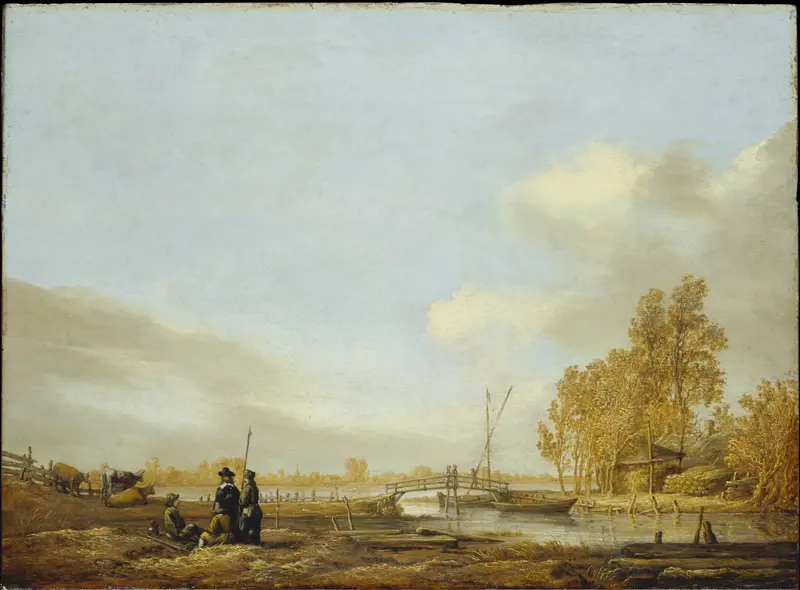
River Landscape with Footbridge
Aelbert Cuyp
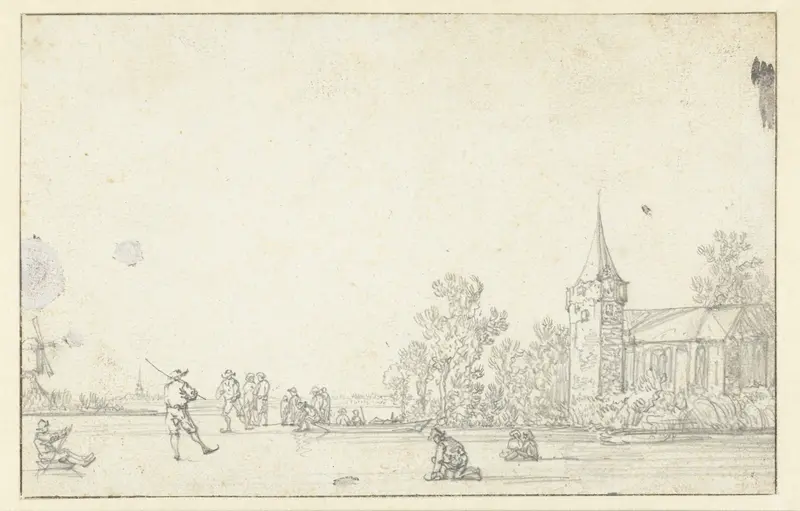
Bevroren rivier met schaatsers bij een kerk
Aelbert Cuyp

Cattle near a River
Aelbert Cuyp
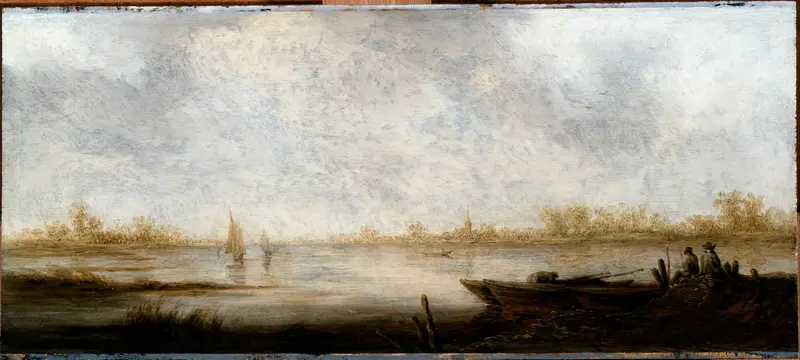
River Landscape
Aelbert Cuyp





