
Sheepfold on the Hill (Bergerie sur le Coteau) — History & Facts
Could beauty survive in a century of chaos? In Sheepfold on the Hill, the question lingers palpably within the tranquil folds of the landscape. Look to the center of the canvas, where gentle hills cradle a sheepfold, a quaint structure bathed in golden light. The warm palette—soft ochres and earthy greens—invites you to breathe in the pastoral serenity. Notice how the artist employs sweeping brushstrokes to convey the lushness of the grass, each stroke a testament to a moment frozen in time.
Shadows play across the undulating land, suggesting the passage of time while subtly hinting at decay. As you absorb the scene, consider what lies beneath the surface. The sheepfold, seemingly idyllic, stands as a reminder of nature’s transience amidst the backdrop of human endeavor. The scattered sheep evoke vulnerability, their presence a reflection of life’s fragility.
In the distance, the horizon blurs, hinting at the inevitable passage into decay, while the cloud-streaked sky suggests a world both beautiful and foreboding. Alphonse Legros painted this work between 1857 and 1911, a time marked by profound change in both society and art. Living in England after leaving his native France, he found himself influenced by the shifting tides of the Impressionist movement, yet remained anchored in a romantic vision of nature. The period was rife with uncertainty, and through this canvas, Legros encapsulates the duality of beauty and decay, revealing the vulnerability of existence against a backdrop of chaos.
More Artworks by Alphonse Legros
Browse all →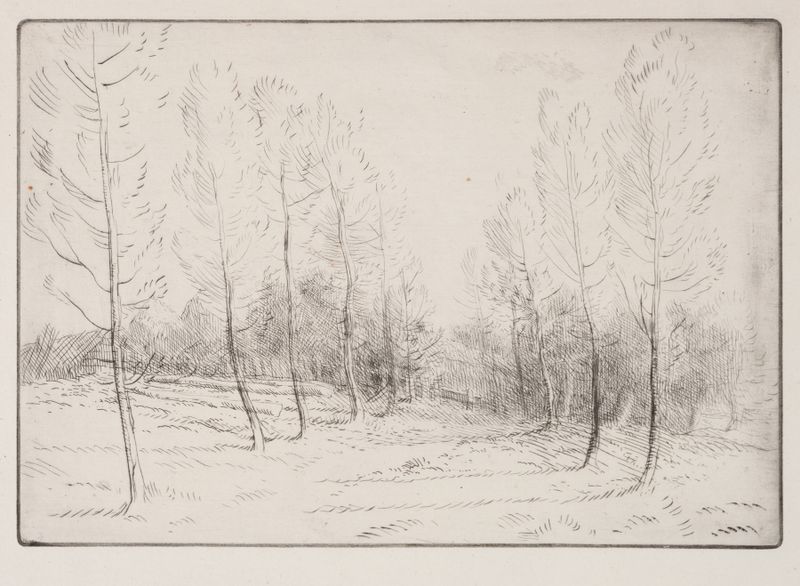
Avenue of Poplars
Alphonse Legros
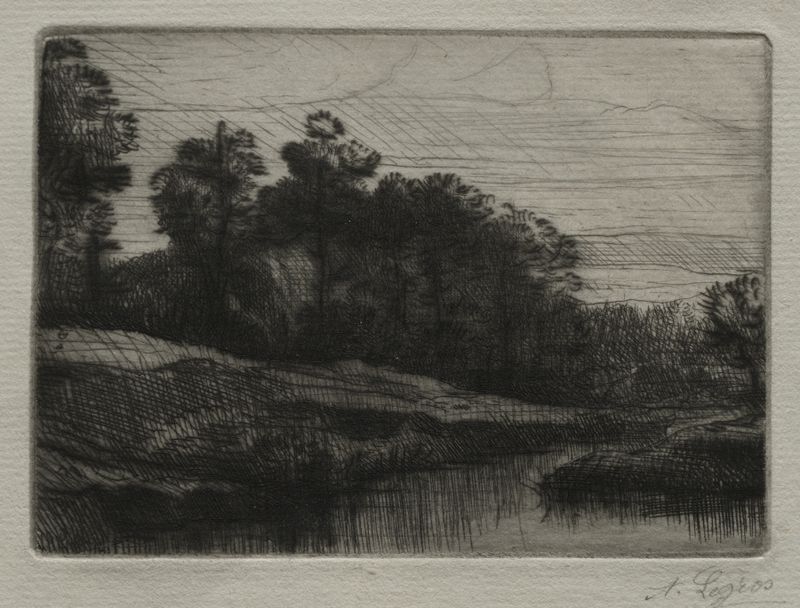
Evening
Alphonse Legros

The Fish in the Hoop Net
Alphonse Legros

The Little Beggar
Alphonse Legros
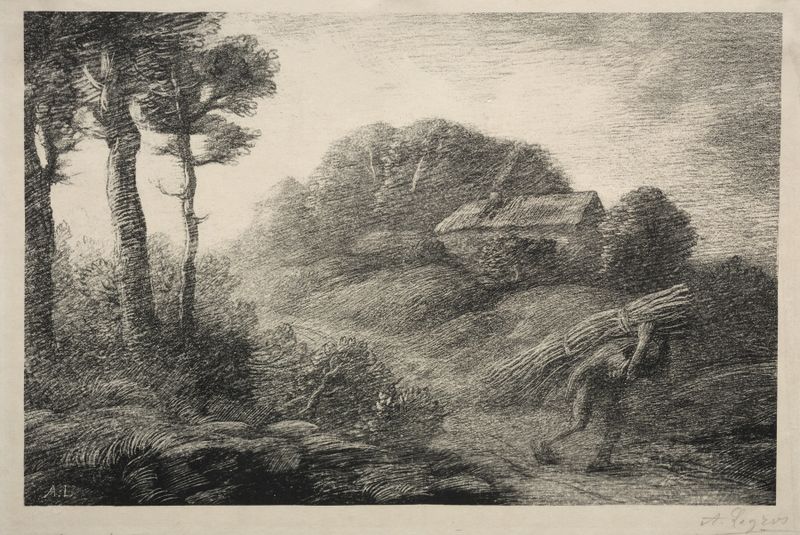
The Return of the Fagot Gatherer
Alphonse Legros

Storm
Alphonse Legros
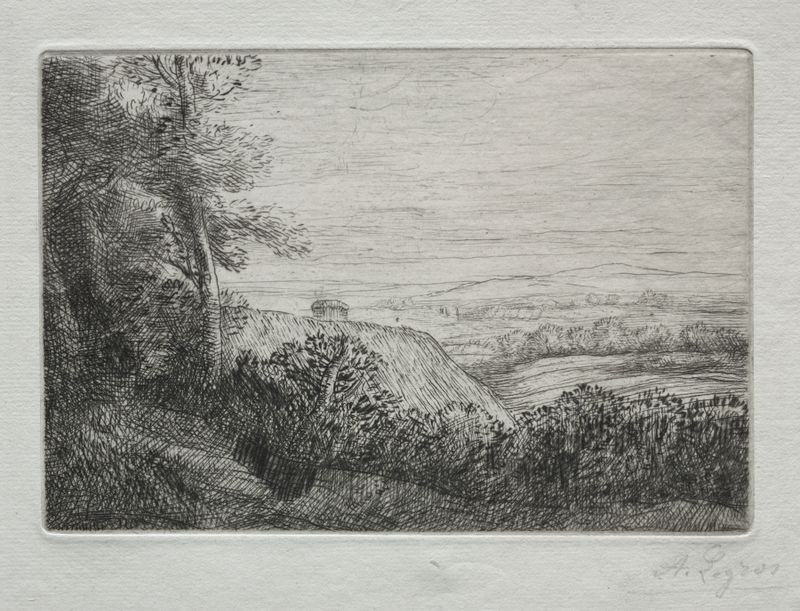
Les dernière Rayons de Soleil
Alphonse Legros
The Traveler Stretched out on the Grass
Alphonse Legros
Guard House
Alphonse Legros

Death of a Vagabond
Alphonse Legros





