
Shepherdess (Ralli) — History & Facts
What first draws the eye in Shepherdess (Ralli) is the direct, almost conspiratorial gaze of the young woman reclining in the grass. She props herself on one elbow, her face framed by a kerchief and traditional dress, her posture relaxed yet alert. The play of sunlight and shadow across her figure pulls her forward from the cool, dappled greens of the meadow, inviting the viewer into her world.
The field stretches away behind her, dotted with trees and distant cypresses, but all the warmth and focus gather around her presence, as if the landscape itself pauses to watch her rest. Painted between 1873 and 1909, this work belongs to a period when artists across Europe turned their attention to rural life, seeking authenticity and beauty in everyday moments. Theodoros Ralli was known for scenes that blended realism with a gentle, almost lyrical touch, often capturing the quiet dignity of his sitters. Works like this were prized by collectors who longed for an idealized vision of the countryside, even as industrialization transformed the world outside the frame.
History has kept few traces of this particular painting’s early journey, but its mood and setting speak to a moment when the rhythms of the land and the lives of its people still held the promise of serenity—an invitation to linger with the shepherdess a little longer.
More Artworks by Theodoros Ralli

The Sleeping Concubine
Theodoros Ralli
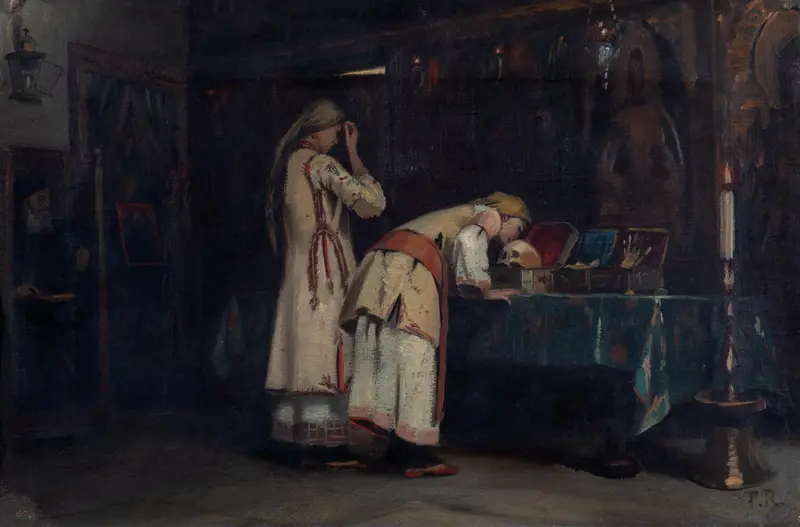
Holy Relics
Theodoros Ralli
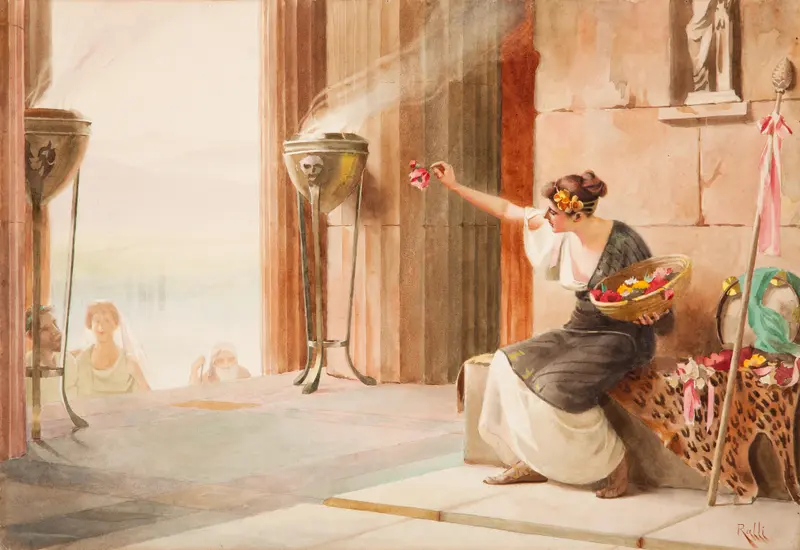
Flower Seller at the Parthenon
Theodoros Ralli
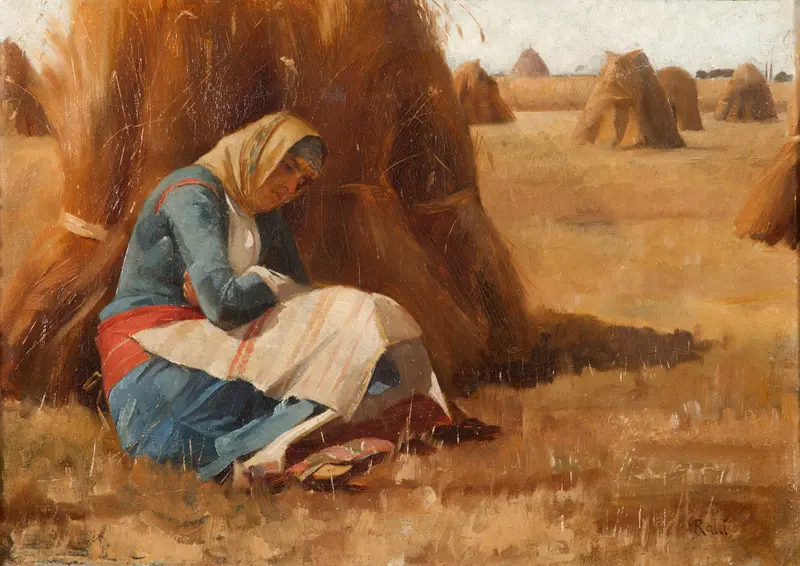
Resting by a Haystack
Theodoros Ralli
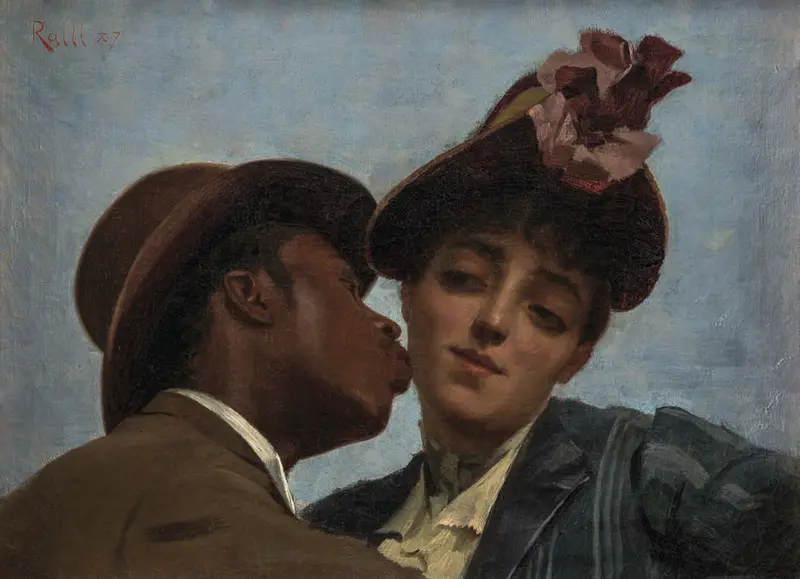
The Kiss (Ralli)
Theodoros Ralli
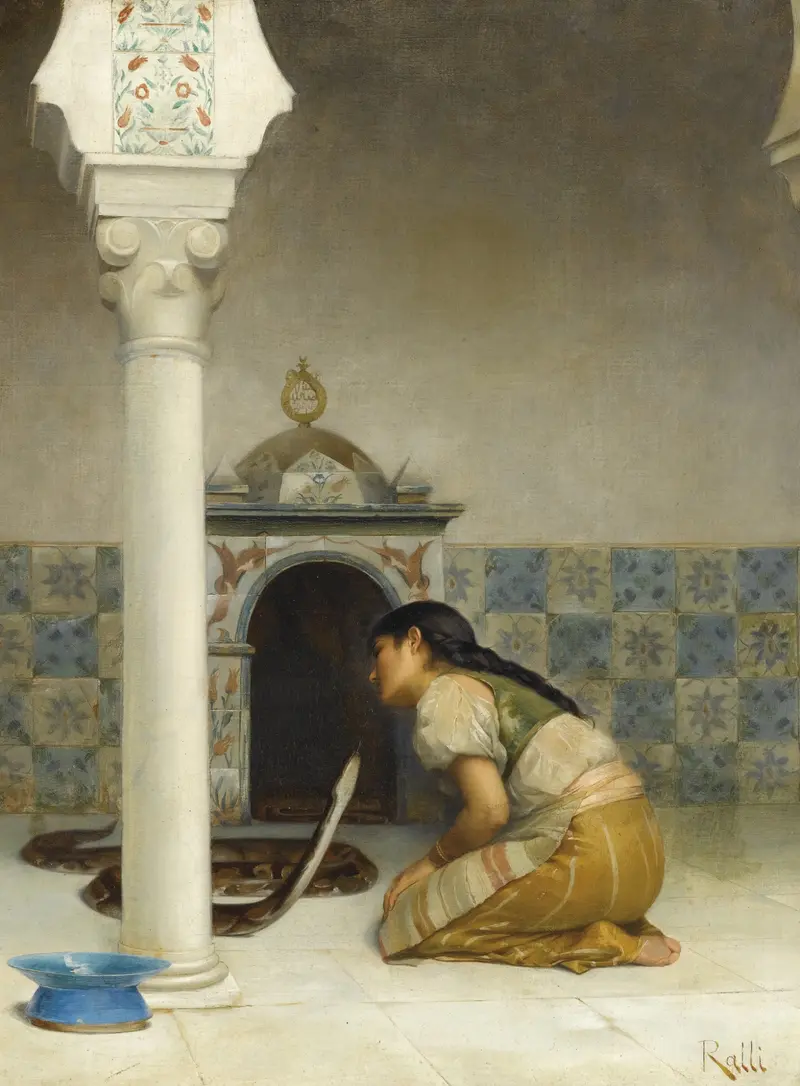
The Sacred Serpent
Theodoros Ralli
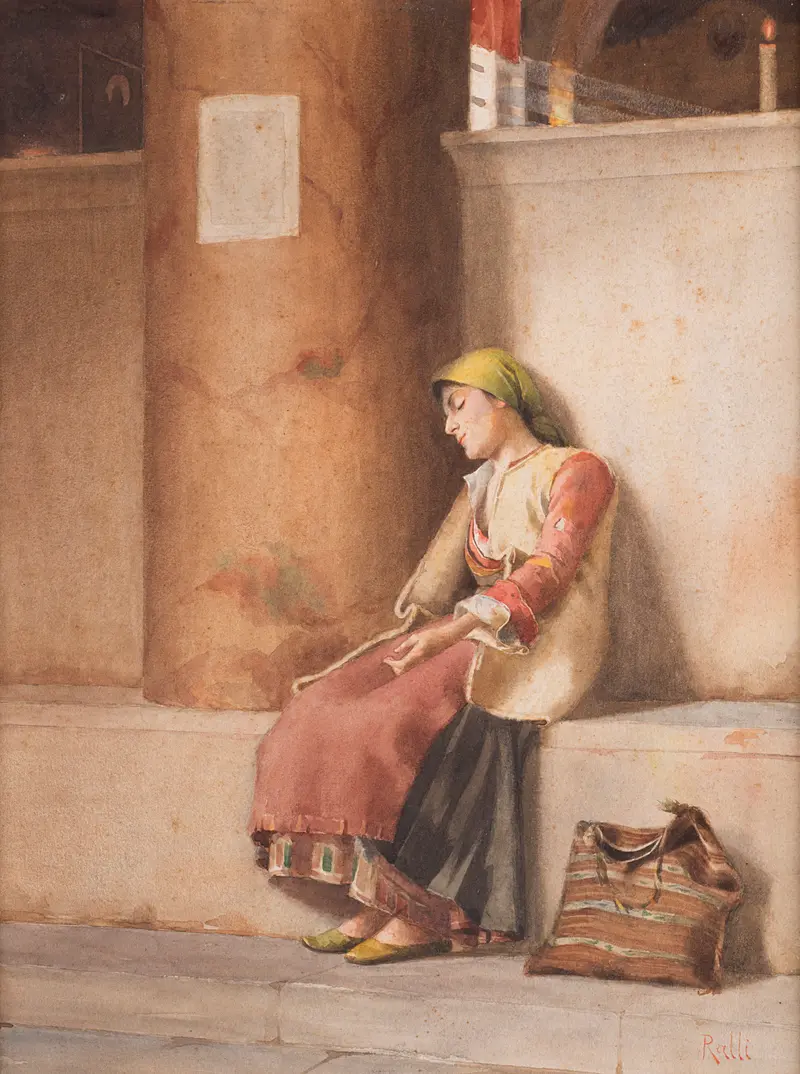
A Moment of Reflection
Theodoros Ralli
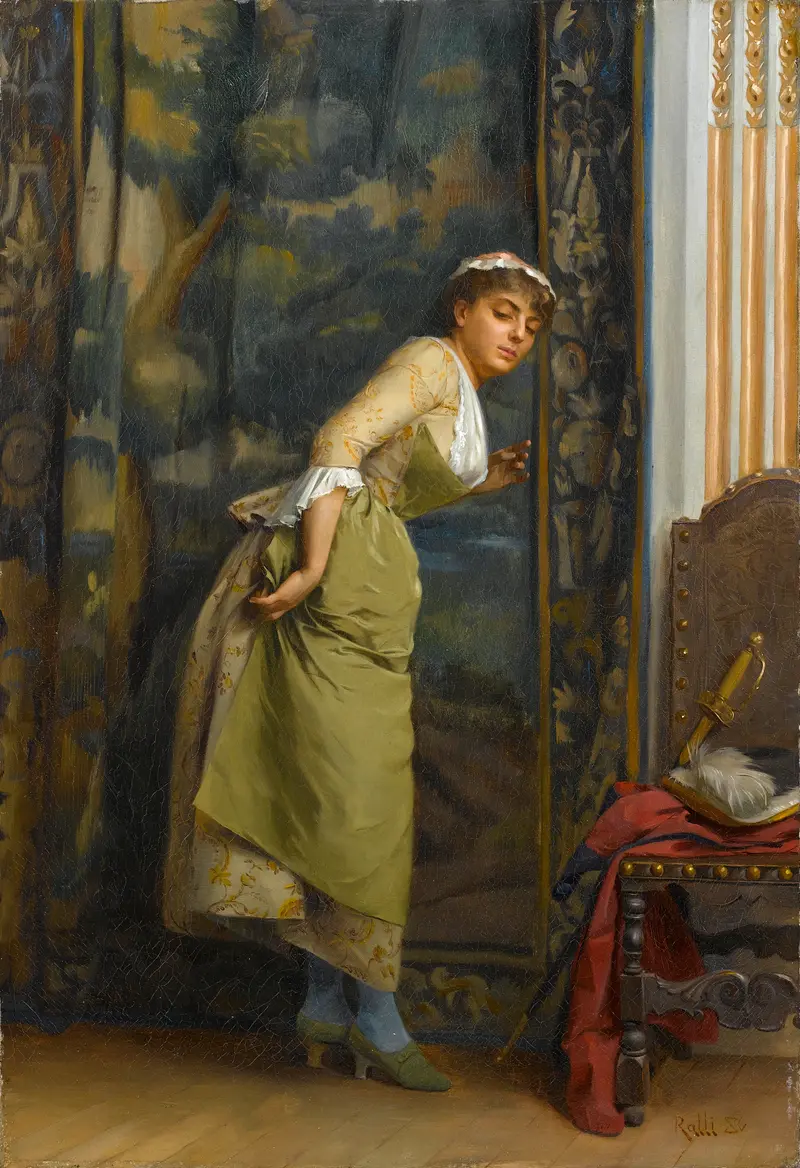
Eavesdropping (Ralli)
Theodoros Ralli
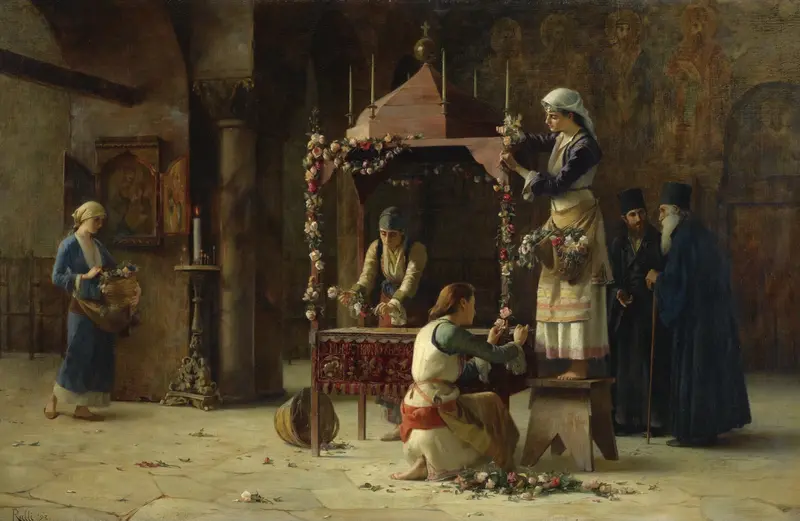
Holy Friday, Greece
Theodoros Ralli
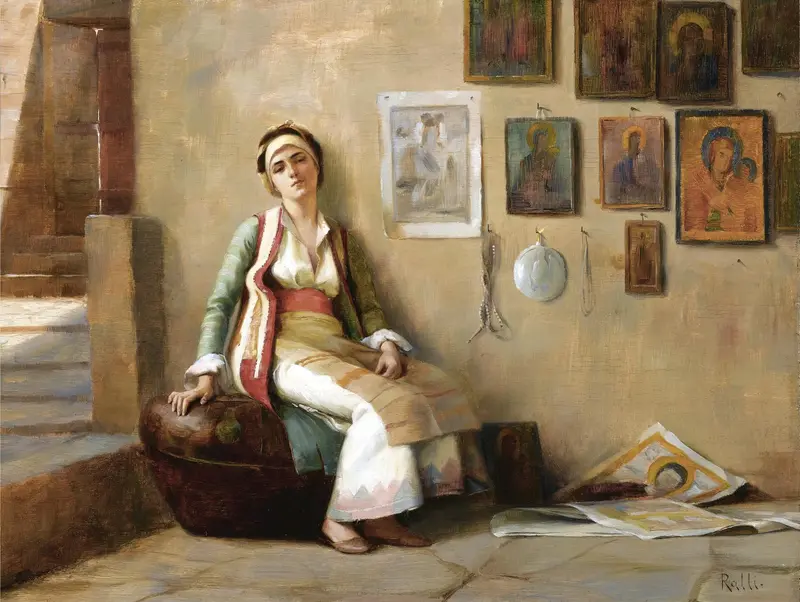
A Moment's Rest
Theodoros Ralli
More Genre Scene Art

Banquet of the Officers of the St George Civic Guard
Frans Hals

Rembrandt and Saskia in the Scene of the Prodigal Son
Rembrandt van Rijn

Bal du moulin de la Galette
Pierre-Auguste Renoir

Quadrille at the Moulin Rouge
Henri de Toulouse-Lautrec

A Burial at Ornans
Gustave Courbet

When Will You Marry?
Paul Gauguin