
Sketch Portrait of Walter Sickert — History & Facts
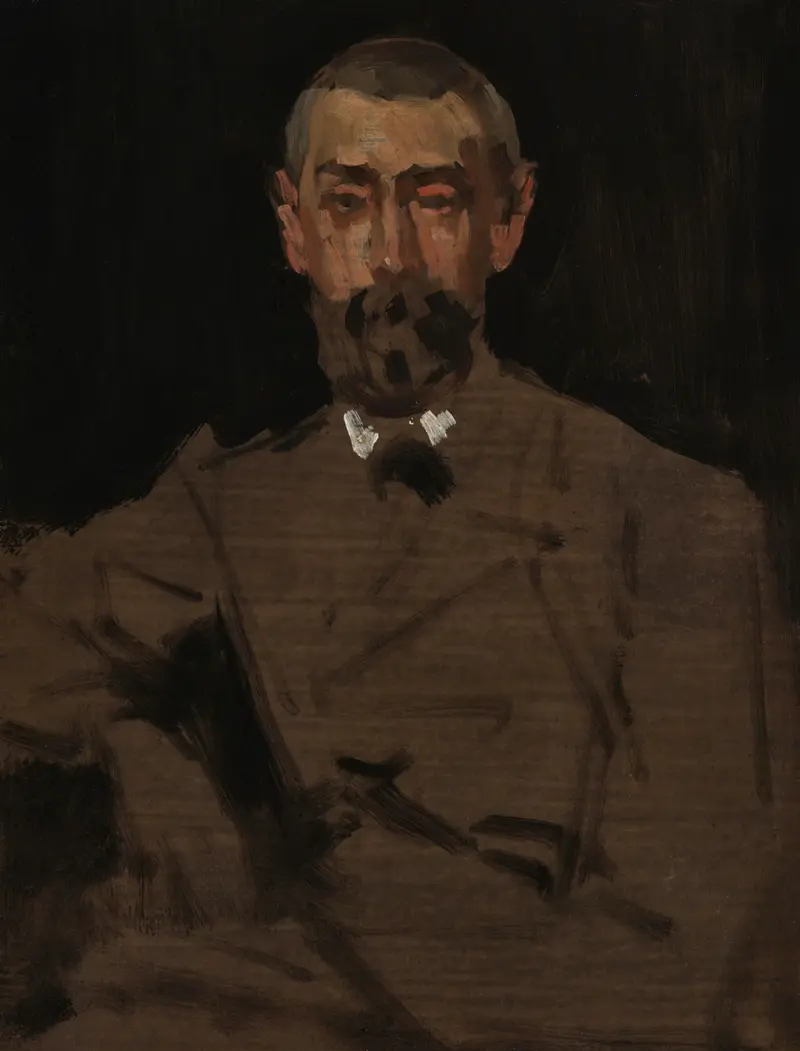
A face emerges from the gloom, half-formed and restless, as if the sitter might vanish if you blink. In Sketch Portrait of Walter Sickert, the brushwork is swift and searching, the features only just resolved from the brown shadows that pool around the eyes and jaw. The sitter’s gaze is direct, but the mouth and cheeks dissolve into the background, giving the impression of a thought caught mid-formation.
The roughness of the strokes, especially around the collar and hair, suggests a moment of intense observation rather than a finished likeness. Light is used sparingly, breaking across the brow and nose, drawing the viewer’s eye to the most alive parts of the face, while everything else recedes into uncertainty. Created between 1885 and 1887, this portrait belongs to a period when artists like James McNeill Whistler were pushing the boundaries of what a portrait could reveal—and conceal. In the late nineteenth century, portrait sketches were often made as studies or private explorations, not always intended for public display.
The unfinished quality here is not a flaw but a window into the experimental spirit of the era, when artists and sitters alike were questioning old certainties about identity and representation. History has kept few traces of this particular work, now recorded in the Whistler collection, but its raw immediacy invites us to linger, searching for the person behind the paint.
More Artworks by James McNeill Whistler
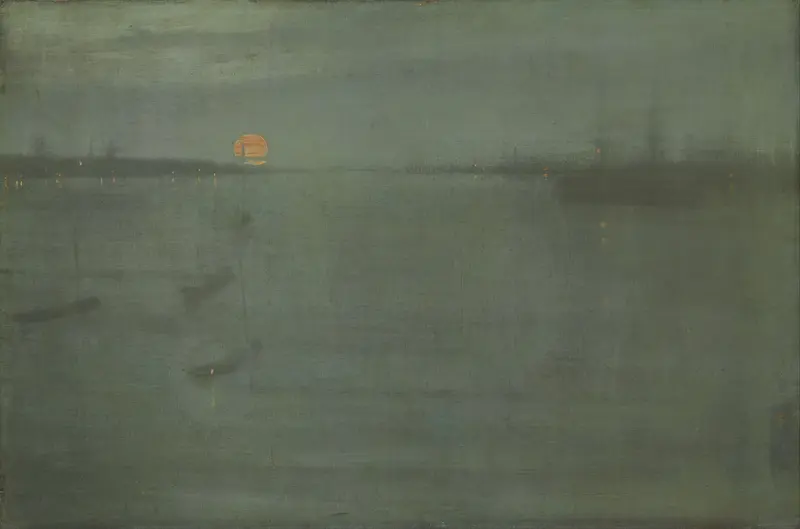
Nocturne: Blue and Gold—Southampton Water
James McNeill Whistler
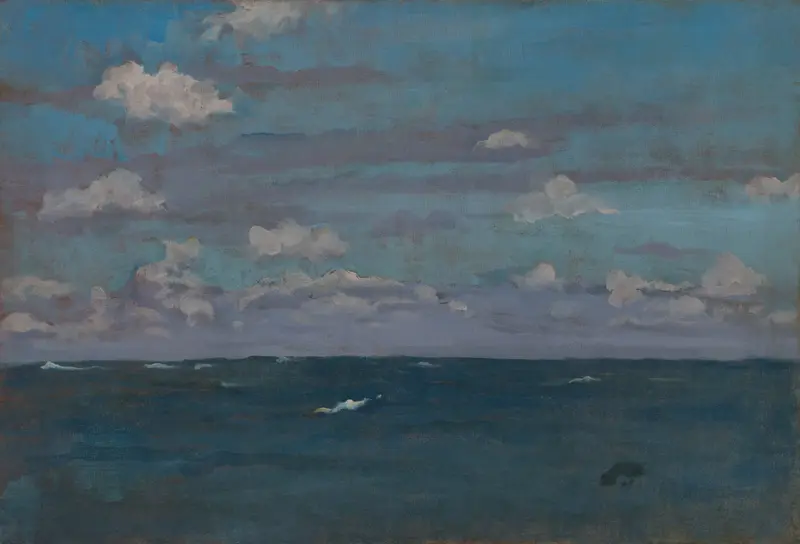
Violet and Silver—The Deep Sea
James McNeill Whistler
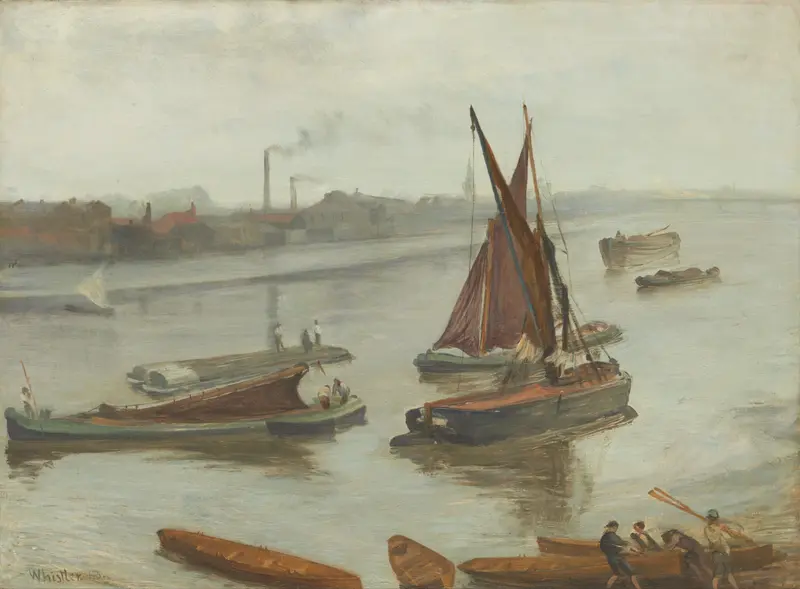
Grey and Silver: Old Battersea Reach
James McNeill Whistler
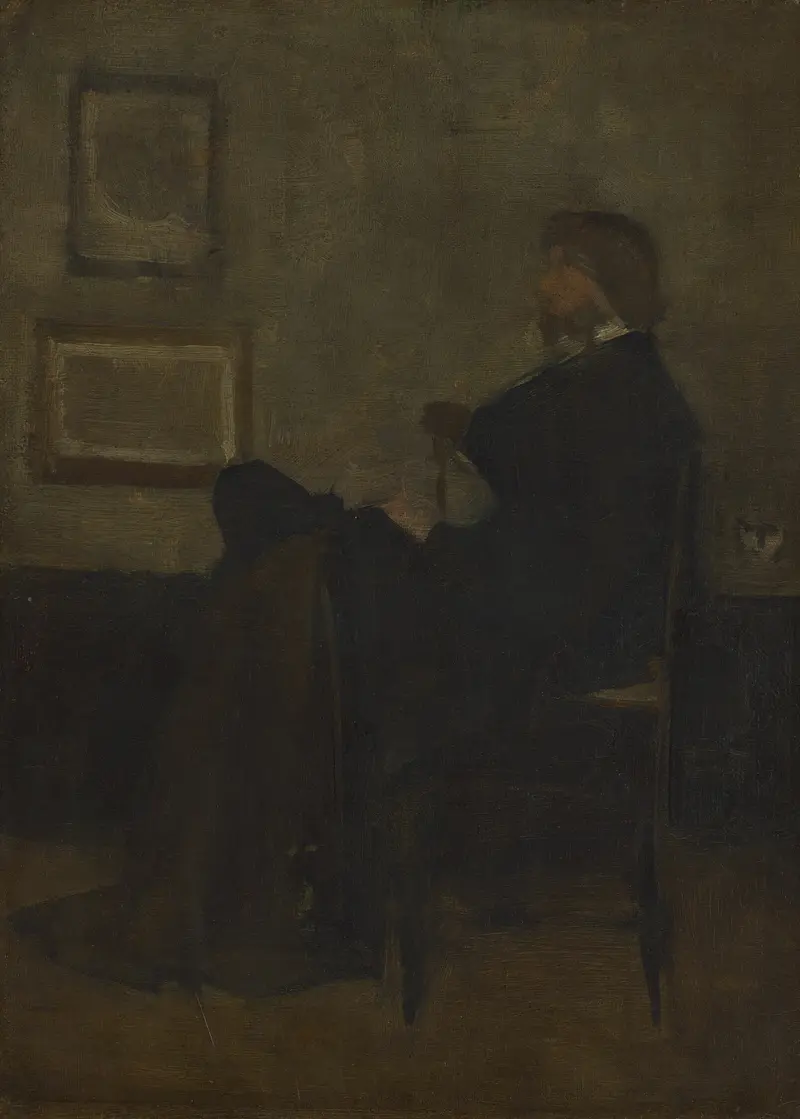
Study for "Arrangement in Grey and Black, No. 2: Portrait of Thomas Carlyle"
James McNeill Whistler
Portrait of M. R. Elden
James McNeill Whistler
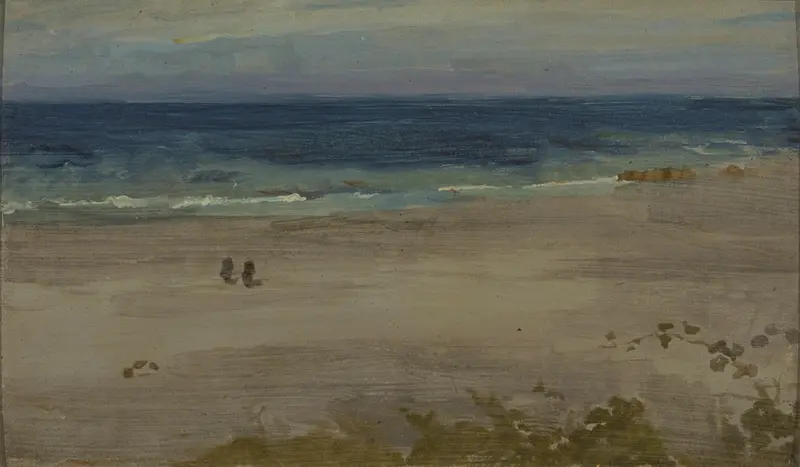
The Blue Sea
James McNeill Whistler
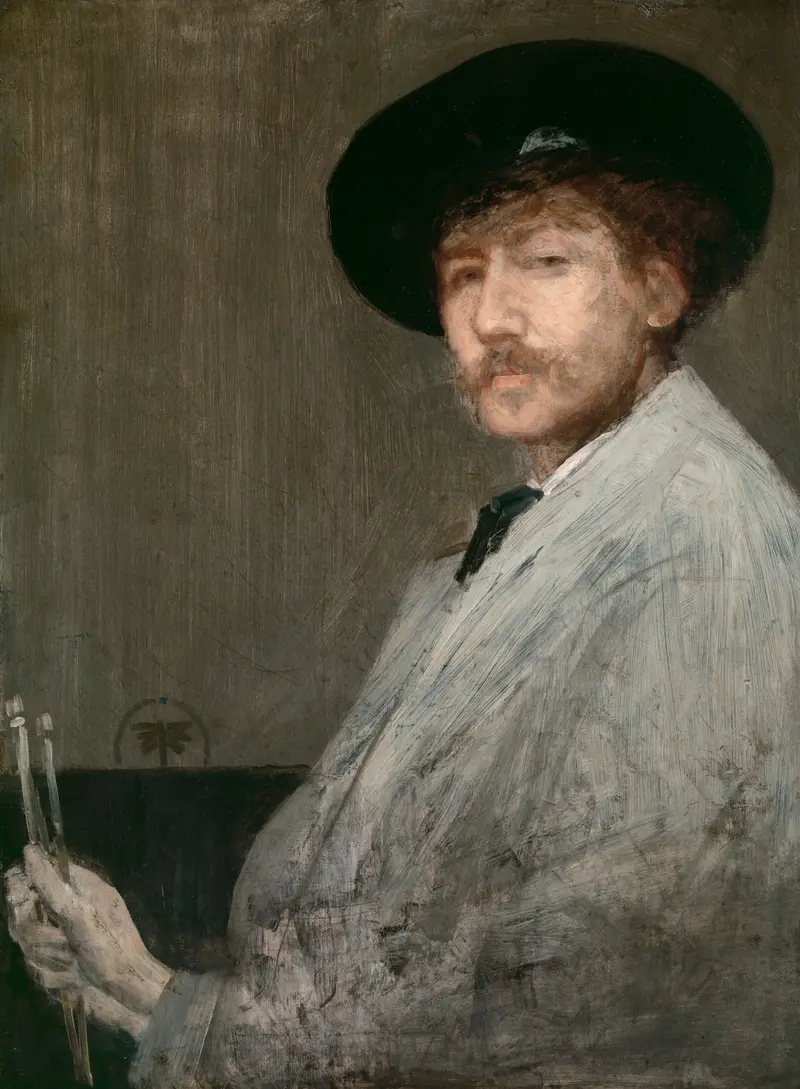
Arrangement in Gray: Portrait of the Painter
James McNeill Whistler
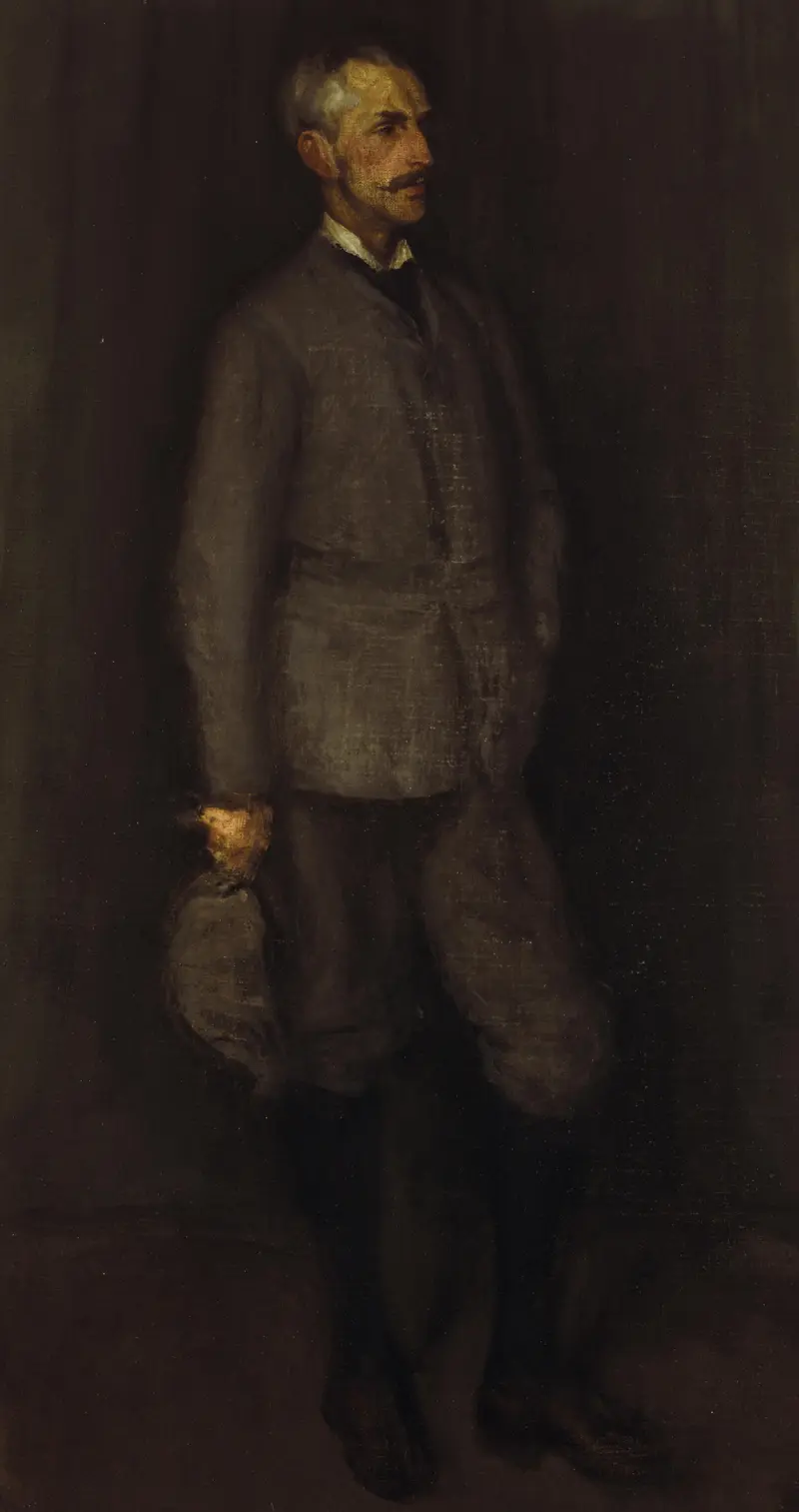
Arrangement in Grey and Green. Portrait of John James Cowan
James McNeill Whistler
Valparaiso Harbor
James McNeill Whistler
Charles Lang Freer
James McNeill Whistler





