
Slaughtered Ox — History & Facts
A single carcass dominates the dim interior, its pale flesh catching the only true light in the room. The artist has chosen not to shy away from the raw reality of the butcher’s trade: ribs, sinew, and fat are rendered with almost clinical precision, yet the effect is strangely hypnotic. The eye is drawn first to the ox itself, suspended and monumental, then to the scattered details that anchor the scene in daily labor—a basket, a cleaver, and the dark heap of horns and hides in the lower right.
The palette is earthy, heavy with ochres and browns, which makes the exposed meat almost glow. There is no drama here, only the quiet, relentless business of life and death. Painted in 1639, Slaughtered Ox by Adriaen van Ostade belongs to a world where such images were both a record and a meditation. In the Dutch Republic, scenes of butchers’ stalls and kitchens spoke to a society fascinated by the cycles of sustenance and the dignity of honest work.
Works like this—now in the Yelkrokoyade collection—were not grand commissions, but objects for private reflection or perhaps the pride of a prosperous tradesman. History has kept few traces of this particular painting’s journey, but its unflinching gaze invites us to look again, not just at the ox, but at the world of labor and necessity that shaped the Dutch Golden Age.
More Artworks by Adriaen van Ostade

Dans in de herberg
Adriaen van Ostade
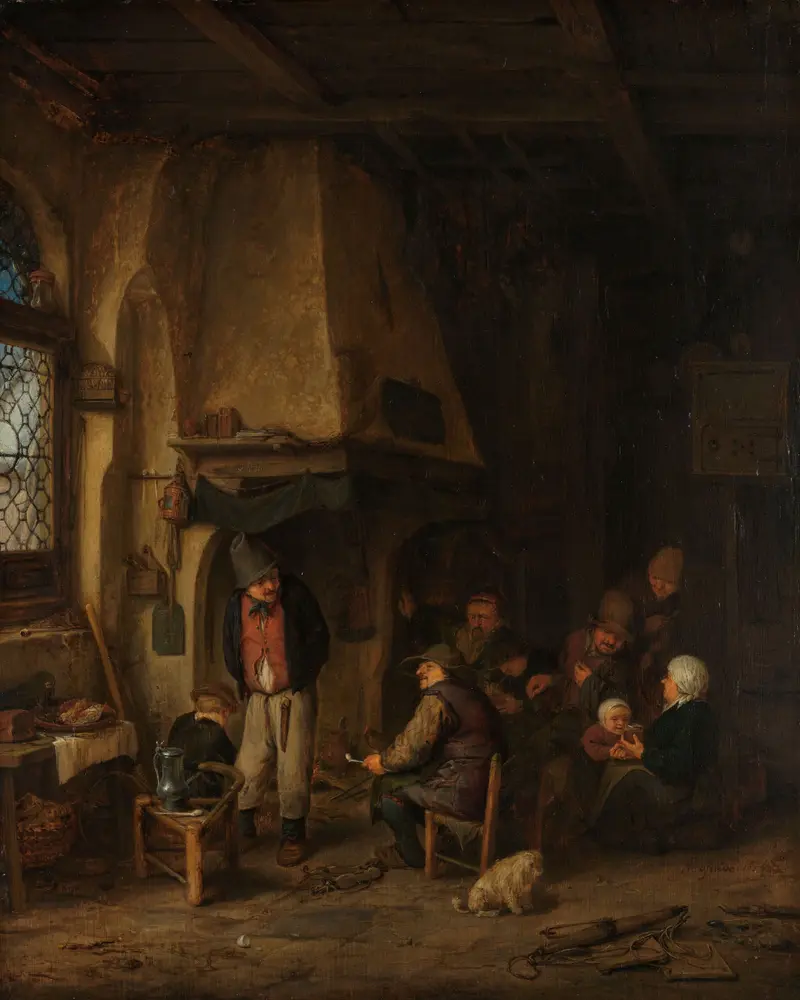
‘The Skaters’: Peasants in an Interior
Adriaen van Ostade
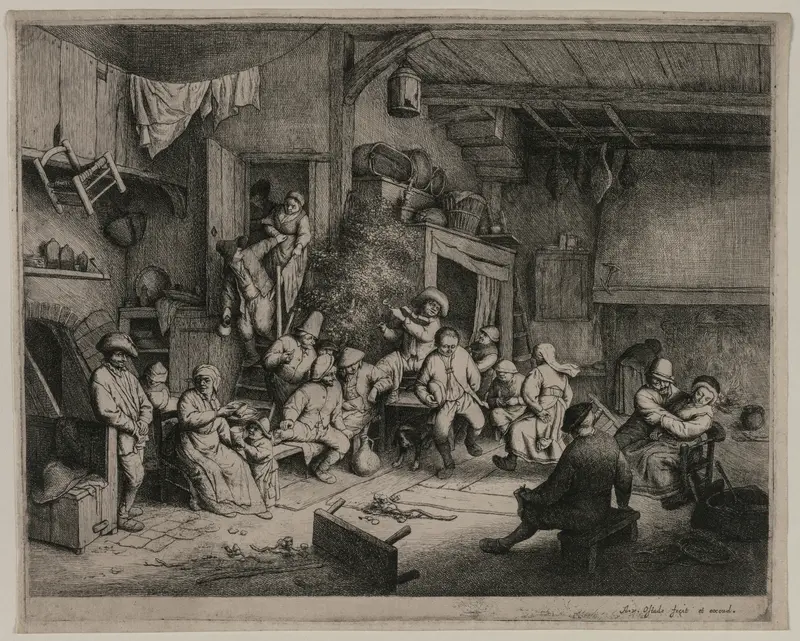
Dance at the Inn
Adriaen van Ostade
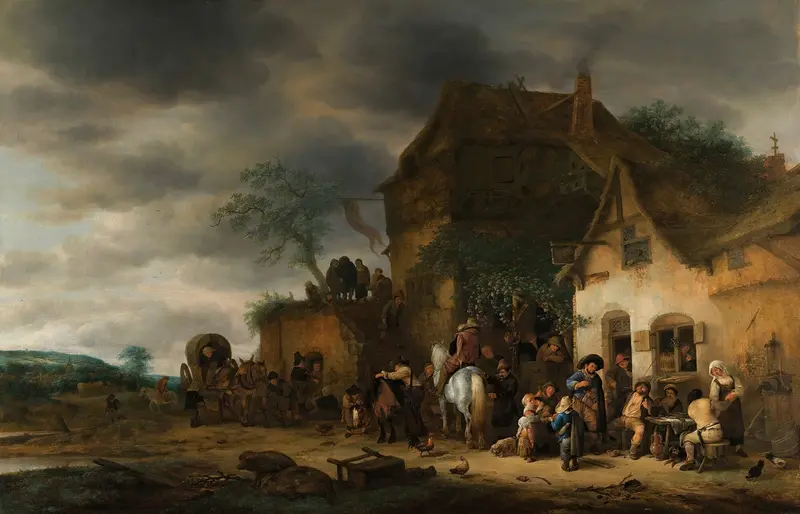
Travellers Halted At A Country Inn
Adriaen van Ostade
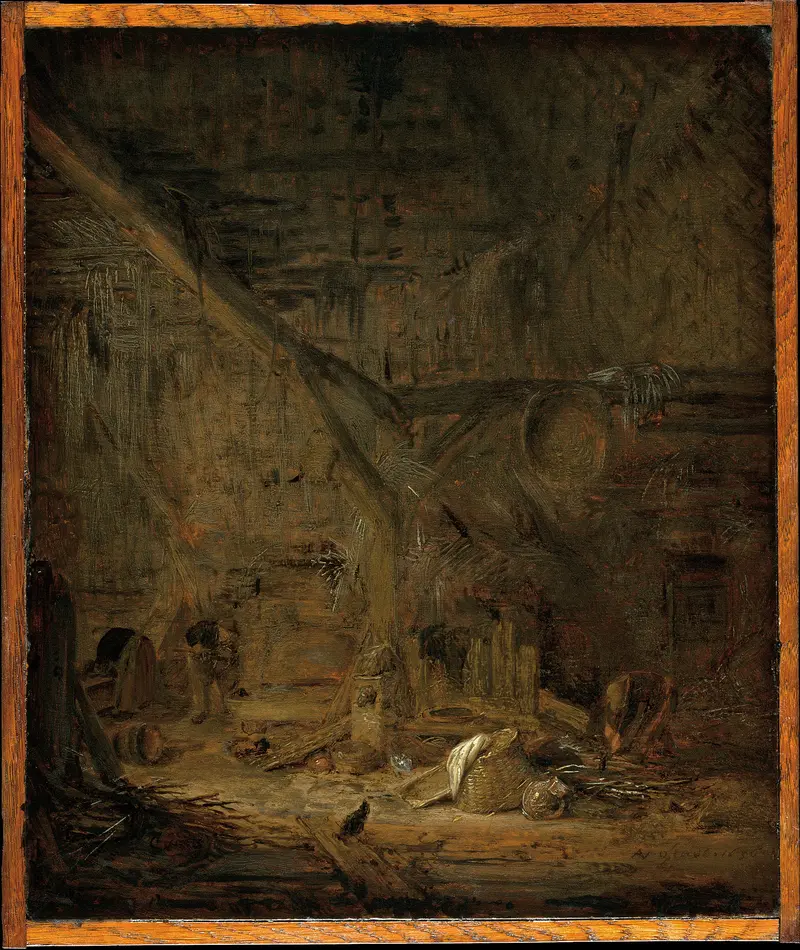
Interior of a Barn
Adriaen van Ostade
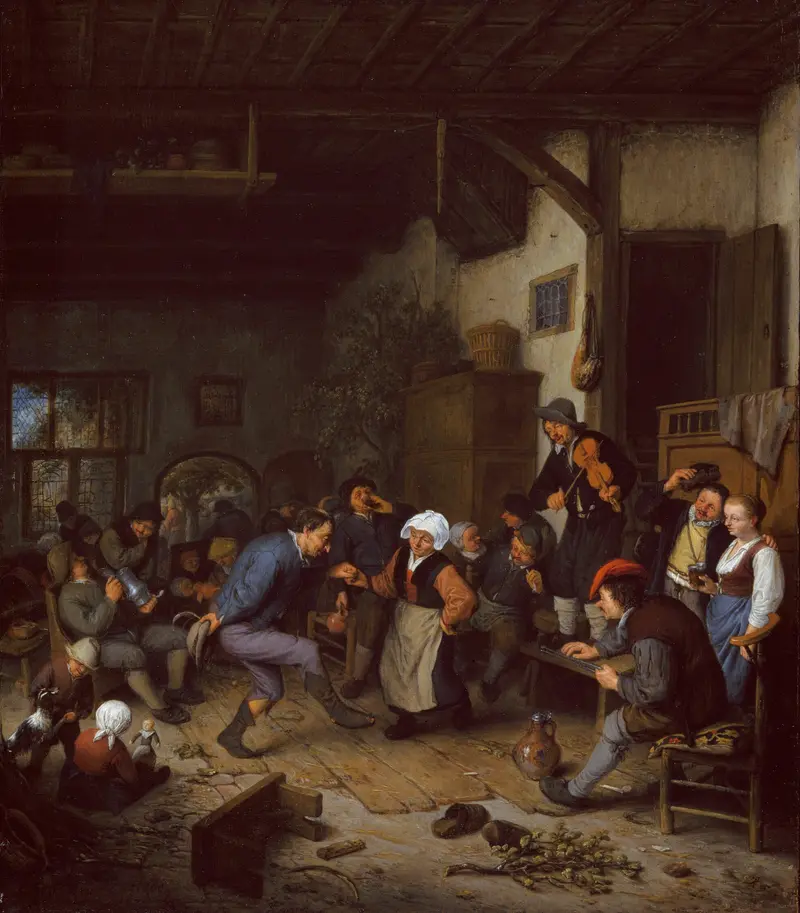
Merrymakers in an Inn
Adriaen van Ostade
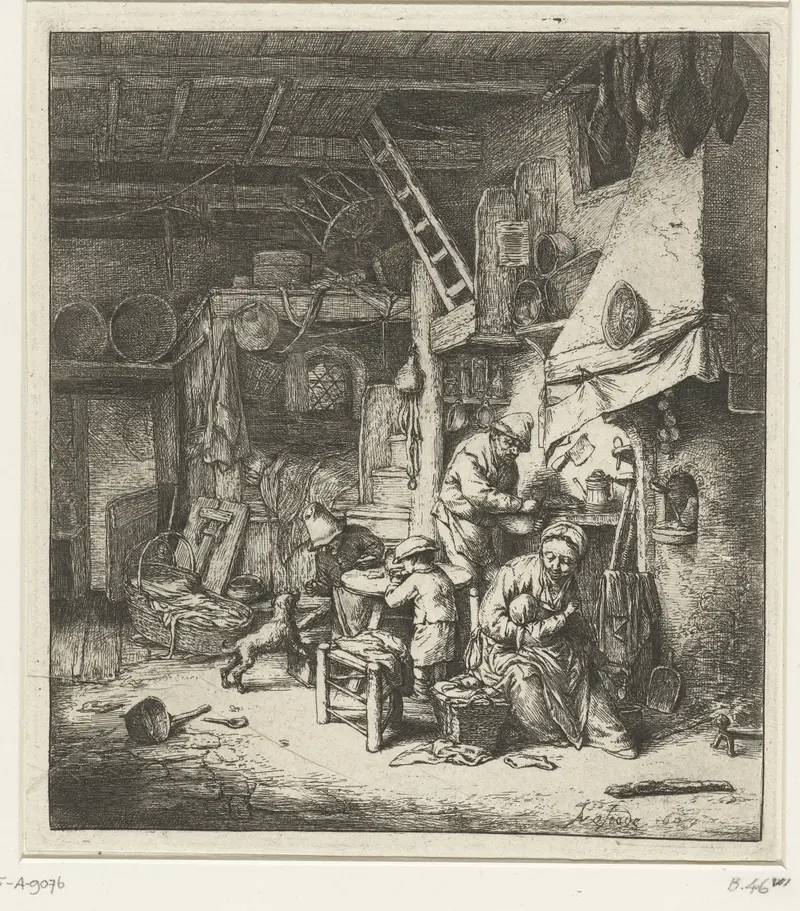
Boerengezin in interieur
Adriaen van Ostade
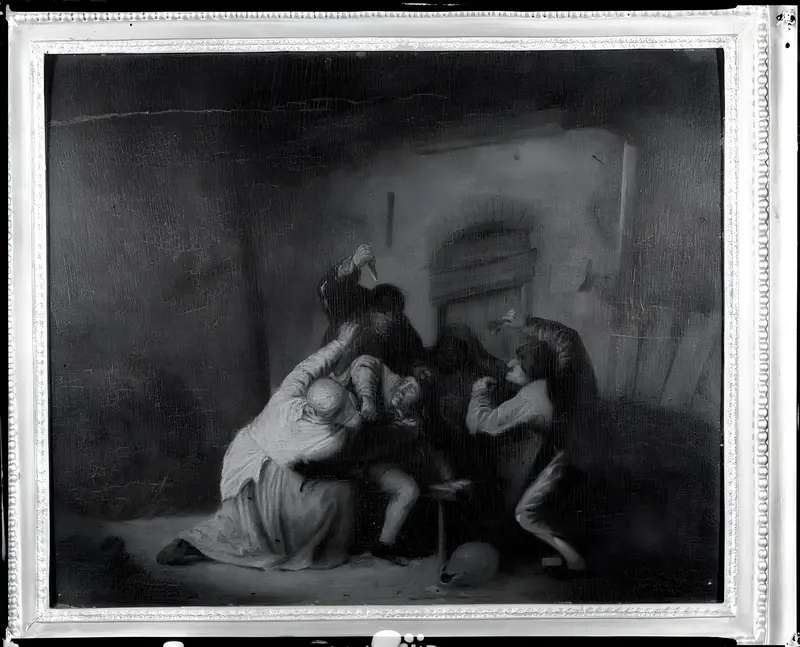
Peasants Brawling in a Tavern
Adriaen van Ostade
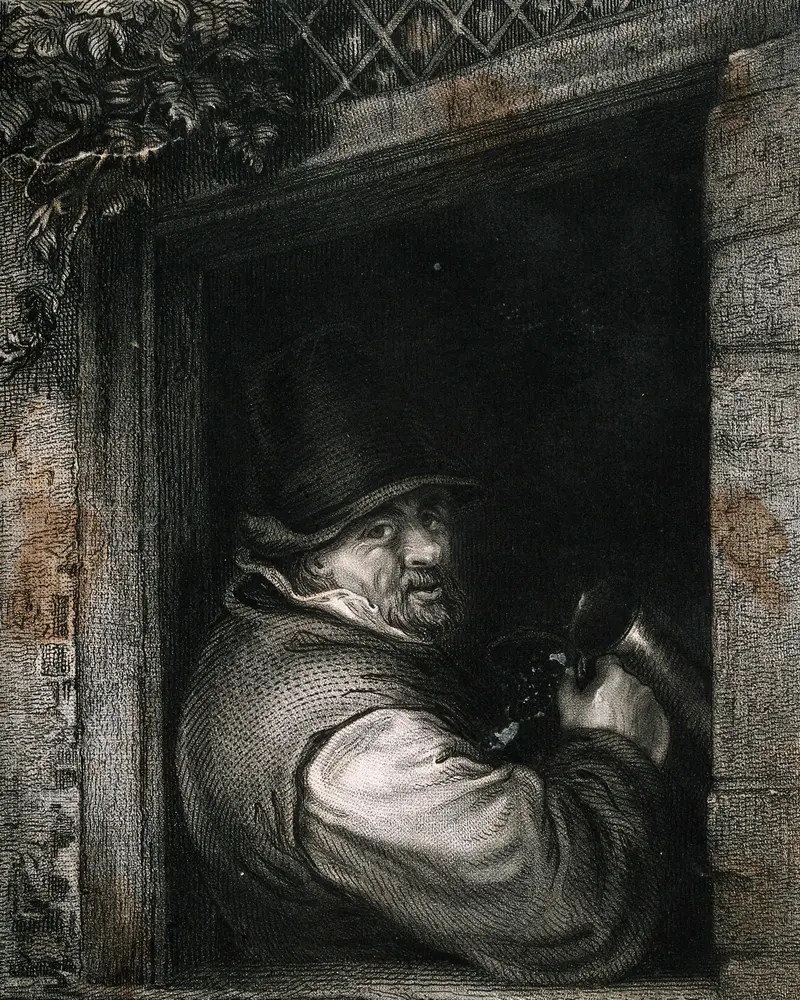
Man with a Tankard at a Window
Adriaen van Ostade
Dans in de herberg
Adriaen van Ostade
More Genre Scene Art

Banquet of the Officers of the St George Civic Guard
Frans Hals

Rembrandt and Saskia in the Scene of the Prodigal Son
Rembrandt van Rijn

Bal du moulin de la Galette
Pierre-Auguste Renoir

Quadrille at the Moulin Rouge
Henri de Toulouse-Lautrec

A Burial at Ornans
Gustave Courbet

When Will You Marry?
Paul Gauguin