
Slaughtered Pig in a Barn — History & Facts
What first seizes the eye in Slaughtered Pig in a Barn is not the bustle of human life, but the stark, almost theatrical presence of the animal’s carcass, suspended and splayed at the heart of the painting. The pale flesh, streaked with red, catches the only real shaft of light in the dim barn, making it both a spectacle and a reminder of rural necessity. Around this central figure, the world continues: a woman bends to her work, a child hovers nearby, and chickens peck at the straw-littered floor, each absorbed in their own small drama.
The barn’s heavy beams and rough-hewn shadows press down from above, but the open door at the back hints at a world beyond, where the cycle of work and life continues. Painted in 1643, this work belongs to the world of seventeenth-century Dutch genre painting, where artists like Adriaen van Ostade found poetry in the everyday. Scenes of rural butchery were not only records of food preparation but also meditations on mortality, labor, and the rhythms of country life. Such paintings were prized by the rising Dutch middle class, who hung them in their homes as both reminders of their roots and celebrations of honest toil.
Today, Slaughtered Pig in a Barn resides in the Städel Museum, a quiet testament to a time when even the humblest chores could become the stuff of art—inviting us to look closer, and to find meaning in the ordinary.
More Artworks by Adriaen van Ostade

Dans in de herberg
Adriaen van Ostade
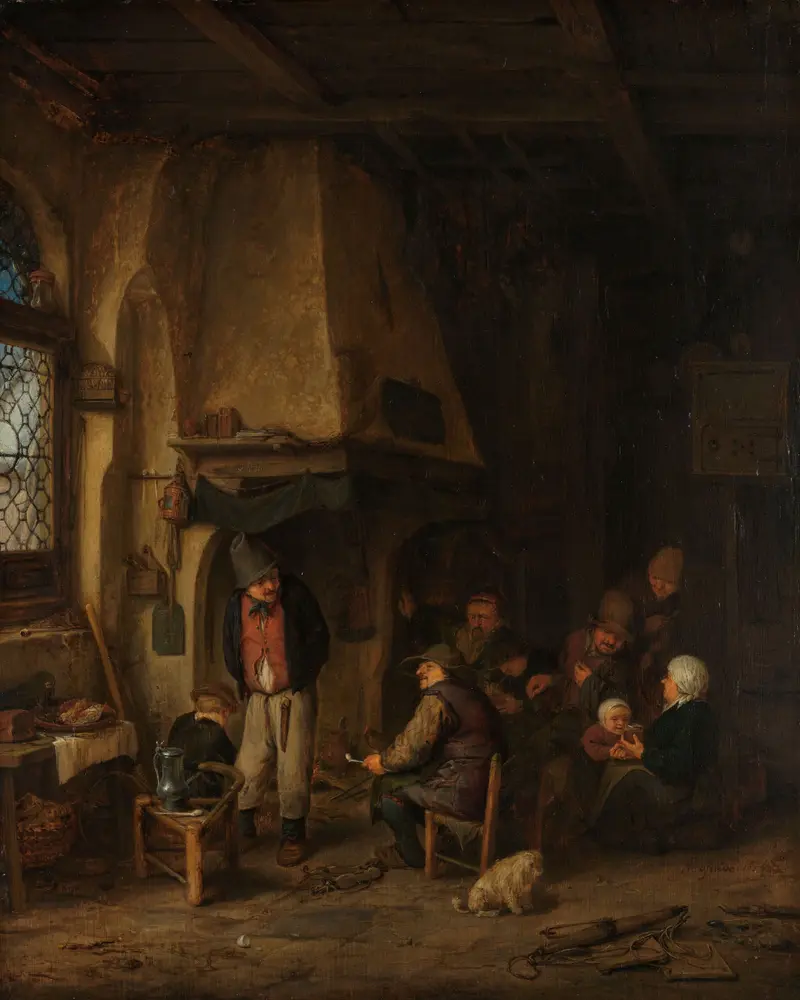
‘The Skaters’: Peasants in an Interior
Adriaen van Ostade
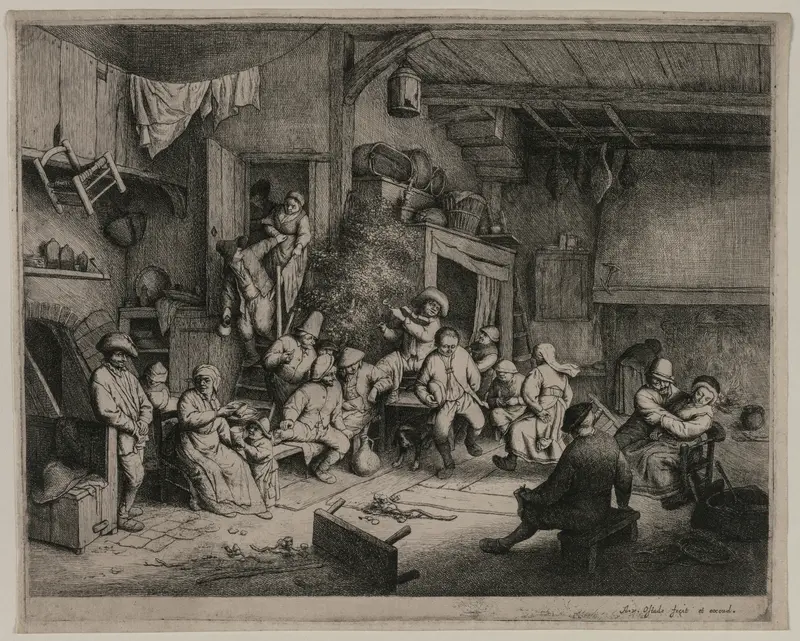
Dance at the Inn
Adriaen van Ostade
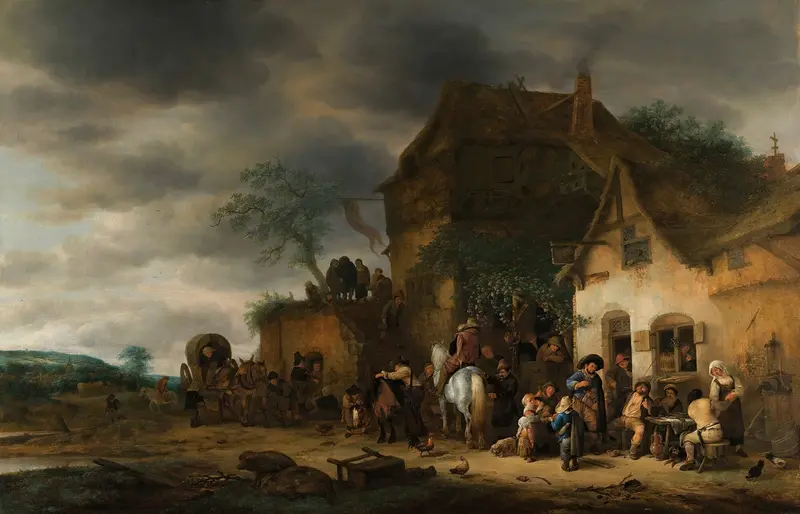
Travellers Halted At A Country Inn
Adriaen van Ostade
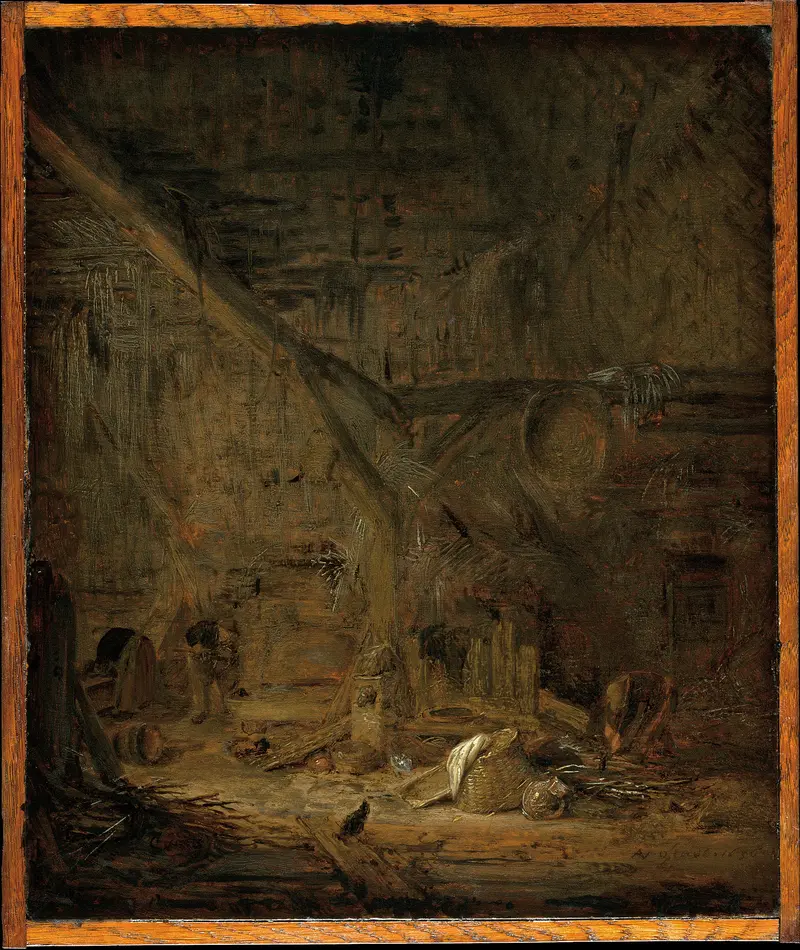
Interior of a Barn
Adriaen van Ostade
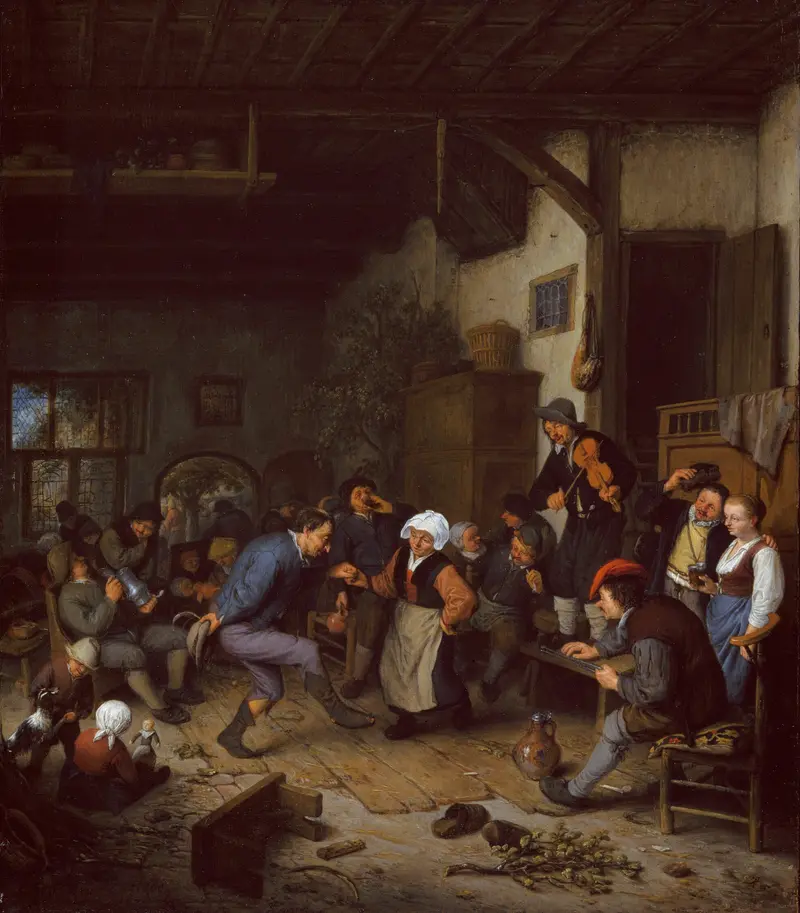
Merrymakers in an Inn
Adriaen van Ostade
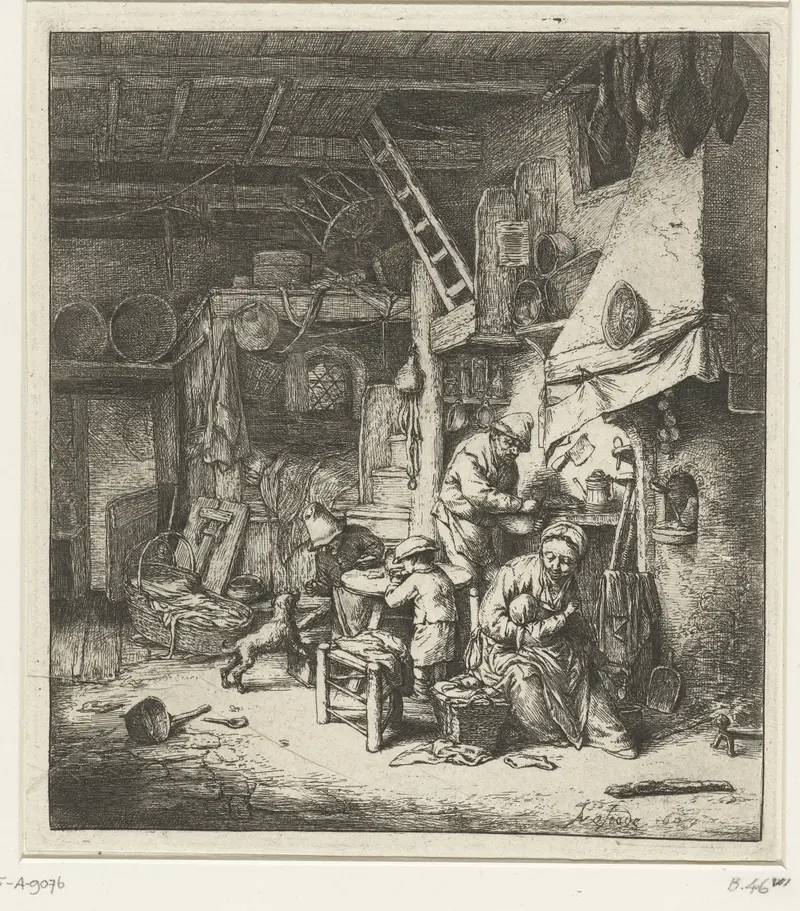
Boerengezin in interieur
Adriaen van Ostade
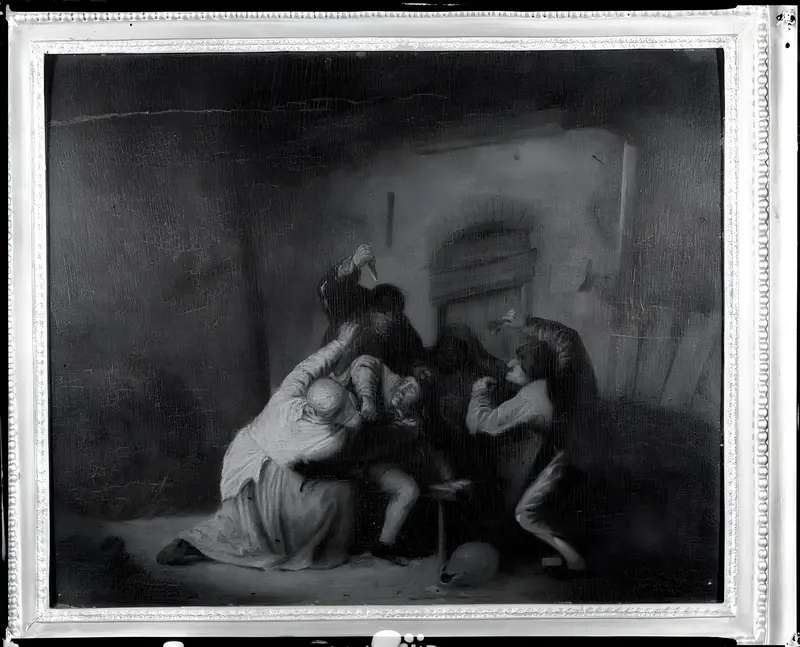
Peasants Brawling in a Tavern
Adriaen van Ostade
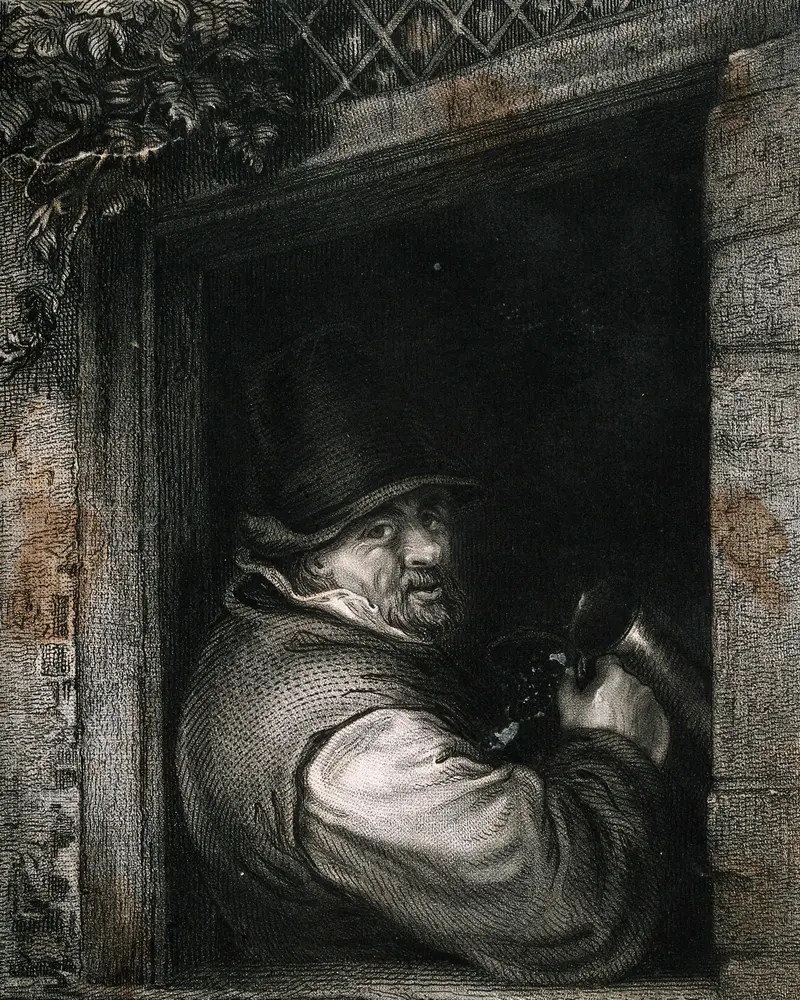
Man with a Tankard at a Window
Adriaen van Ostade
Dans in de herberg
Adriaen van Ostade
More Genre Scene Art

Banquet of the Officers of the St George Civic Guard
Frans Hals

Rembrandt and Saskia in the Scene of the Prodigal Son
Rembrandt van Rijn

Bal du moulin de la Galette
Pierre-Auguste Renoir

Quadrille at the Moulin Rouge
Henri de Toulouse-Lautrec

A Burial at Ornans
Gustave Courbet

When Will You Marry?
Paul Gauguin