
Smokers — History & Facts
What draws the eye first in Smokers by Adriaen van Ostade is the sly, conspiratorial energy between the three men, each caught in a moment of shared leisure and earthy amusement. The dim, golden light pools around their faces and hands, picking out the glint of a glass, the pale curl of a clay pipe, the rough textures of wool and linen. One man leans back, his cheeks flushed, holding a drink and meeting the gaze of his companions with a half-smile; another bends over his pipe, lips pursed, eyes narrowed in concentration; the third stands behind, knife in hand, mid-gesture as if about to carve or offer something, his expression animated and knowing.
The cluttered tabletop, the bread and meat in the background, and the battered furniture all speak of a world where pleasure is simple and communal, and where the painter’s touch lingers on the ordinary details that make the scene feel lived-in. Works like this, rooted in the world of seventeenth-century Dutch and Flemish genre painting, were prized for their ability to capture everyday life with humor and sharp observation. Adriaen van Ostade was celebrated for his scenes of tavern interiors and peasant gatherings, where the rituals of drinking, smoking, and storytelling became a theater of character and class. Paintings of this kind were collected by prosperous townspeople who saw in them both a reflection of their own world and a playful caricature of it.
Today, Smokers resides in the National Museum in Warsaw—its precise origins and journey mostly lost to time, as is often the case with such intimate, domestic scenes. Yet the painting’s warmth and wit invite us to linger, to imagine the stories behind these faces, and to notice the small, telling gestures that still speak across centuries.
More Artworks by Adriaen van Ostade

Dans in de herberg
Adriaen van Ostade
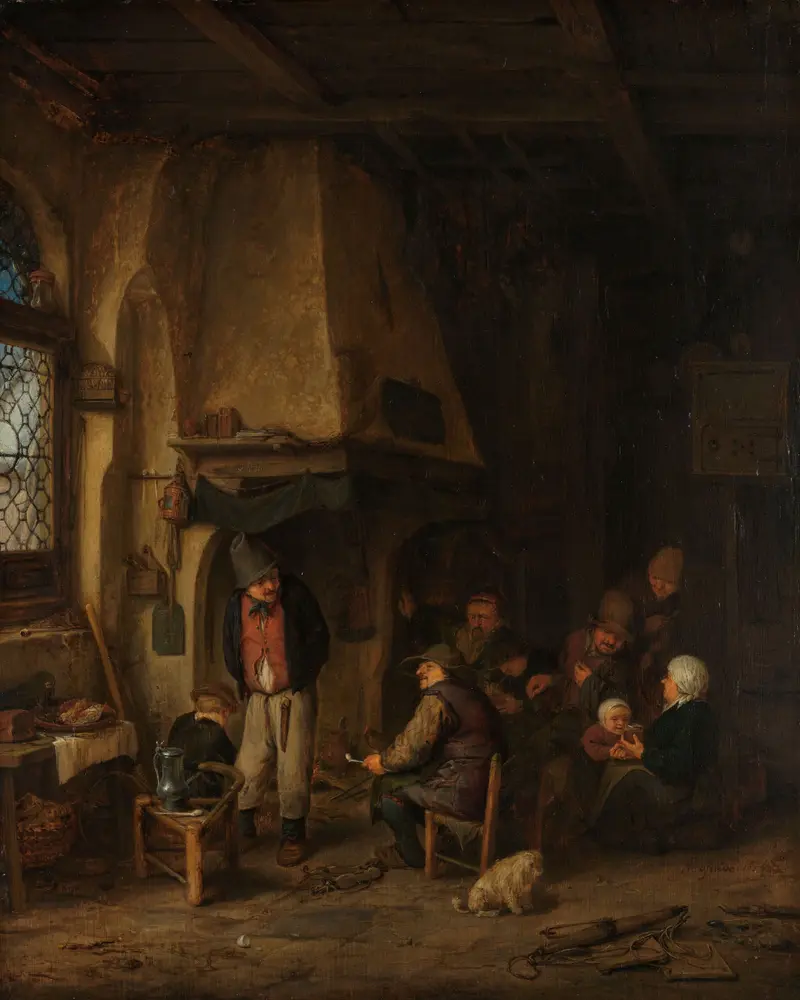
‘The Skaters’: Peasants in an Interior
Adriaen van Ostade
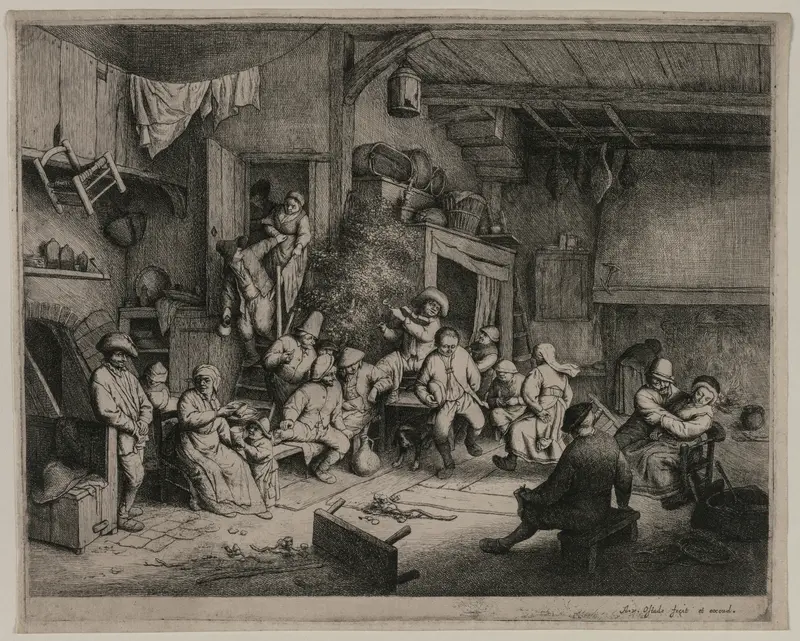
Dance at the Inn
Adriaen van Ostade
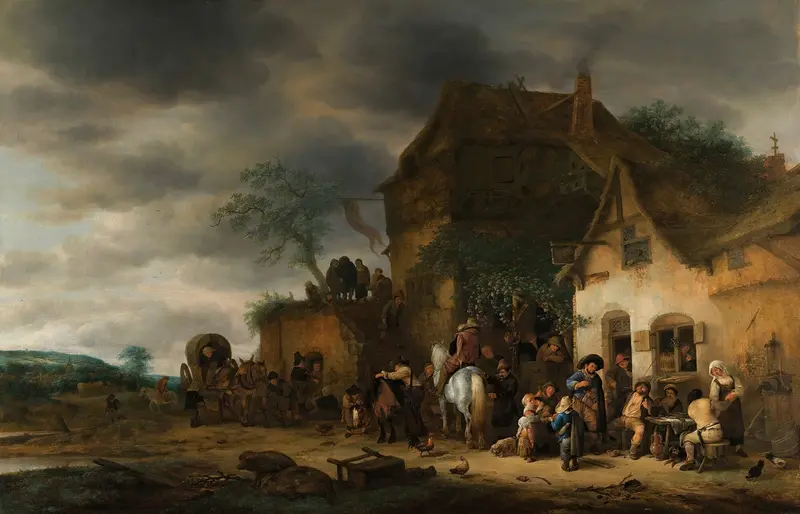
Travellers Halted At A Country Inn
Adriaen van Ostade
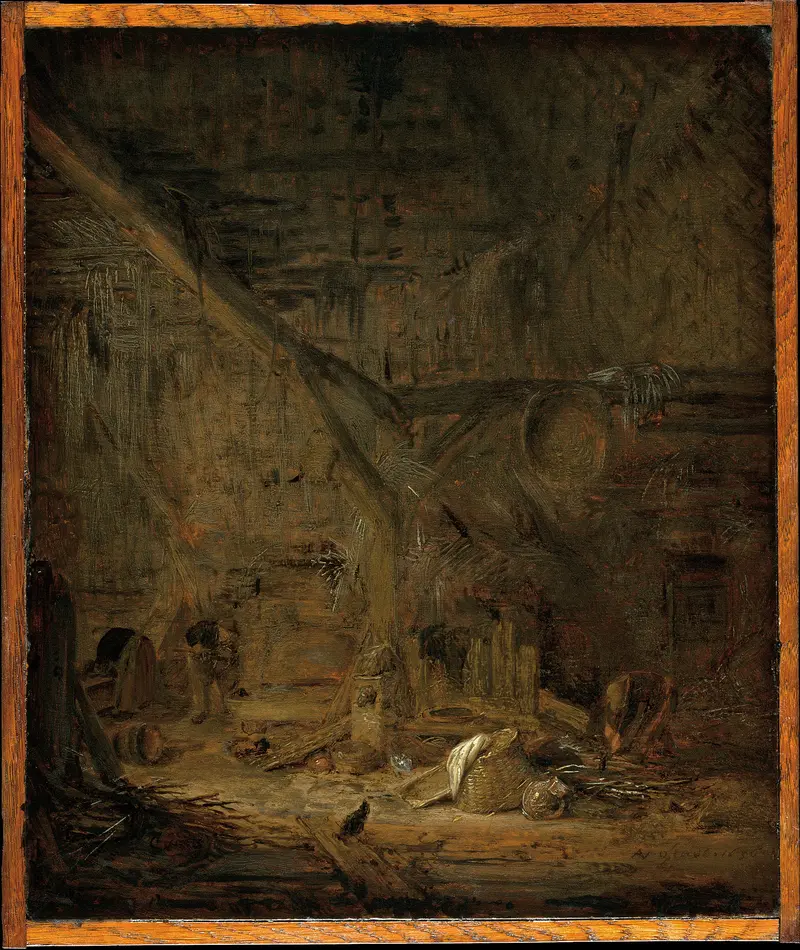
Interior of a Barn
Adriaen van Ostade
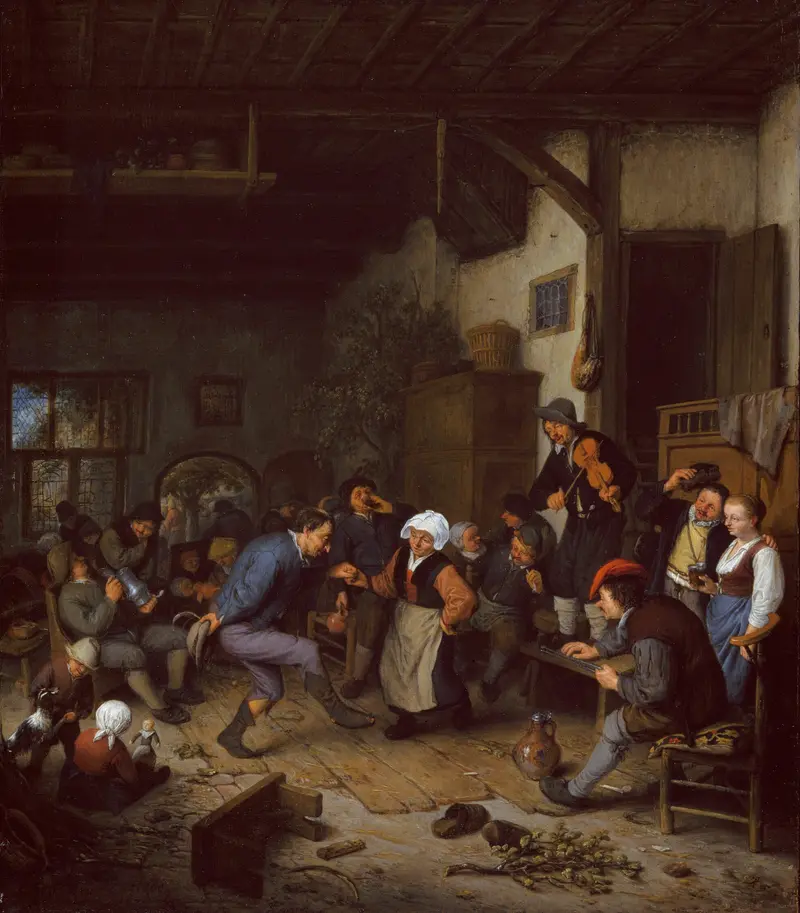
Merrymakers in an Inn
Adriaen van Ostade
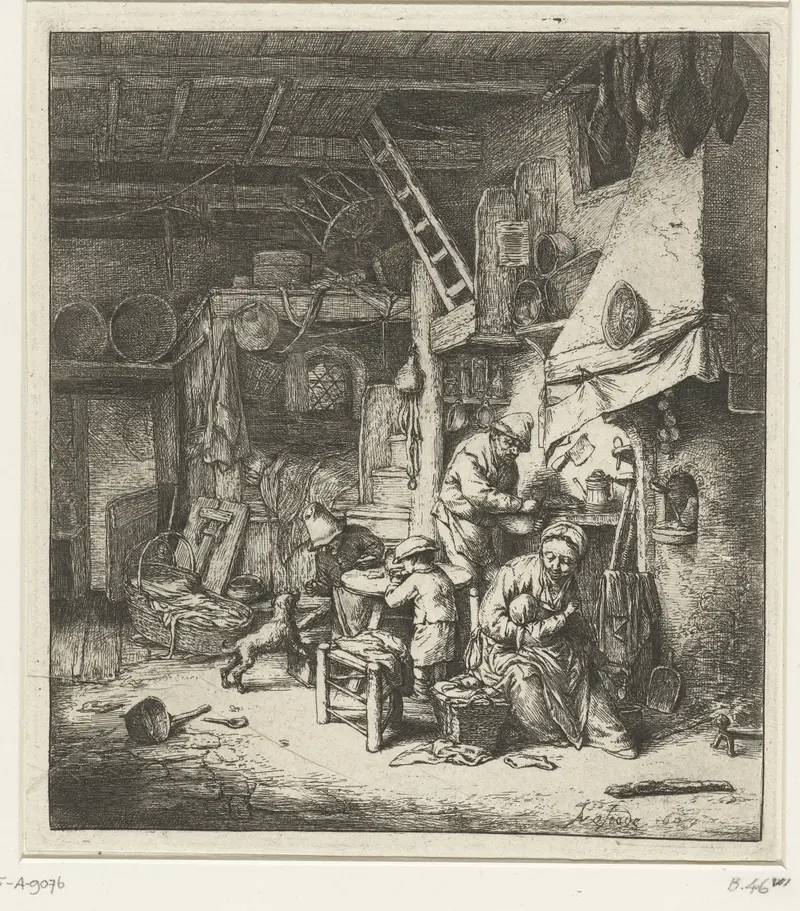
Boerengezin in interieur
Adriaen van Ostade
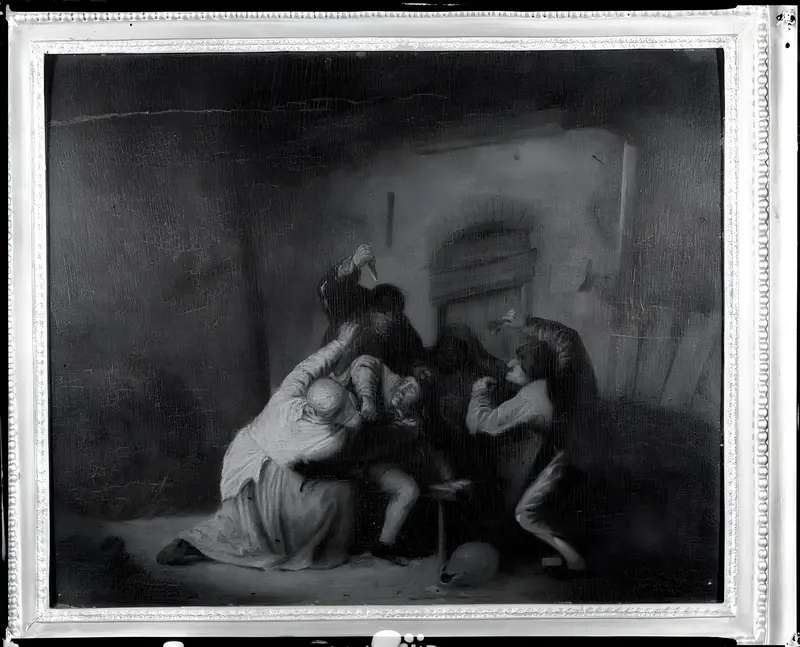
Peasants Brawling in a Tavern
Adriaen van Ostade
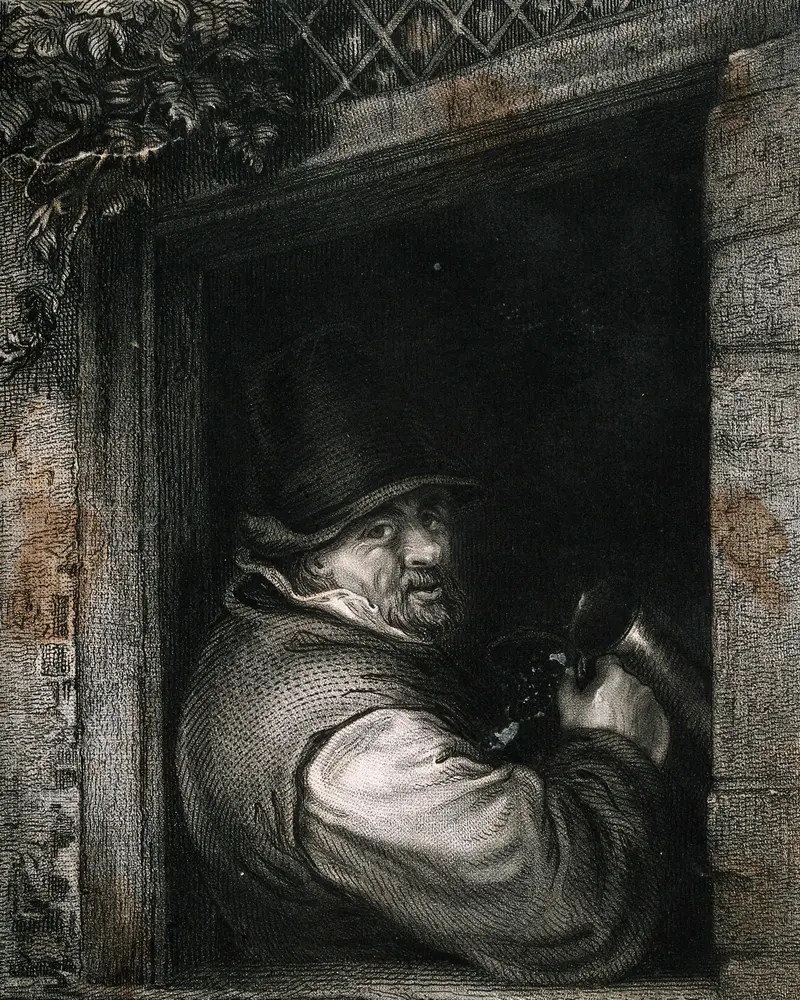
Man with a Tankard at a Window
Adriaen van Ostade
Dans in de herberg
Adriaen van Ostade
More Genre Scene Art

Banquet of the Officers of the St George Civic Guard
Frans Hals

Rembrandt and Saskia in the Scene of the Prodigal Son
Rembrandt van Rijn

Bal du moulin de la Galette
Pierre-Auguste Renoir

Quadrille at the Moulin Rouge
Henri de Toulouse-Lautrec

A Burial at Ornans
Gustave Courbet

When Will You Marry?
Paul Gauguin