
Southern Mountain Landscape — History & Facts
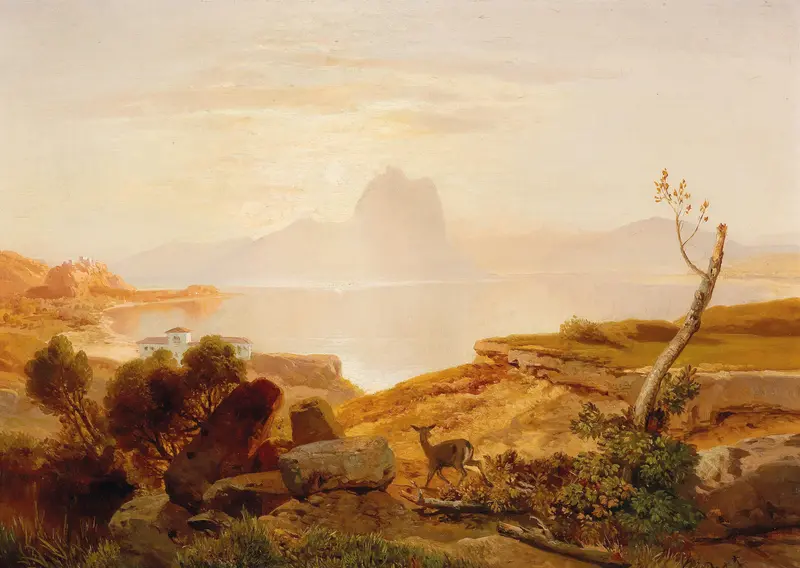
What first arrests the viewer in Southern Mountain Landscape is the way the light lingers on the water’s rush and the trees’ trunks, as if the day is pausing to admire the scene before slipping away. The eye is drawn from the froth of the stream in the foreground, swirling around boulders, up to the trio of trees that lean together like old friends. Their branches catch the sun, casting gentle shadows that soften the rocks below and invite you further into the cool, wooded depths.
Beyond, the mountain rises in hazy blue, its summit touched with the last gold of afternoon, while the sky above is clear and impossibly wide. The painting’s palette is warm but tempered by the blues and greens of distance, lending a sense of calm after motion. Painted by Albert August Zimmermann by 1888, this landscape belongs to a tradition that valued nature as both spectacle and sanctuary. In the late nineteenth century, such works were often commissioned by collectors eager to bring the grandeur of the outdoors into their homes, a reminder of travels or aspirations toward the untamed.
Zimmermann, working in an era when Romanticism was giving way to more naturalistic views, captures both the drama and the serenity of the southern mountains—places that were, for many, the very edge of the known world. Now held in the Dorotheum collection, Southern Mountain Landscape stands as a quiet witness to a time when artists and viewers alike looked to the land not just for beauty, but for a sense of the infinite. Let your gaze follow the river’s path and imagine where it might lead beyond the frame.
More Artworks by Albert August Zimmermann
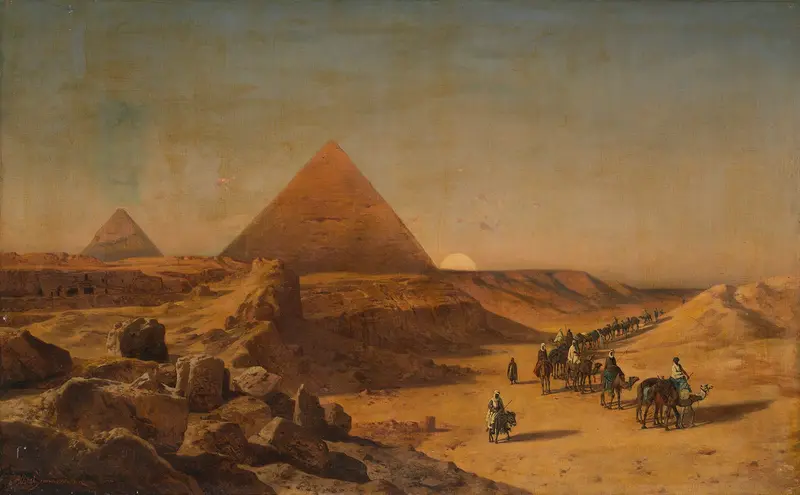
Pyramids
Albert August Zimmermann

Schwäbische Alb
Albert August Zimmermann
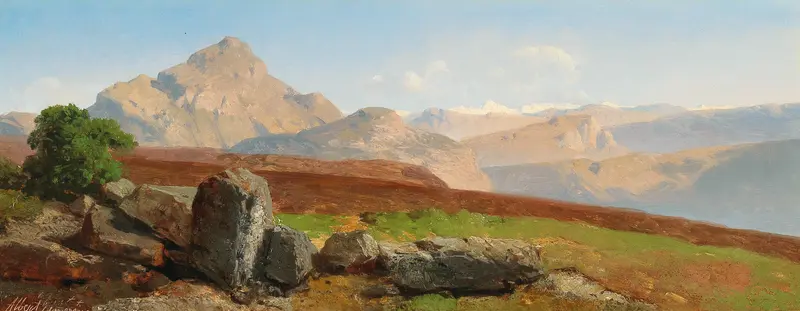
Mountain Landscape
Albert August Zimmermann
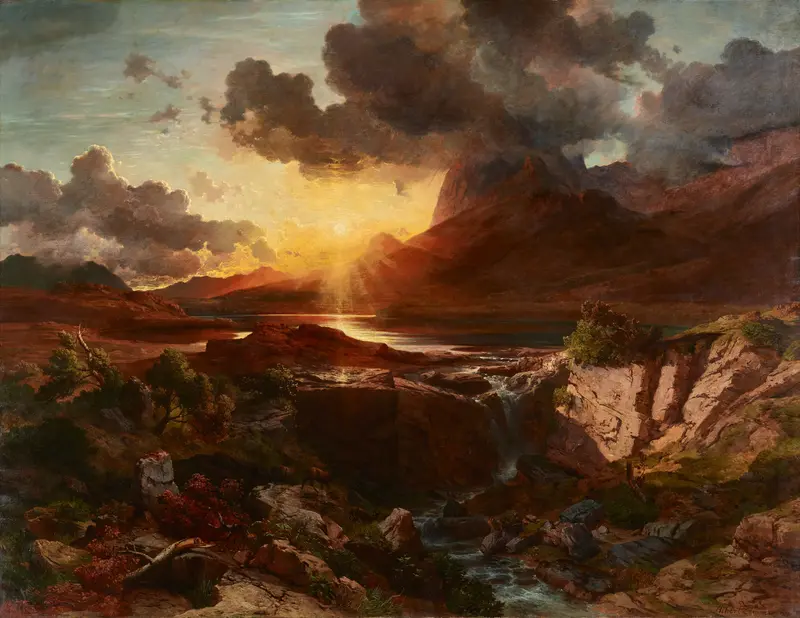
Sonnenuntergang am Hintersee in Berchtesgaden 13 Österreichische Galerie Belvedere
Albert August Zimmermann
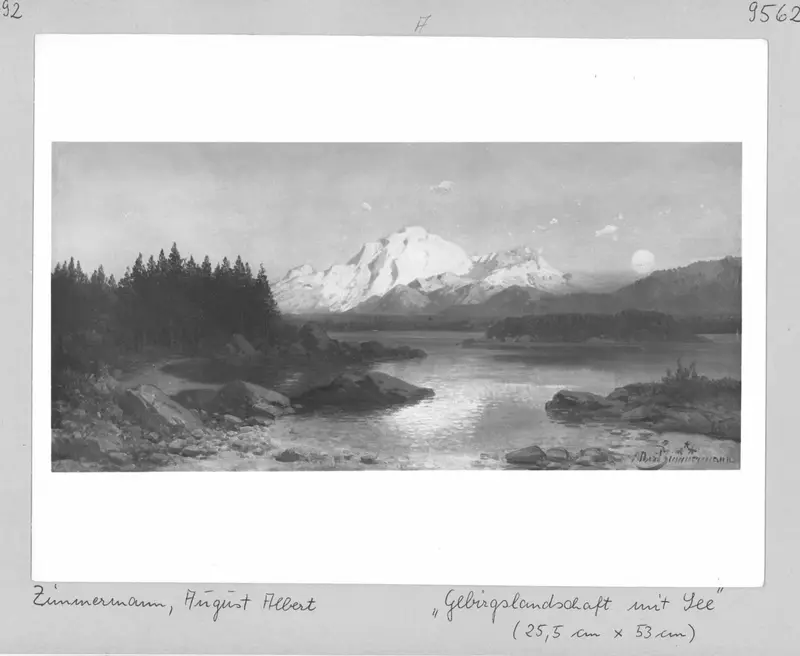
Mountain-landscape with lake
Albert August Zimmermann
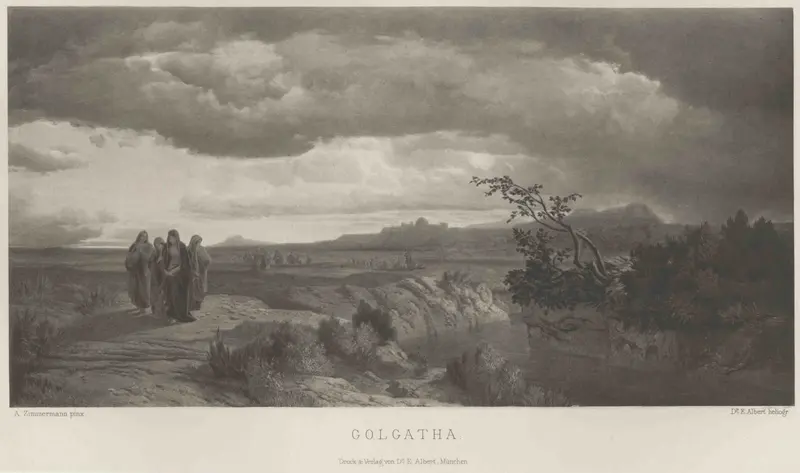
Golgatha
Albert August Zimmermann
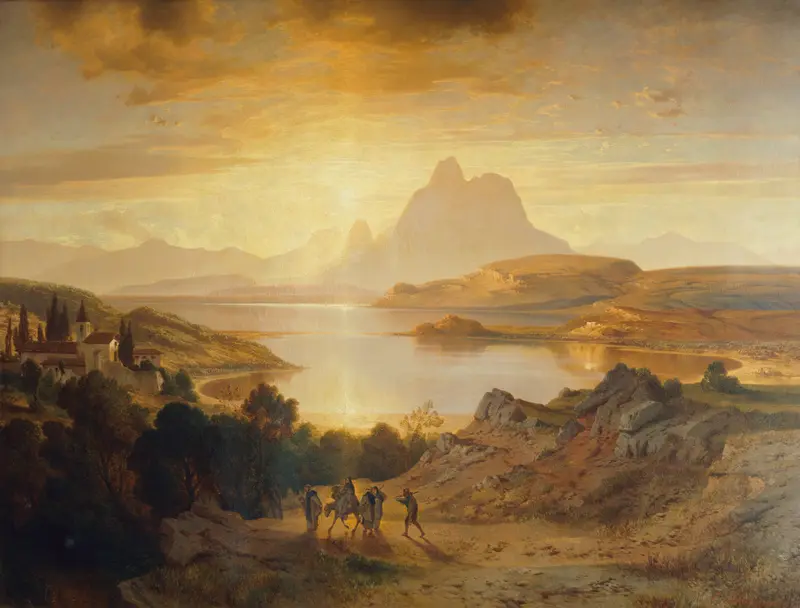
Lago di Lugano 65 Österreichische Galerie Belvedere
Albert August Zimmermann
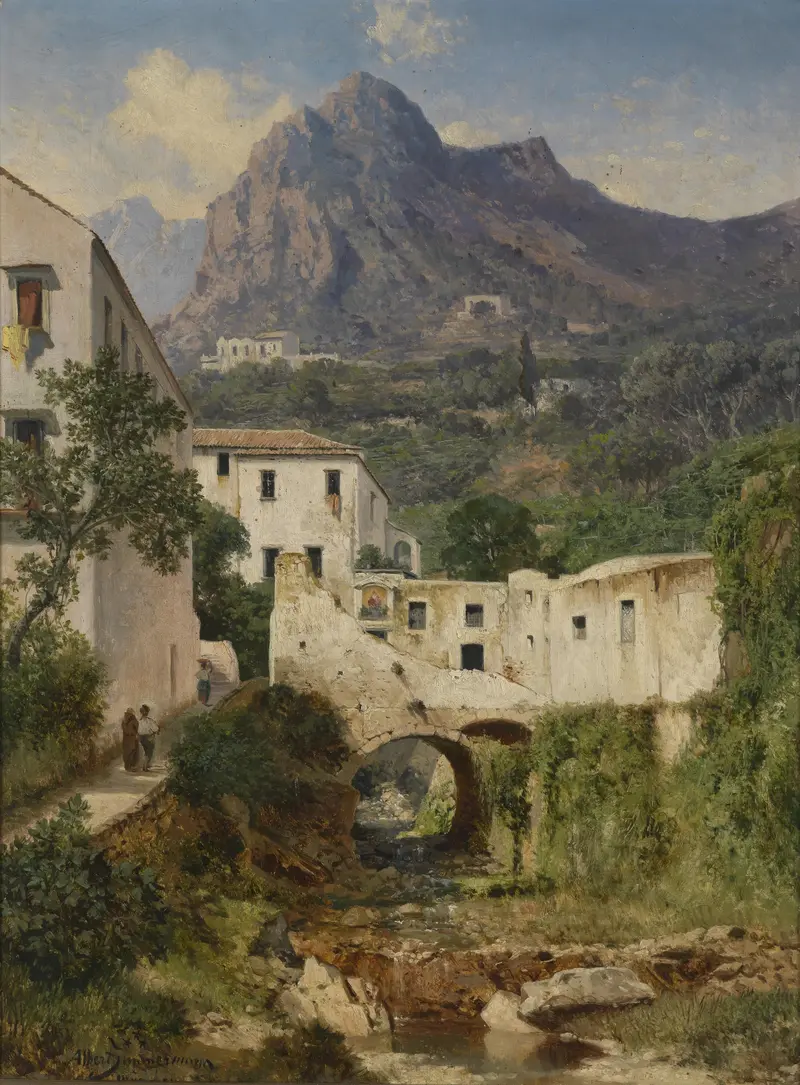
Mühltal bei Amalfi
Albert August Zimmermann
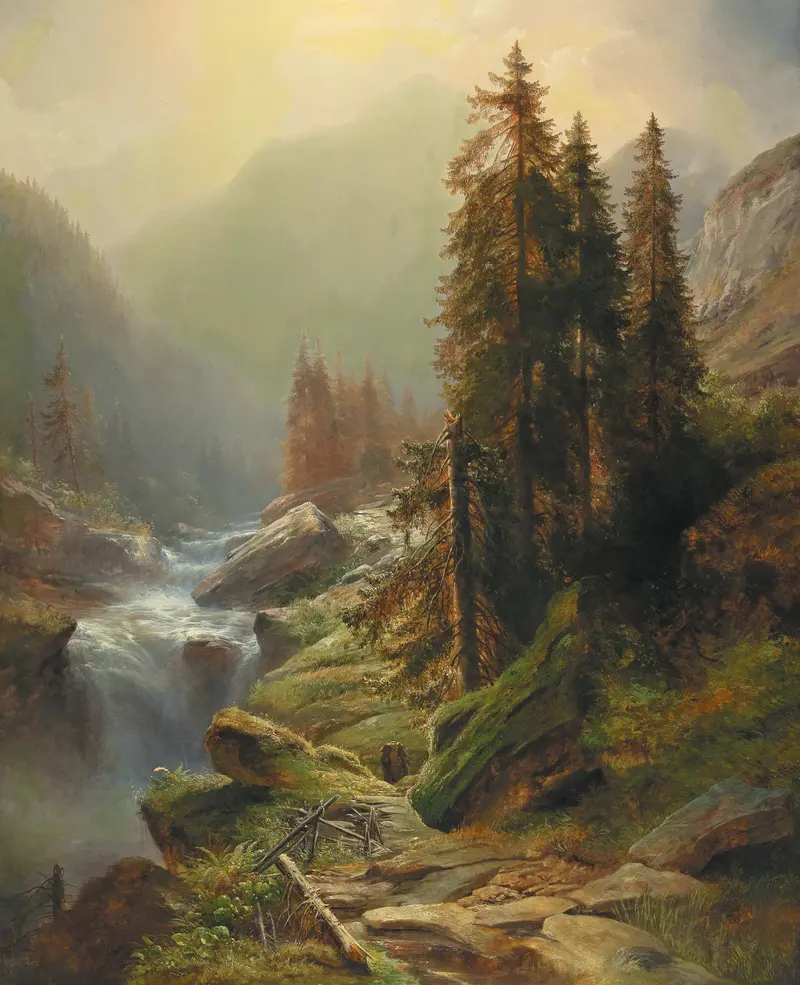
Large Mountain Landscape
Albert August Zimmermann
Partie am Como See
Albert August Zimmermann
More Landscape Art

The Starry Night
Vincent van Gogh

View of Delft
Johannes Vermeer

Water Lilies
Claude Monet

The Grand Canal, Venice, looking north-west from the Ca' Corner to the Ca' Contarini degli Scrigni, with the campanile of Santa Maria della Carità
Canaletto

Windsor Castle
Canaletto

The Grand Canal looking North-East from the Palazzo Dolfin-Manin to the Rialto Bridge
Canaletto