
Spinning woman by the window. — History & Facts
What draws the eye first in Spinning woman by the window is not the humble task, but the woman’s face: caught mid-laugh, her features are alive with the warmth of a private moment. Light from the window glances across her white cap and collar, picking her out from the brown shadows of the room and making her expression the heart of the painting. The spinning wheel, rendered in rough strokes, is less a tool than a companion—her hand hovers above it, as if she’s just paused to share a joke or a story with someone just out of view.
The loose, earthy palette and the intimacy of the pose invite the viewer in, making the ordinary act of spinning feel like a scene from daily life that is both familiar and quietly joyful. Painted in the 17th century, this work belongs to a world where scenes of everyday labor were newly celebrated by artists like Adriaen van Ostade. In the Dutch Republic, pictures of peasants and artisans at work or leisure became prized decorations for middle-class homes—images that reflected both the dignity and humor of common life. The painting now resides in the National Museum in Warsaw, a reminder of how such scenes once traveled far from their original context.
History has kept few traces of this specific woman or her story, but the laughter in her eyes still bridges centuries, inviting us to look again and wonder what—or who—sparked her delight.
More Artworks by Adriaen van Ostade

Dans in de herberg
Adriaen van Ostade
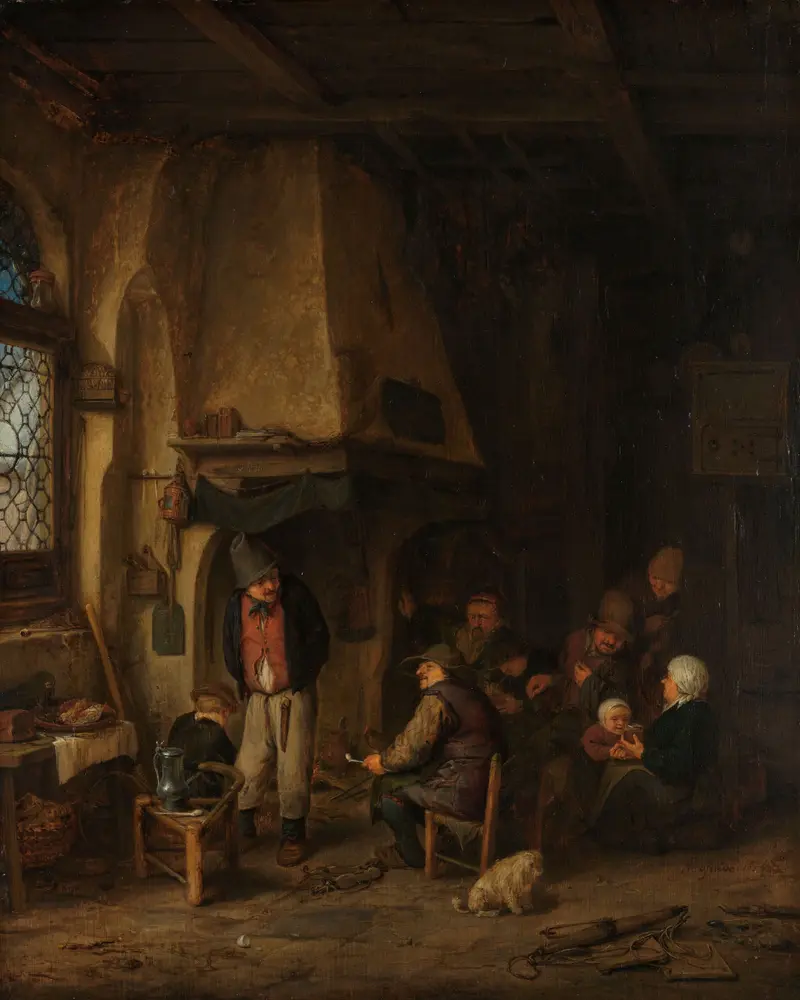
‘The Skaters’: Peasants in an Interior
Adriaen van Ostade
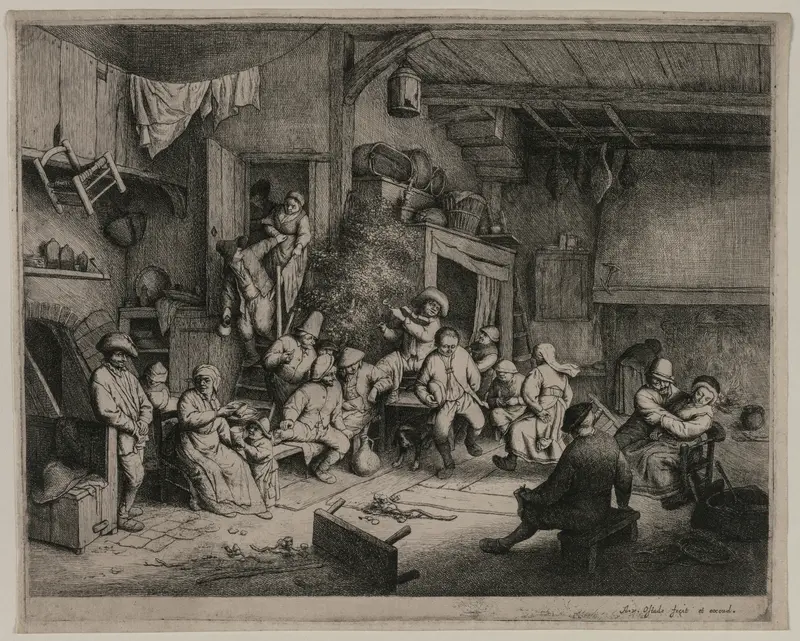
Dance at the Inn
Adriaen van Ostade
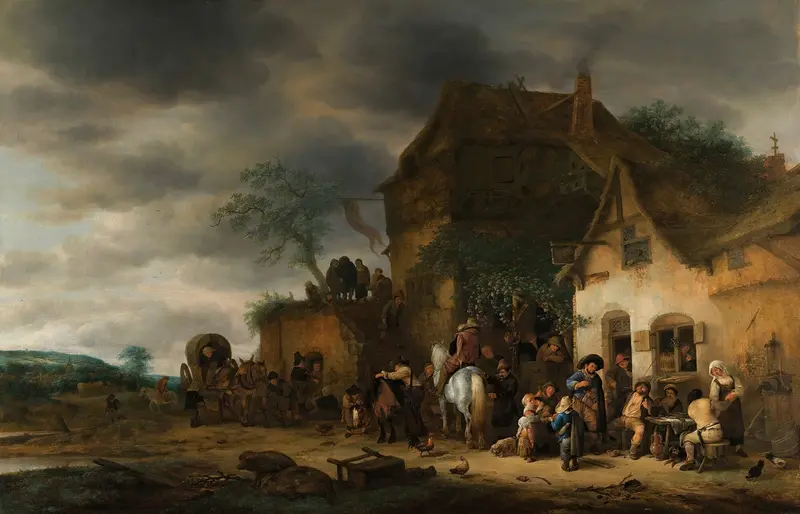
Travellers Halted At A Country Inn
Adriaen van Ostade
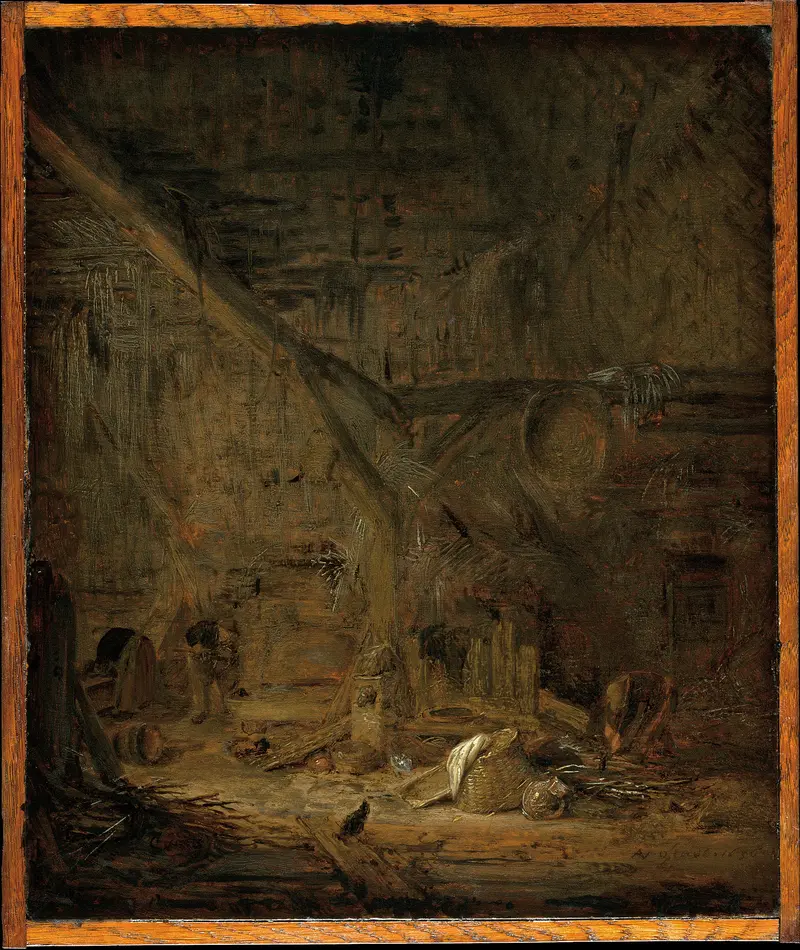
Interior of a Barn
Adriaen van Ostade
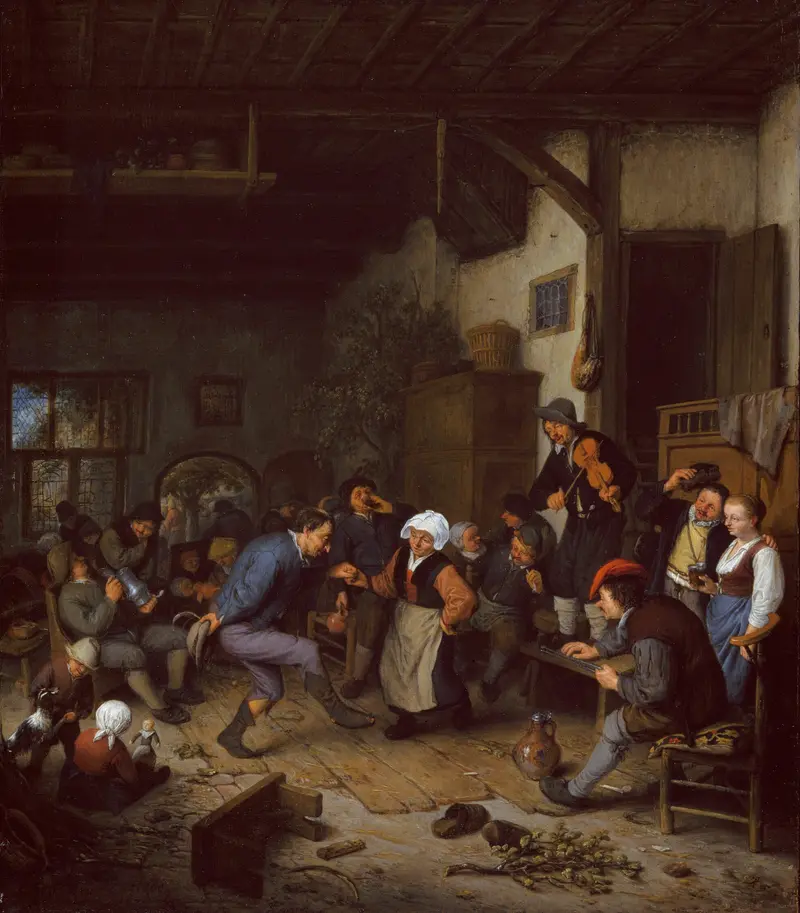
Merrymakers in an Inn
Adriaen van Ostade
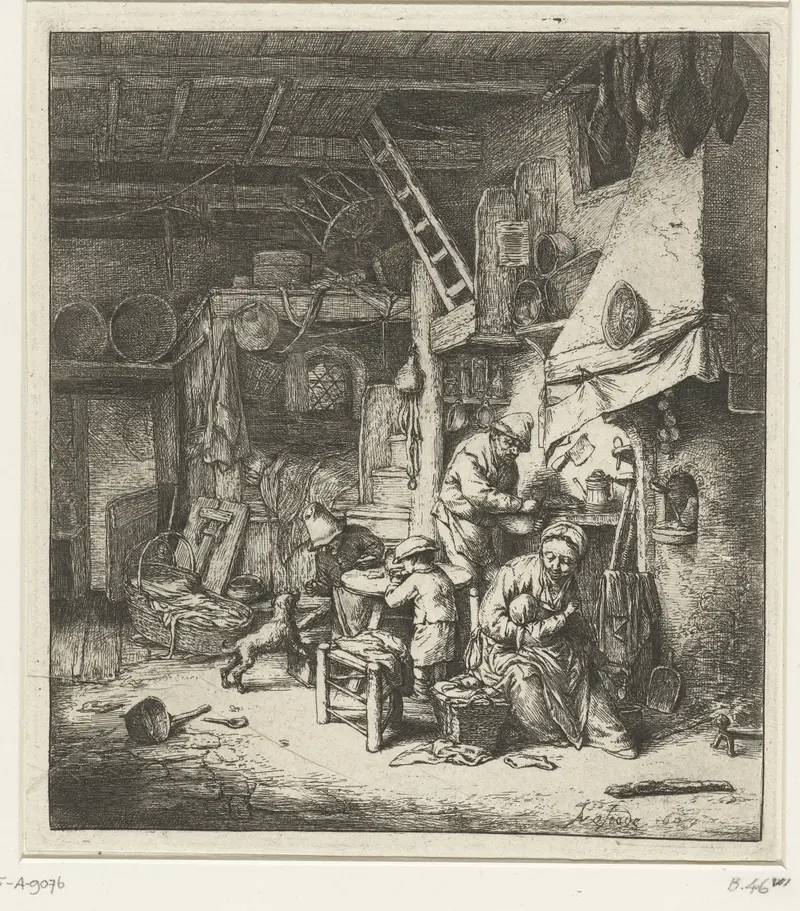
Boerengezin in interieur
Adriaen van Ostade
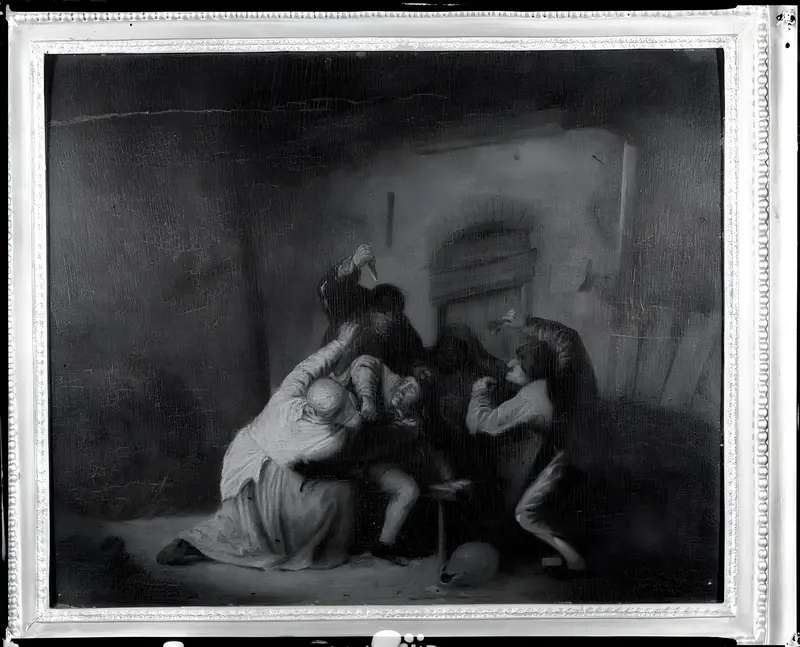
Peasants Brawling in a Tavern
Adriaen van Ostade
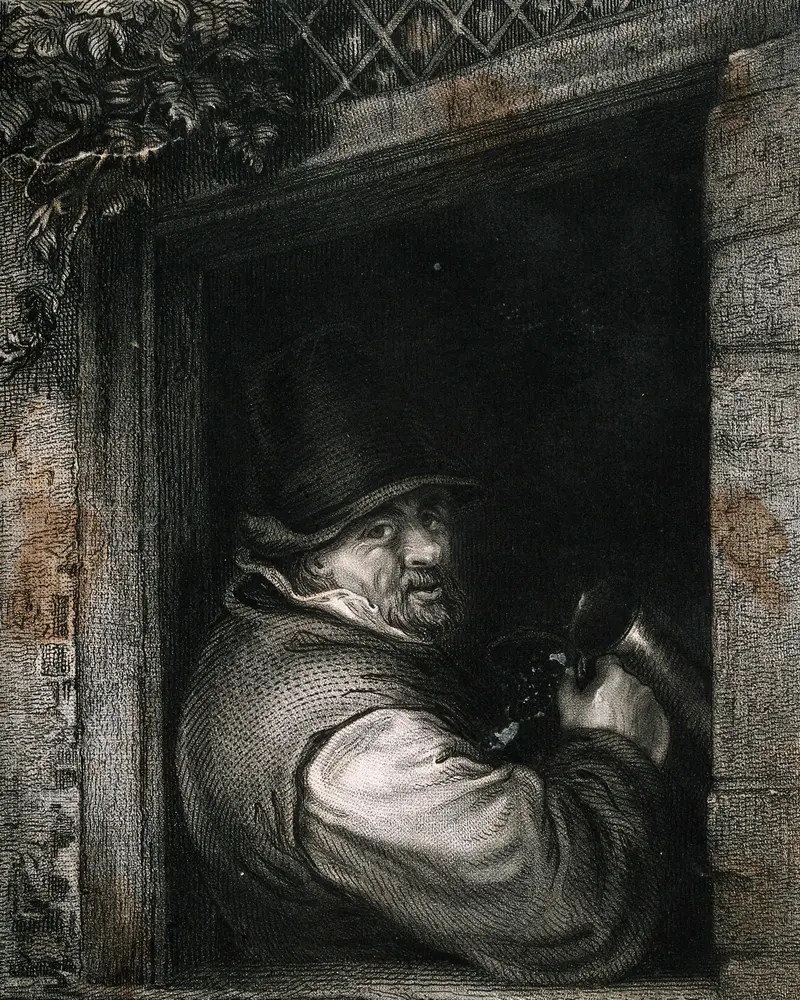
Man with a Tankard at a Window
Adriaen van Ostade
Dans in de herberg
Adriaen van Ostade
More Genre Scene Art

Banquet of the Officers of the St George Civic Guard
Frans Hals

Rembrandt and Saskia in the Scene of the Prodigal Son
Rembrandt van Rijn

Bal du moulin de la Galette
Pierre-Auguste Renoir

Quadrille at the Moulin Rouge
Henri de Toulouse-Lautrec

A Burial at Ornans
Gustave Courbet

When Will You Marry?
Paul Gauguin