
Spotted Flycatchers. — History & Facts
The eye is caught first by the alert poise of the upper bird, its gaze fixed on something just beyond the frame, as if it has paused mid-hunt. The artist, Archibald Thorburn, renders every feather with such precision that you sense the texture beneath your own fingers. The smaller companion, tucked lower on the branch, seems to defer to the sentinel above, its posture more tentative, its eyes wide.
The yellow blossoms and lush green leaves are not mere background; they frame the birds, their arching stems echoing the curve of the perched flycatcher’s tail, while the soft blue wash behind suggests open air and freedom. Light falls gently from the left, picking out the subtle gradations of brown and cream, and giving the birds a quiet presence against the foliage. Painted by 1935, Spotted Flycatchers belongs to a tradition of British naturalist art that flourished in the late nineteenth and early twentieth centuries, when field guides and ornithological illustration were as much scientific record as aesthetic pursuit. Thorburn was celebrated in his lifetime for his ability to capture both the likeness and the spirit of British wildlife, and his works were often sought by collectors and publishers alike.
This piece, now recorded in the Bonhams collection, stands as a testament to that era’s fascination with the living world, when artists and scientists sometimes seemed to share a single eye for detail. History has kept few traces of the individual stories behind such images, but their quiet observation invites us to linger, searching for the life in every careful brushstroke.
More Artworks by Archibald Thorburn

The Watchful Hinds
Archibald Thorburn
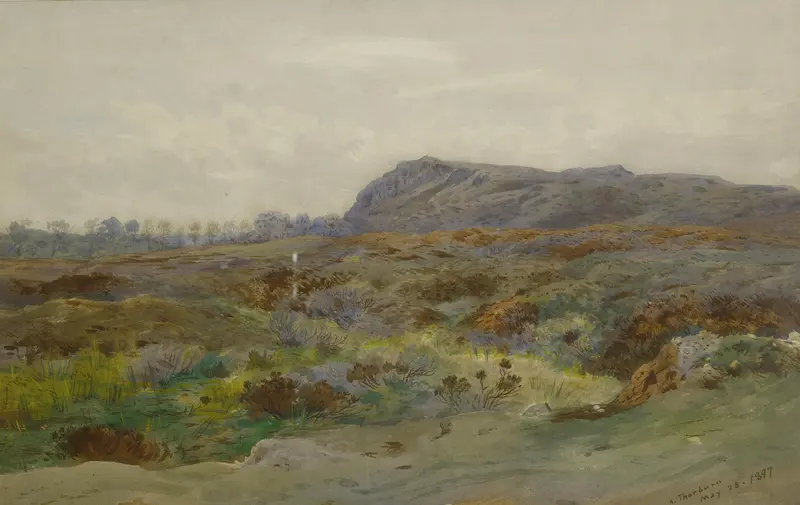
Moorland Landscape
Archibald Thorburn
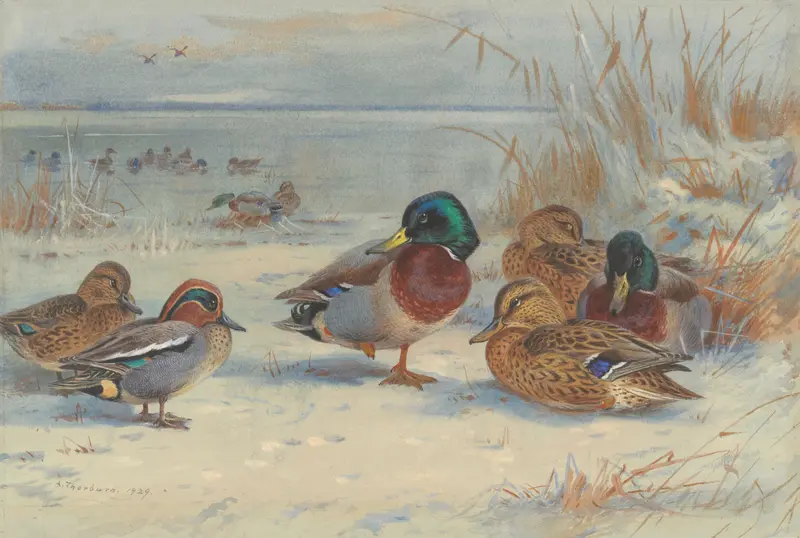
Mallard and teal in the snow
Archibald Thorburn
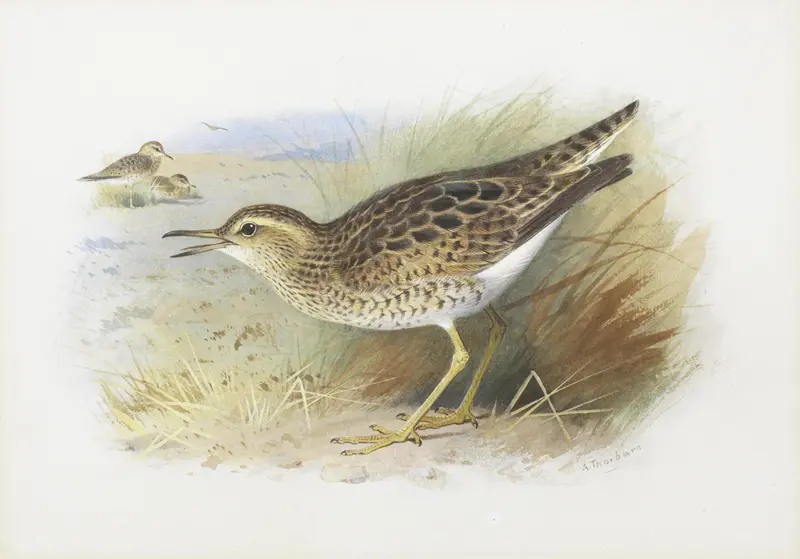
Bartram's Plover
Archibald Thorburn
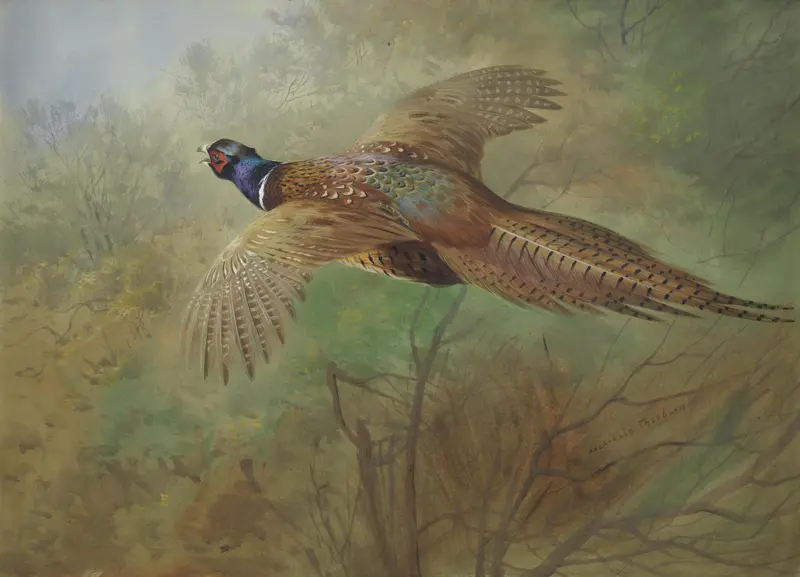
Pheasant in flight
Archibald Thorburn
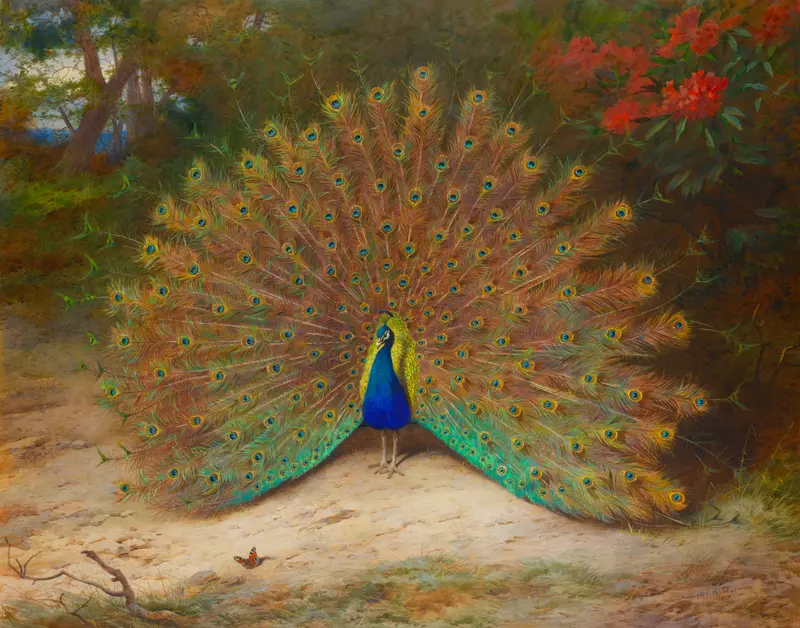
Peacock and Peacock Butterfly
Archibald Thorburn
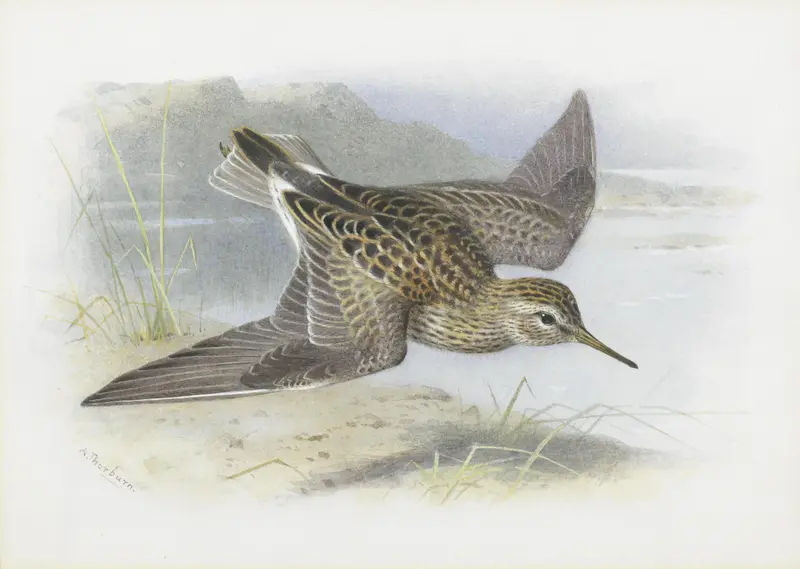
Pectoral Sandpiper
Archibald Thorburn
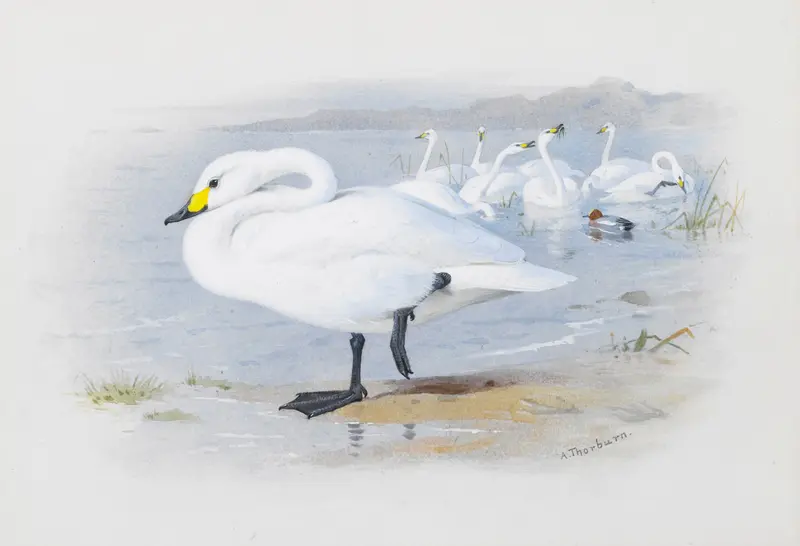
Bewick's swan.
Archibald Thorburn
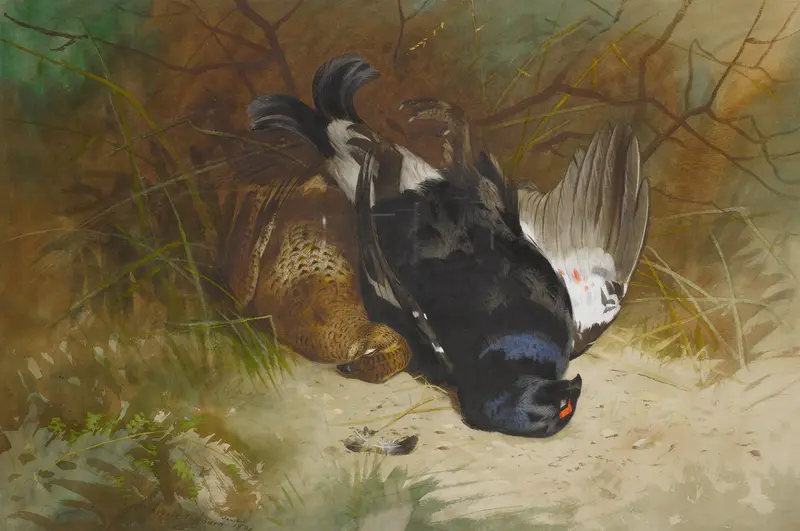
Still life of a pair of Blackgame.
Archibald Thorburn
Blackgame
Archibald Thorburn





