
Spring — History & Facts
What first catches the eye in Spring by Adriaen Pietersz van de Venne is the moment of encounter—a rider, having dismounted, turns his attention from his stately horse to an elegantly dressed woman, her gown shimmering with the suggestion of new beginnings. The scene is alive with social interplay: a beggar leans in, hat extended, while three attentive dogs form a living bridge between the figures. The palette is fresh and lively, the greens and golds of the landscape echoing the season’s promise, while the careful placement of flowers at the woman’s feet and the gentle curve of the riverbank invite the viewer to linger.
The artist’s crisp detailing—lace, velvet, the sheen of horsehair—draws us into a world where every gesture is charged with meaning: the woman’s outstretched hand, the respectful bow of the beggar, the subtle exchange of glances. Painted in 1625, this work belongs to a tradition of allegorical representations of the seasons, a genre that flourished in the Dutch Republic during the early seventeenth century. Such paintings were often commissioned by prosperous citizens eager to display both their wealth and their taste for learned symbolism; they offered a vision of society in harmony with nature’s cycles, yet attentive to the realities of class and charity. Van de Venne was known for his keen observation of social types and his ability to weave moral commentary into lively rural scenes.
Though history has kept few traces of this particular painting’s early journey, it now resides in the Rijksmuseum, a testament to the enduring appeal of art that captures both the pageantry and the everyday of its time. Let your eye wander from the foreground’s careful choreography to the distant carriage and riverbank, and imagine the stories unfolding just beyond the painted edge.
More Artworks by Adriaen Pietersz van de Venne
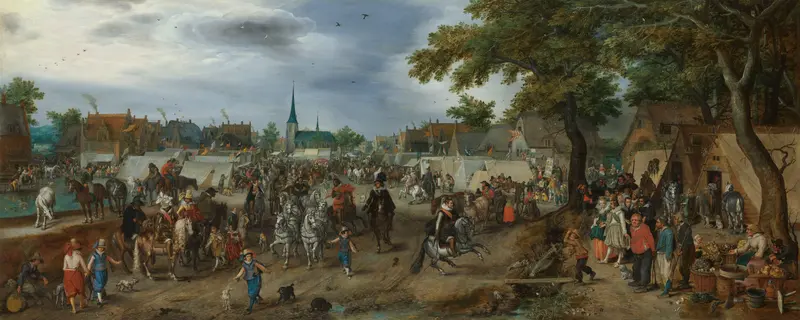
Princes Maurice and Frederick Henry at the Valkenburg Horse Fair
Adriaen Pietersz van de Venne
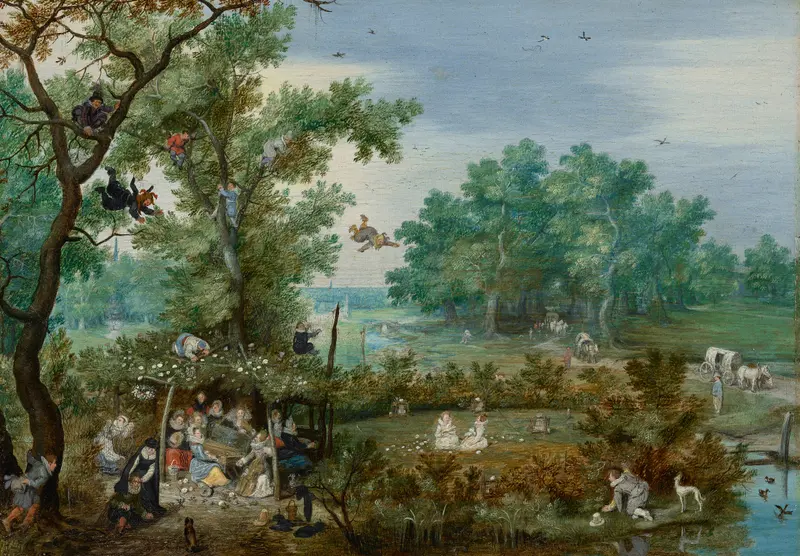
Merry Company in an Arbor
Adriaen Pietersz van de Venne
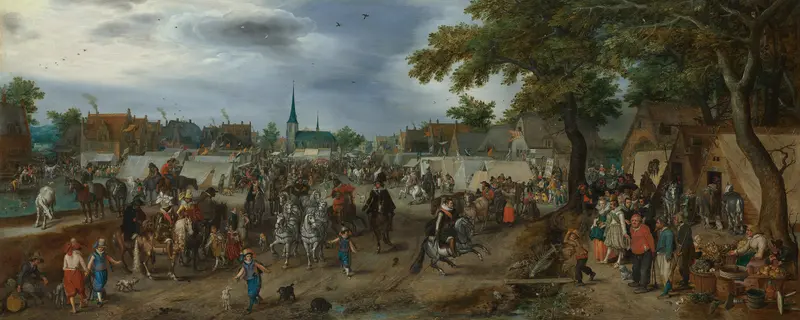
Princes Maurice and Frederick Henry at the Valkenburg Horse Fair
Adriaen Pietersz van de Venne
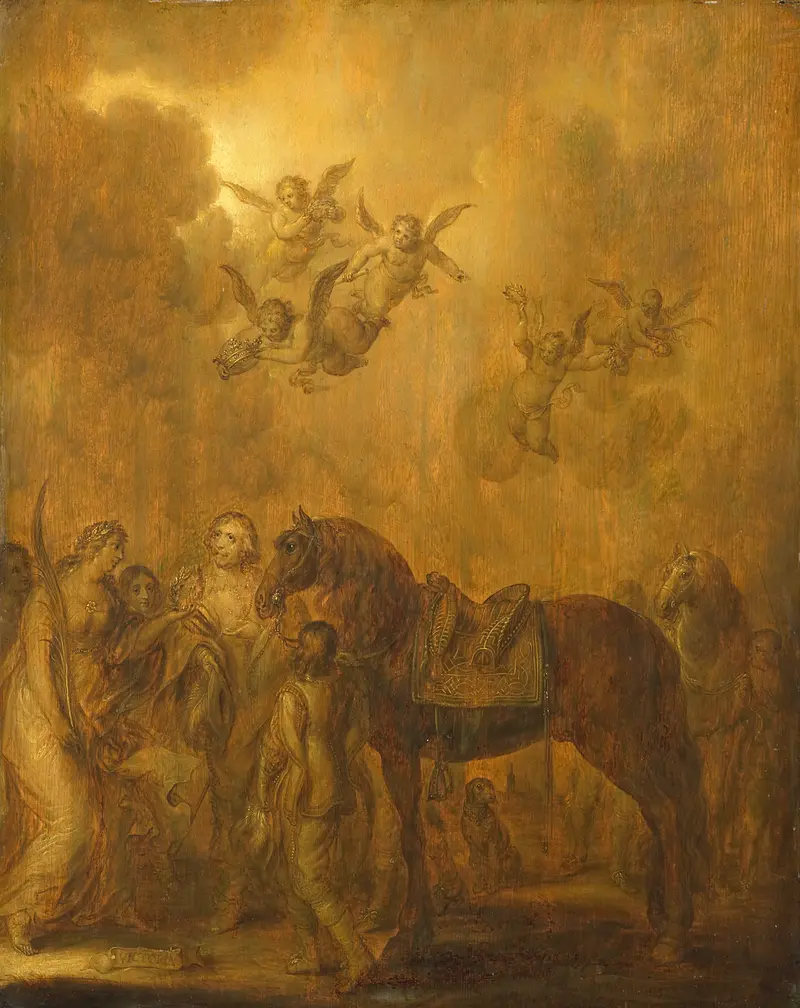
Allegory of the Stadtholdership of Prince Frederick Henry
Adriaen Pietersz van de Venne
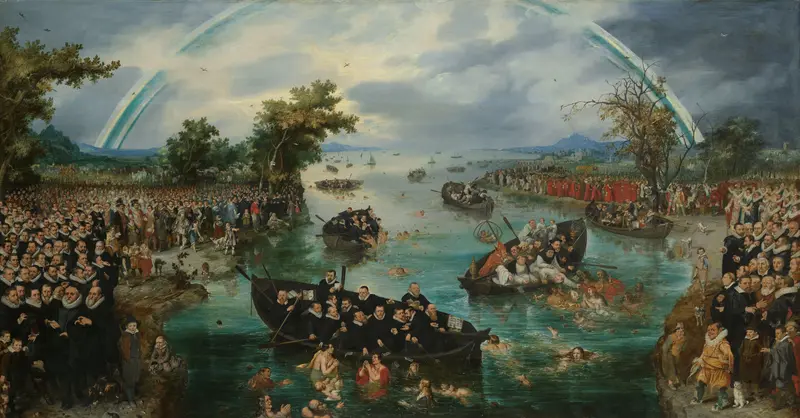
Fishing for Souls
Adriaen Pietersz van de Venne
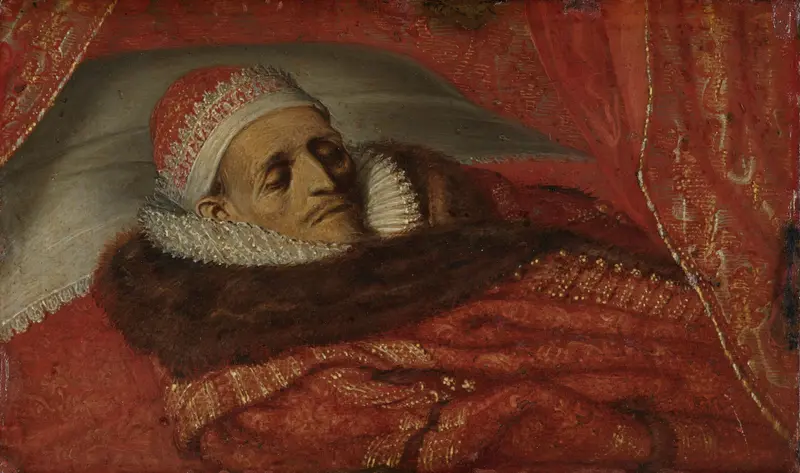
Stadtholder Prince Maurice Lying in State
Adriaen Pietersz van de Venne
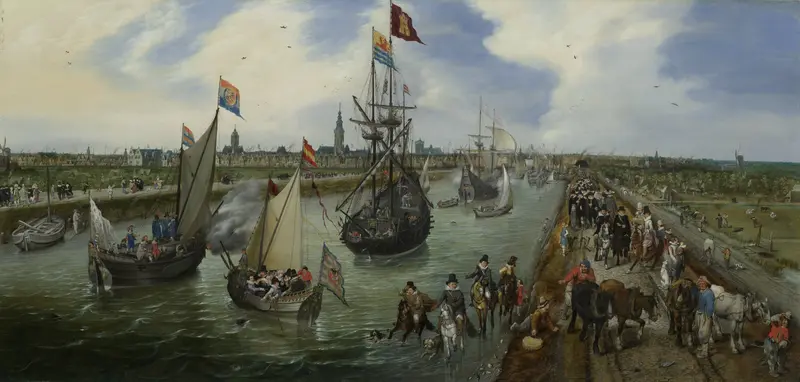
The Departure of a Dignitary from Middelburg
Adriaen Pietersz van de Venne
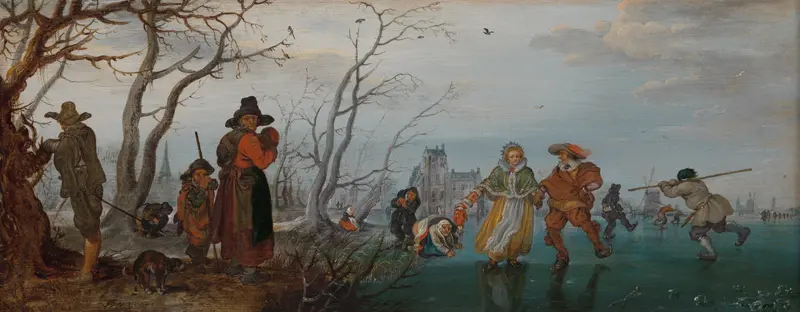
Winter
Adriaen Pietersz van de Venne

A Jeu de Paume Before a Country Palace
Adriaen Pietersz van de Venne
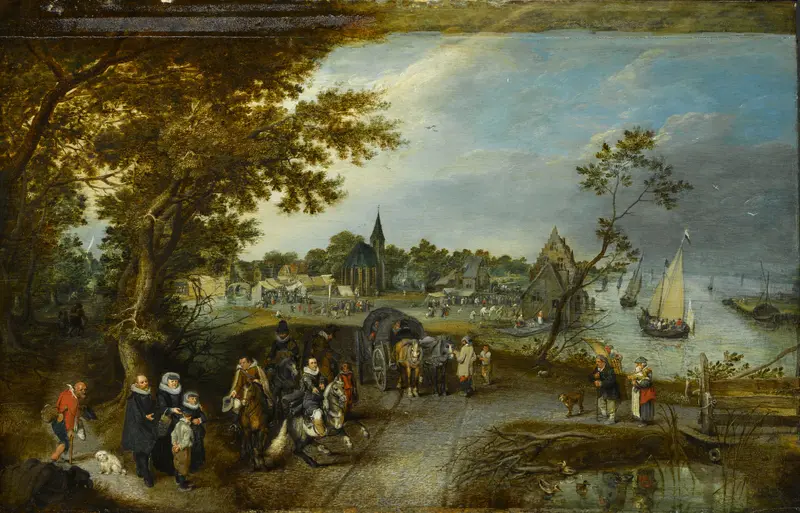
Landscape with Figures and a Village Fair (Village Kermesse)
Adriaen Pietersz van de Venne
More Genre Scene Art

Banquet of the Officers of the St George Civic Guard
Frans Hals

Rembrandt and Saskia in the Scene of the Prodigal Son
Rembrandt van Rijn

Bal du moulin de la Galette
Pierre-Auguste Renoir

Quadrille at the Moulin Rouge
Henri de Toulouse-Lautrec

A Burial at Ornans
Gustave Courbet

When Will You Marry?
Paul Gauguin