
Spring Morning — History & Facts
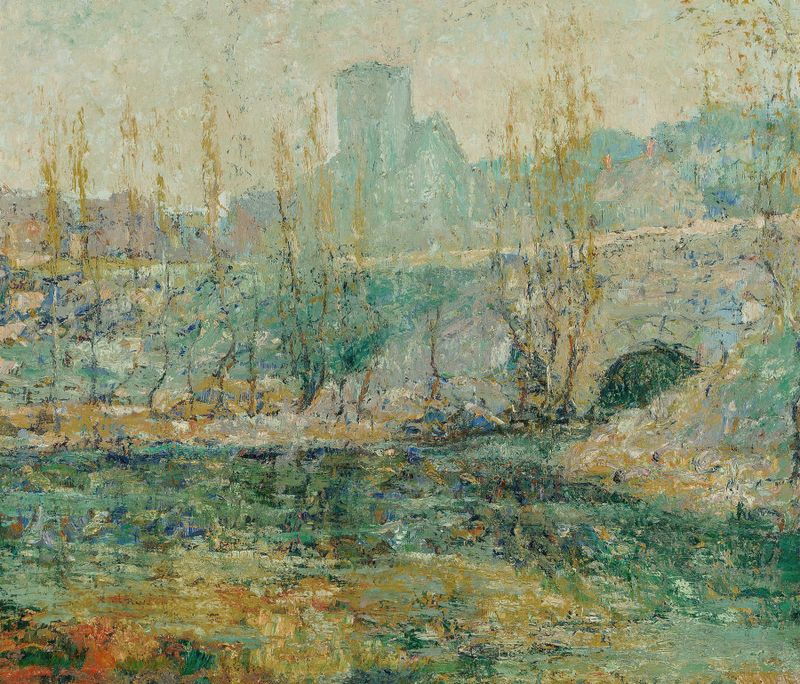
What if silence could speak through light? In Spring Morning, the stillness of dawn captures a moment where nature breathes softly, allowing tranquility to envelop the viewer like a warm embrace. Look to the left at the gentle rise of the hills, their contours painted with lush greens and soft yellows, infused with the freshness of early spring. The luminous light filters through the scene, illuminating the delicate foliage while casting elongated shadows, creating a harmony between brightness and depth. Notice how the brushstrokes vary from fluid washes to textured dabs, inviting you to dwell on the nuances of nature's awakening. Within this serene landscape, there resides a powerful contrast between the vibrant life of the greenery and the profound silence that pervades the air.
The absence of human presence speaks volumes, evoking a sense of solitude and reflection. The play of light not only delineates the physical contours of the landscape but also hints at deeper emotional states—serenity interlaced with the anticipation of renewal. Ernest Lawson painted this work during the early 20th century, a period when American art was increasingly turning towards nature for inspiration. By immersing himself in the beauty of the natural world, Lawson sought to evoke the sublime, responding to a collective yearning for peace amid the rapid industrial changes of the time.
His approach marks a significant departure from the more chaotic expressions of modernity, focusing instead on moments of quiet contemplation.
More Artworks by Ernest Lawson
Browse all →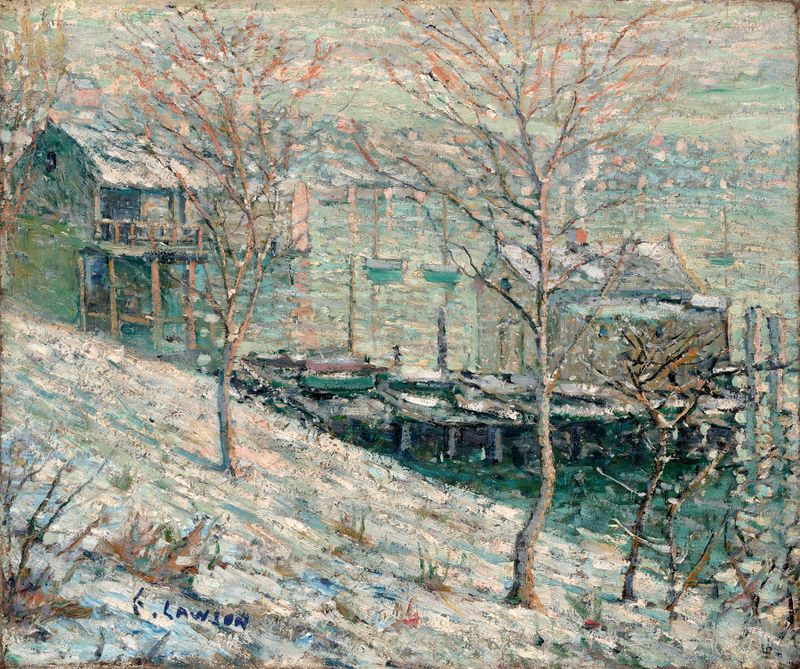
Harlem River Winter Scene
Ernest Lawson

Spring Night, Harlem River
Ernest Lawson

Upper Harlem River—Winter
Ernest Lawson
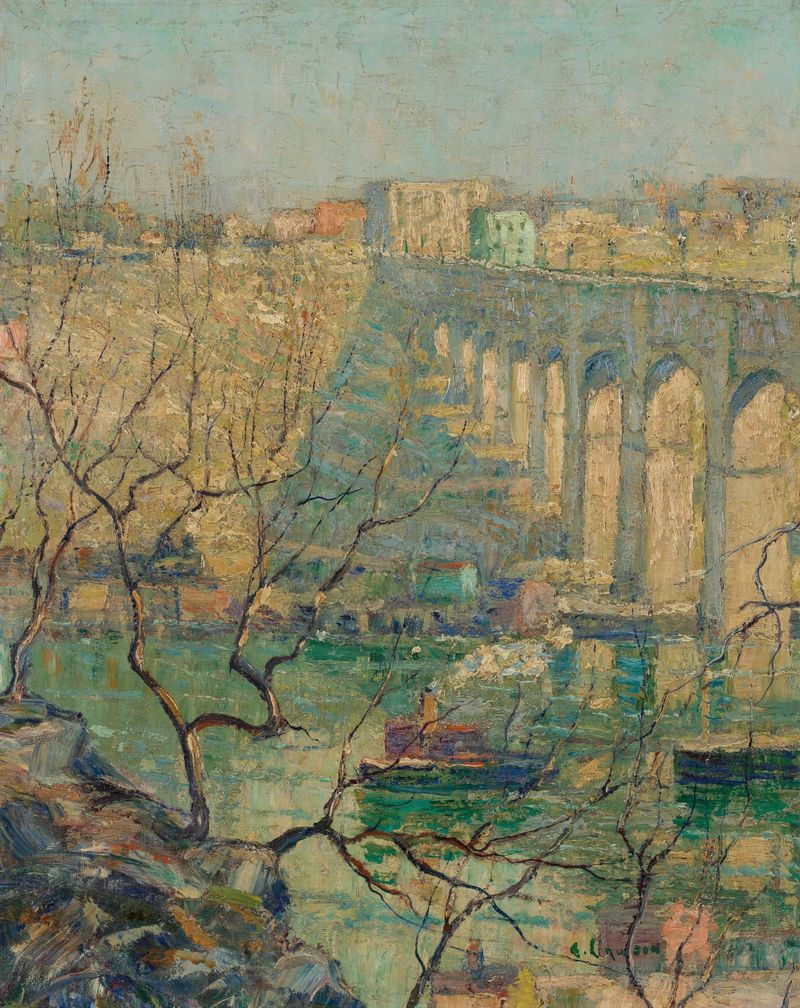
View of the Bridge
Ernest Lawson

A Bright Day, Spain (Segovia)
Ernest Lawson
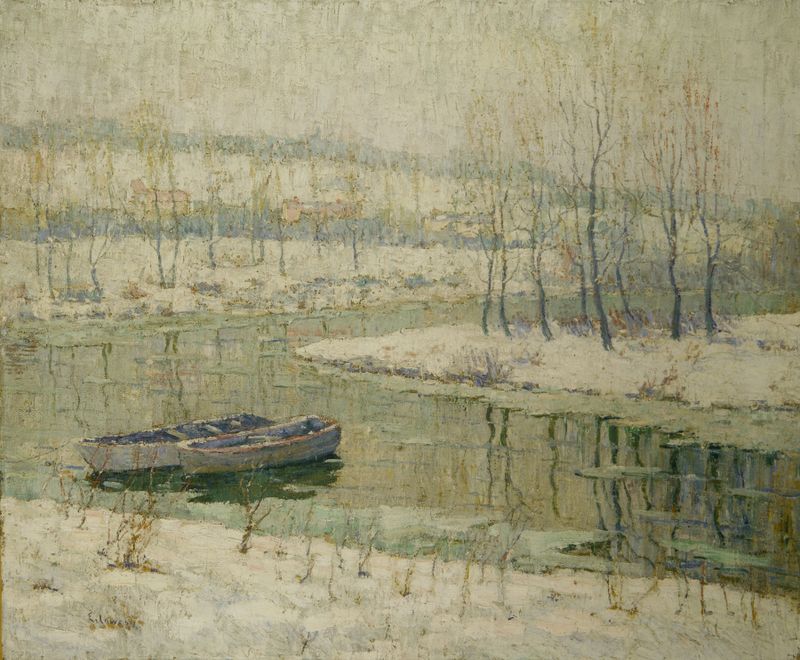
Spring thaw
Ernest Lawson

Road Down the Palisades
Ernest Lawson
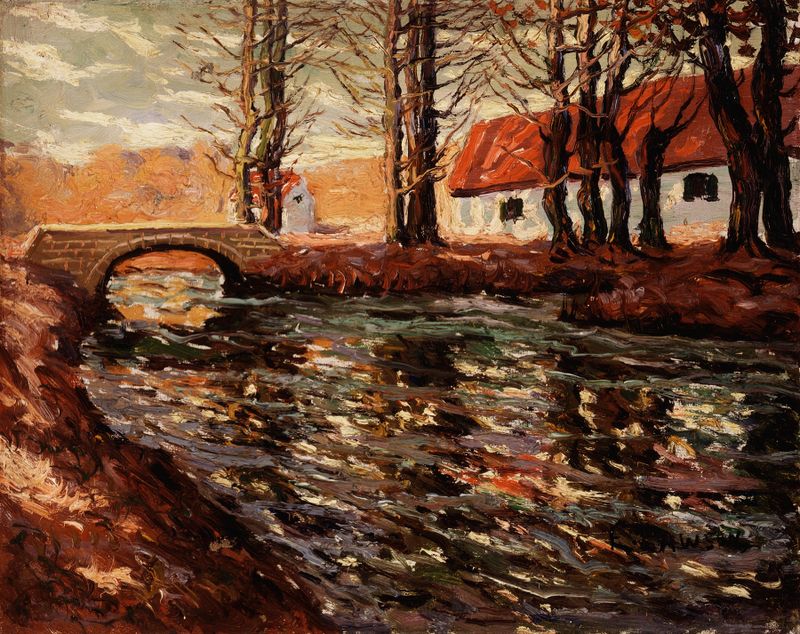
River Landscape
Ernest Lawson

The Mill
Ernest Lawson
The Pond and Gapstow Bridge, New York City
Ernest Lawson





