St. Julien le Pauvre; Le Presbytère — History & Facts
In St. Julien le Pauvre; Le Presbytère, illusion dances with truth, evoking nostalgia for a world where moments linger longer than memory allows. Look closely at the soft, muted colors that embrace the scene, drawing your eye toward the delicate interplay of light and shadow. Notice how the warm glow spills from the windows of the presbytery, wrapping around the cobblestones like a gentle embrace.
The careful brushstrokes evoke both the solidity of the architecture and the ethereal quality of the evening light, inviting you to step into a moment suspended between reality and dreams. As you delve deeper, explore the tension between the solidity of the building and the ephemeral nature of the light that caresses it. The juxtaposition of the rigid structure and the fluidity of the light serves as a reminder of the passage of time, echoing the fragile balance between permanence and transience. Small details, such as the gentle arch of a tree branch or the distant silhouettes of passersby, enhance the intimacy of the scene, suggesting lives intertwined with this space while leaving their stories unspoken. Created during a transformative period between 1870 and 1918, Lepère painted this piece amidst a burgeoning interest in impressionism and the interplay of light.
Working in France, he embraced new artistic ideas that challenged traditional representation, infusing his work with a modern sensibility. This painting reflects not only his personal exploration but also a broader cultural shift toward capturing the fleeting essence of everyday life.
More Artworks by Auguste Louis Lepère
Browse all →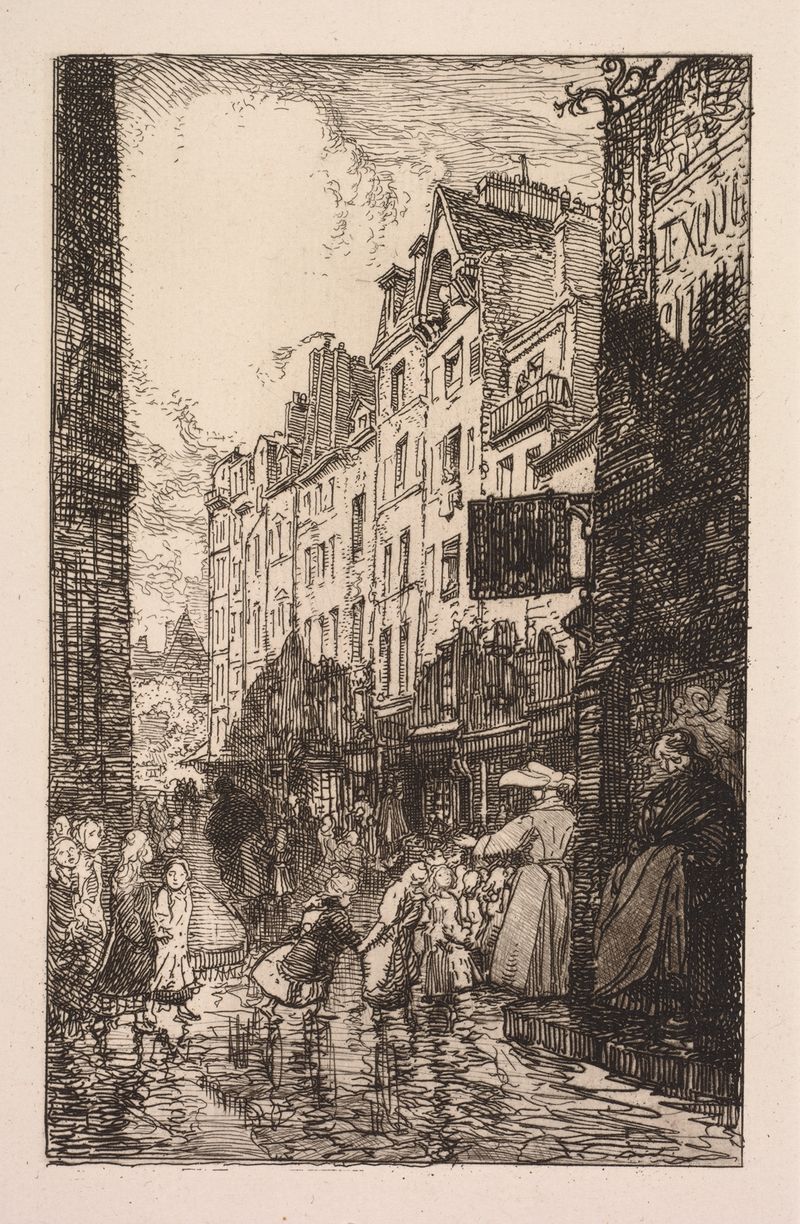
La Rue des Prêtres Saint-Séverin
Auguste Louis Lepère
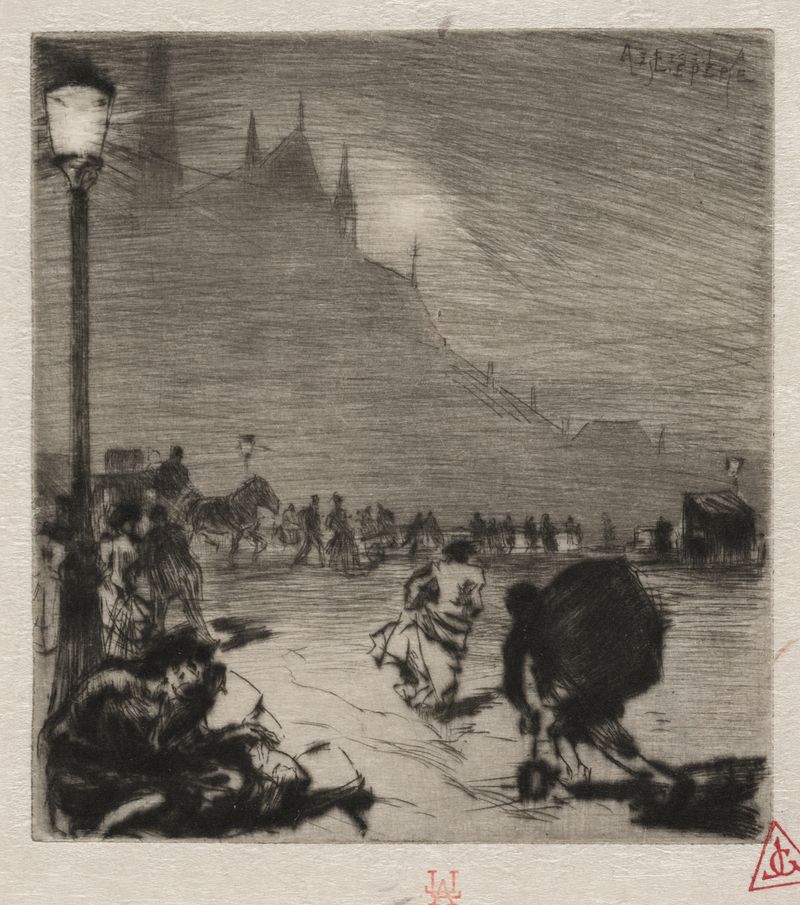
Au Coin du Pont-aux-Doubles
Auguste Louis Lepère
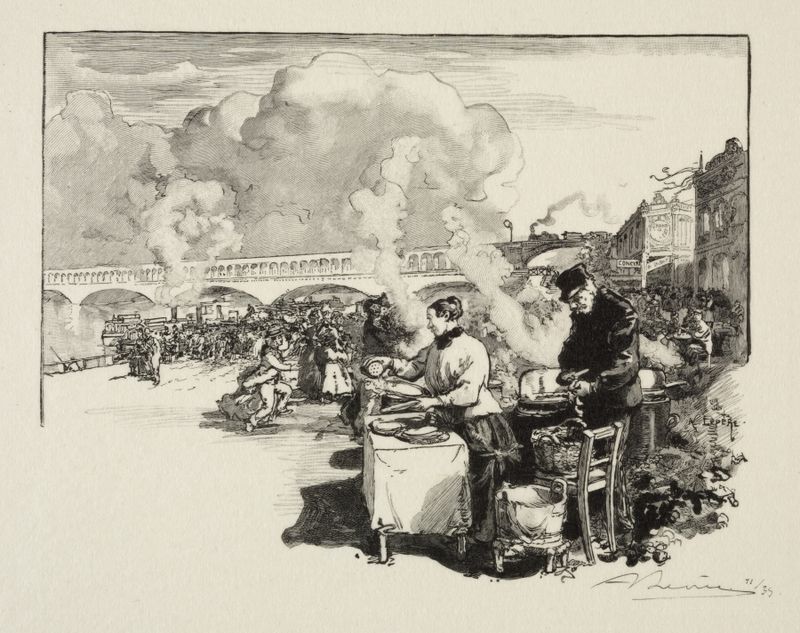
Debarcadère des bateaux-omnibus
Auguste Louis Lepère

La Seine, au quai de la Rapée
Auguste Louis Lepère
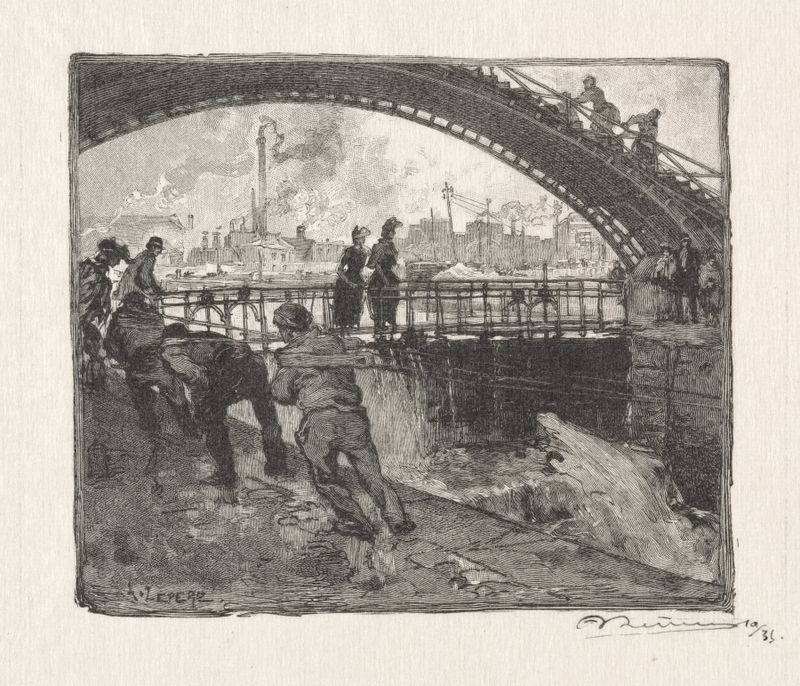
L’Ecluse du Canal St. Martin
Auguste Louis Lepère

Le Boulevard Montmartre, le Soir
Auguste Louis Lepère

Une Chasse au Mont Gérard
Auguste Louis Lepère
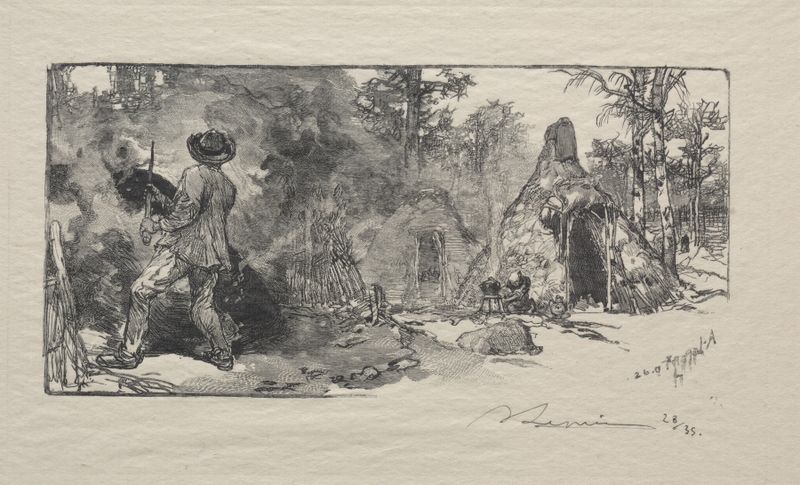
Les Charbonniere
Auguste Louis Lepère
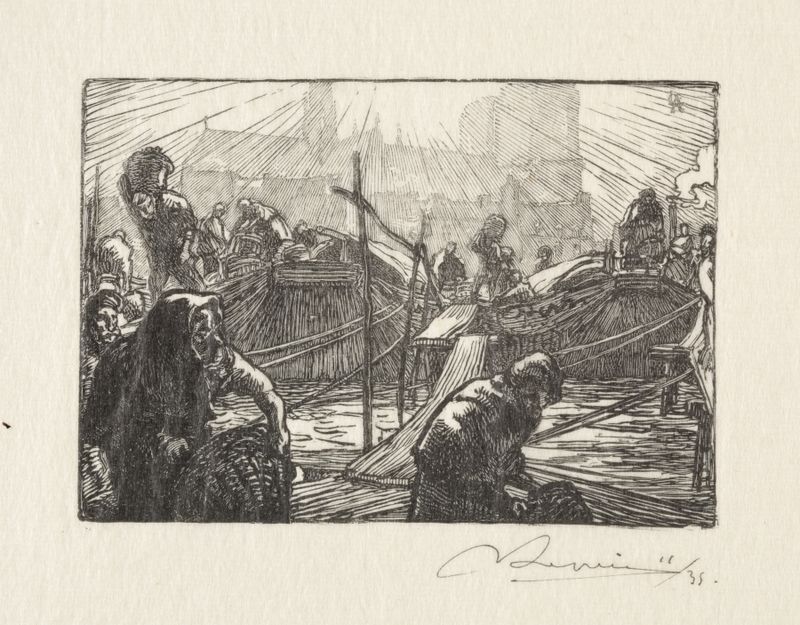
Notre Dame vue du Marché aux pommes
Auguste Louis Lepère

Le Palais des Arts Liberaux, Intèrieur
Auguste Louis Lepère