
Still life with book, jug and bottle. — History & Facts
What first catches the eye in Still life with book, jug and bottle is its play of boundaries—where does the painting end and the world begin? The artist, Arthur Segal, has painted not only the objects but the very frame itself, blurring the line between artwork and environment. The frame’s bold stripes echo the geometric rhythms within, drawing the viewer into a visual puzzle. Inside, familiar objects—a jug, a bottle, a book, and fruit—are fractured and reassembled, their contours broken into planes of color and light.
The palette is warm but never restful, with sharp contrasts and shifting shadows that keep the eye moving, searching for the next shape to resolve. Created around 1924, this still life belongs to a period when artists across Europe were reimagining the everyday through the language of Cubism and abstraction. In the wake of the First World War, painters like Segal sought new ways to see and to show the world, breaking objects into facets and reordering them on the canvas. Still lifes, once a domain of quiet domesticity, became sites of experimentation and bold design.
The fact that this work is painted in oil on cardboard, and that the original frame is Segal’s own creation, speaks to both resourcefulness and a desire for unity between art and its setting. History has kept few traces of this particular painting’s journey, but its restless geometry and painted border invite us to linger, asking where art ends and life begins.
More Artworks by Arthur Segal

Rotes Dach
Arthur Segal
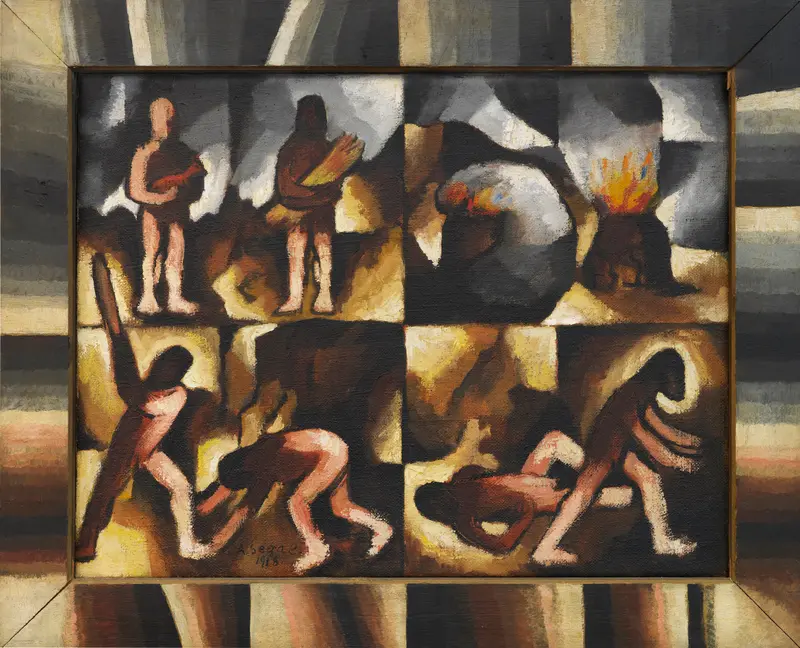
Kain und Abel (Zyklus Altes Testament)
Arthur Segal
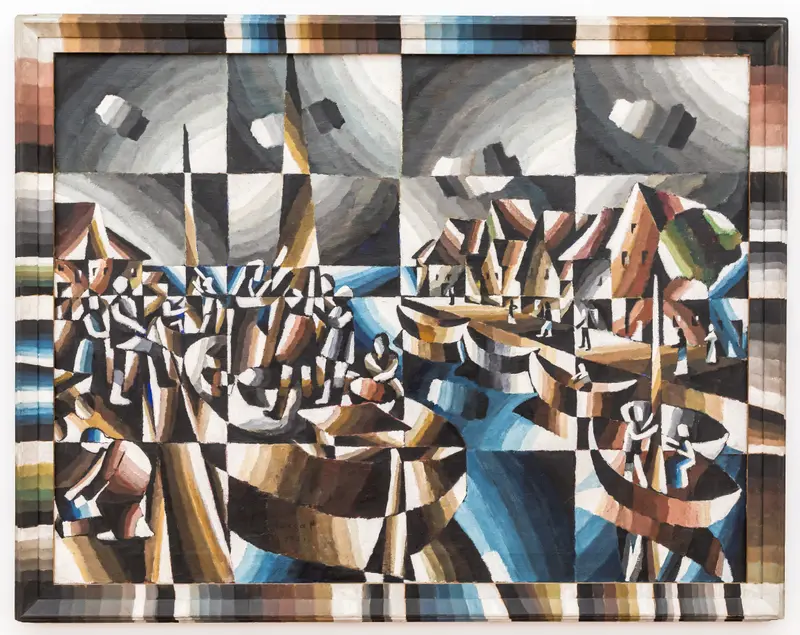
Der Hafen Museum Ludwig
Arthur Segal
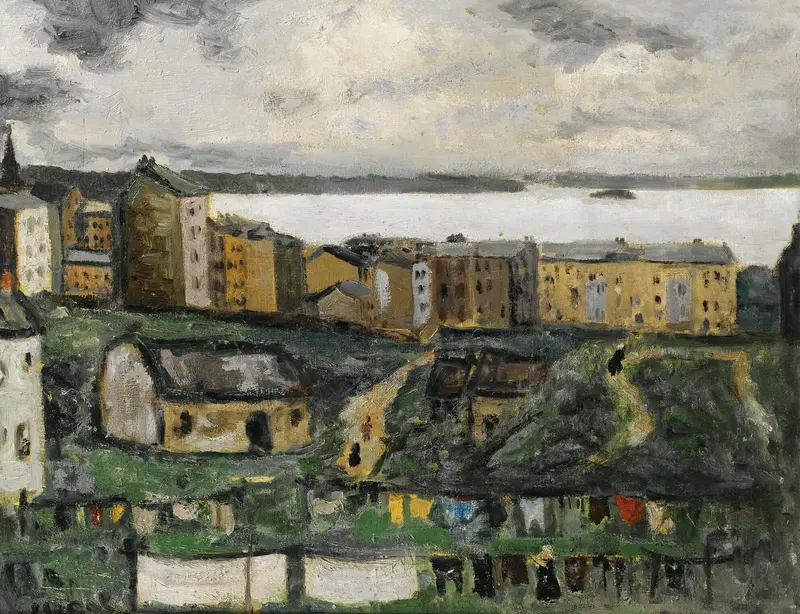
Village View
Arthur Segal
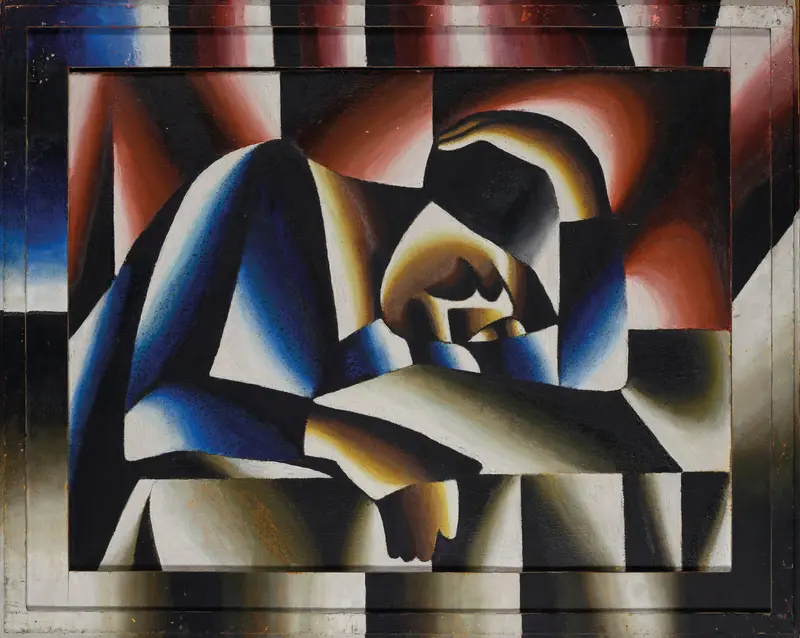
Sleeping woman
Arthur Segal
Still-Life with Candelabrum and Box
Arthur Segal
Der Astronom (Zyklus Arbeit)
Arthur Segal
Ein Dorf
Arthur Segal
Pietà
Arthur Segal

Ein Tag
Arthur Segal





