
Der Hafen Museum Ludwig — History & Facts
A harbor scene fractures into a mosaic of color and rhythm in Der Hafen by Arthur Segal, drawing the viewer into a world where the ordinary bustle of boats and figures becomes a dance of geometry. The eye is pulled first by the checkerboard sky, a grid of swirling greys and whites that sets the whole composition in motion. Below, boats and houses are broken into angular shards, their forms echoing the Cubist experiments of the early twentieth century, yet Segal’s palette of ochres, blues, and whites keeps the scene grounded in the material world of water and wood.
Figures emerge as white-edged silhouettes, busy with the labor of the port, their gestures frozen yet dynamic, as if caught mid-conversation or mid-haul. This painting belongs to a world on the cusp of modernity, painted in 1921 when artists across Europe were reimagining how to represent the energy of the city and the new rhythms of industrial life. Works like this, often commissioned for private collectors or progressive exhibitions, aimed to capture not just the appearance but the pulse of daily existence. Arthur Segal was among those who brought the innovations of Cubism and Expressionism into dialogue, especially in the years after the First World War, when old certainties had been shattered.
Today, Der Hafen survives in the Raimond Spekking collection, its angular harbor inviting us to look again at the everyday, and to find in its fragments the restless spirit of its time.
More Artworks by Arthur Segal

Rotes Dach
Arthur Segal
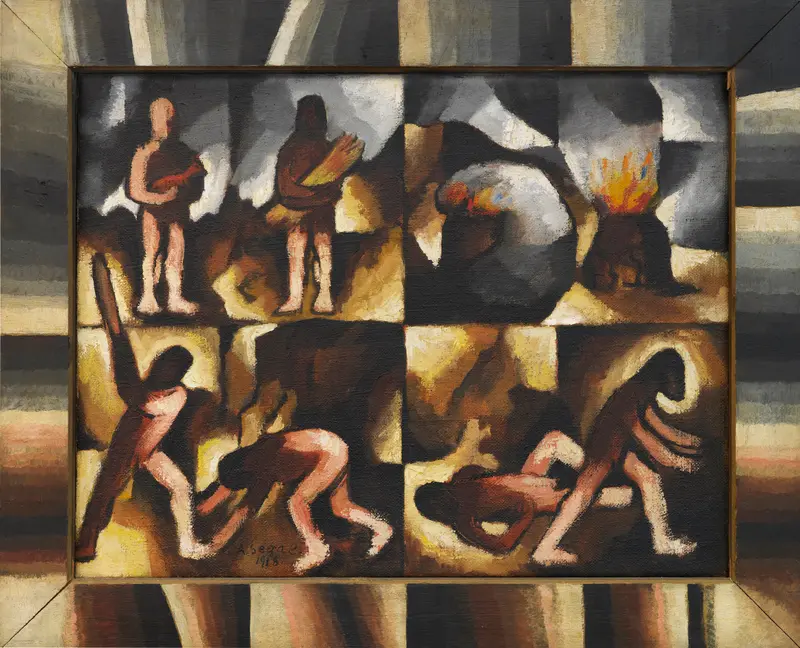
Kain und Abel (Zyklus Altes Testament)
Arthur Segal
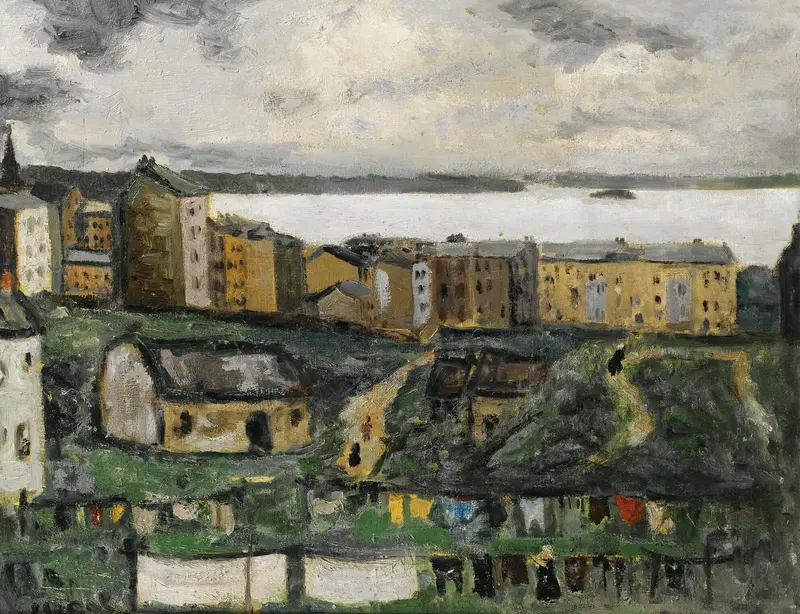
Village View
Arthur Segal
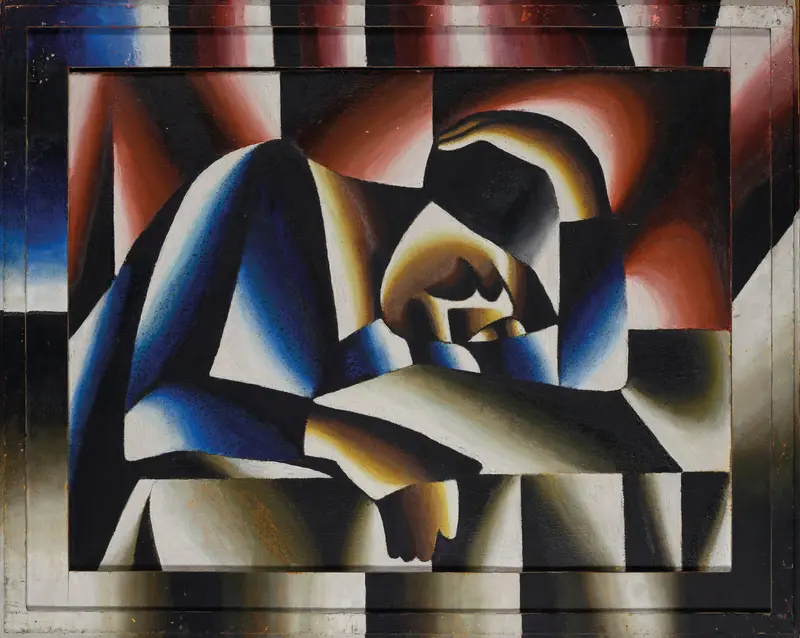
Sleeping woman
Arthur Segal
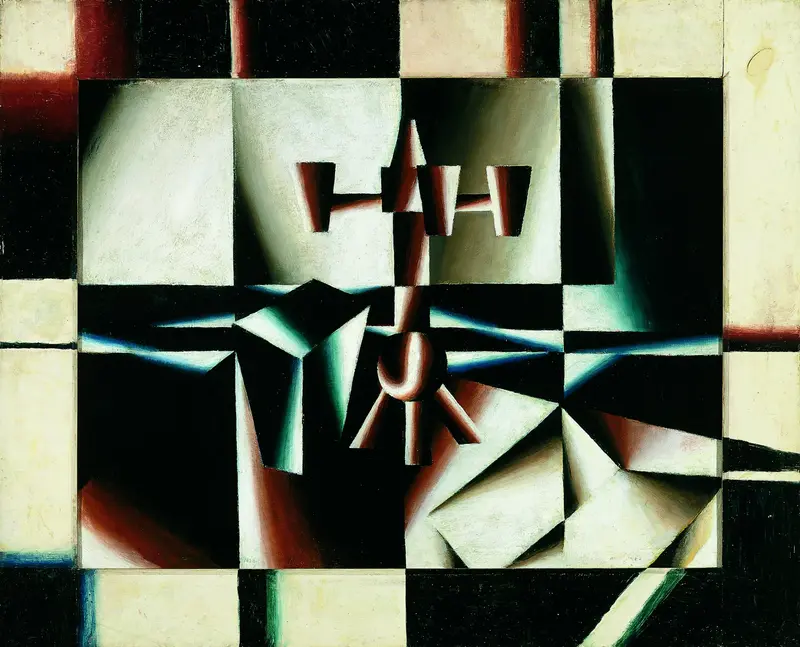
Still-Life with Candelabrum and Box
Arthur Segal
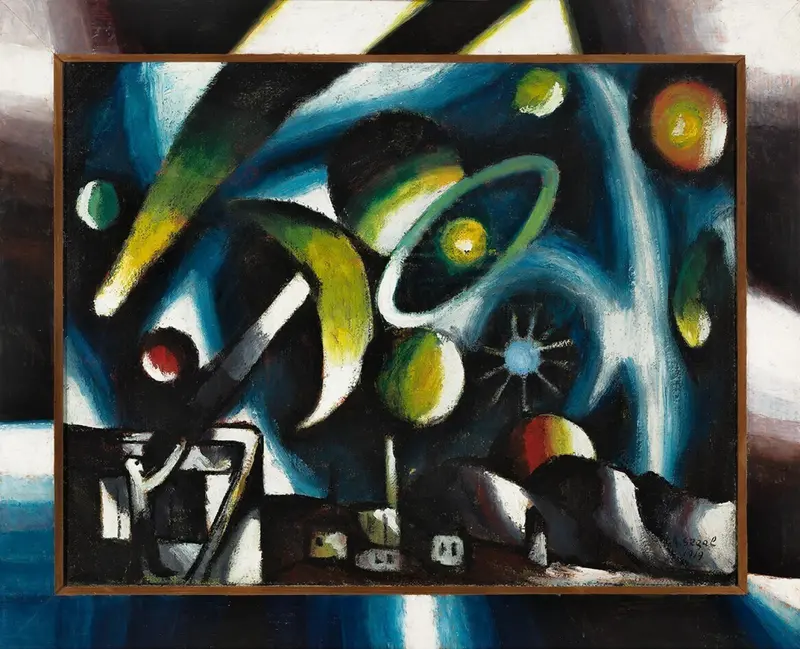
Der Astronom (Zyklus Arbeit)
Arthur Segal
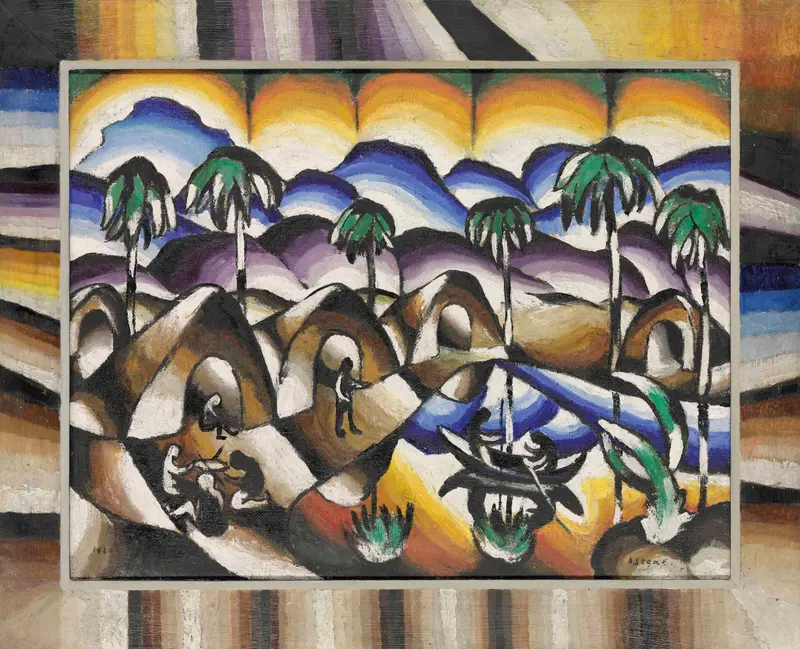
Ein Dorf
Arthur Segal
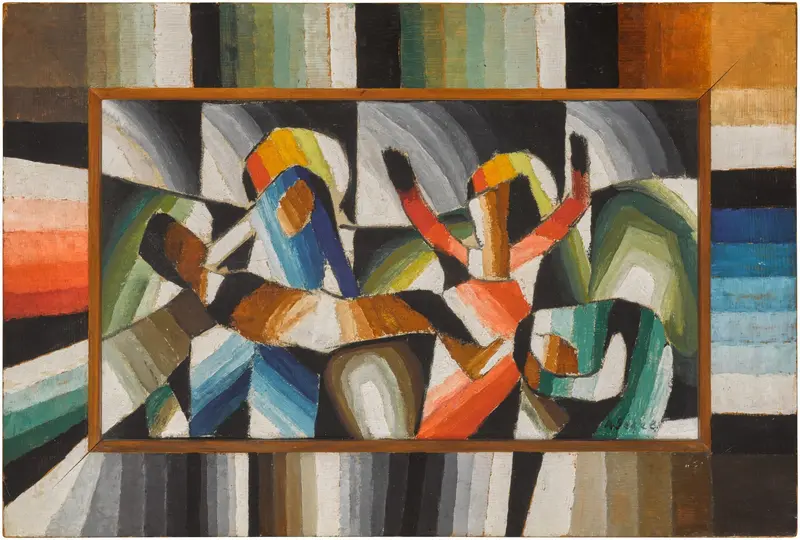
Pietà
Arthur Segal

Ein Tag
Arthur Segal
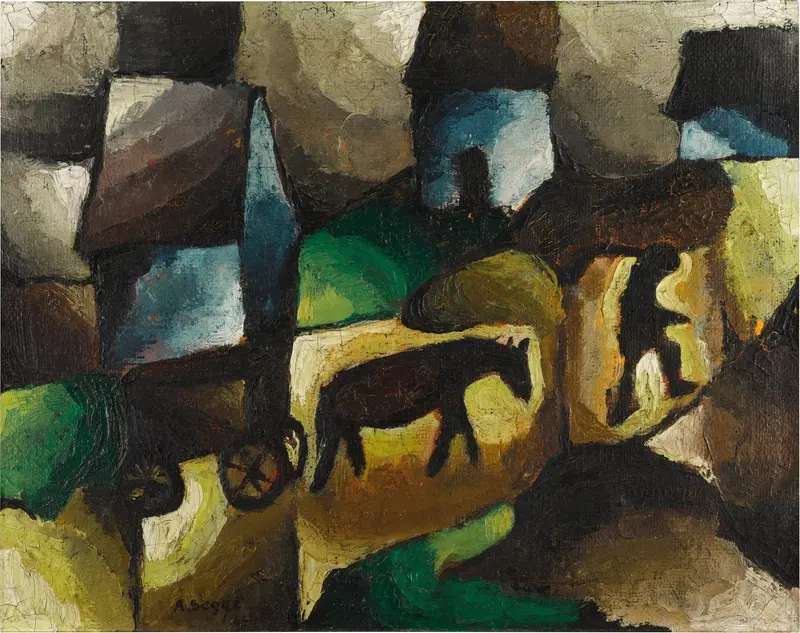
Arthur Segal: Man, Horse, Wagon
Arthur Segal





