Kain und Abel (Zyklus Altes Testament) — History & Facts
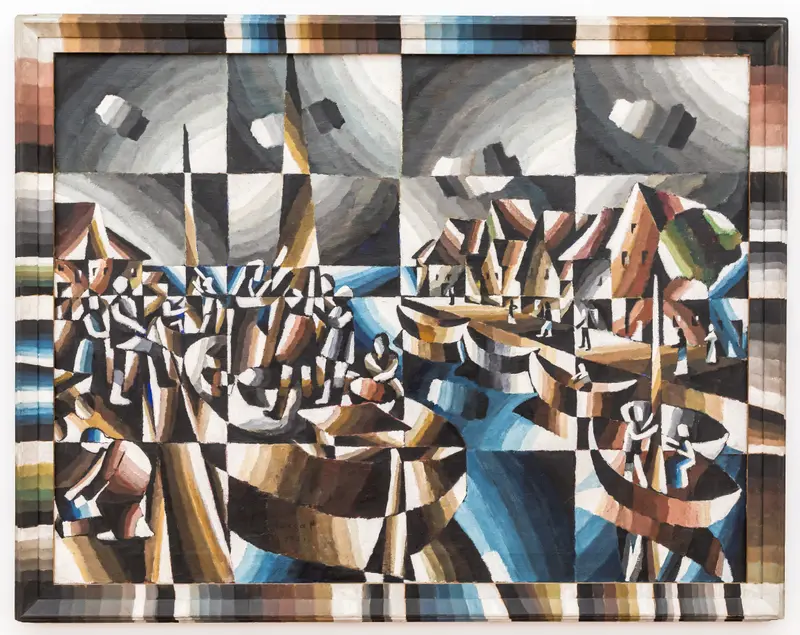
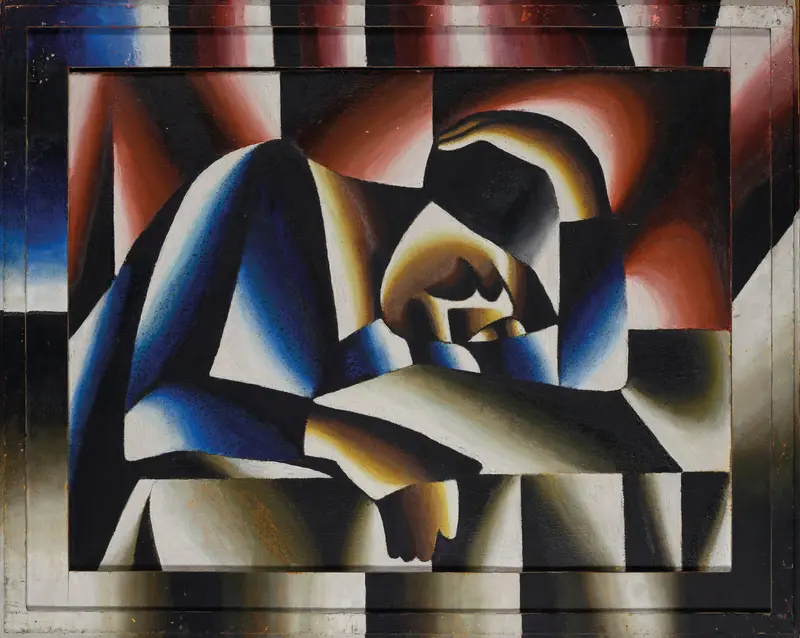
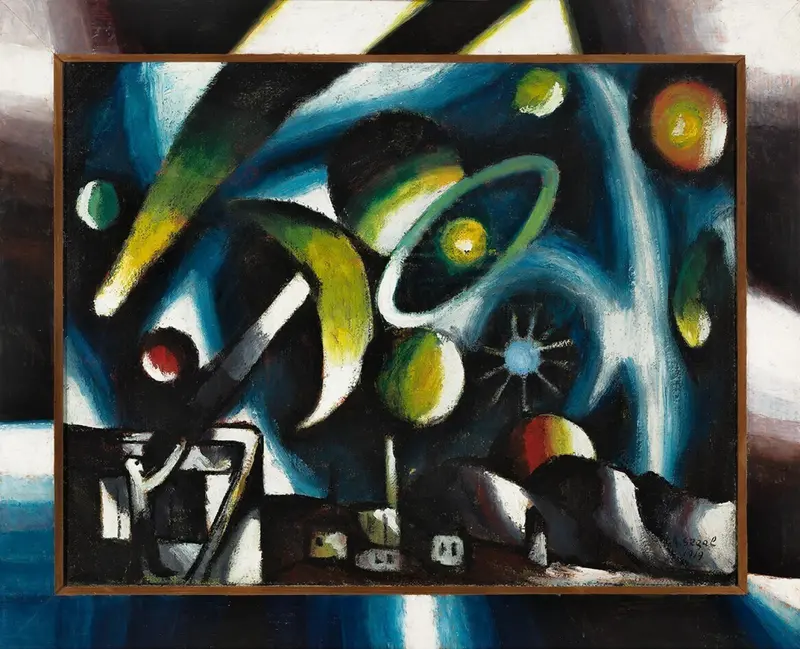
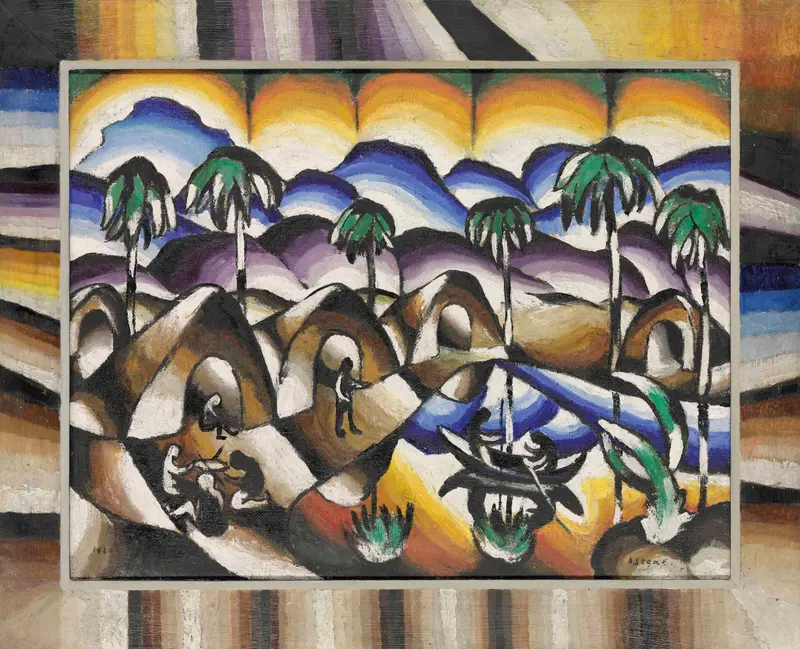
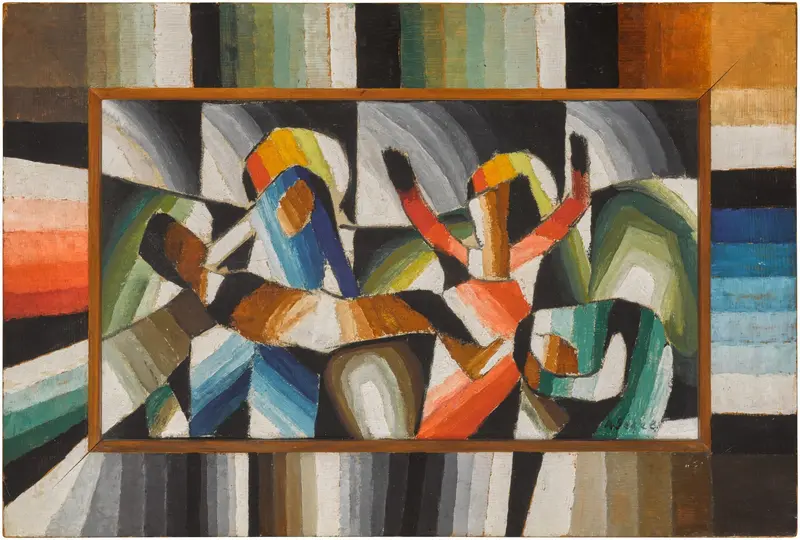
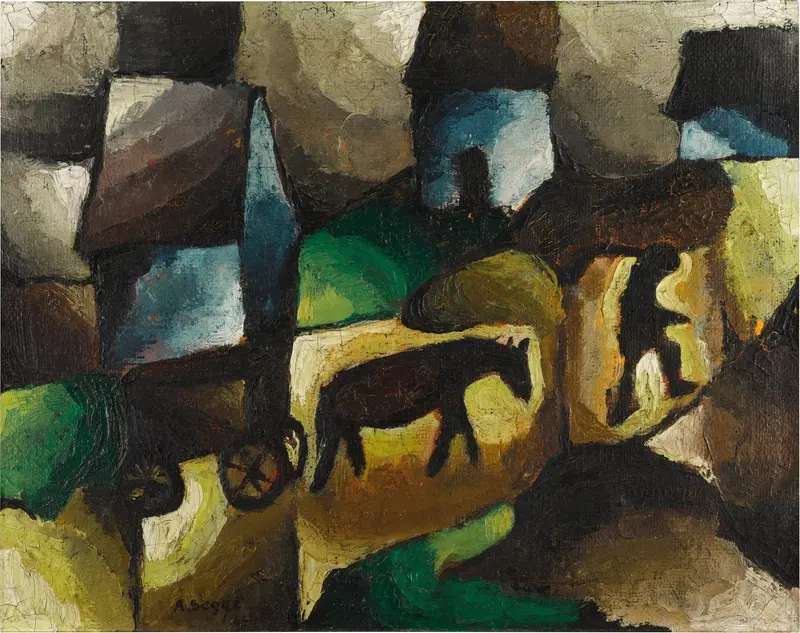
What first seizes the eye in Kain und Abel (Zyklus Altes Testament) by Arthur Segal is the painting’s division into six panels, each a window into a moment of tension and ritual. The figures, rendered with blocky limbs and stark shadows, seem to move through a ritualized choreography: upright, offering, then suddenly contorted in violence. The palette is all ochre, black, and ember-red, as if the entire scene is lit by the fires that burn in the background—fires that are both sacrificial and destructive.
The composition leads the viewer in a circular motion, from the upright figures at the top, through the drama below, and back again, as if the story is doomed to repeat itself. The figures’ gestures are exaggerated, almost primitive, their faces mask-like and impassive, heightening the sense of fate and inevitability. Painted in 1918, this work emerges from a world shaken by war and searching for new ways to tell old stories. Arthur Segal was part of the early twentieth-century avant-garde, a time when biblical themes were reimagined through the fractured lens of modernism.
Works like this were rarely made for churches or private devotion; instead, they were statements for galleries and salons, where artists and intellectuals debated the meaning of violence, sacrifice, and brotherhood in a shattered Europe. Little is recorded about the journey of this particular painting, now documented in a modern collection, but its bold, almost mural-like presence invites viewers to linger and ask what ancient stories still echo in the present.