
Stockholm, la grue — History & Facts
A single crane, perched at the edge of Stockholm’s waterfront, commands the scene with a quiet authority. The eye is drawn first to its angular silhouette, a scaffold of ironwork set against the pale, misted expanse of water and sky. The Swedish flag flutters from its mast, a flash of color that anchors the composition and hints at national identity in this industrial moment.
Marquet’s brushwork is spare and deliberate: the dock and machinery are rendered in deep, weighty tones, while the distant city dissolves into a haze of grays and silvers. The light, soft and diffused, flattens the horizon and lends the harbor an air of calm anticipation—work paused, the city waiting. Painted in 1938, Stockholm, la grue belongs to a world on the cusp of change. Views of harbors and rivers were a favored subject for artists in the early twentieth century, reflecting both the romance and the reality of modern industry.
In France, painters like Marquet were drawn to the interplay of water, sky, and the new machinery reshaping Europe’s cities. This work, now in the Musée des Beaux-Arts de Bordeaux, was acquired in 1960—history has kept few traces of its journey before that date, but its presence in the collection today invites us to linger over the quiet dignity of a working port, caught between the old world and the new. Look again at the water’s surface; notice how it holds the memory of every passing vessel, every shift in the northern light.
More Artworks by Albert Marquet
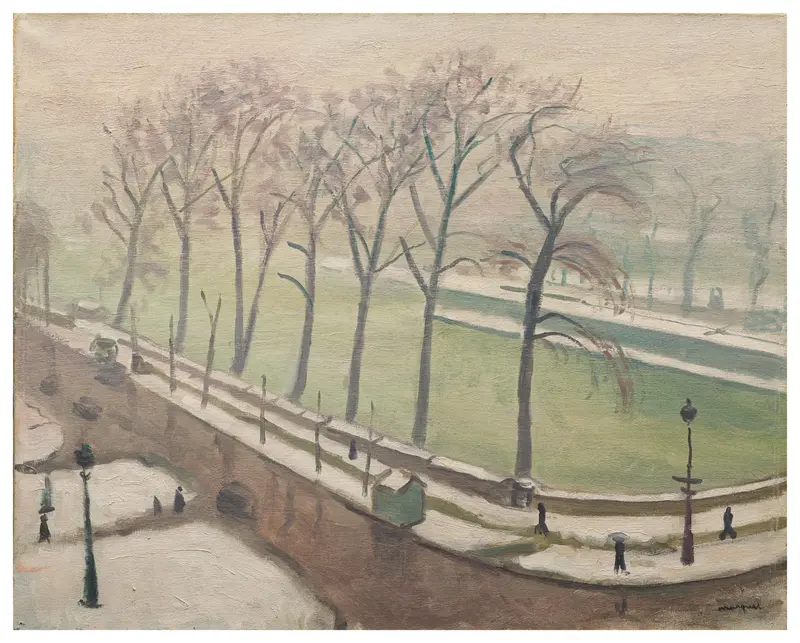
Pont-Neuf sous la neige
Albert Marquet

Le Port d’Alger
Albert Marquet
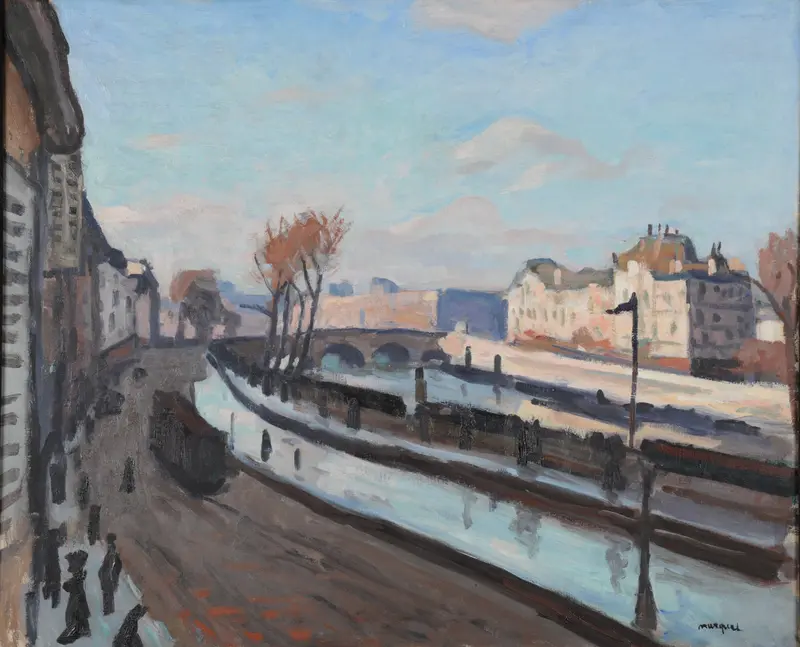
Le quai des Grands Augustins
Albert Marquet

Le jardin à l’Estaque
Albert Marquet
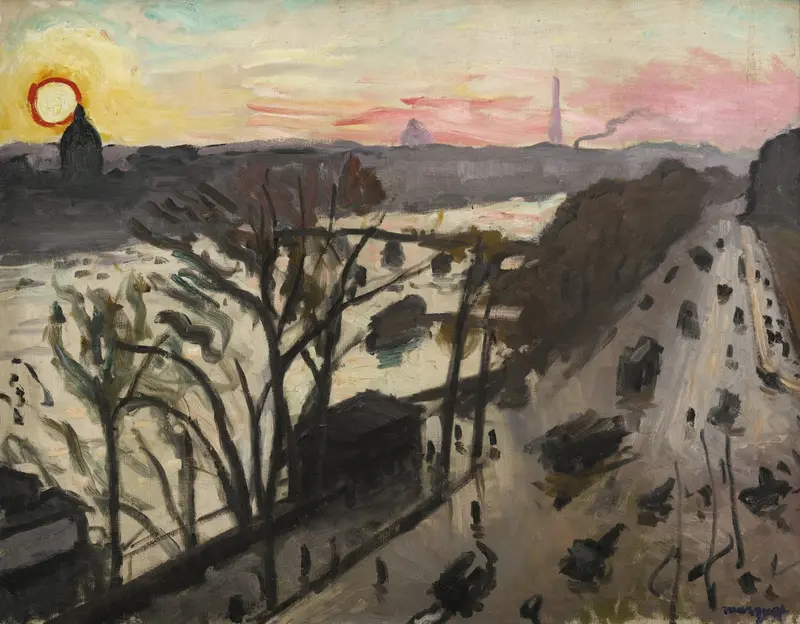
Paris, quai du Louvre, soleil d’hiver
Albert Marquet
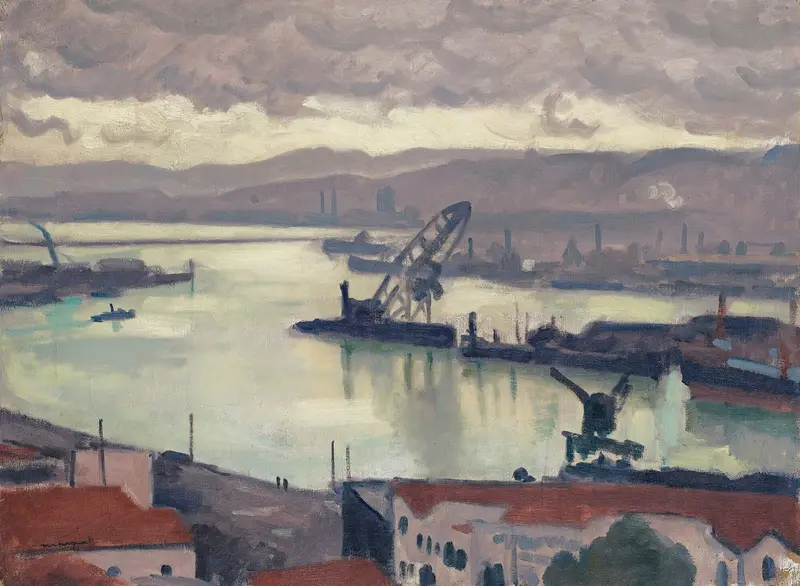
Alger, Temps Gris
Albert Marquet

Berge de la Seine à Méricourt
Albert Marquet
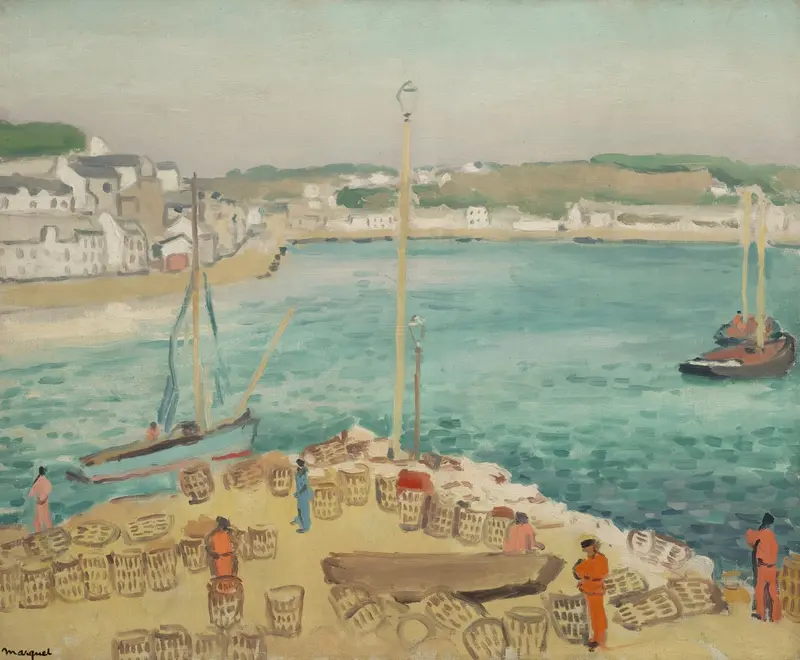
Audierne, les tonneaux
Albert Marquet
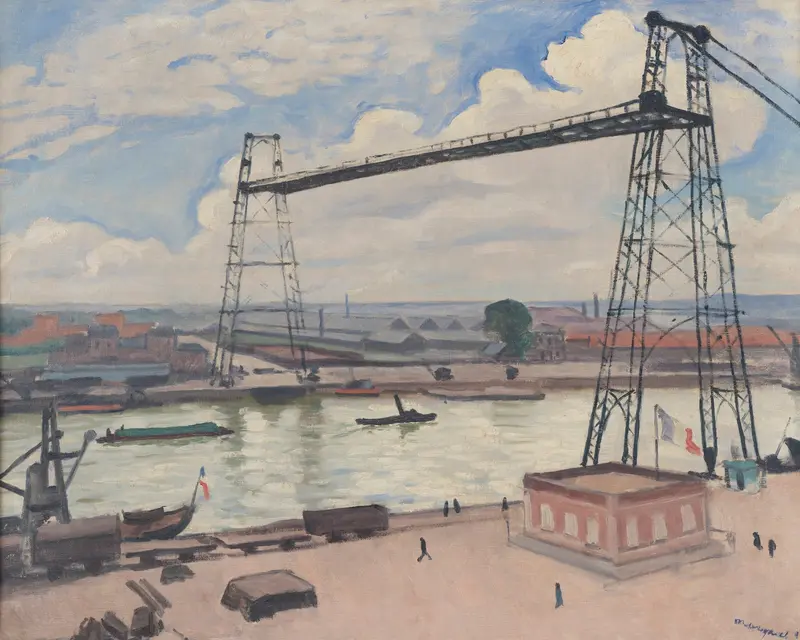
Rouen, le pont transbordeur
Albert Marquet
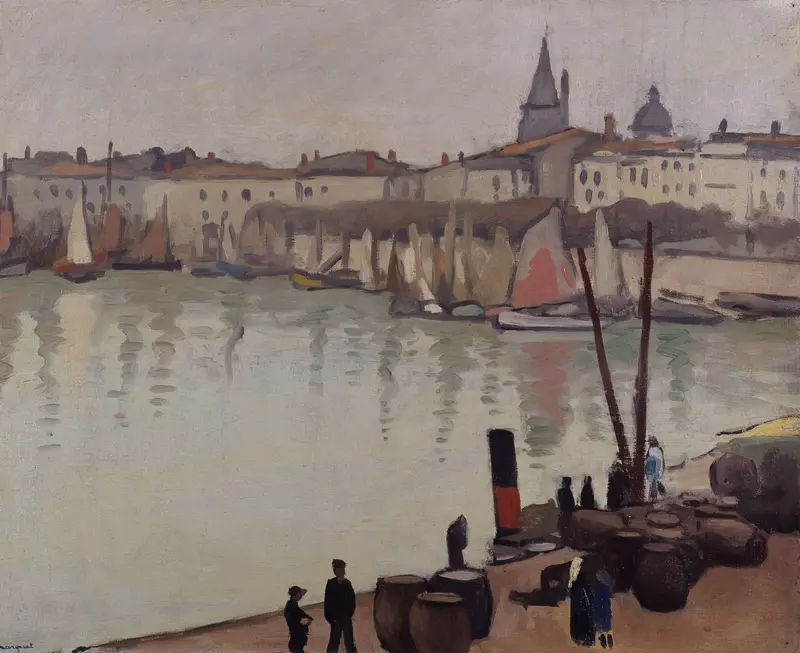
Port of La Rochelle
Albert Marquet





