
Street Scene — History & Facts
What first strikes the eye in Street Scene by Abraham Manievich is the restless play of shadow and color, as if the entire surface of the painting is alive with the shifting light of a late afternoon. The trunks and branches of the foreground trees carve bold, dark lines across the pale façades, their shadows stretching and twisting in blue and violet. The buildings themselves, rendered in thick, energetic strokes, seem both solid and fleeting, their forms caught in a moment of transformation.
Every window, every patch of wall, is fractured by the geometry of sunlight and shade, drawing the viewer’s gaze in and out of the scene, from the warmth of the ochre and red roofs to the cool, mysterious depths of the doorways. Painted between 1910 and 1914, this work belongs to a world on the brink of modern upheaval, when artists across Eastern Europe were testing the boundaries of Impressionism and Expressionism. Manievich was known for his vibrant cityscapes and landscapes, often infusing ordinary streets with a sense of inner movement and tension. Works like this were rarely commissioned; rather, they were born from the artist’s own fascination with the changing face of urban life and the fleeting effects of light.
History has kept few traces of this specific painting’s journey, but its presence in the Athenaeum collection today invites us to look again at the ordinary street—transformed, for a moment, into a stage for color and shadow.
More Artworks by Abraham Manievich
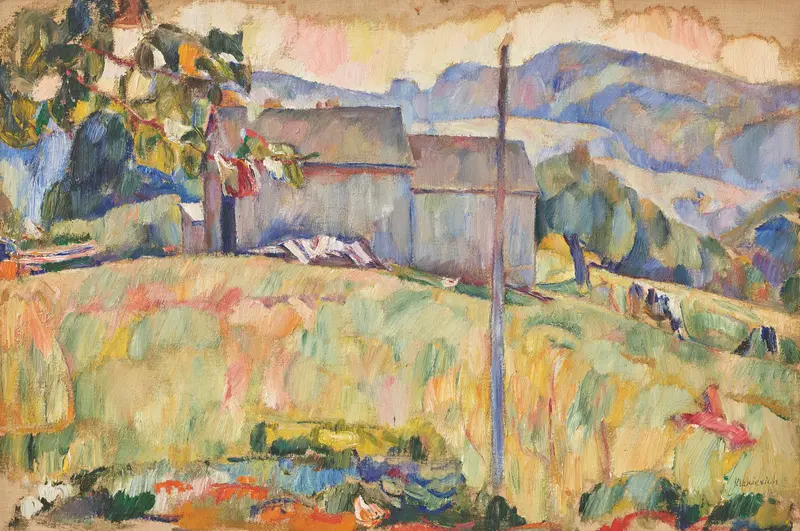
Summer landscape
Abraham Manievich

Early Spring
Abraham Manievich
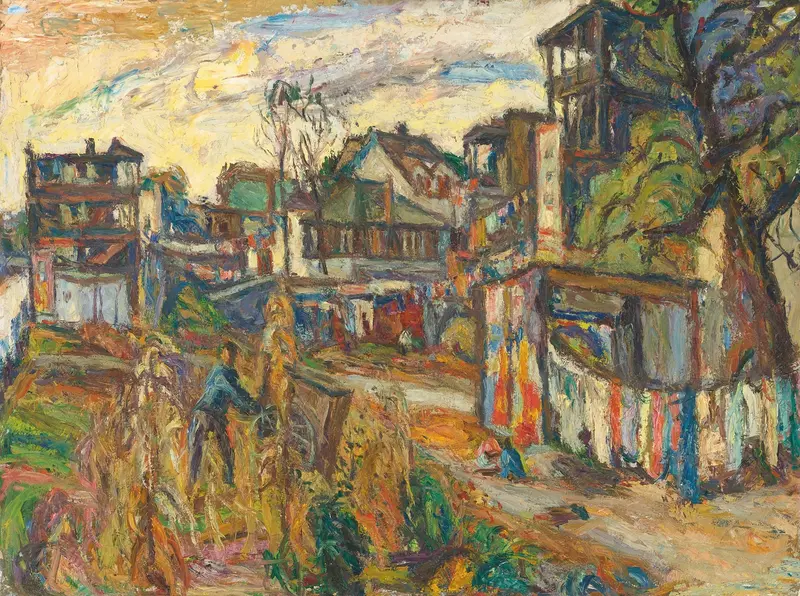
City Scene
Abraham Manievich
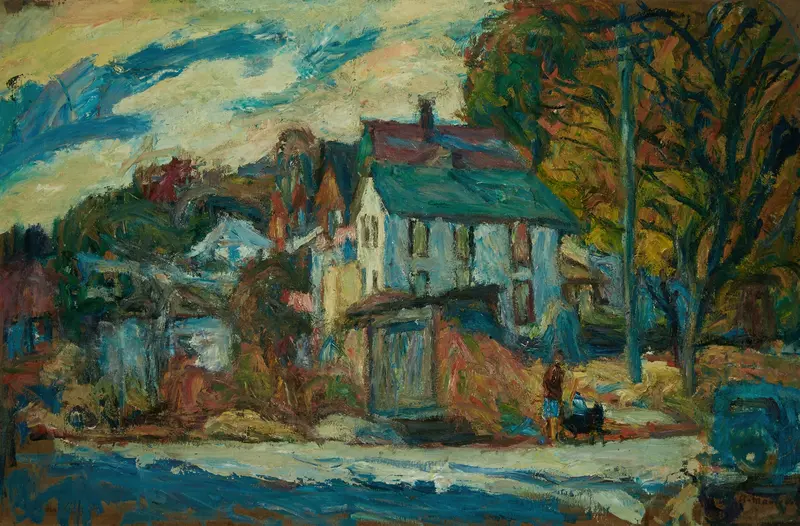
Autumn. White Plains
Abraham Manievich
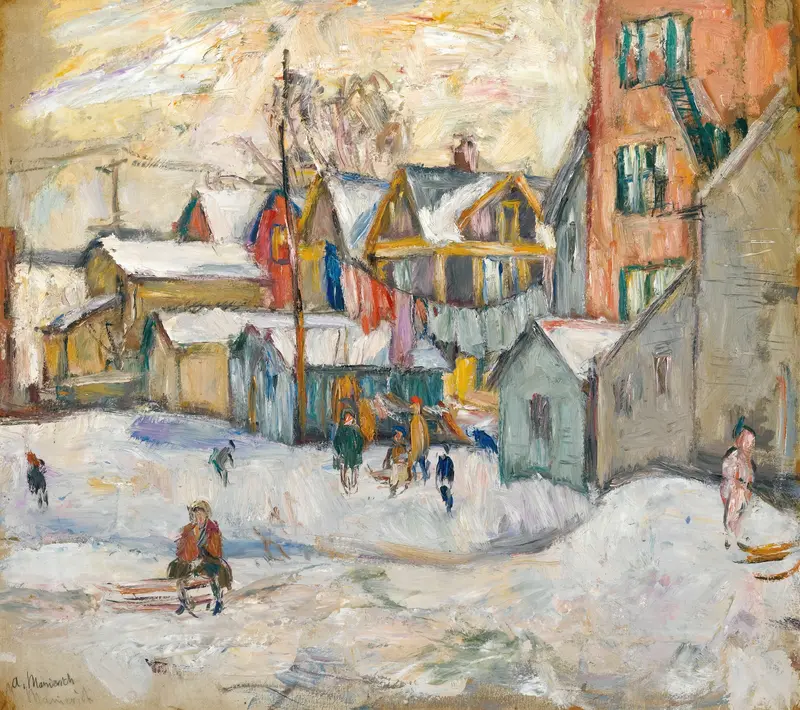
The Bronx
Abraham Manievich
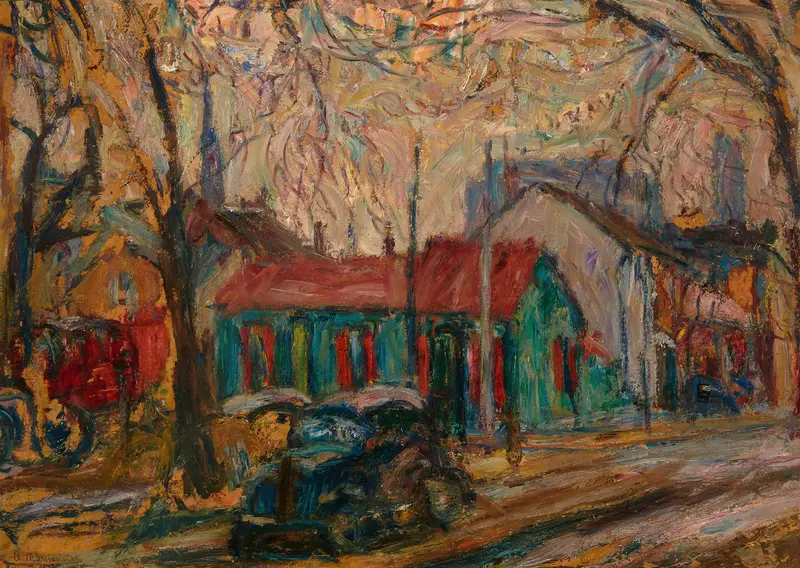
Quiet street
Abraham Manievich
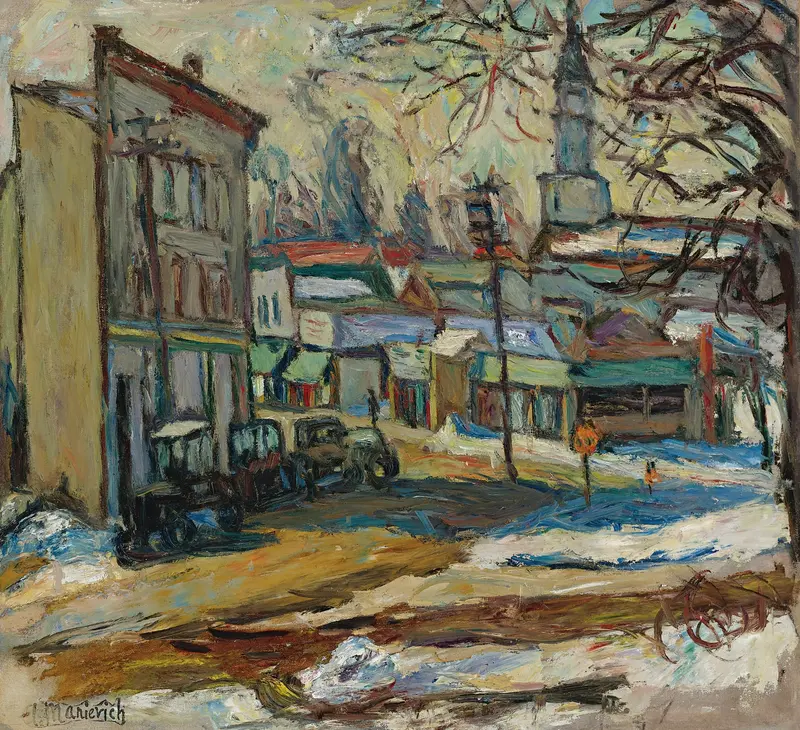
Bridgeport
Abraham Manievich
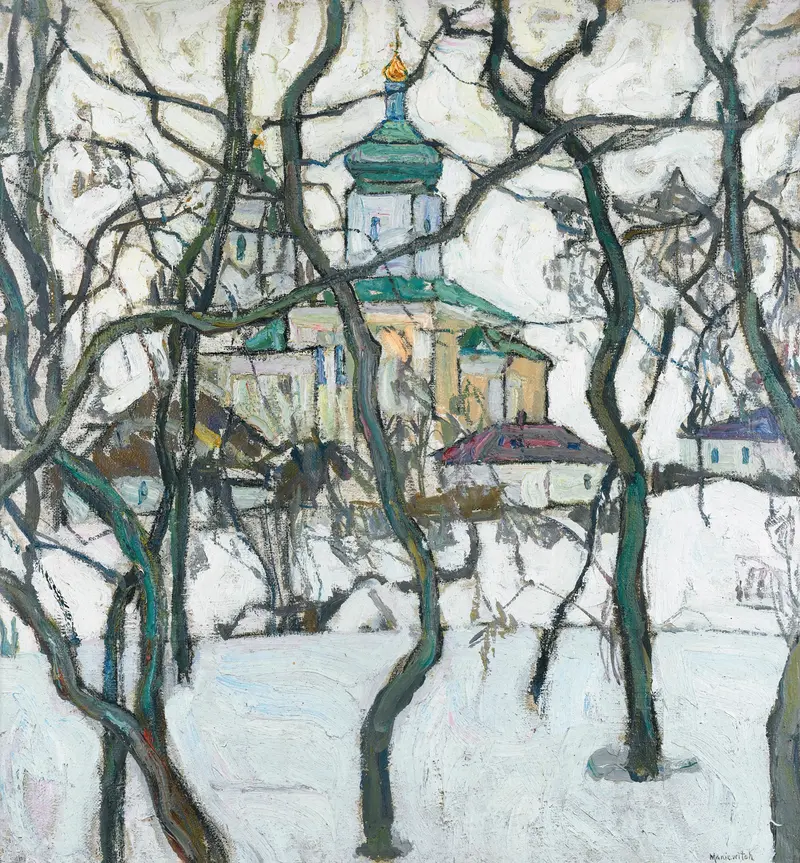
Winter Scene With Church
Abraham Manievich
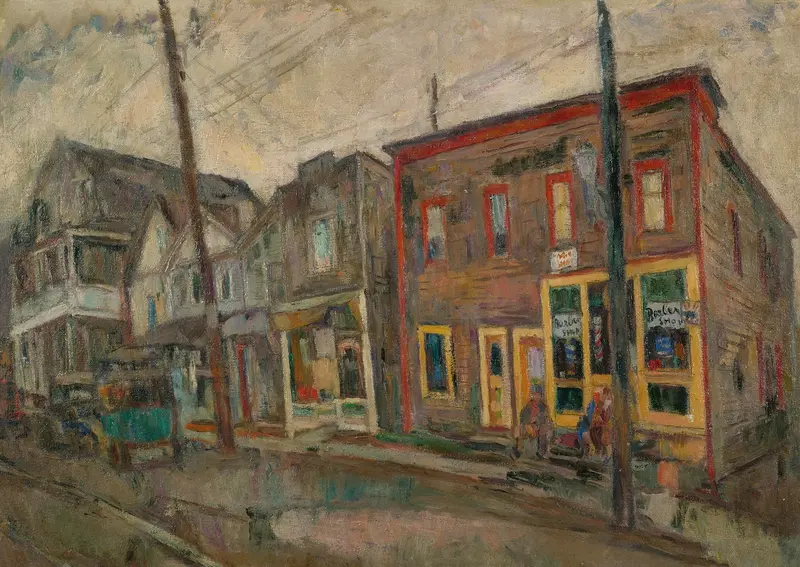
Street in the Bronx
Abraham Manievich
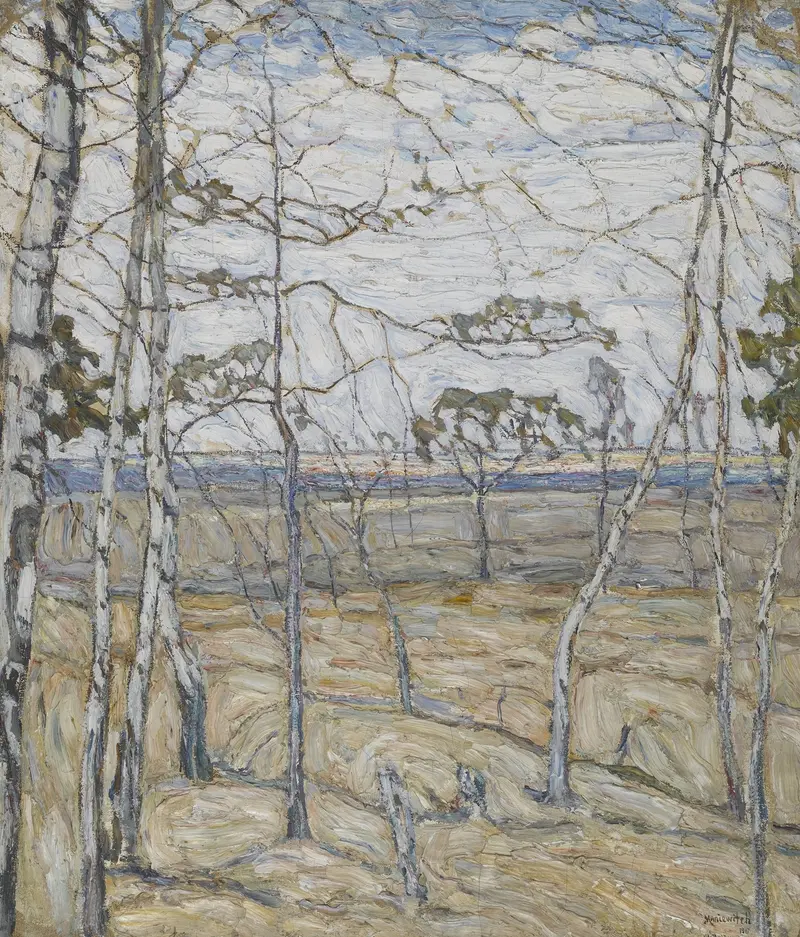
Birch Trees
Abraham Manievich
More Landscape Art

The Starry Night
Vincent van Gogh

View of Delft
Johannes Vermeer

Water Lilies
Claude Monet

The Grand Canal, Venice, looking north-west from the Ca' Corner to the Ca' Contarini degli Scrigni, with the campanile of Santa Maria della Carità
Canaletto

Windsor Castle
Canaletto

The Grand Canal looking North-East from the Palazzo Dolfin-Manin to the Rialto Bridge
Canaletto