Strook witte machinale kant met bloemen aan één zijde geschulpt, op karton — History & Facts
In the intricate dance of creation, the artist transforms raw materials into a delicate symphony of form and texture, capturing the essence of both nature and artistry in a singular moment. Look closely at the meticulous lacework emerging from the surface; it calls your attention immediately. The interplay of shadows and light reveals the sculpted flowers adorning one edge, each petal carrying a whisper of life and movement. The soft, muted tones of the cardboard contrast with the immaculate white of the lace, creating a visual dialogue that draws the eye to both the organic curves and the geometric precision.
Each stroke of the brush seems to transcend its medium, inviting you into a realm where craftsmanship reigns supreme. Yet, within this harmony lies a subtle tension. The disparity between the industrial quality of cardboard and the fragile beauty of lace speaks to the duality of creation—artistry born from both chaos and control. The floral motifs suggest a fleeting softness, hinting at the ephemeral nature of both life and artistic expression, while the rigid support evokes permanence, grounding the work in reality.
This juxtaposition invites contemplation of the relationship between the natural world and human ingenuity. In the mid-1920s, Schnitzler worked in a vibrant artistic environment that embraced modernism and sought new forms of expression. At this time, the boundaries between fine art and craftsmanship were increasingly blurred, as artists like him explored innovative techniques and materials. Schnitzler's work, including this piece, reflects a pivotal moment in art history, capturing transitional ideals just as society began to grapple with the rapidly changing world around it.
More Artworks by Gustav Schnitzler
Browse all →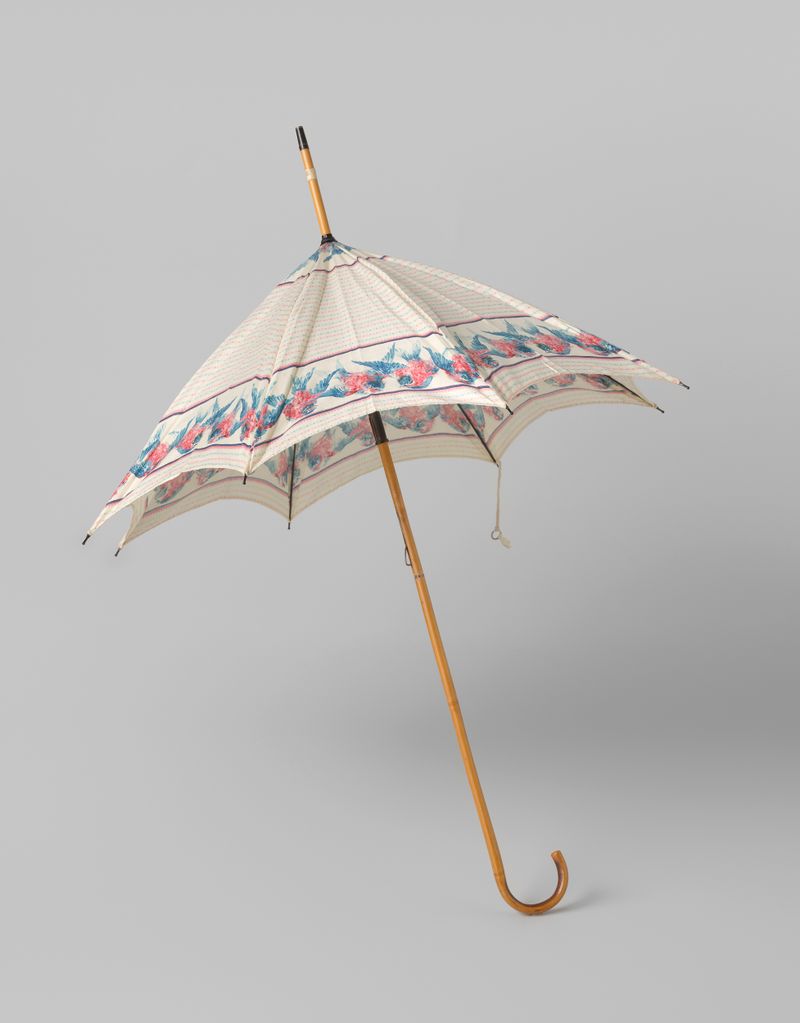
Parasol met dek witte katoen bedrukt met roze en blauwe vogeltjes, op een bamboe stok met gebogen handvat
Gustav Schnitzler
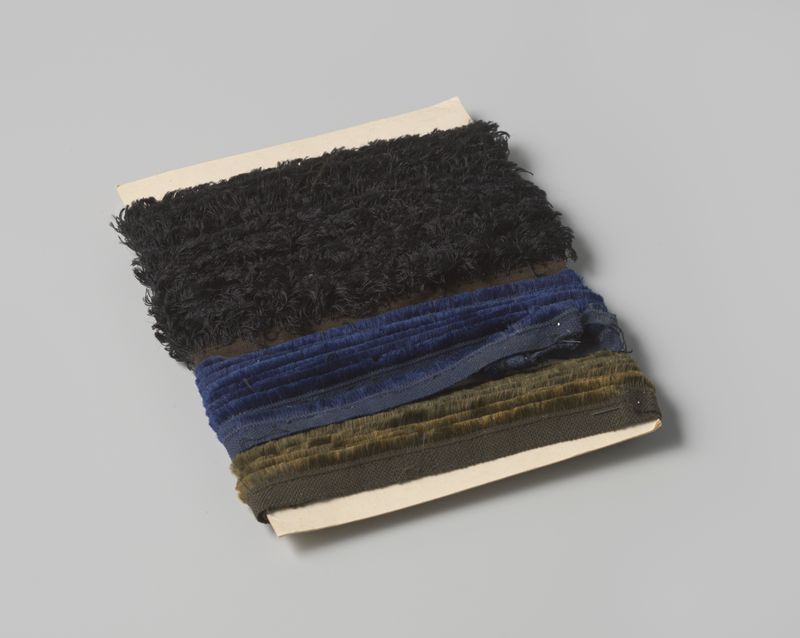
Strook zwarte franje aan bezemband, op karton
Gustav Schnitzler
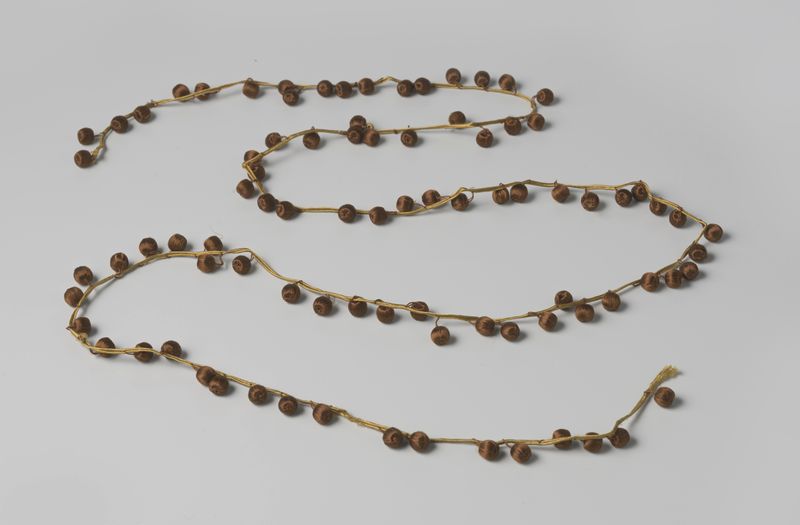
Galon, goudkleurig, waaraan pompons van bruin (zijde)draad hangen
Gustav Schnitzler
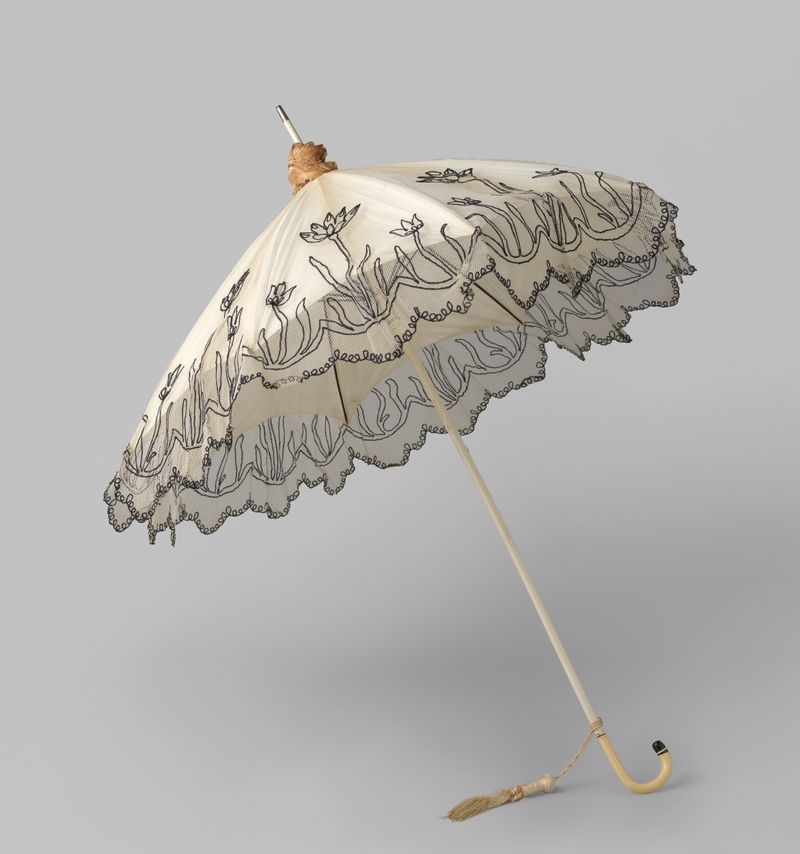
Parasol met dek van witte tule waarop zwart borduurwerk van telkens drie bloemen, op een witgeverfde houten stok, waaraan een gebogen ivoorkleurig handvat
Gustav Schnitzler

Parasol met dek van witte katoen, waartussen een strook van witte kant, op een lichte, houten stok met een ronde haak
Gustav Schnitzler

Strook franje, getand, wit en écru, gewikkeld rond een met gouden randen afgezet plankje
Gustav Schnitzler
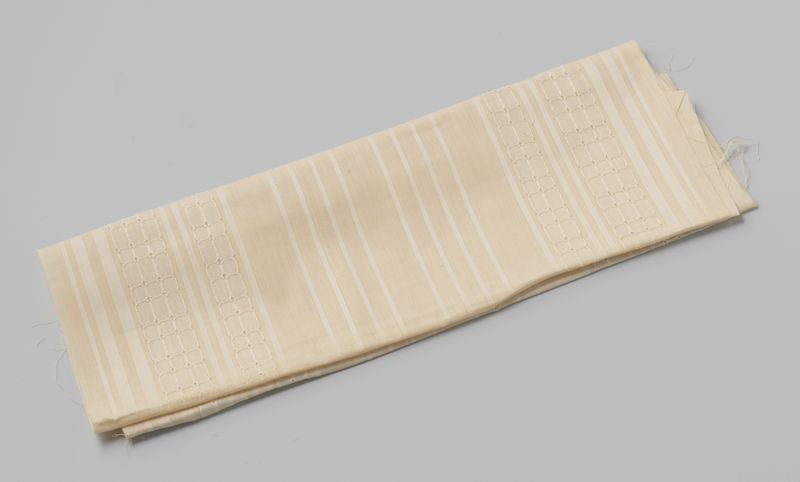
Coupon wit parasolkatoen met beige strepen aan weerszijden
Gustav Schnitzler
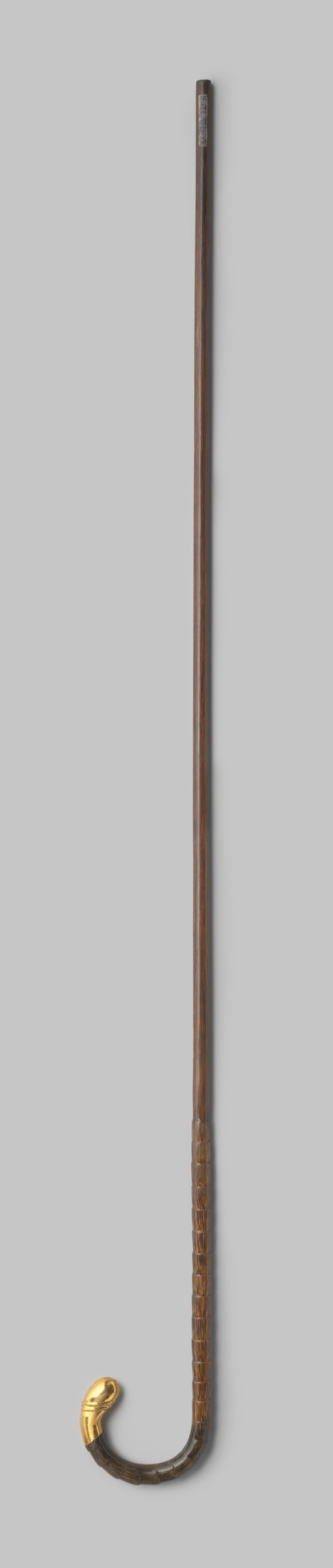
Onderstok van een parapluie of parasol van kokospalm met ronde haak en goudkleurig (verguld?) metalen uiteinde
Gustav Schnitzler
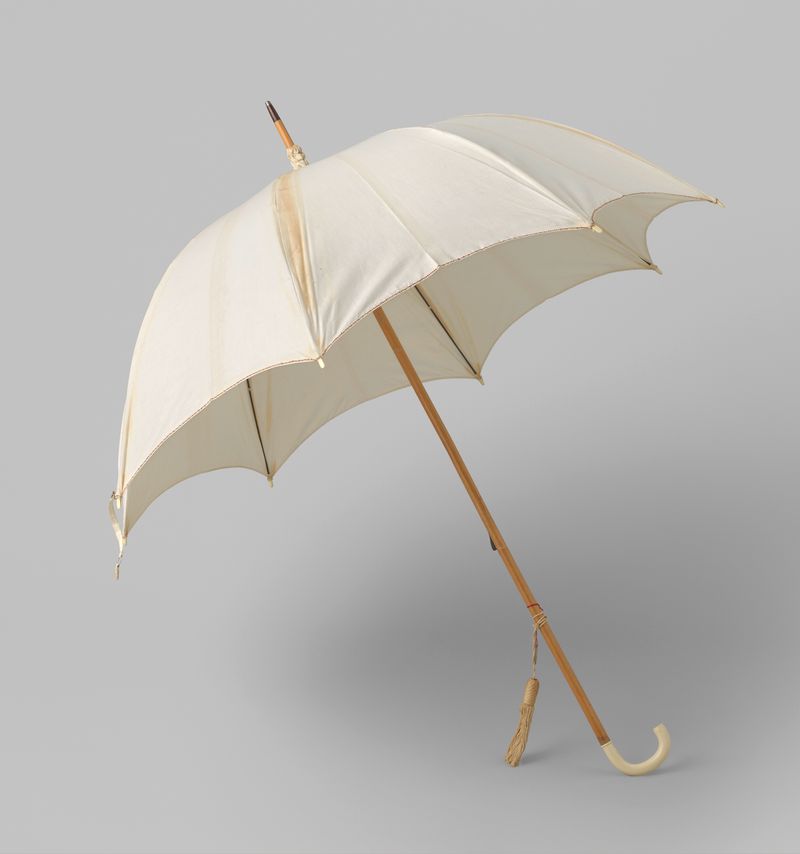
Parasol met dek van effen witte katoen met een smal meerkleurig draad langs de rand geregen, op lichte houten stok, met gebogen, ivoorkleurig handvat
Gustav Schnitzler
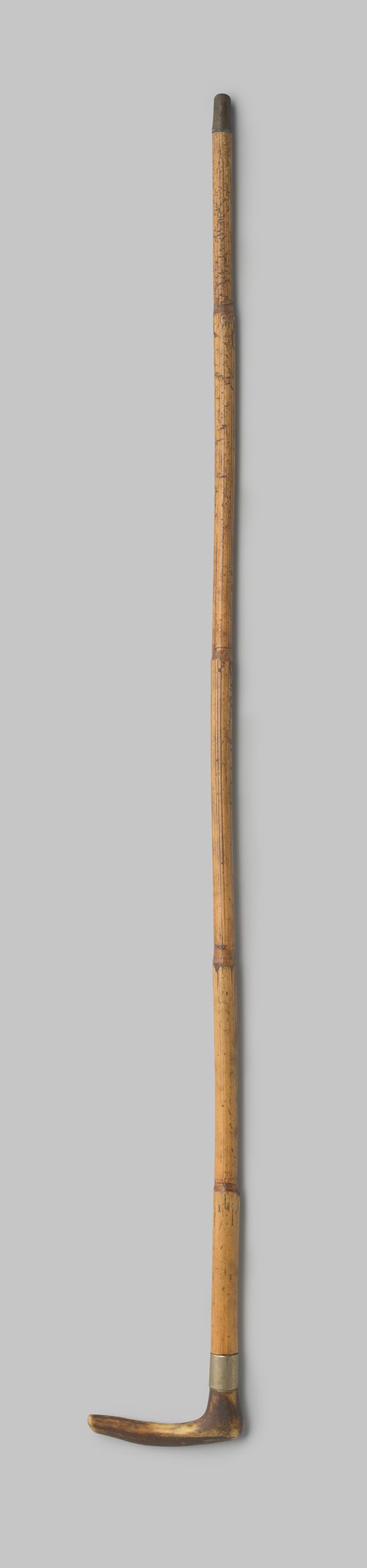
Onderstok van parasol of parapluie van bamboe met rechte haak van hertshoorn, met ring en punt van koper
Gustav Schnitzler