
Study — History & Facts
In Study, the essence of fleeting moments is beautifully captured, revealing the quiet revelations that emerge from nature and contemplation. Look to the left at the soft, whispering waves painted with gentle blues and greens, where the sea caresses the shore. The strokes are delicate yet confident, inviting your gaze to dance with the ebb and flow of the water. Notice how the light falls upon the surface, creating glimmers that feel almost alive, as if the horizon itself is exhaling a sigh of contentment.
The subtle gradations of color blend seamlessly, establishing a serene atmosphere that envelops the viewer. Upon closer inspection, the contrasts in Study emerge: the harmonious interplay between sky and water speaks of unity, while the brushwork itself reveals a duality of calmness and energy. The absence of figures amplifies the solitude, allowing the surrounding beauty to resonate deeply within the viewer. Each stroke invites contemplation, encouraging one to find revelations in the seemingly mundane, as if the simplicity of nature holds the answers to life's complexities. During the late 19th century, Eugène Boudin painted this work while establishing himself as a pivotal figure in the Impressionist movement.
Working in Normandy, he was deeply influenced by the coastal landscapes, aiming to capture the light and atmosphere that define them. This was a time of burgeoning artistic exploration, where traditional boundaries were being challenged, and Boudin stood at the forefront, paving the way for future generations of artists.
More Artworks by Eugène Boudin
Browse all →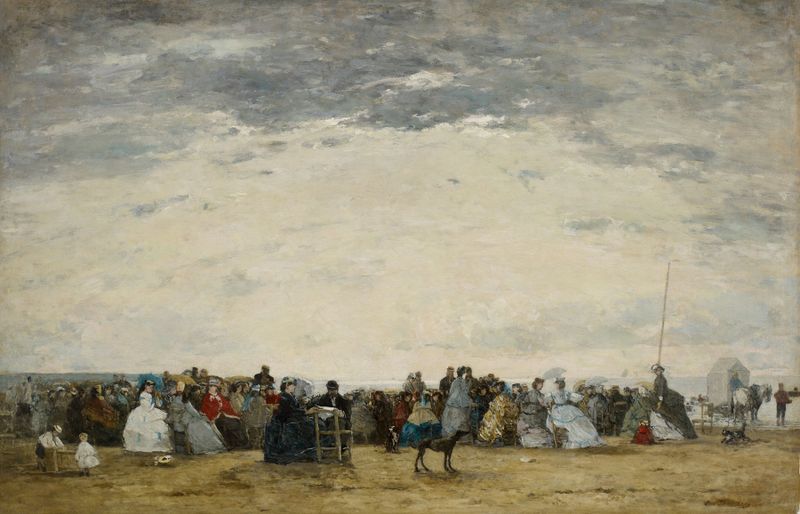
Vacationers on the Beach at Trouville
Eugène Boudin

Washerwoman near Trouville
Eugène Boudin
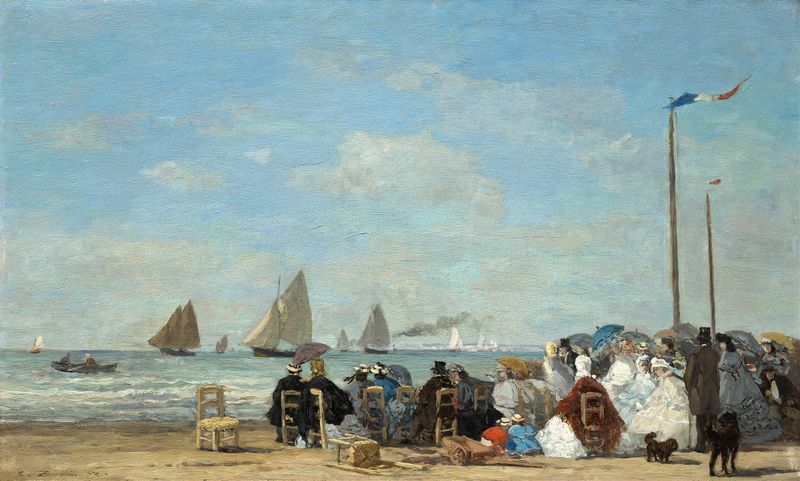
Beach Scene at Trouville
Eugène Boudin

Port aux environs d’Honfleur
Eugène Boudin

Le Faou, un coin du village
Eugène Boudin
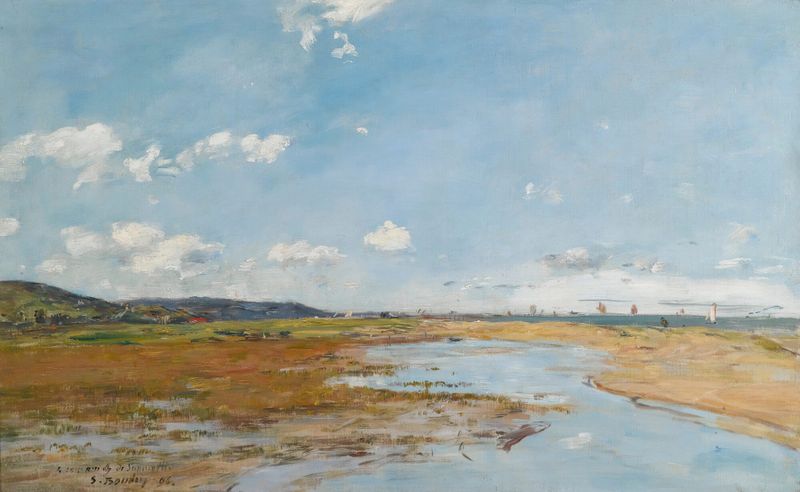
Deauville. Le Rivage
Eugène Boudin
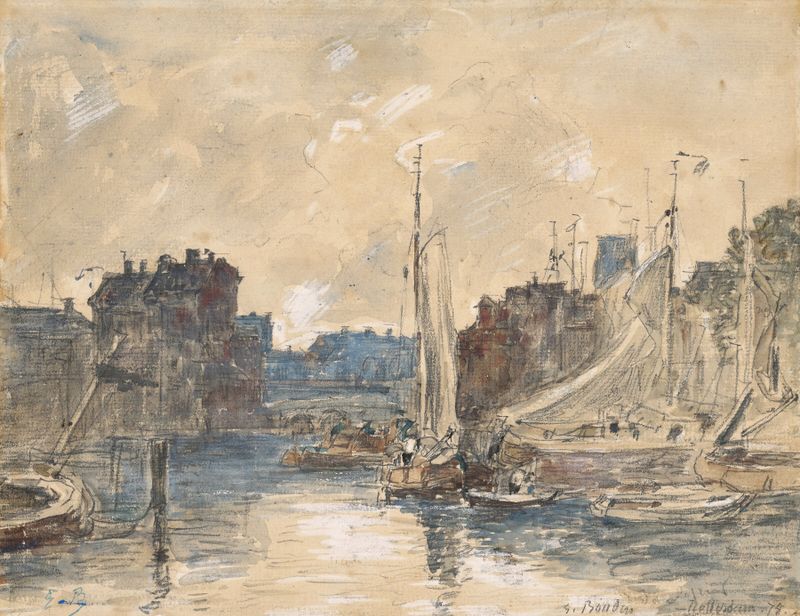
Port de Rotterdam
Eugène Boudin

View of Bordeaux, from the Quai des Chartrons
Eugène Boudin

Trouville, Scène De Plage
Eugène Boudin

Trouville, Le Port
Eugène Boudin





