
Study of a cock pheasant — History & Facts
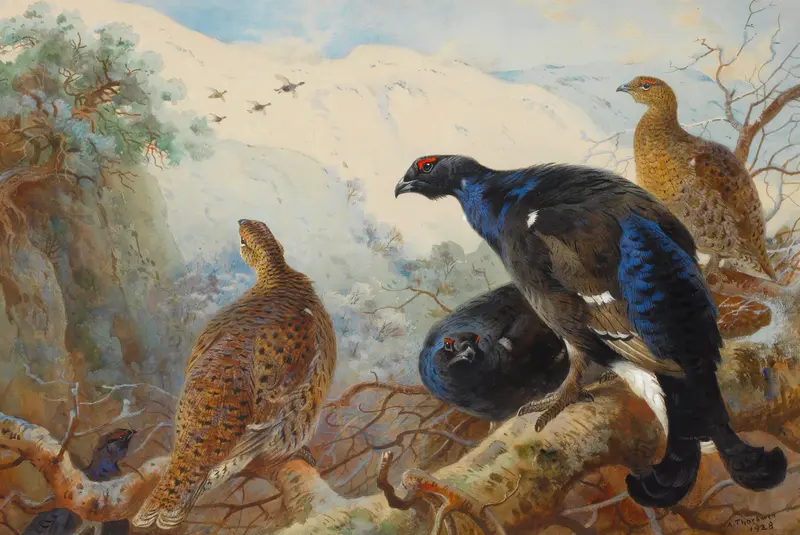
What holds the gaze here is the sheer presence of the pheasant, caught in a moment of alert stillness. The bird’s head is turned, its eye sharp and watchful, while its body remains poised, every feather rendered with a precision that borders on reverence. The sweep of the long tail draws the viewer’s eye across the page, while the riot of color—copper, emerald, cobalt—signals both the bird’s vulnerability and its pride.
The background, a haze of ochre and soft blue, offers no distraction; it is the pheasant alone that commands the scene, as if the world has briefly paused to admire it. Archibald Thorburn was celebrated in late nineteenth- and early twentieth-century Britain for his ability to capture wildlife with both accuracy and affection. Works like this, now in the collection of Christie’s, were often created for naturalists, sportsmen, or collectors who sought to bring a piece of the wild indoors. Such studies were not merely decorative; they were part of a larger Victorian and Edwardian fascination with cataloguing and understanding nature, driven by both scientific curiosity and the pleasures of country life.
History has kept few traces of the individual stories behind many of these works, but the clarity and immediacy of Study of a cock pheasant speak directly to anyone who pauses before it—inviting the viewer to look again, and see not just a bird, but a living moment.
More Artworks by Archibald Thorburn

The Watchful Hinds
Archibald Thorburn
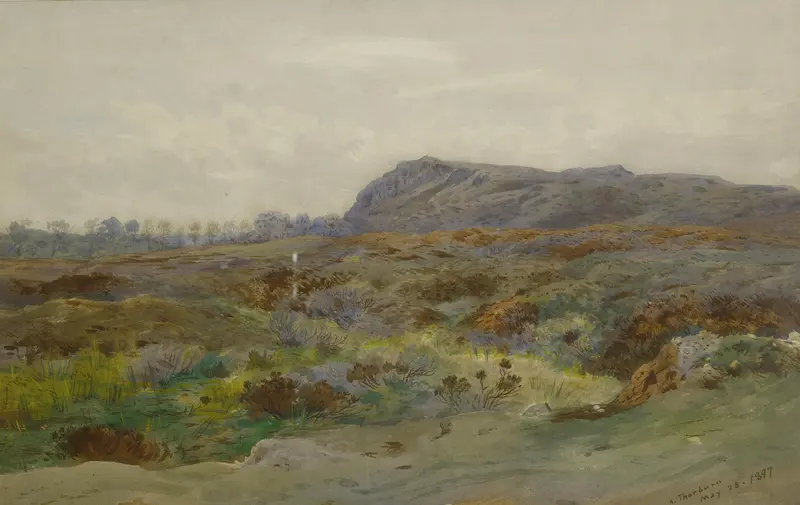
Moorland Landscape
Archibald Thorburn
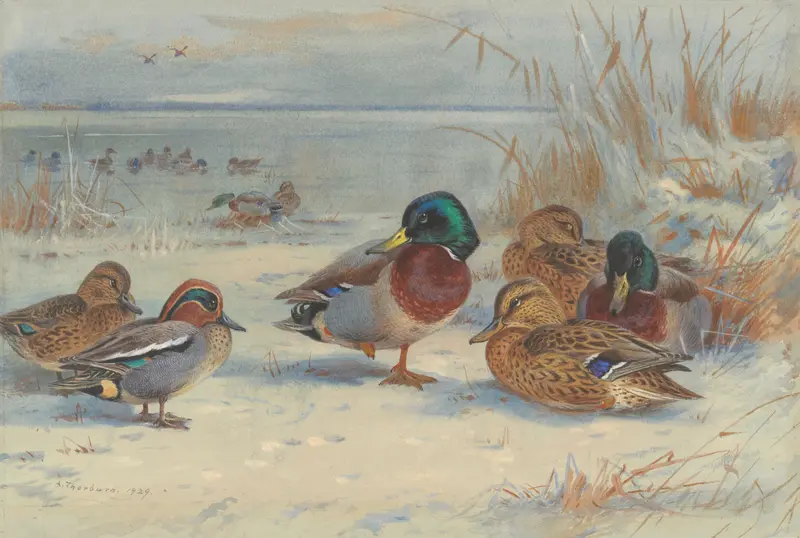
Mallard and teal in the snow
Archibald Thorburn
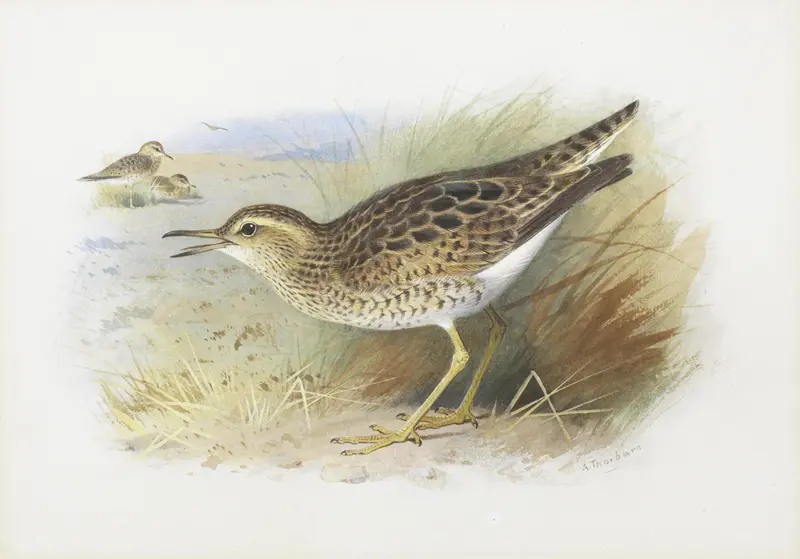
Bartram's Plover
Archibald Thorburn
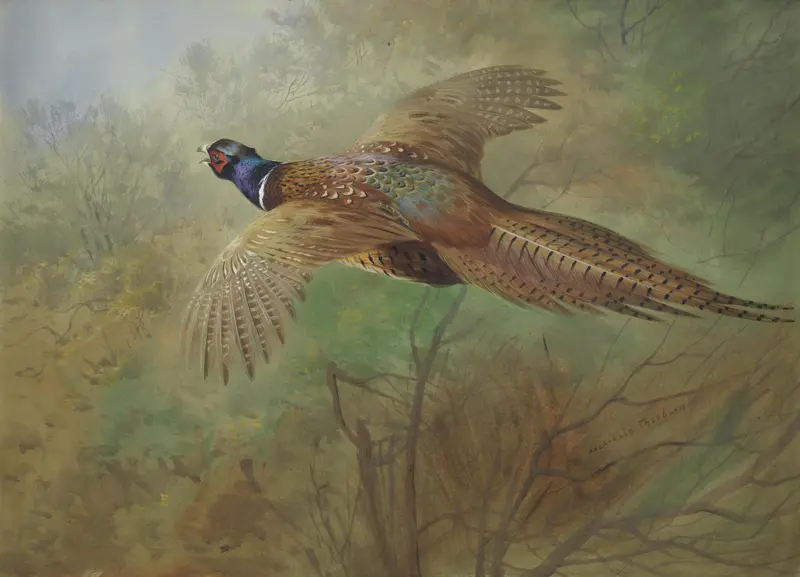
Pheasant in flight
Archibald Thorburn
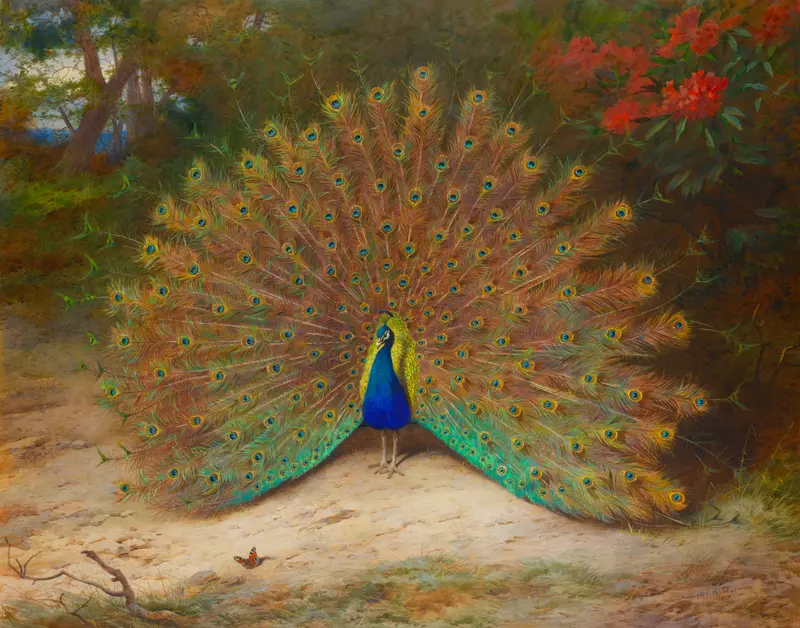
Peacock and Peacock Butterfly
Archibald Thorburn
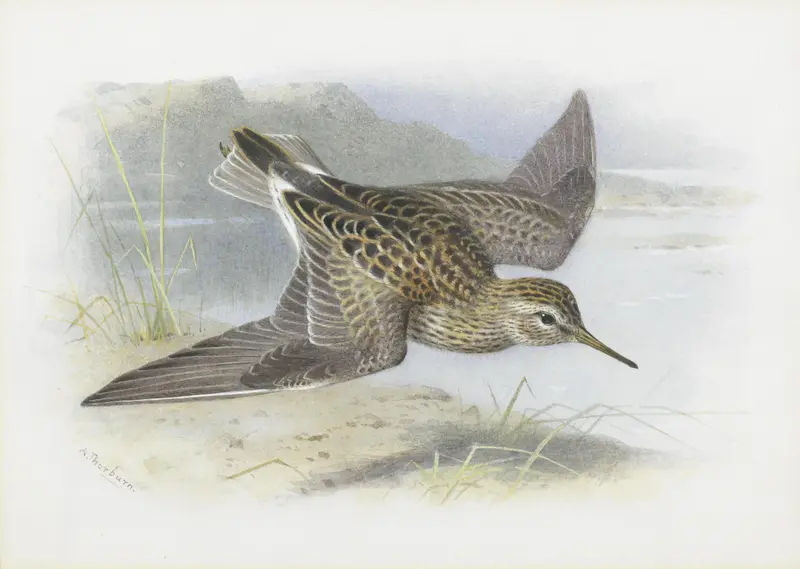
Pectoral Sandpiper
Archibald Thorburn
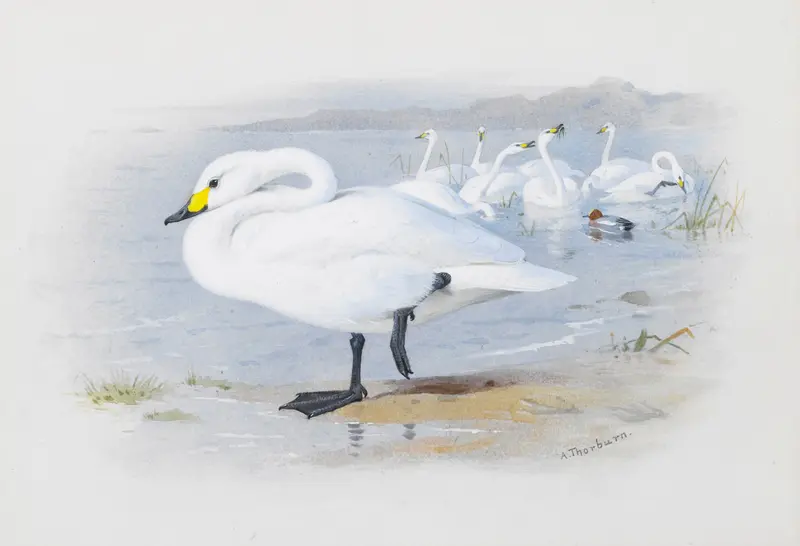
Bewick's swan.
Archibald Thorburn
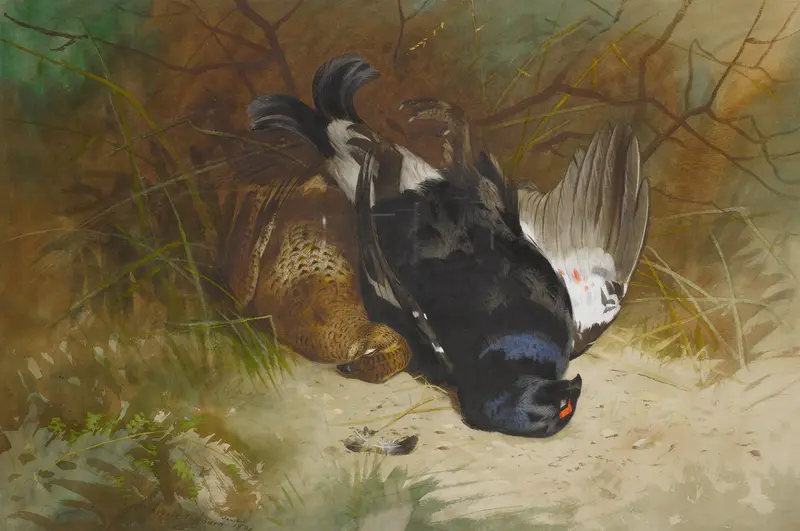
Still life of a pair of Blackgame.
Archibald Thorburn
Blackgame
Archibald Thorburn





