
Sur la plage – Chemins de fer de l'Ouest — History & Facts
A hush of leisure settles over the scene, drawing the viewer first to the gentle curve that frames two women in conversation, their dresses and hats a study in the soft fashions of 1900. The sweep of their posture—one leaning in, the other turned outward—suggests the easy intimacy of a summer afternoon by the sea, while the muted palette of rose, cream, and sand gives the moment a sense of calm. Beyond them, the bay is dotted with sailboats, their hulls reflected in still water, anchoring the composition in a world of quiet pleasures.
To the right, a child in a boldly ribboned hat crouches at the water’s edge, intent on her play, a small echo of adult absorption in the rituals of seaside leisure. The artist’s light touch and the lithograph’s delicate color washes evoke not only the look but the feeling of a day suspended between land and water. This print by Théophile Alexandre Steinlen, made in Paris in 1900, belongs to a world where seaside holidays had become a symbol of modern life and social aspiration. The rise of railways like the Chemins de fer de l'Ouest made the coast newly accessible to the Parisian middle class, and artists responded with images that captured both the novelty and the ordinariness of these escapes.
Lithographs such as this, produced in small editions for collectors, were prized for their ability to blend art and fashion, public spectacle and private reverie. History has kept few traces of this particular print’s journey, but its survival—marked by the collector’s stamps and Steinlen’s own signature—invites us to linger with its figures, and to imagine the world of anticipation and possibility that once awaited just beyond the frame.
More Artworks by Théophile Alexandre Steinlen

Village et charrette
Théophile Alexandre Steinlen
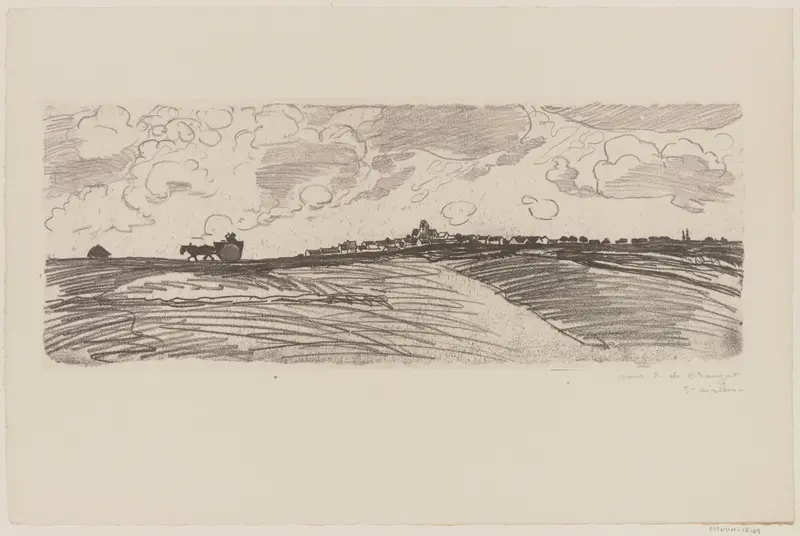
Village et charrette
Théophile Alexandre Steinlen
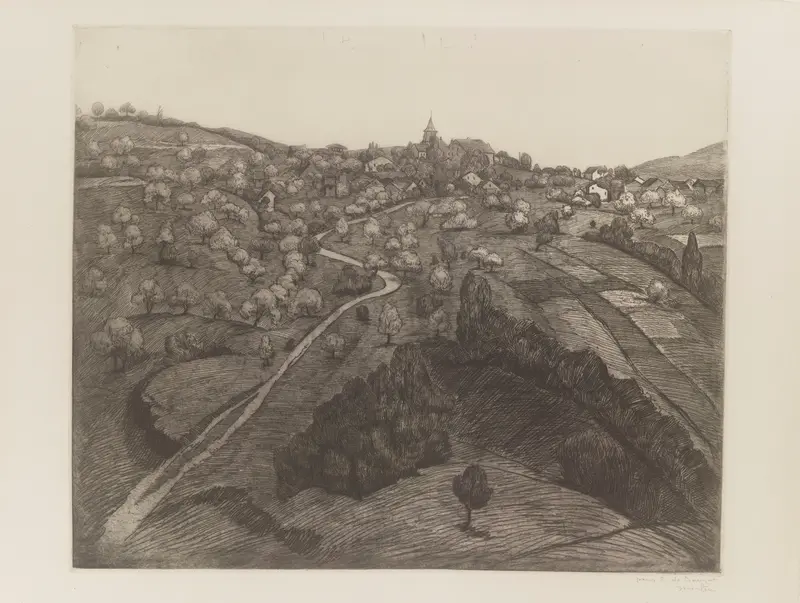
Vue de Belmont, près de Lausanne
Théophile Alexandre Steinlen
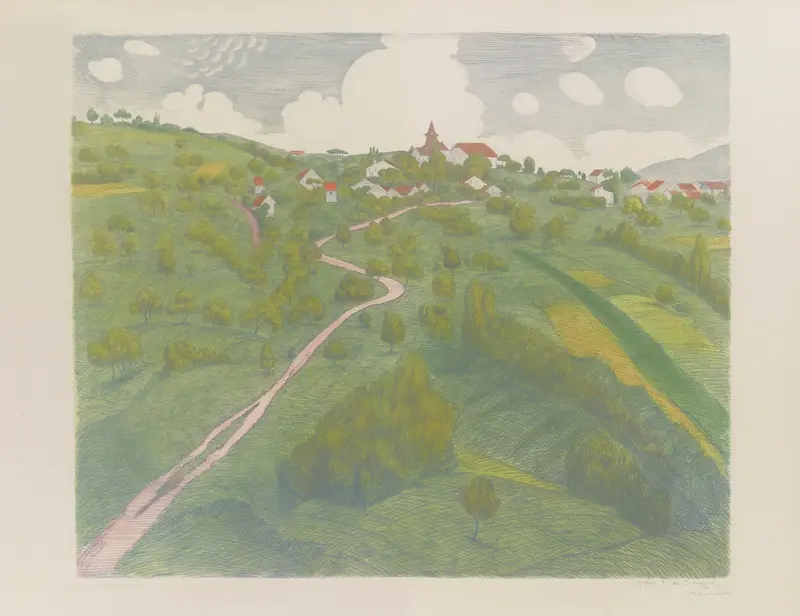
Vue de Belmont, près de Lausanne
Théophile Alexandre Steinlen
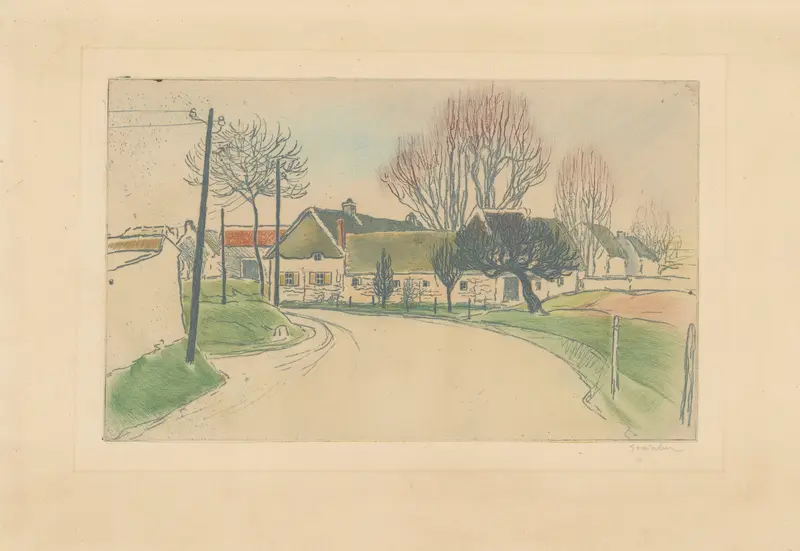
La maison à l’entrée du village
Théophile Alexandre Steinlen
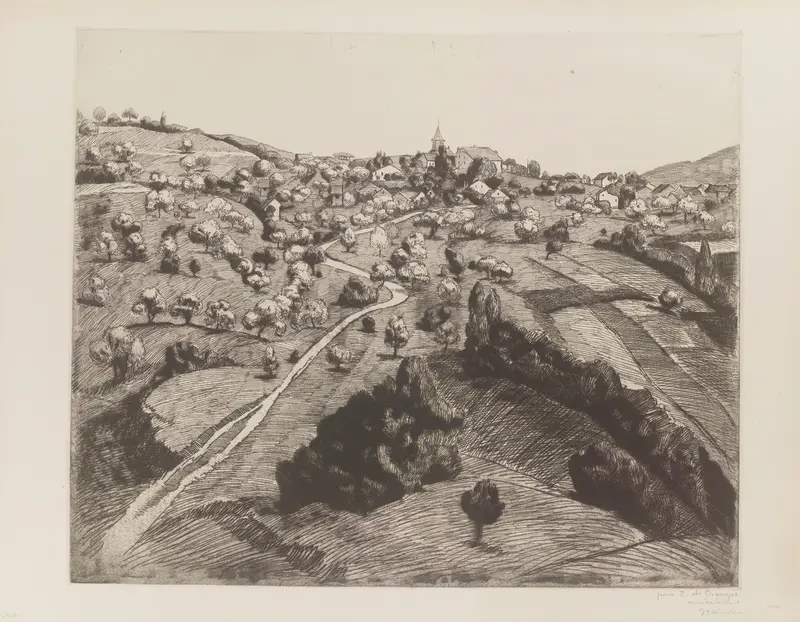
Vue de Belmont, près de Lausanne
Théophile Alexandre Steinlen
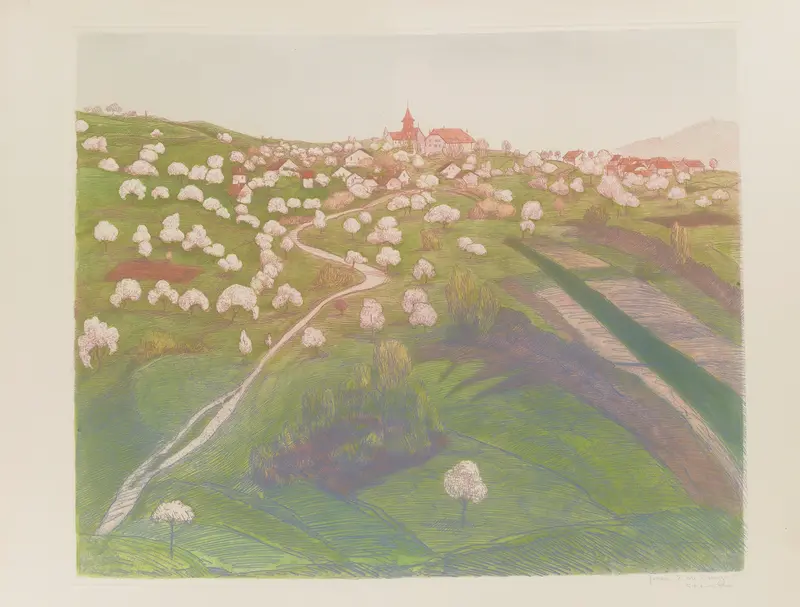
Vue de Belmont, près de Lausanne, n° 2
Théophile Alexandre Steinlen
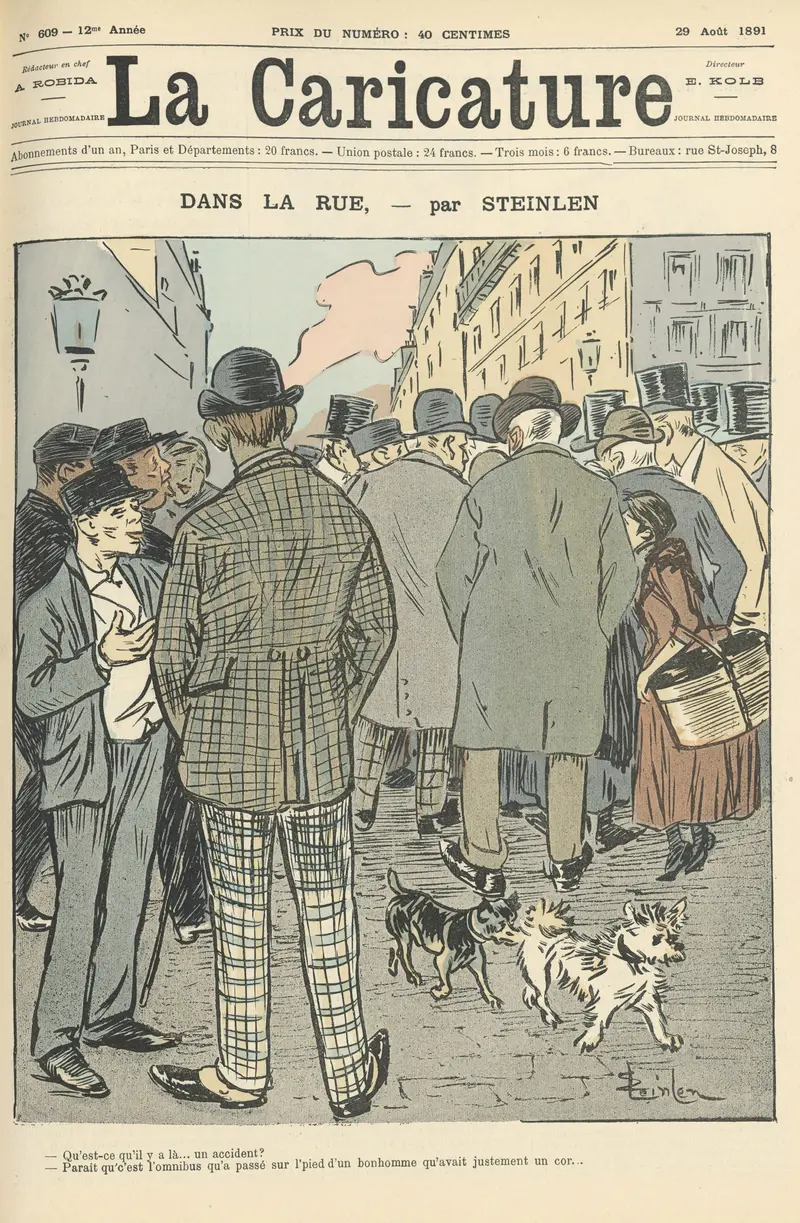
Dans la rue (La Caricature, 29 août 1891)
Théophile Alexandre Steinlen
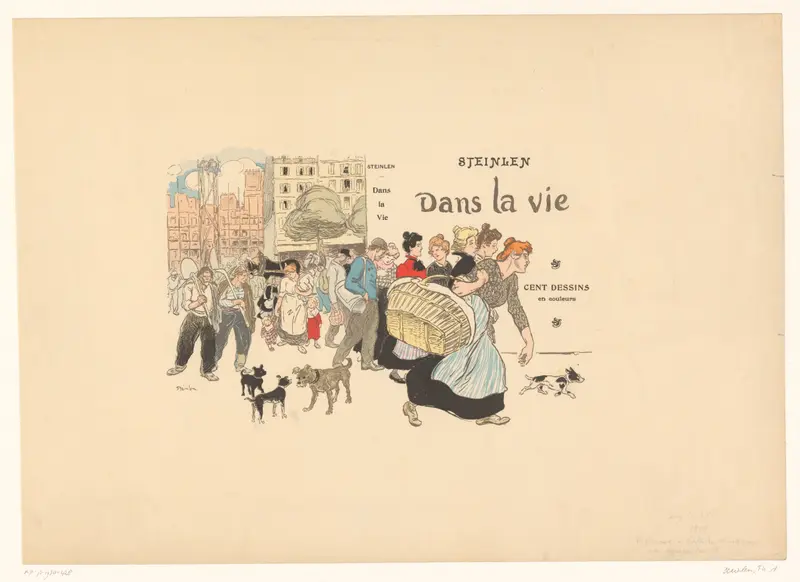
Dans la vie
Théophile Alexandre Steinlen
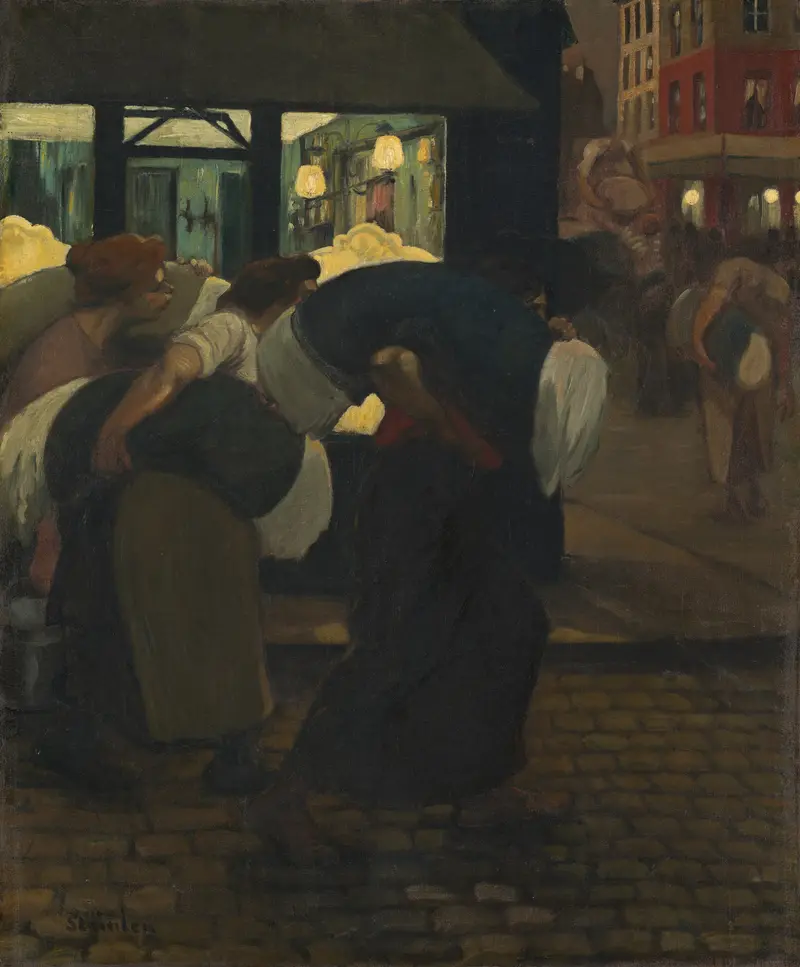
The Laundresses
Théophile Alexandre Steinlen
More Genre Scene Art

Banquet of the Officers of the St George Civic Guard
Frans Hals

Rembrandt and Saskia in the Scene of the Prodigal Son
Rembrandt van Rijn

Bal du moulin de la Galette
Pierre-Auguste Renoir

Quadrille at the Moulin Rouge
Henri de Toulouse-Lautrec

A Burial at Ornans
Gustave Courbet

When Will You Marry?
Paul Gauguin