
Sur la plage de Trouville — History & Facts
What if silence could speak through light? In Sur la plage de Trouville, the soothing glow of the sun dances across the canvas, illuminating a moment where tranquility meets the transitory nature of beach life. Focus on the gentle waves caressing the shore, where the vibrant blues and soft whites create a rhythmic pulse, drawing you into the serene atmosphere. Look at the figures scattered along the beach, their silhouettes softened by the golden light, invoking a sense of leisure. Notice how Boudin's delicate brushwork captures the ephemeral movements of both water and people, contrasting the liveliness of summer activity with the stillness of the moment. The painting unfolds layers of meaning—each wave resonates with life's passing moments, while the shadows of the figures suggest a deeper introspection.
The juxtaposition of vibrant daylight against the stillness of the beach evokes a sense of fleeting joy, as if time itself pauses to admire nature's beauty. These details compel the viewer to contemplate the relationship between our experiences and the larger, unyielding rhythms of existence. Eugène Boudin painted Sur la plage de Trouville during the late 19th century, a period marked by a growing fascination with capturing natural light and its effects on the landscape. Working in France, he became a pivotal figure in the Impressionist movement, inspiring contemporaries like Monet.
This work reflects Boudin's commitment to portraying everyday moments, as he sought to elevate the mundane to a realm of transcendence through light and atmosphere.
More Artworks by Eugène Boudin
Browse all →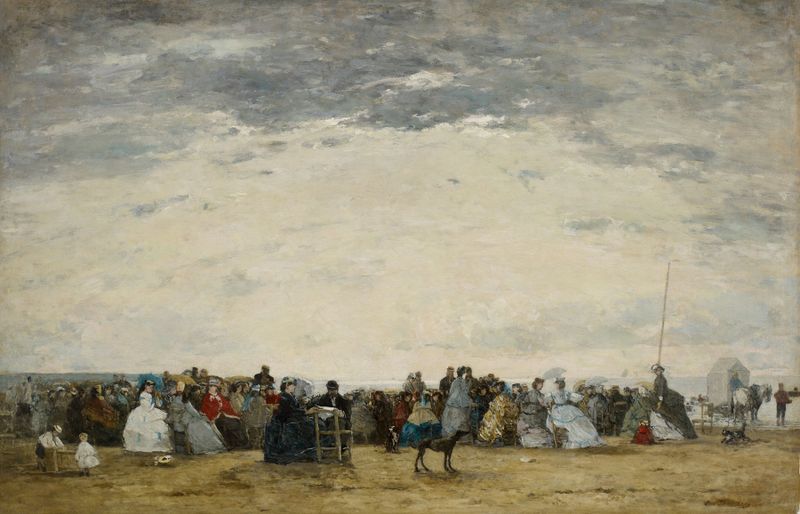
Vacationers on the Beach at Trouville
Eugène Boudin

Washerwoman near Trouville
Eugène Boudin
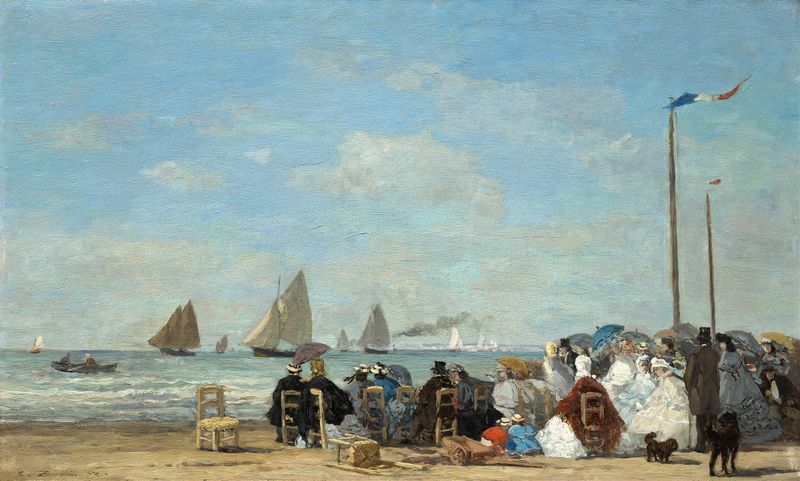
Beach Scene at Trouville
Eugène Boudin

Port aux environs d’Honfleur
Eugène Boudin

Le Faou, un coin du village
Eugène Boudin
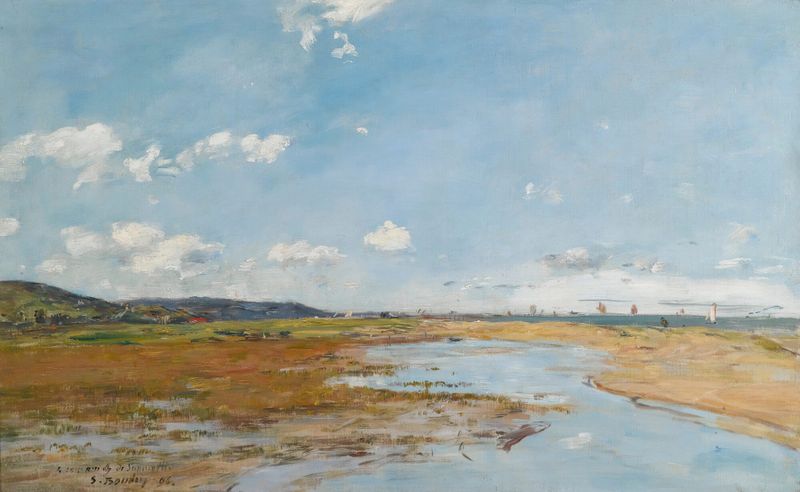
Deauville. Le Rivage
Eugène Boudin
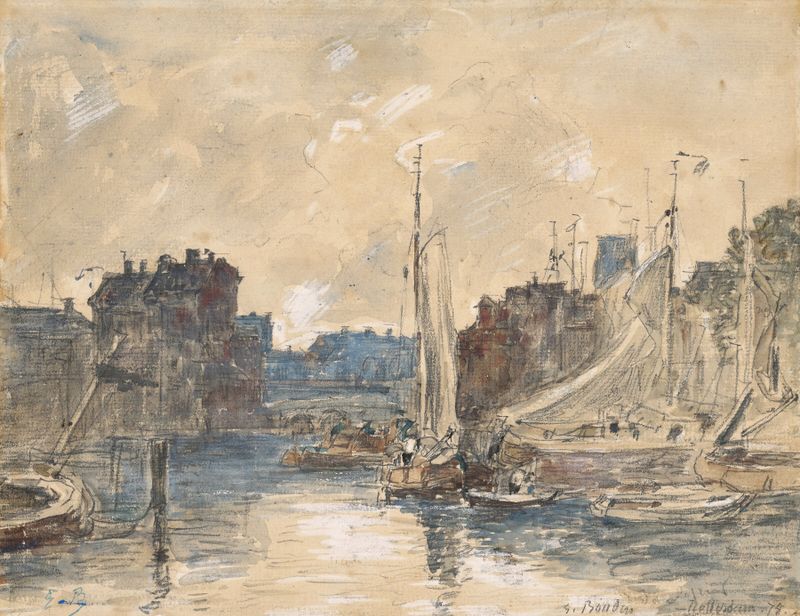
Port de Rotterdam
Eugène Boudin

View of Bordeaux, from the Quai des Chartrons
Eugène Boudin

Trouville, Scène De Plage
Eugène Boudin

Trouville, Le Port
Eugène Boudin





