
Taras Shevchenko painting — History & Facts
Few artists in Ukrainian history have shaped their nation's identity as powerfully as Taras Shevchenko, who, in 1843, painted this work during his first return to Ukraine after years of serfdom and study in St. Petersburg. The painting stands out as one of the rare surviving examples from a period when Shevchenko, already a celebrated poet, turned his attention to capturing the lives and landscapes of his homeland.
Its creation coincided with a surge of national consciousness in Ukraine, and Shevchenko’s art became a quiet act of resistance under Russian imperial rule. In this scene, Shevchenko selects a moment of everyday life, focusing on a solitary figure—often interpreted as a Ukrainian peasant—set against the gentle sweep of the steppe. The figure’s posture, slightly bowed, and the subdued palette speak to both hardship and dignity, while the distant horizon hints at longing and hope. The details—a traditional embroidered shirt, a simple tool or bundle—root the work firmly in Ukrainian folk culture.
Where Russian academic painters of the era might have idealized rural life, Shevchenko’s approach is direct and unvarnished, more akin to the realism later seen in Jean-François Millet’s depictions of French peasants. The painting’s medium remains uncertain, as does its early provenance, but it is known that Shevchenko often worked with modest materials, sometimes on paper or cardboard, reflecting his limited means. Many of his works were dispersed or lost during the political upheavals of the 19th and 20th centuries. Today, this painting is treasured as a rare witness to Shevchenko’s artistic vision and his dual legacy as both painter and national bard.
It is now part of a Ukrainian museum collection, where it continues to inspire viewers with its quiet assertion of identity and memory.
More Artworks by Taras Shevchenko
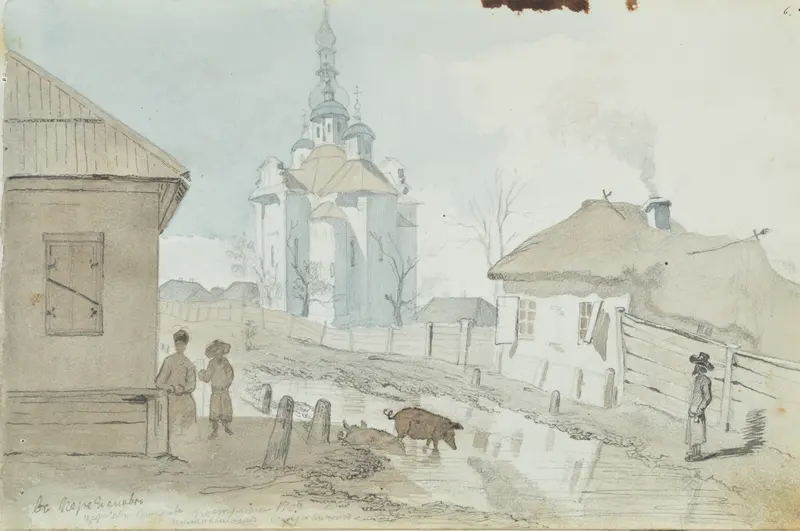
1845 Sh Sketchbook f.06r
Taras Shevchenko

1845 Sh Sketchbook f.04r
Taras Shevchenko

1848 Bilia vohnu
Taras Shevchenko
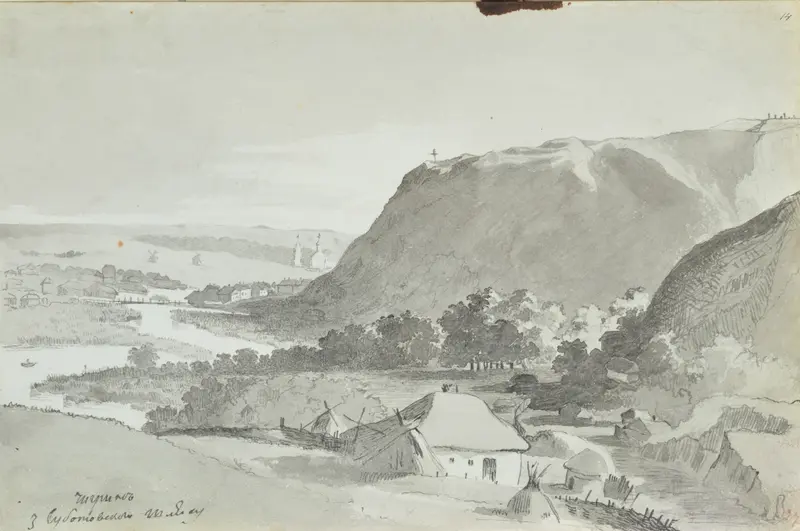
1845 Sh Sketchbook f.14r
Taras Shevchenko
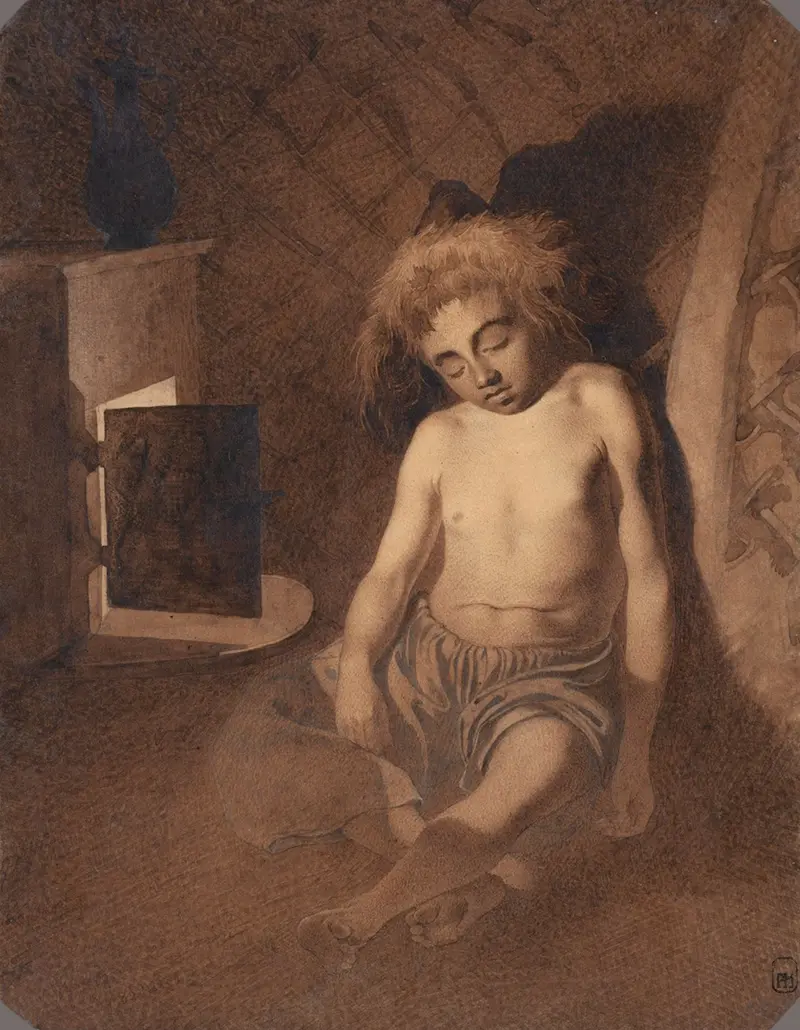
1848 Hlopcyk zasnuv
Taras Shevchenko
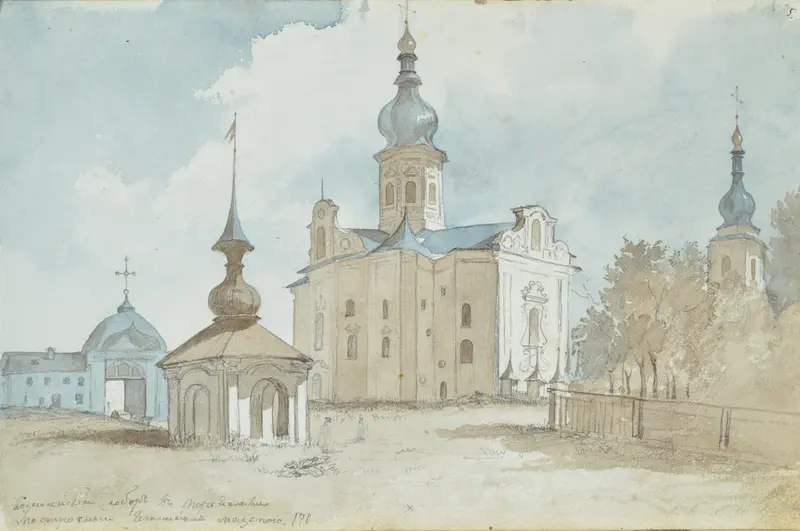
1845 Sh Sketchbook f.05r
Taras Shevchenko
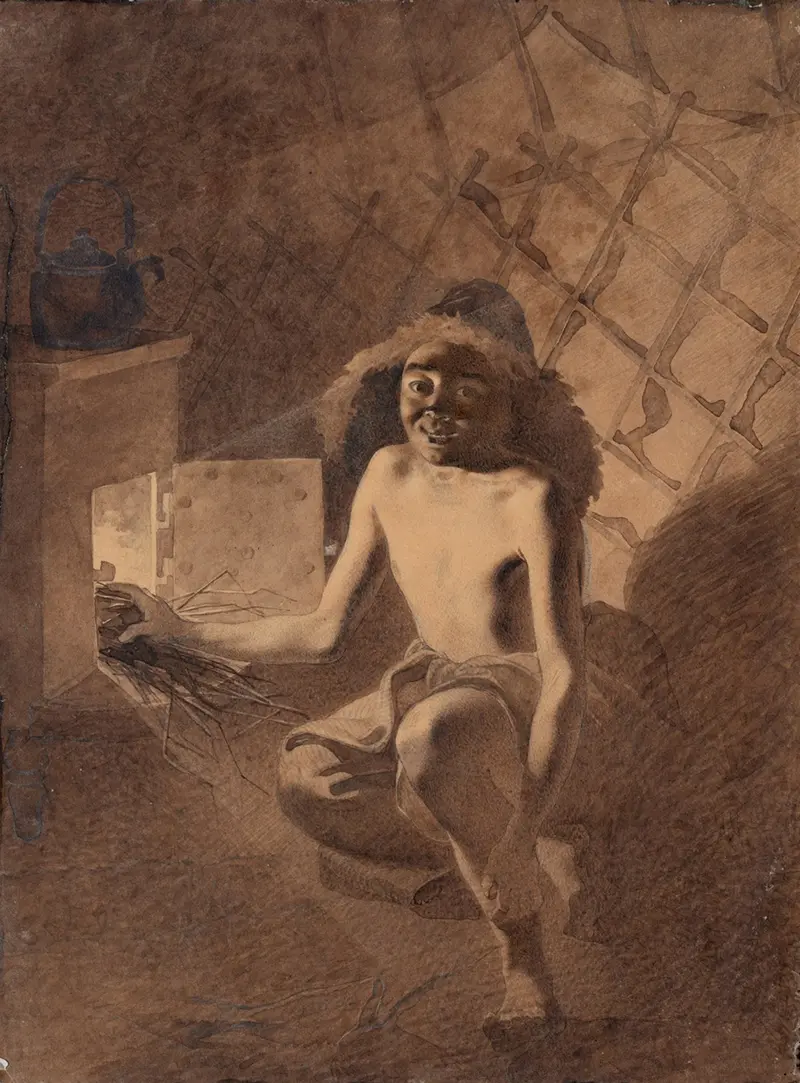
1848 Hlopcyk rozpalije
Taras Shevchenko
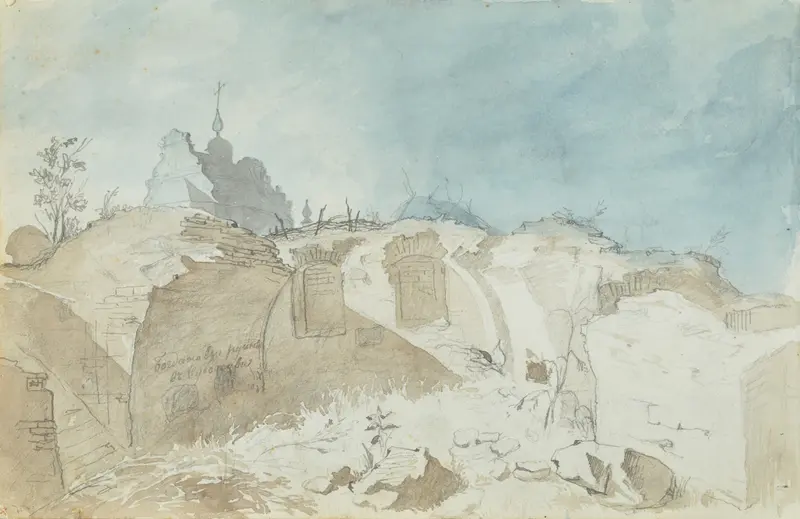
1845 Sh Sketchbook f.12v
Taras Shevchenko
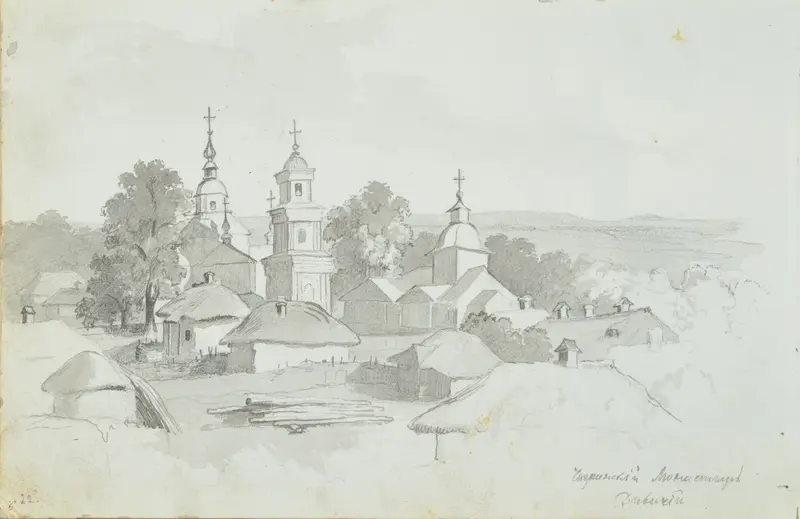
1845 Sh Sketchbook zz f.11v
Taras Shevchenko
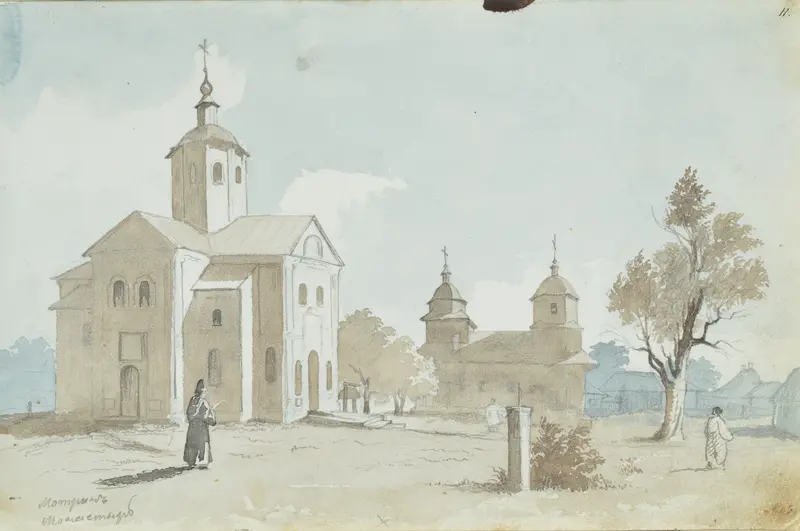
1845 Sh Sketchbook f.11r
Taras Shevchenko
More Genre Scene Art

Banquet of the Officers of the St George Civic Guard
Frans Hals

Rembrandt and Saskia in the Scene of the Prodigal Son
Rembrandt van Rijn

Bal du moulin de la Galette
Pierre-Auguste Renoir

Quadrille at the Moulin Rouge
Henri de Toulouse-Lautrec

A Burial at Ornans
Gustave Courbet

When Will You Marry?
Paul Gauguin