
Tavern interior with peasants playing cards, smoking and drinking — History & Facts
What draws the eye first in this bustling tavern is not the clamor or the drink, but the conspiratorial huddle of card players, their faces lit by a shaft of light that slices through the gloom. Each figure is caught mid-gesture: a hand hovers with a card, another clutches a pipe, a child peeks between elbows, learning the rules of the game and of the world. The table is battered, the floor scattered with tankards and pipes, and yet the arrangement feels deliberate—every object a clue to the pleasures and vices that animate this smoky interior.
The painter’s palette is earthy, the shadows thick, but the faces glow with the heat of laughter and argument, drawing the viewer into the circle as if invited to join the next round. Works like this, painted in 1648 by Adriaen van Ostade, belong to a Dutch tradition that reveled in the everyday—scenes of peasants and tradesmen at their leisure, far from the grand narratives of history or myth. In the mid-seventeenth century, such genre paintings were eagerly collected by a rising merchant class who saw themselves reflected, with a wink, in these humble pleasures. The artist’s name is closely tied to Haarlem, a city known for its lively artistic scene, and the date places this piece at the heart of the Dutch Golden Age.
Though little is recorded about the specific journey of this painting, its survival—documented by the Netherlands Institute for Art History—invites us to linger over the details: the laughter, the smoke, the stubborn joy of ordinary life.
More Artworks by Adriaen van Ostade

Dans in de herberg
Adriaen van Ostade
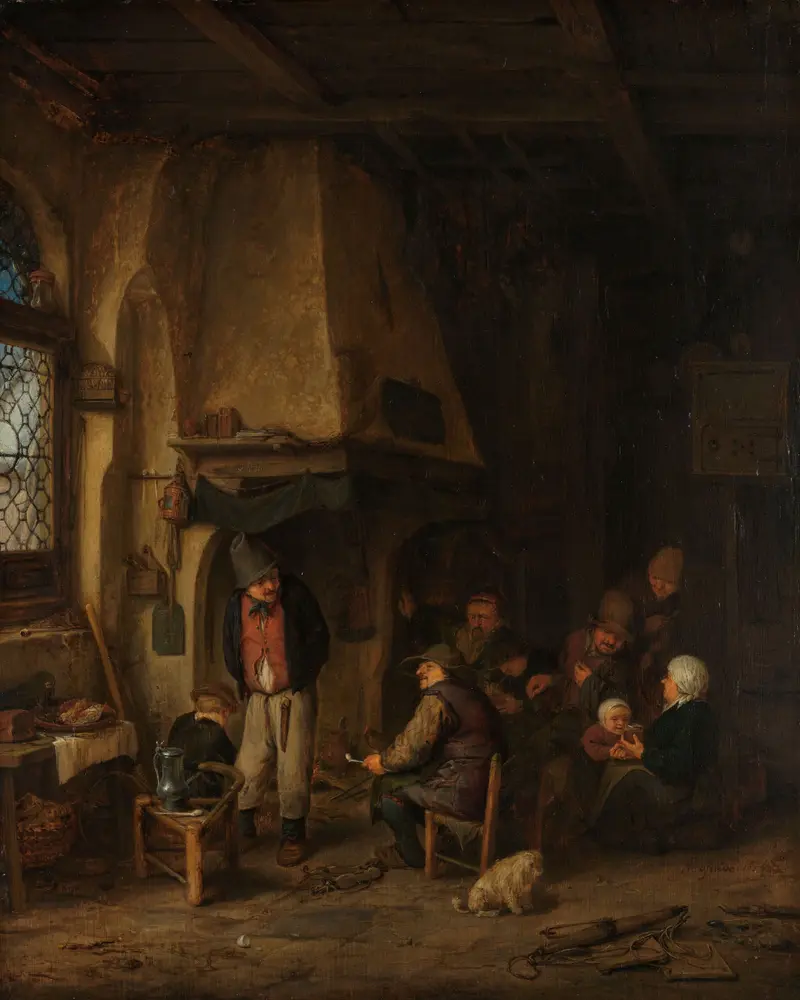
‘The Skaters’: Peasants in an Interior
Adriaen van Ostade
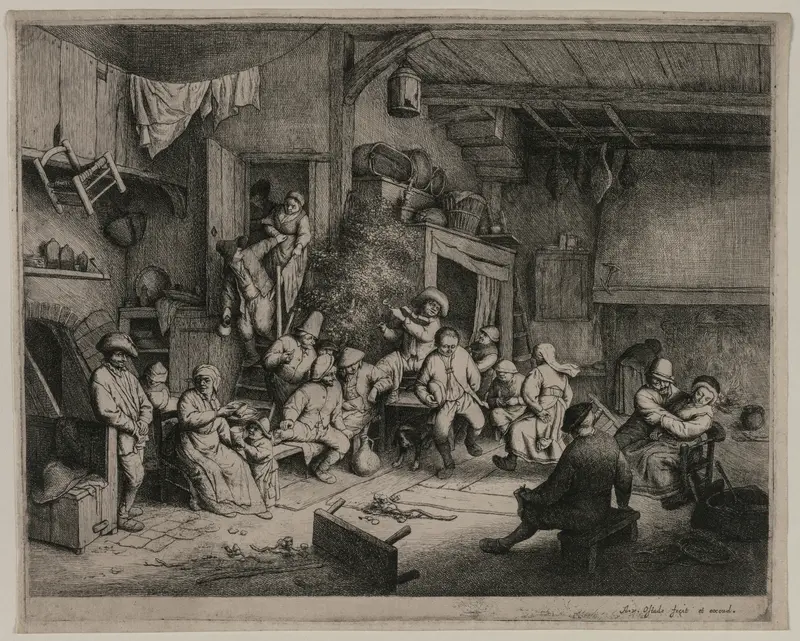
Dance at the Inn
Adriaen van Ostade
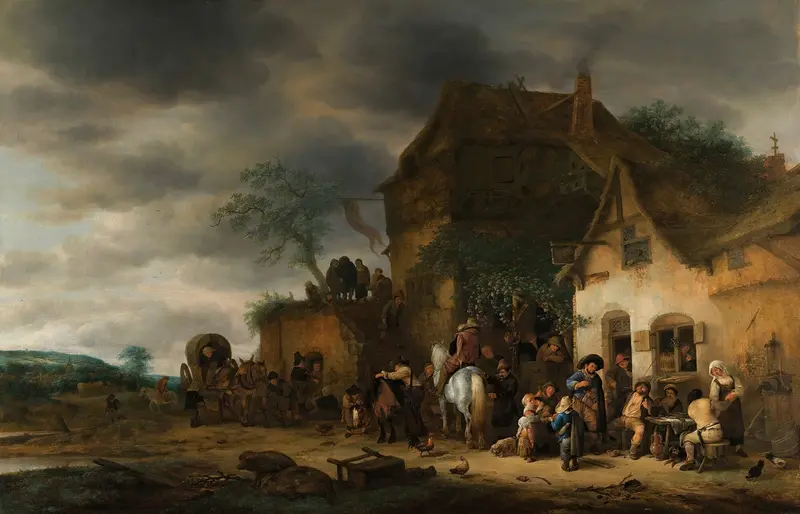
Travellers Halted At A Country Inn
Adriaen van Ostade
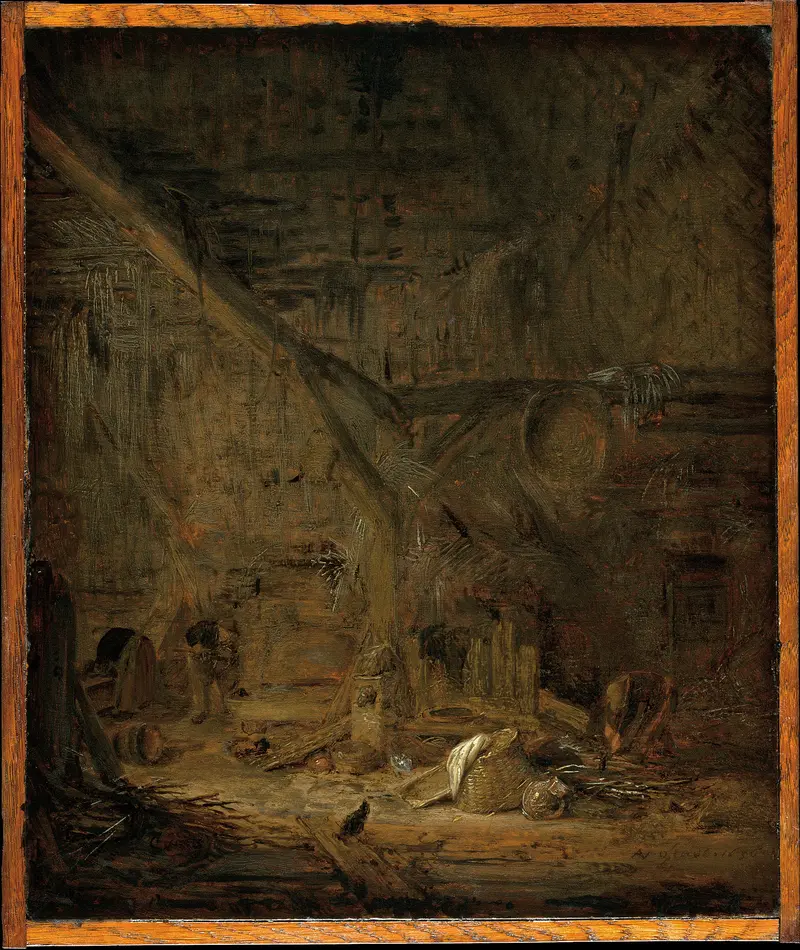
Interior of a Barn
Adriaen van Ostade
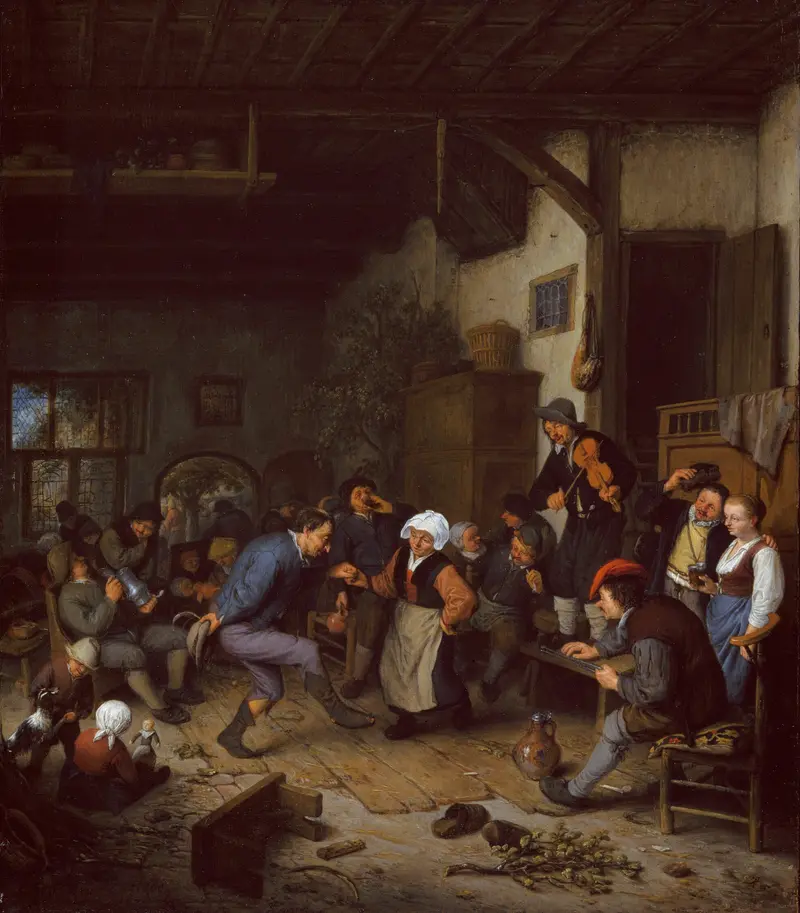
Merrymakers in an Inn
Adriaen van Ostade
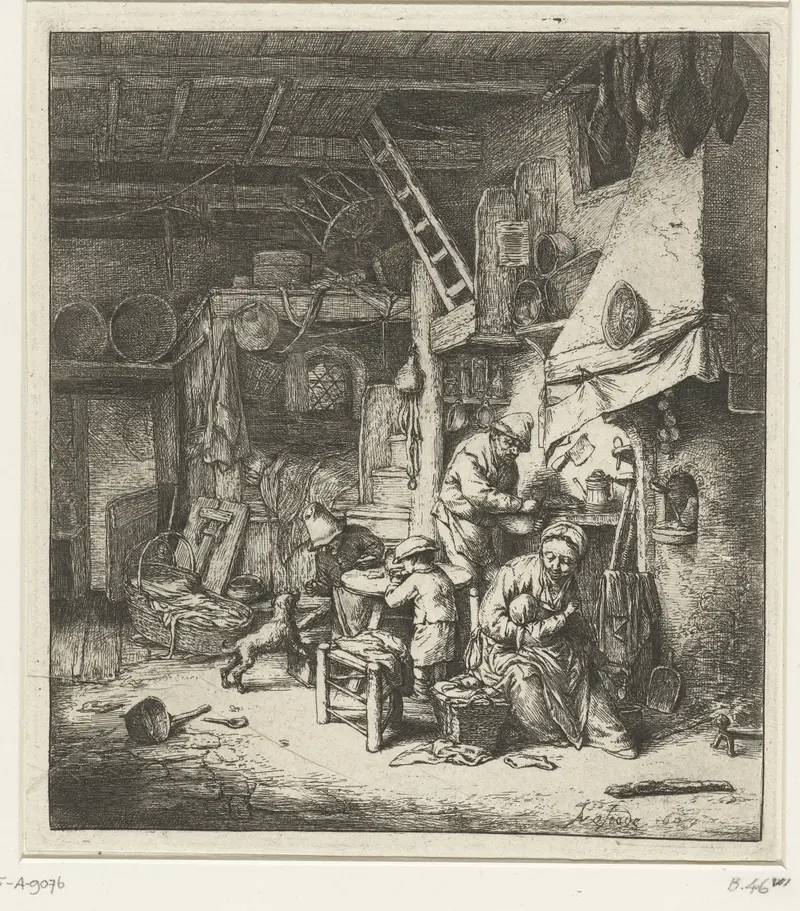
Boerengezin in interieur
Adriaen van Ostade
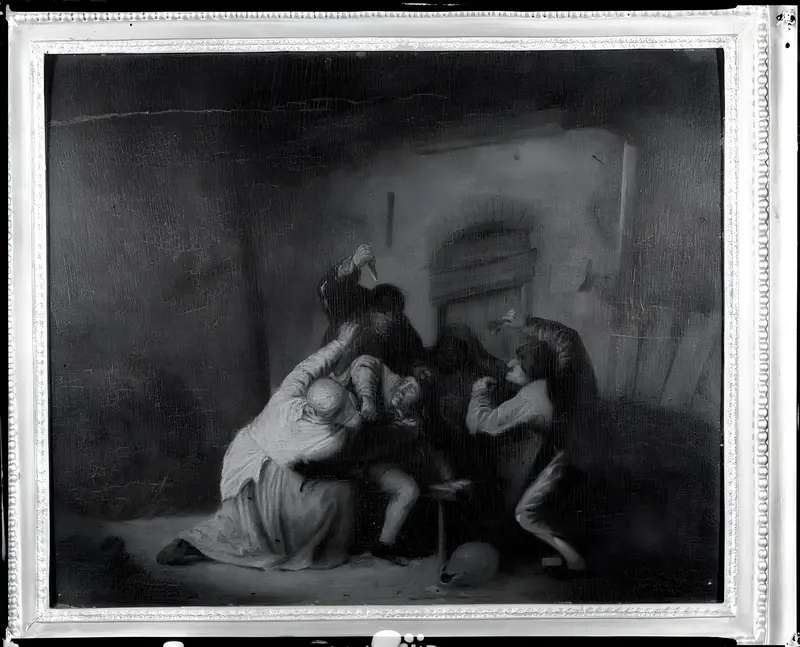
Peasants Brawling in a Tavern
Adriaen van Ostade
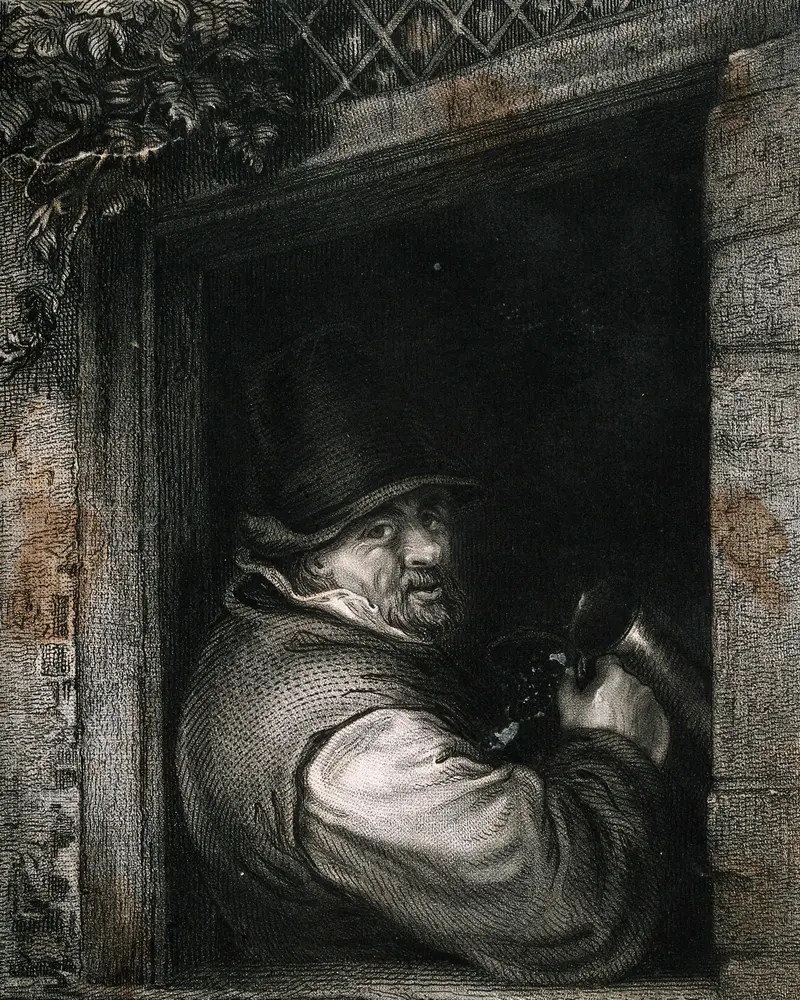
Man with a Tankard at a Window
Adriaen van Ostade
Dans in de herberg
Adriaen van Ostade
More Genre Scene Art

Banquet of the Officers of the St George Civic Guard
Frans Hals

Rembrandt and Saskia in the Scene of the Prodigal Son
Rembrandt van Rijn

Bal du moulin de la Galette
Pierre-Auguste Renoir

Quadrille at the Moulin Rouge
Henri de Toulouse-Lautrec

A Burial at Ornans
Gustave Courbet

When Will You Marry?
Paul Gauguin