
Tavern Scene — History & Facts
A single candle perched on the great chimney’s ledge is all it takes to draw the eye into the heart of this crowded tavern, where laughter, smoke, and the scrape of tankards seem to fill the air. The glow falls on a circle of figures hunched around a sturdy table, their faces animated by drink and conversation. Each gesture is a clue: the man leaning in with a pipe, the woman in a white cap lost in thought, the standing figure pouring from a jug.
The warmth of the fire and the golden light carve out a stage for ordinary joys, while the shadowy corners hint at quieter, private exchanges. The palette is earthy, the mood bustling but intimate—every detail serves to pull the viewer into the thick of communal life. Works like this, painted by Adriaen van Ostade between circa 1660 and circa 1665, belong to a tradition that reveled in the everyday world of the Dutch Golden Age. Scenes of taverns, peasants, and village gatherings were prized for their humor, their earthy realism, and their subtle social commentary.
Patrons—often prosperous townsfolk—hung such paintings in their homes as reminders of simple pleasures or perhaps as gentle warnings against excess. While little is recorded about the specific journey of this Tavern Scene, its presence in the National Gallery of Art today connects us to a world where the boundaries between work, play, and community blurred in the flicker of candlelight. Every time you return to this image, notice how the painter’s hand lingers over each face, inviting you to join the company.
More Artworks by Adriaen van Ostade

Dans in de herberg
Adriaen van Ostade
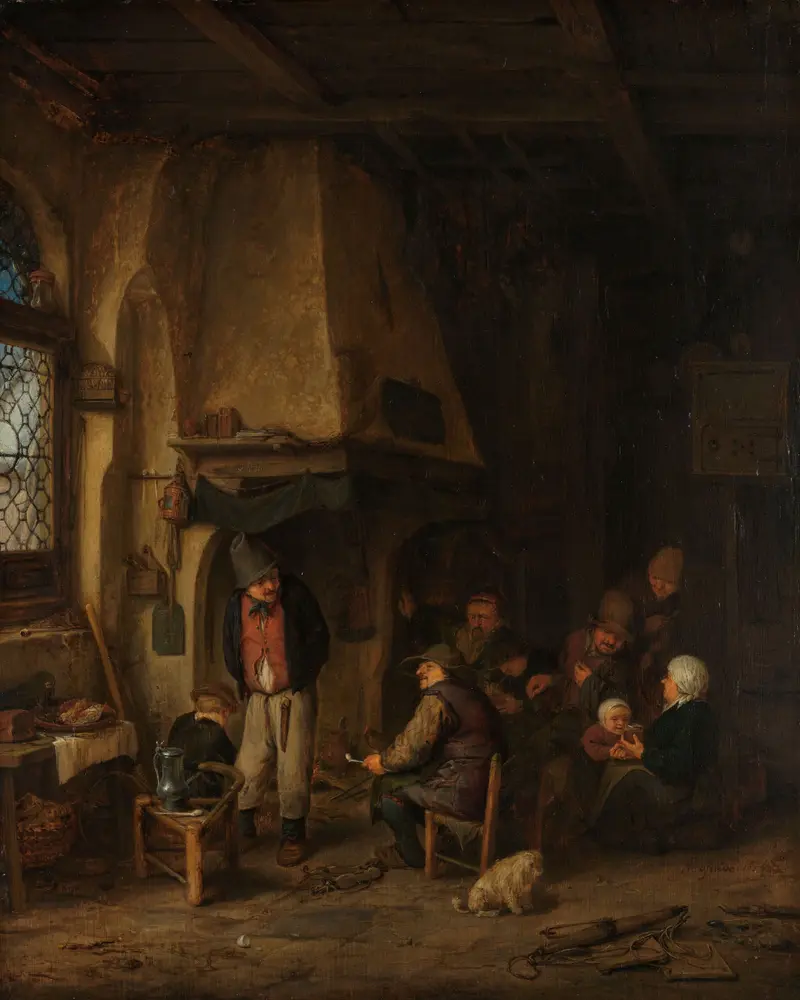
‘The Skaters’: Peasants in an Interior
Adriaen van Ostade
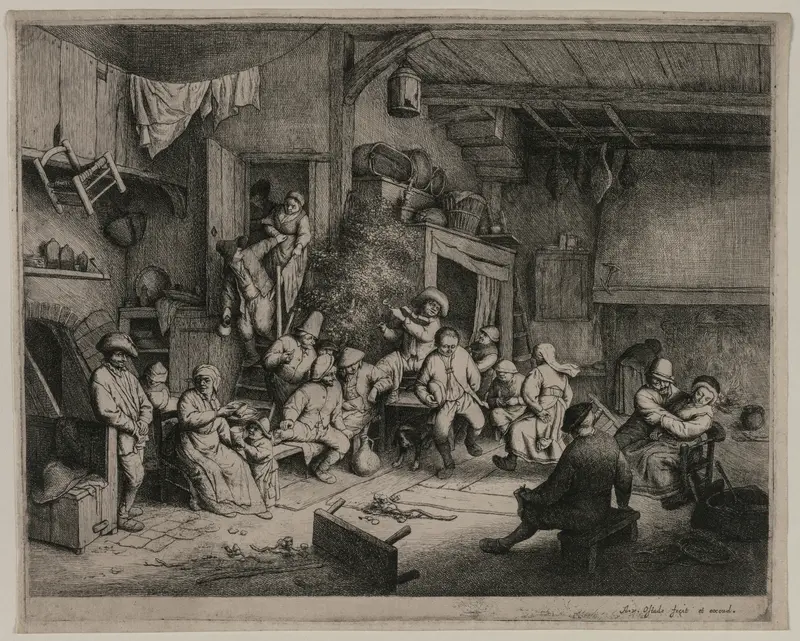
Dance at the Inn
Adriaen van Ostade
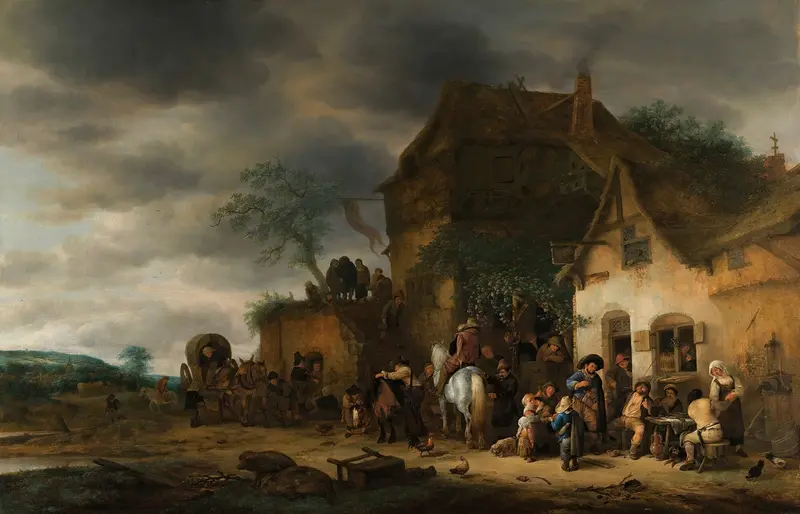
Travellers Halted At A Country Inn
Adriaen van Ostade
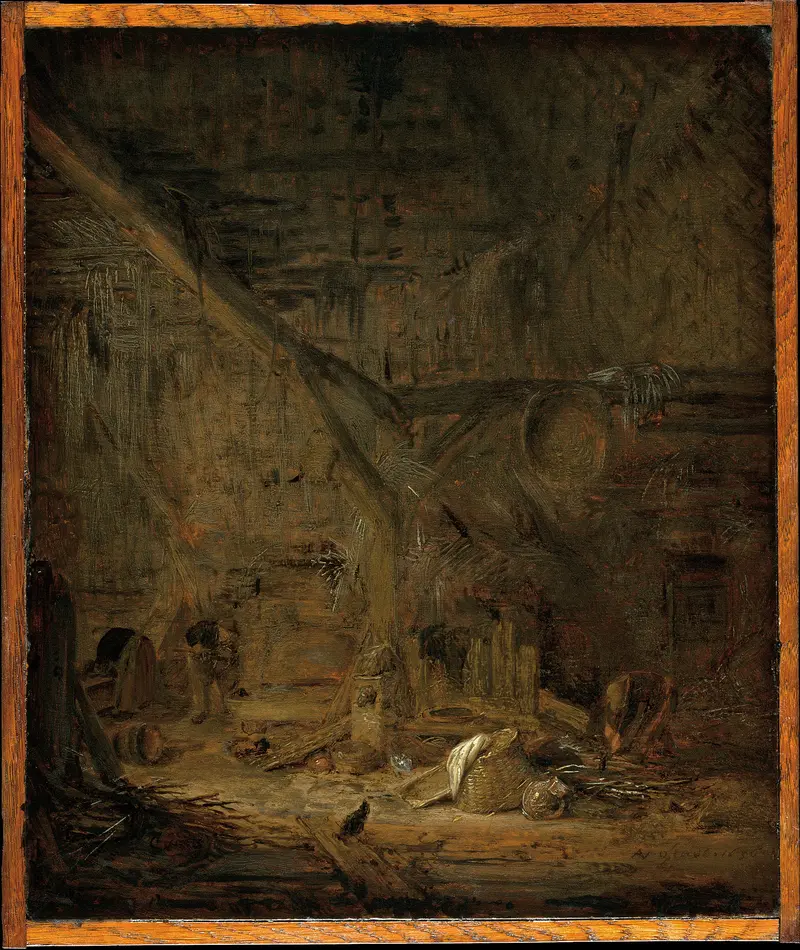
Interior of a Barn
Adriaen van Ostade
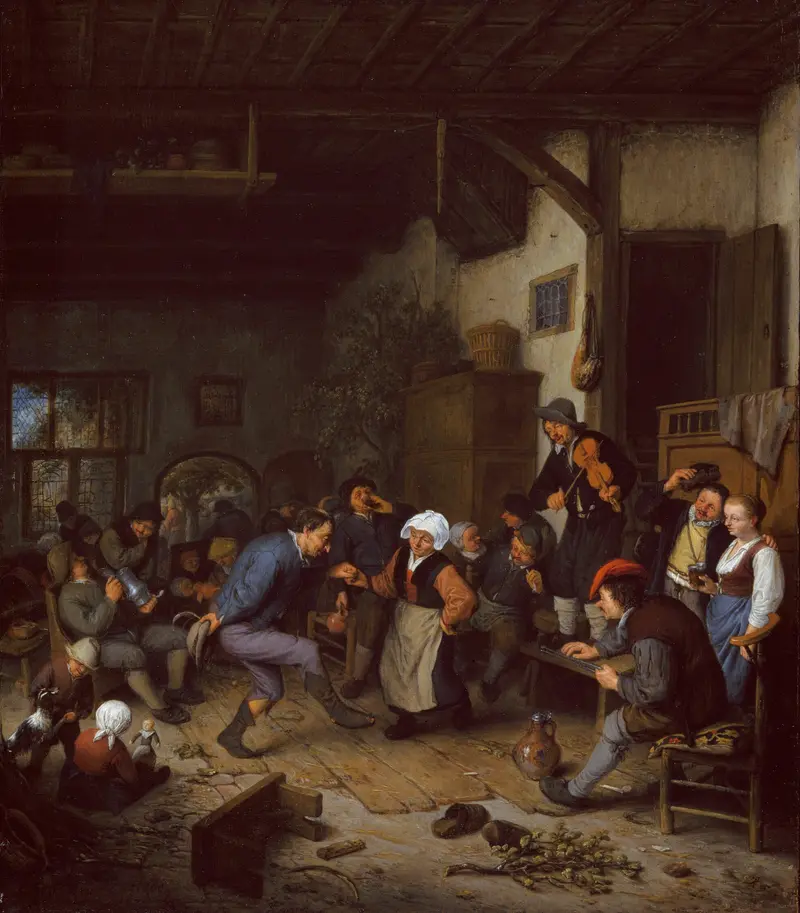
Merrymakers in an Inn
Adriaen van Ostade
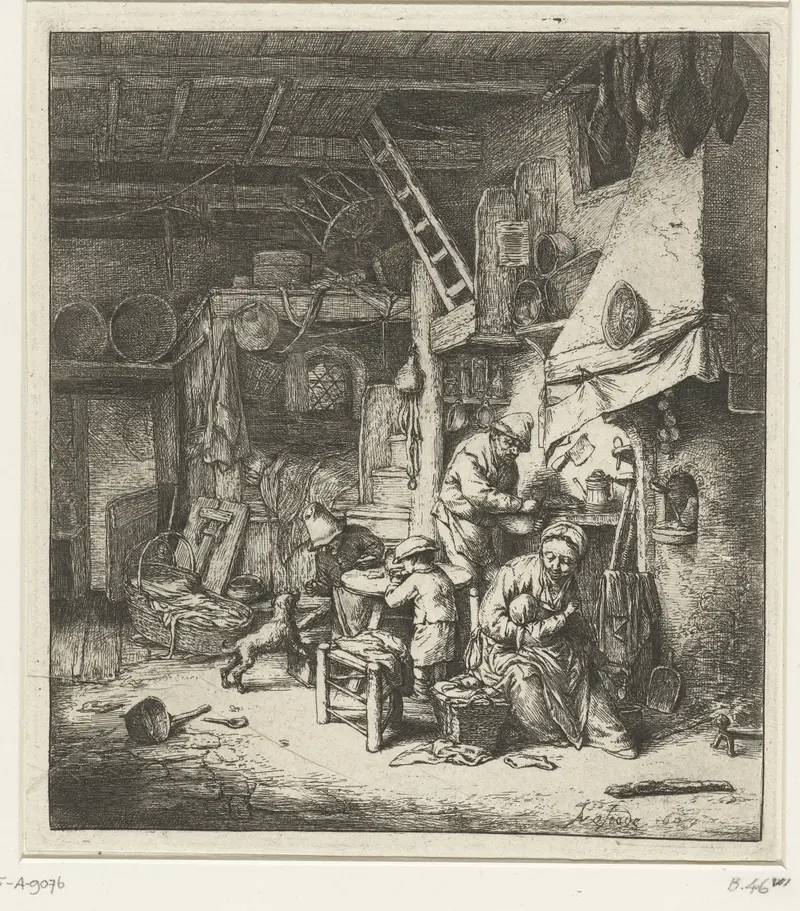
Boerengezin in interieur
Adriaen van Ostade
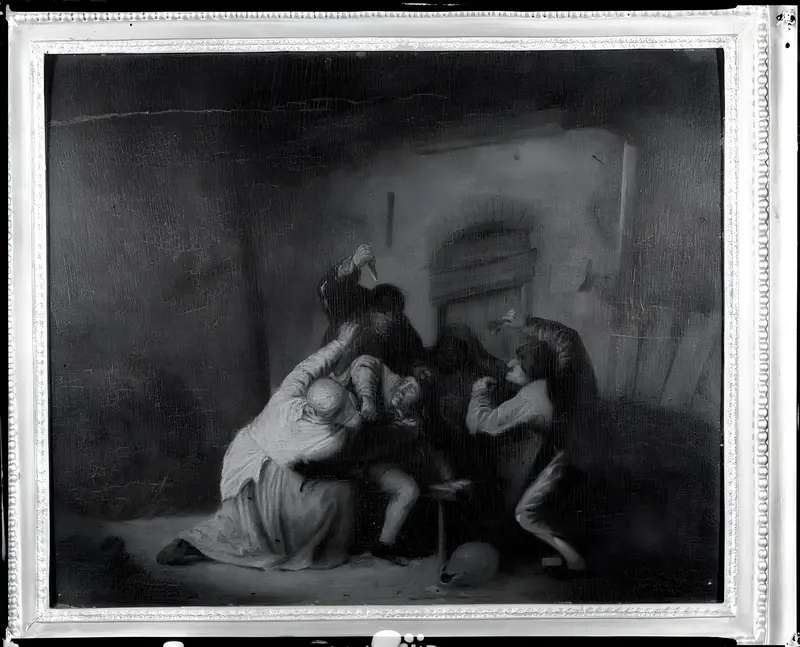
Peasants Brawling in a Tavern
Adriaen van Ostade
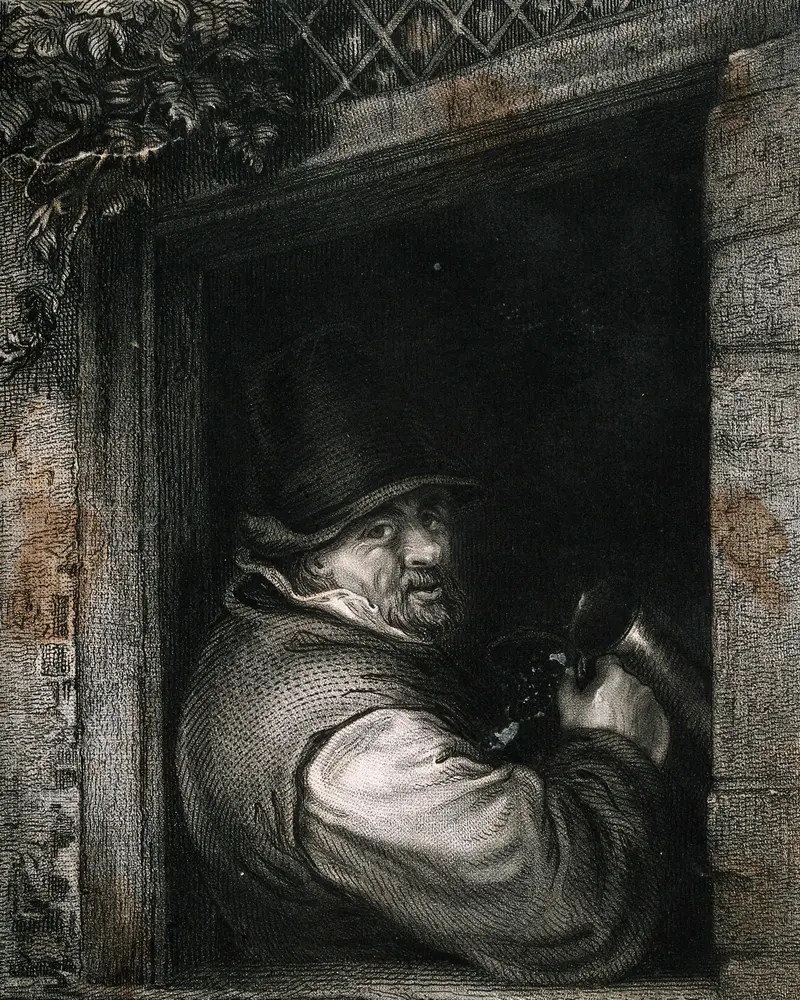
Man with a Tankard at a Window
Adriaen van Ostade
Dans in de herberg
Adriaen van Ostade
More Genre Scene Art

Banquet of the Officers of the St George Civic Guard
Frans Hals

Rembrandt and Saskia in the Scene of the Prodigal Son
Rembrandt van Rijn

Bal du moulin de la Galette
Pierre-Auguste Renoir

Quadrille at the Moulin Rouge
Henri de Toulouse-Lautrec

A Burial at Ornans
Gustave Courbet

When Will You Marry?
Paul Gauguin