
Tête á Tête on the 968th Floor of a Skyscraper (Tête á Tête am Wolkenkratzer 968 Etage) — History & Facts
A woman leans perilously from a glowing window, arm outstretched to meet the hand of a man who has landed his biplane on the ledge of a dizzying skyscraper. The night sky is alive with stars and streaked with green wires, while the city below is rendered in a grid of blue and orange, each window a tiny stage. Moriz Jung’s Tête á Tête on the 968th Floor of a Skyscraper turns the modern metropolis into a playground for the impossible: intimacy at a thousand-story height, where the risk is as palpable as the affection.
The cartoonish exaggeration of scale and the crisp, poster-like lines invite the viewer to suspend disbelief and revel in the spectacle. Created in 1911, this print belongs to a world on the brink of transformation. Aviation was still a marvel, skyscrapers a symbol of ambition, and the city night a new frontier for both danger and romance. Works like this, often produced as prints or postcards, captured the era’s fascination with technology and the absurdities of modern life—sometimes poking fun, sometimes celebrating the sheer audacity of human invention.
History has kept few traces of Jung’s individual works, but this image, preserved in the Metropolitan Museum of Art’s collection, is a vivid reminder that the early twentieth century dreamed not only of progress, but of the wild, improbable encounters it might bring. Look again at the outstretched hands: in this city of windows, every light is a story waiting to be told.
More Artworks by Moriz Jung
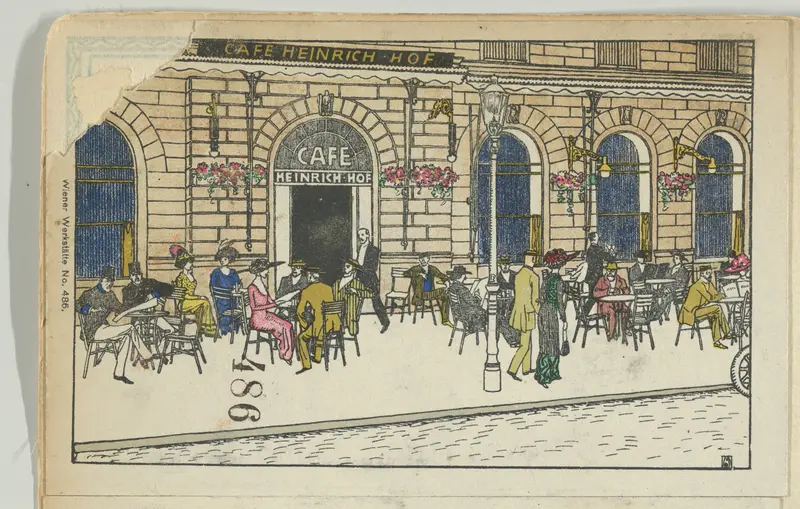
Café Heinrichhof
Moriz Jung

Moriz Jung Porträt
Moriz Jung
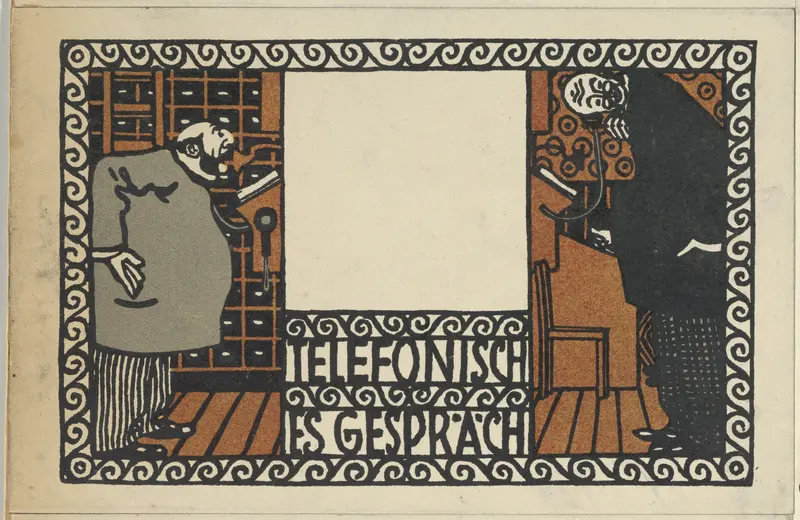
Telephone Conversation (Telefonisches Gespräch)
Moriz Jung
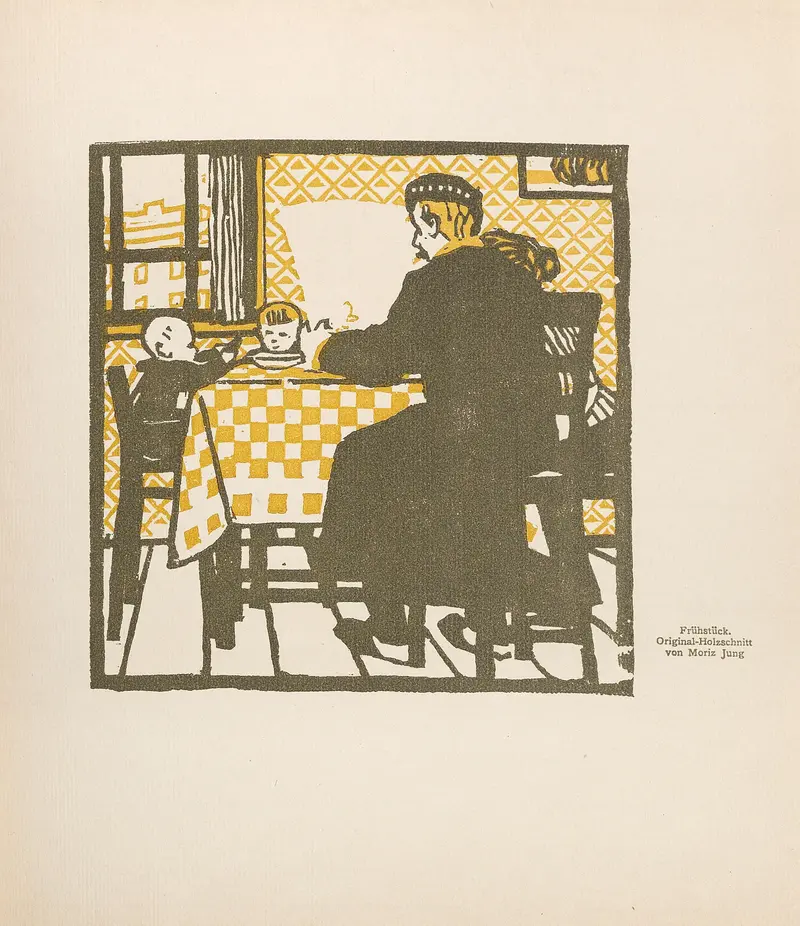
Moriz Jung Frühstück
Moriz Jung
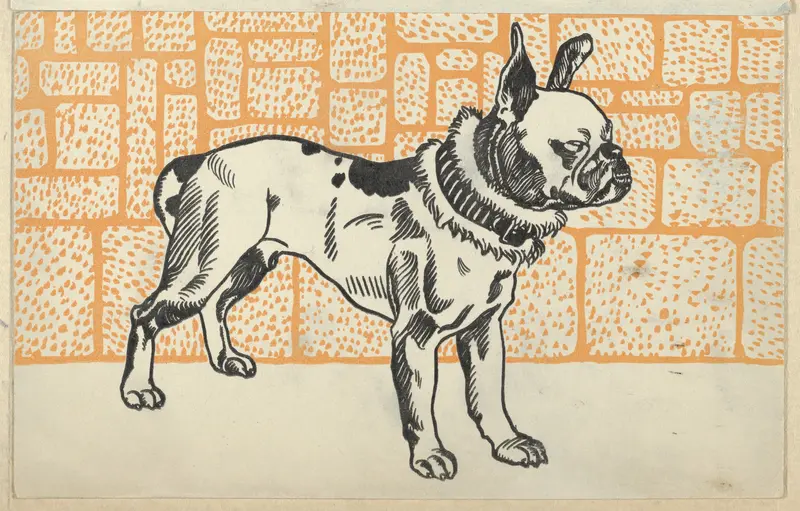
Pitbull Terrier
Moriz Jung
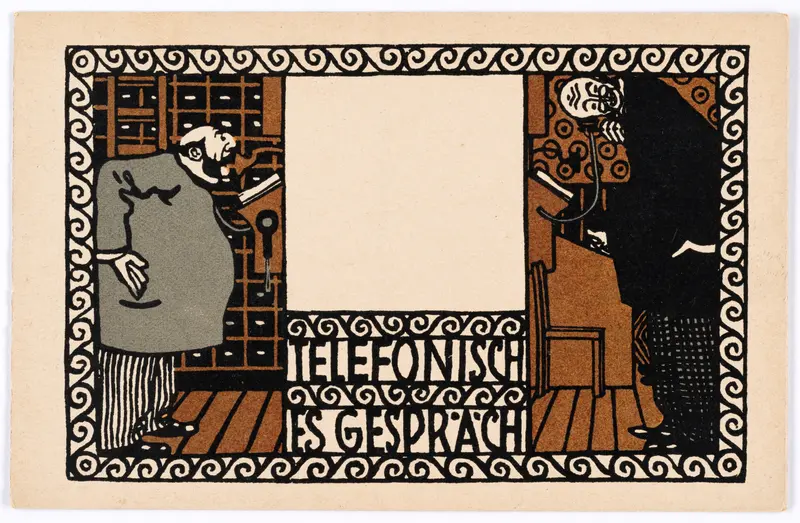
Postkarte der Wiener Werkstätte Nr. 58 - Telefonisches Gespräch
Moriz Jung
Postkarte der Wiener Werkstätte Nr. 58 - Telefonisches Gespräch - verso
Moriz Jung
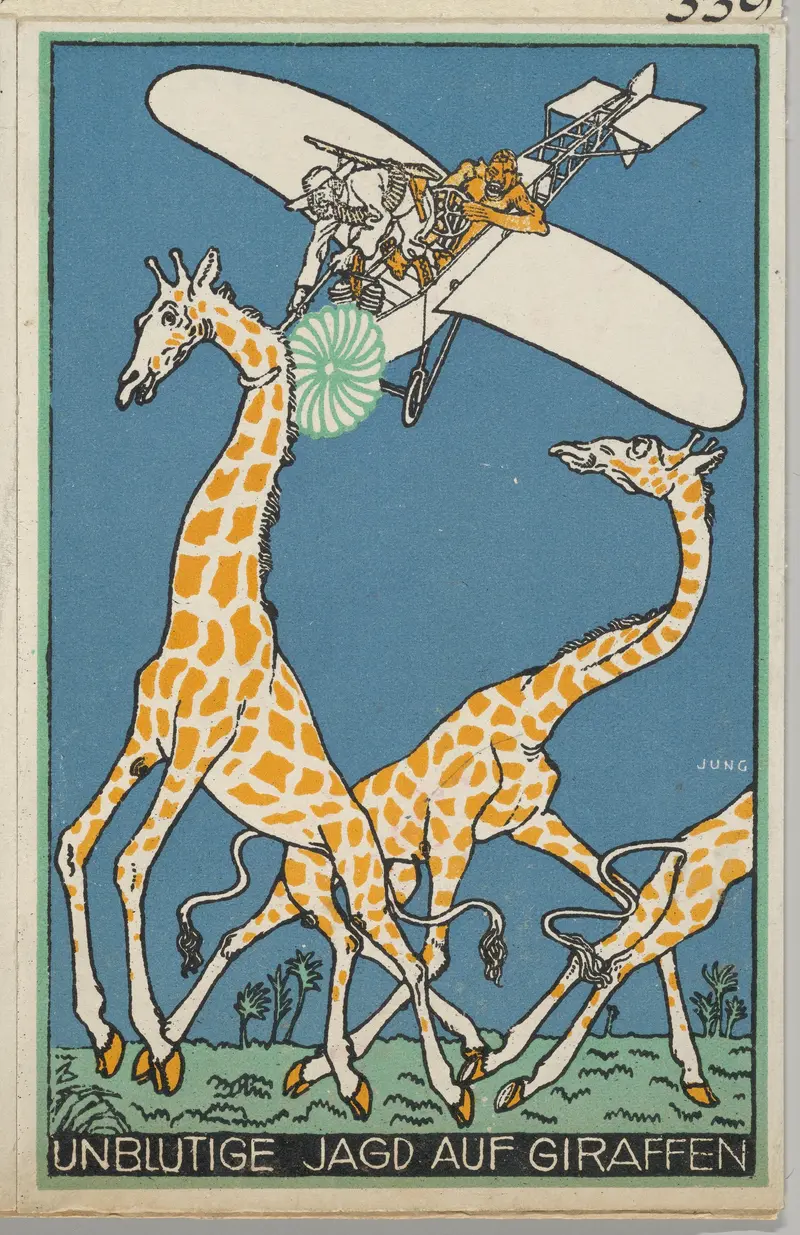
Bloodless Giraffe Hunt (Unblutige Jagd auf Giraffen)
Moriz Jung
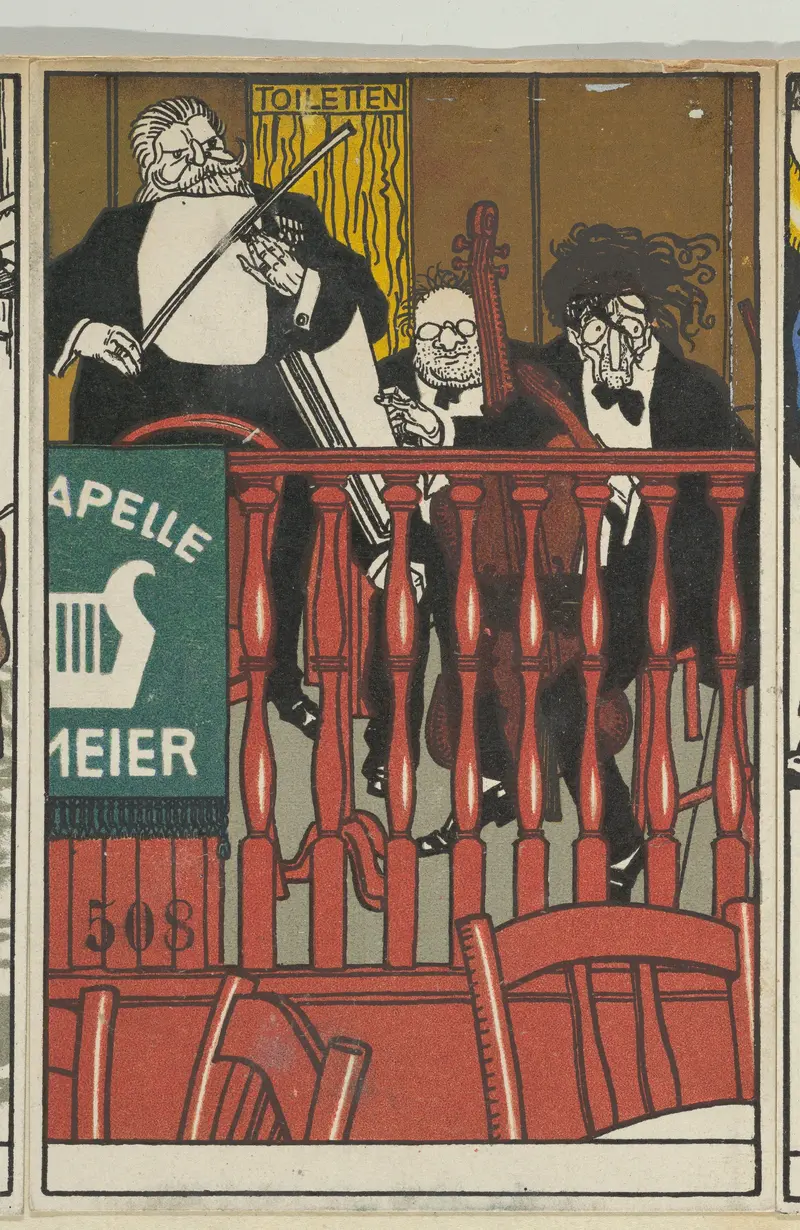
Salon Orchestra Meier
Moriz Jung
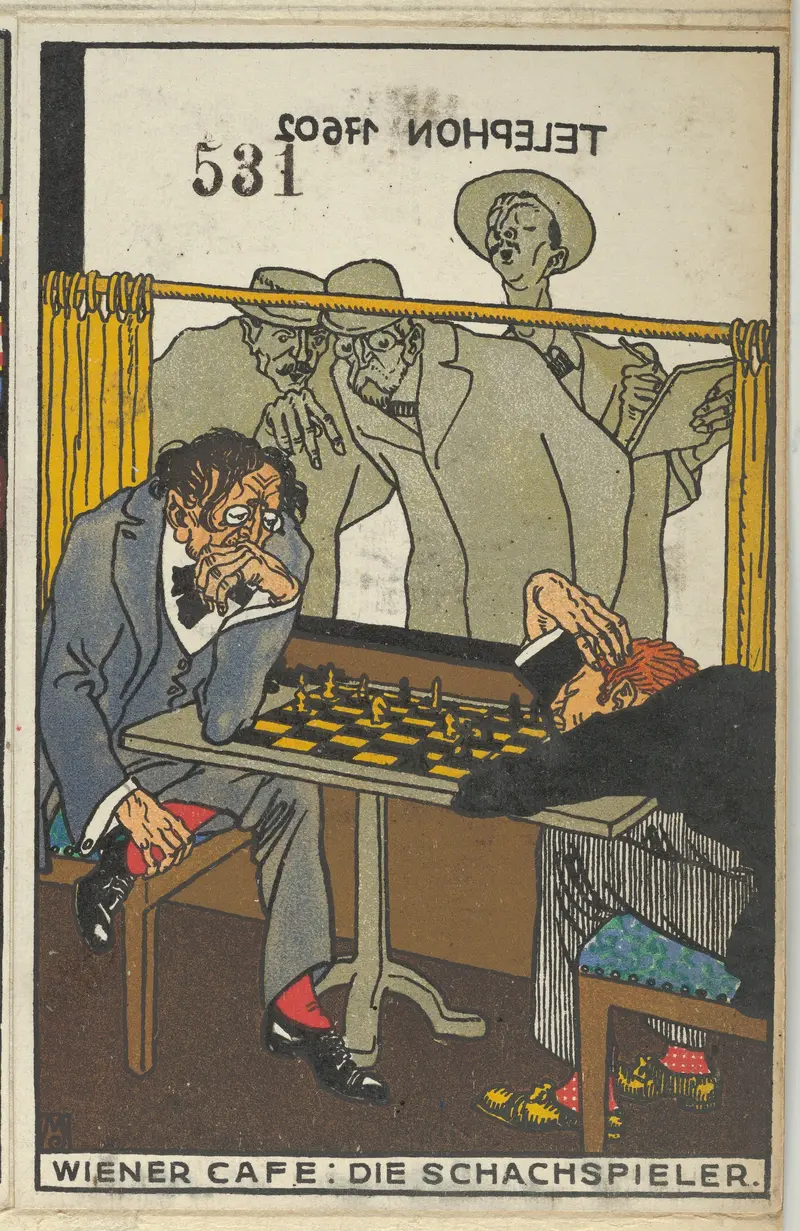
Wiener Café: Die Schachspieler
Moriz Jung
More Genre Scene Art

Banquet of the Officers of the St George Civic Guard
Frans Hals

Rembrandt and Saskia in the Scene of the Prodigal Son
Rembrandt van Rijn

Bal du moulin de la Galette
Pierre-Auguste Renoir

Quadrille at the Moulin Rouge
Henri de Toulouse-Lautrec

A Burial at Ornans
Gustave Courbet

When Will You Marry?
Paul Gauguin