
The Alchemist — History & Facts
A single shaft of light slices through the gloom, catching on the hunched figure at the heart of the scene—an alchemist so absorbed in his mysterious labor that the clutter and chaos around him seem to vanish. Every inch of the canvas teems with the detritus of experiment: battered vessels, curling scraps of paper, and the telltale glow of a furnace that promises transformation. The alchemist’s hands, busy with a crucible, draw the viewer’s eye to the precarious hope of discovery, while the rest of the room—dim, cluttered, lived-in—reminds us how easily ambition can tip into obsession.
The palette is earthy and muted, thick with browns and ochres, conjuring a world where science and superstition mingle in the half-light. Painted in 1661, this work by Adriaen van Ostade belongs to a Dutch Golden Age tradition fascinated by the everyday and the eccentric alike. Scenes of alchemists were popular in this period, often serving as sly commentary on folly and the pursuit of impossible dreams. While history has kept few traces of this particular painting’s early journey, it now resides in the National Gallery, a testament to the era’s appetite for both humor and cautionary tales.
The world that produced such images was one of rapid change—where merchants, craftsmen, and scholars alike might peer into the shadows of their own ambitions, and where a humble interior could become a stage for the grandest of human hopes. Look again at the alchemist’s face, and ask yourself: is he on the verge of discovery, or simply lost in the labyrinth of his own making?
More Artworks by Adriaen van Ostade

Dans in de herberg
Adriaen van Ostade
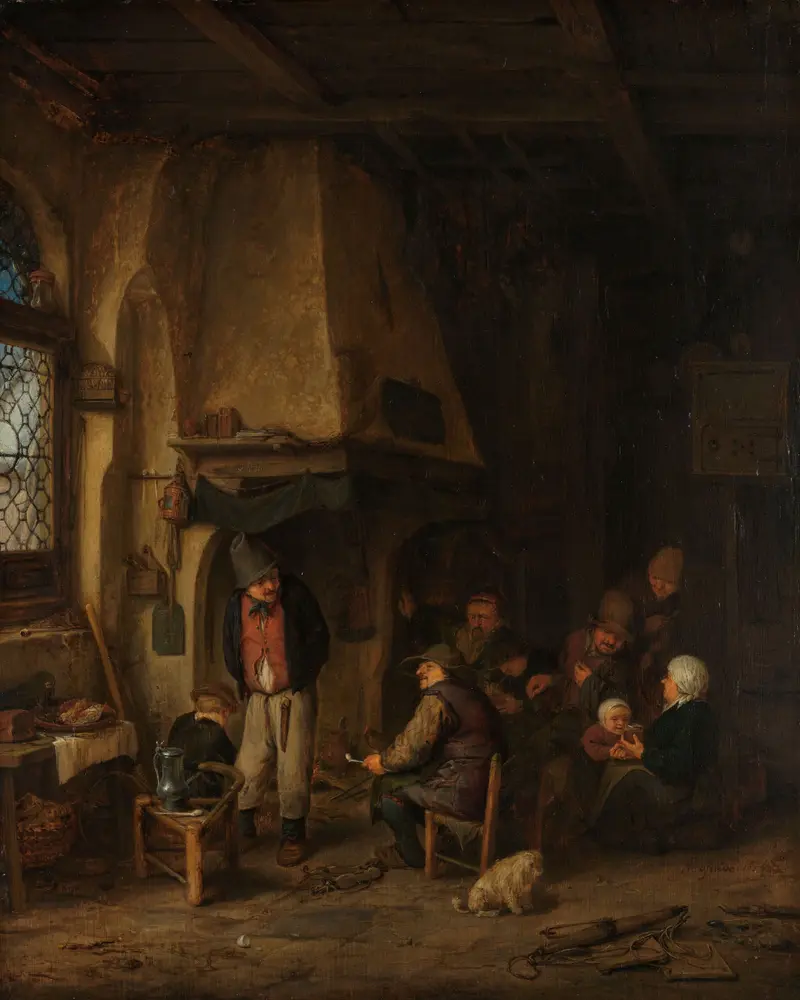
‘The Skaters’: Peasants in an Interior
Adriaen van Ostade
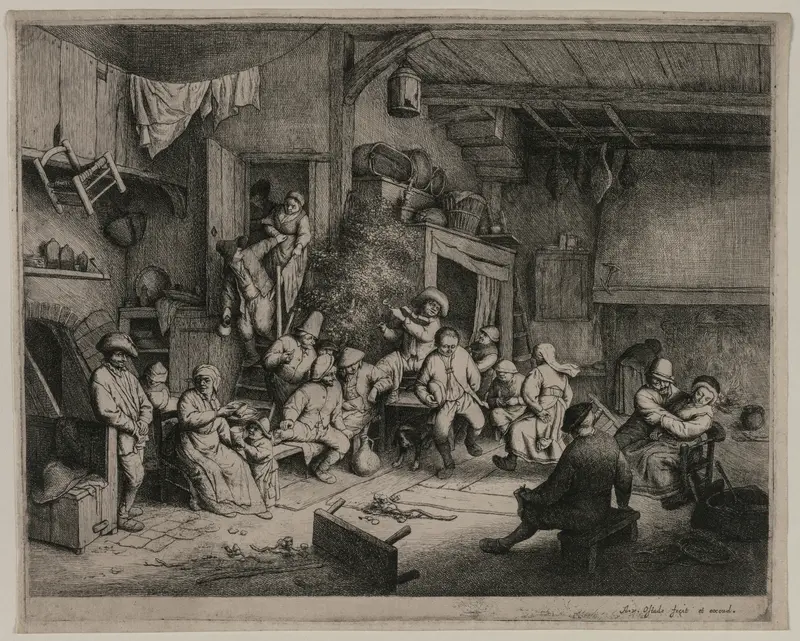
Dance at the Inn
Adriaen van Ostade
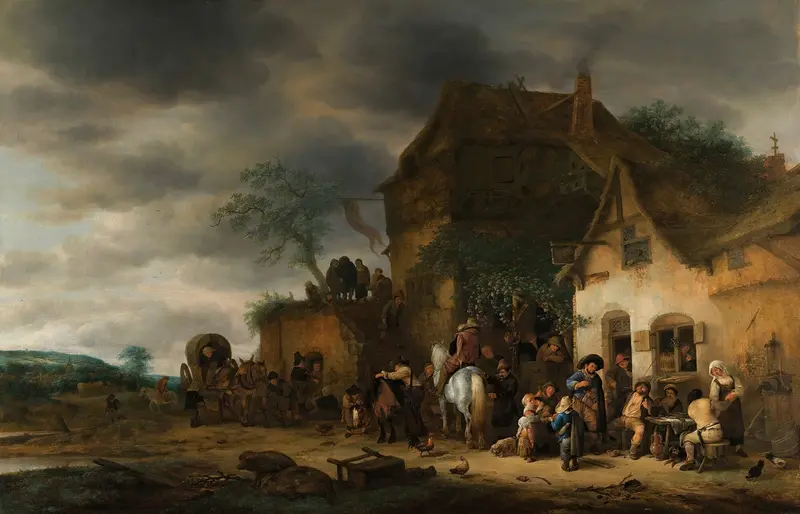
Travellers Halted At A Country Inn
Adriaen van Ostade
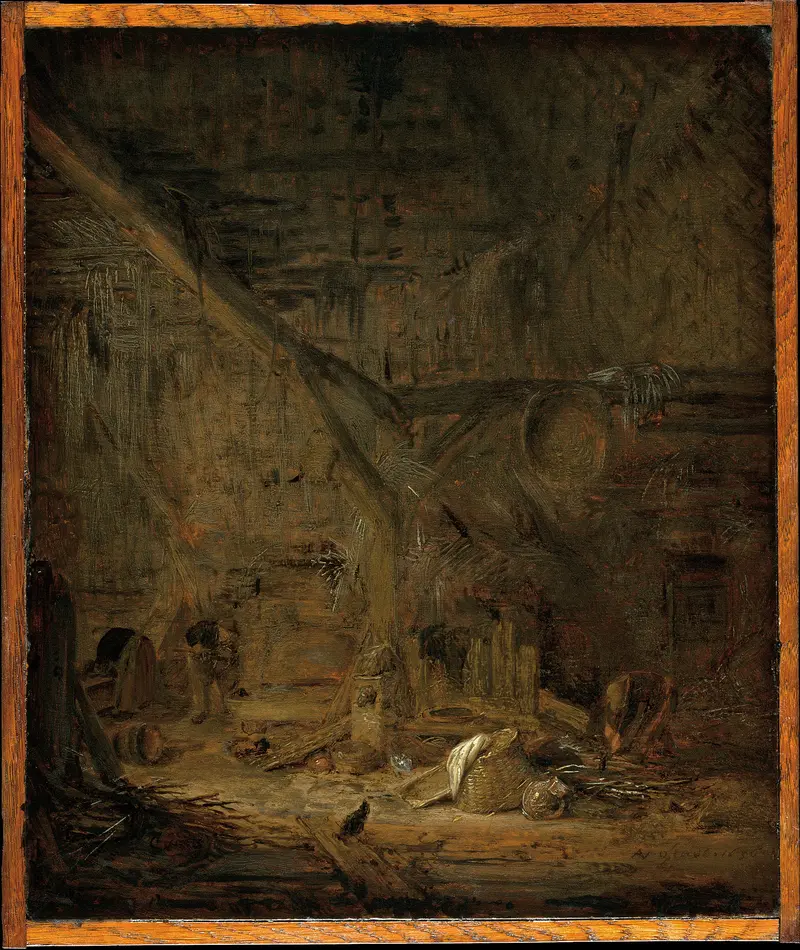
Interior of a Barn
Adriaen van Ostade
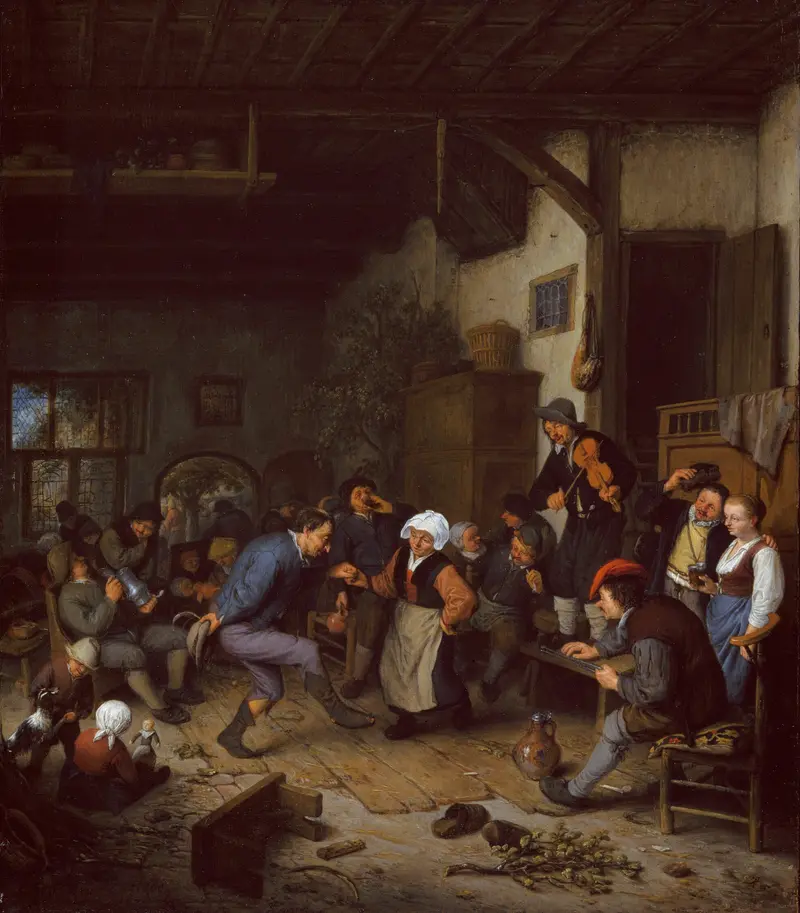
Merrymakers in an Inn
Adriaen van Ostade
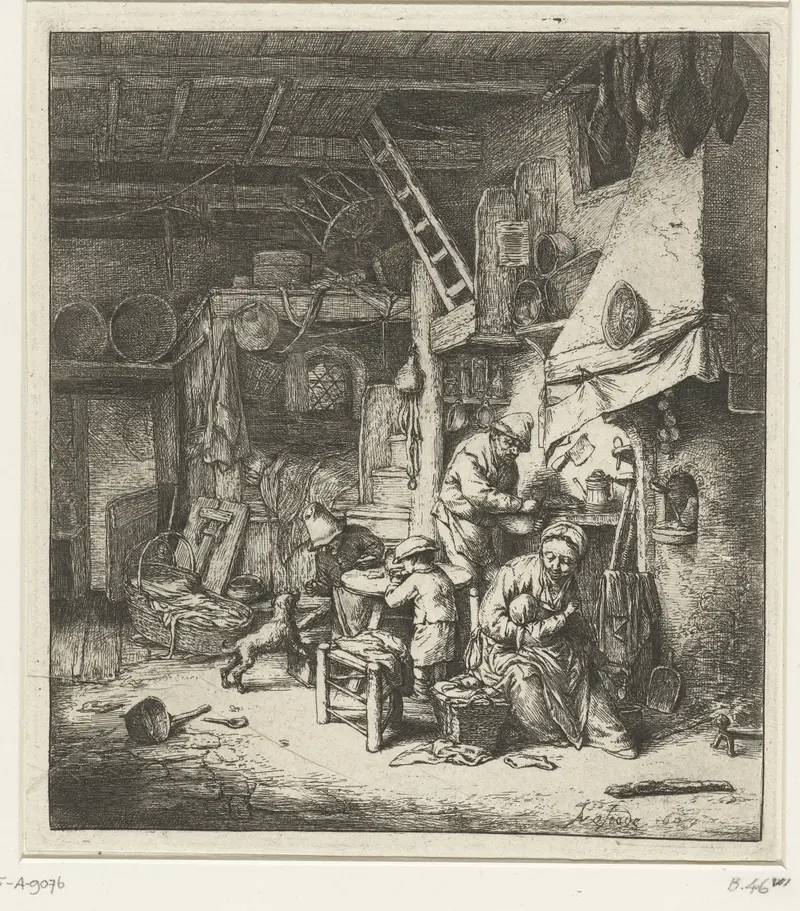
Boerengezin in interieur
Adriaen van Ostade
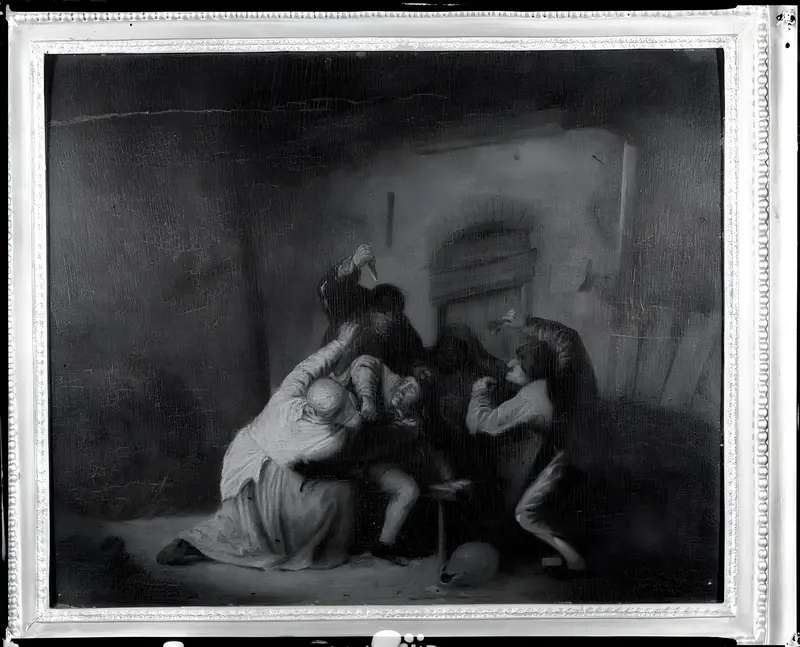
Peasants Brawling in a Tavern
Adriaen van Ostade
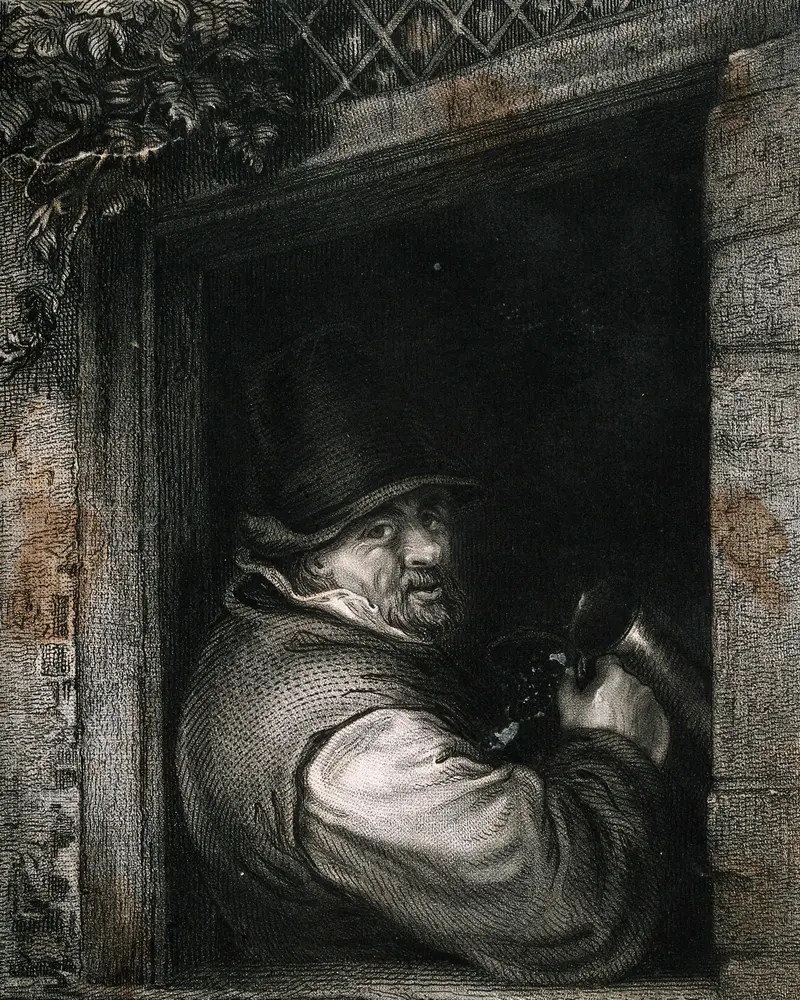
Man with a Tankard at a Window
Adriaen van Ostade
Dans in de herberg
Adriaen van Ostade
More Genre Scene Art

Banquet of the Officers of the St George Civic Guard
Frans Hals

Rembrandt and Saskia in the Scene of the Prodigal Son
Rembrandt van Rijn

Bal du moulin de la Galette
Pierre-Auguste Renoir

Quadrille at the Moulin Rouge
Henri de Toulouse-Lautrec

A Burial at Ornans
Gustave Courbet

When Will You Marry?
Paul Gauguin