Discover insights about this artwork
The Alley — History & Facts
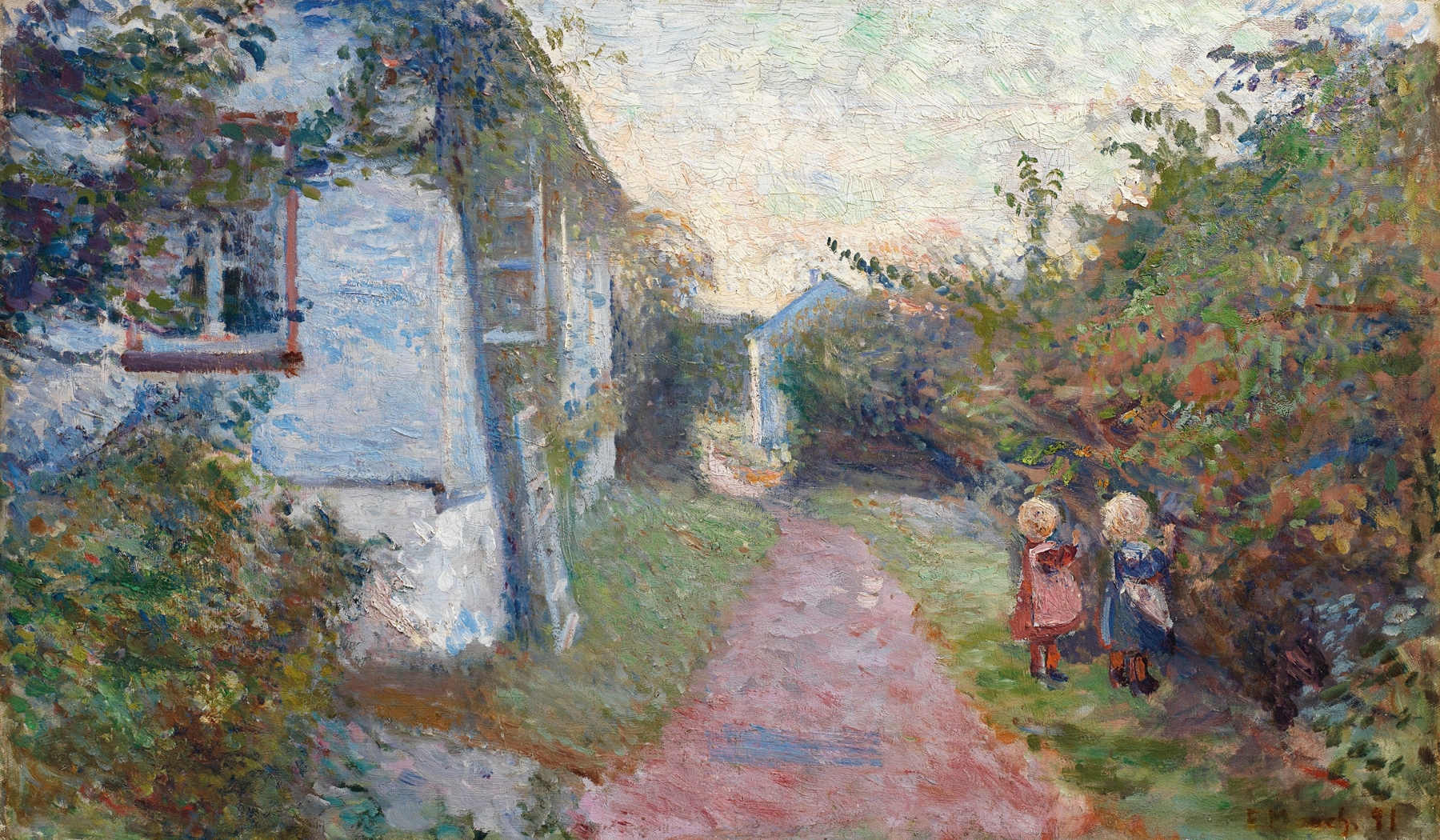
In The Alley, Edvard Munch presents a striking urban scene filled with vibrant colors and distorted figures. The alleyway is narrow and shadowy, creating a sense of claustrophobia. Figures appear to be moving through the space, their forms exaggerated and almost ghostly.
The use of bold colors adds to the emotional intensity of the scene. The painting is characterized by Munch's signature brushwork and use of color to convey mood. The figures are not realistically depicted; instead, they reflect Munch's expressionist style, emphasizing emotion over realism. The composition draws the viewer's eye into the depth of the alley, creating a dynamic sense of movement.
The overall effect is haunting, inviting contemplation of the urban experience. The Alley was created during a time when Munch was exploring themes of anxiety and urban life. This work reflects his interest in the psychological effects of city living, a recurring theme in his oeuvre. Munch's unique style, characterized by bold colors and emotional depth, set him apart from his contemporaries.
Interestingly, this painting is part of a private collection, making it less accessible to the public compared to his more famous works.