
The Artist's Studio (Ralli) — History & Facts
A hush of concentration fills the studio, broken only by the silent choreography of hands and glances. The eye is drawn first to the delicate exchange at the heart of The Artist's Studio (Ralli): a young woman stands quietly, her gaze lowered as a man—perhaps the artist himself—adjusts the folds of her costume with careful intent. The light falls softly on her pale blouse and the bright sash at her waist, lending her an air of both vulnerability and quiet dignity.
Nearby, an older woman in vivid traditional dress perches on the edge of a striped sofa, her posture alert, one hand raised as if to offer advice or caution. The tapestry behind them, alive with mythic figures, echoes the drama of the present moment, while the scattered props—brushes, drapery, and sketches—speak of a space where art and life intermingle. Painted in 1876, this work belongs to a world where the artist’s studio was both a private sanctuary and a stage for carefully orchestrated encounters. In the late nineteenth century, scenes like this were prized for their glimpse behind the curtain of creation, revealing the labor and ritual that went into every finished canvas.
Theodoros Ralli, working at a time when Orientalist and genre painting flourished, captures not only the textures of fabric and flesh but the subtle negotiations of trust and authority between sitter, artist, and chaperone. Though little is recorded about the specific journey of this painting—its patrons, its early admirers—it stands as a testament to a moment when the making of art was itself a subject worthy of close attention. The longer you look, the more the studio’s quiet drama unfolds.
More Artworks by Theodoros Ralli

The Sleeping Concubine
Theodoros Ralli
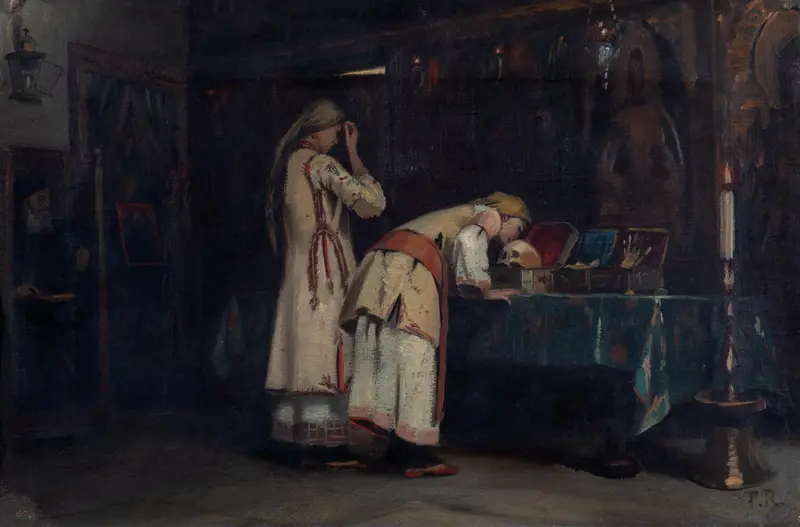
Holy Relics
Theodoros Ralli
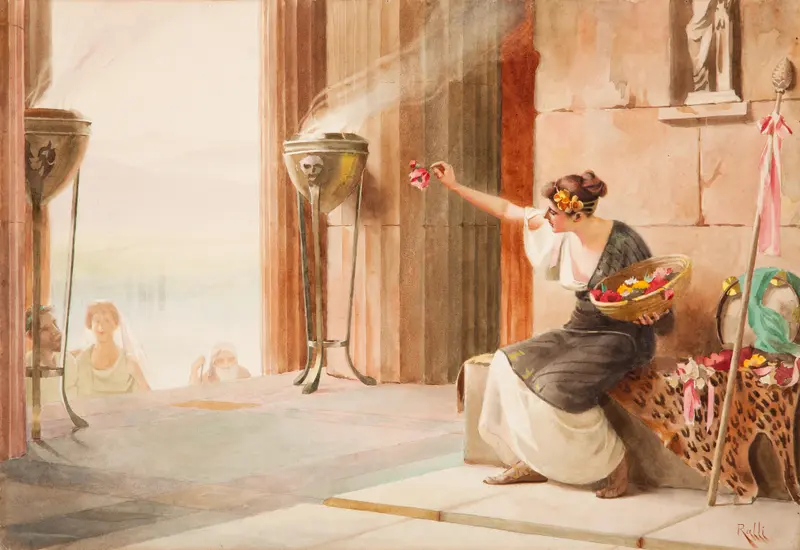
Flower Seller at the Parthenon
Theodoros Ralli
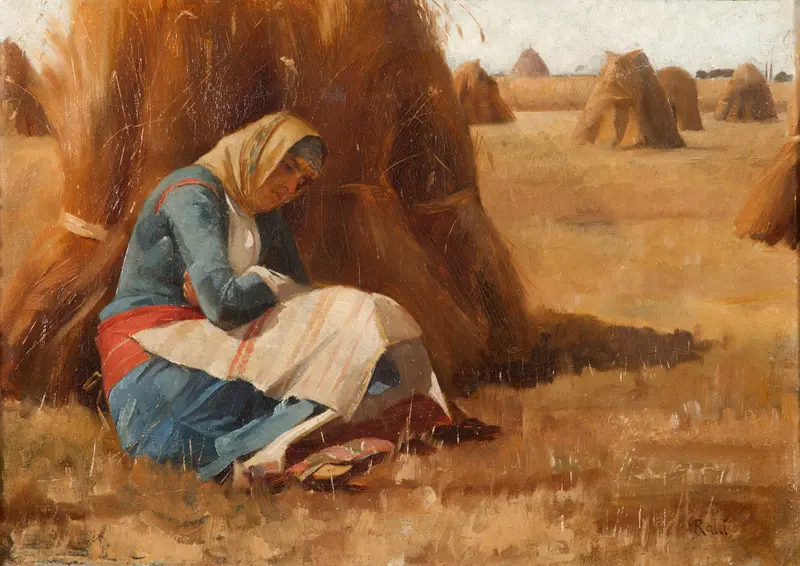
Resting by a Haystack
Theodoros Ralli
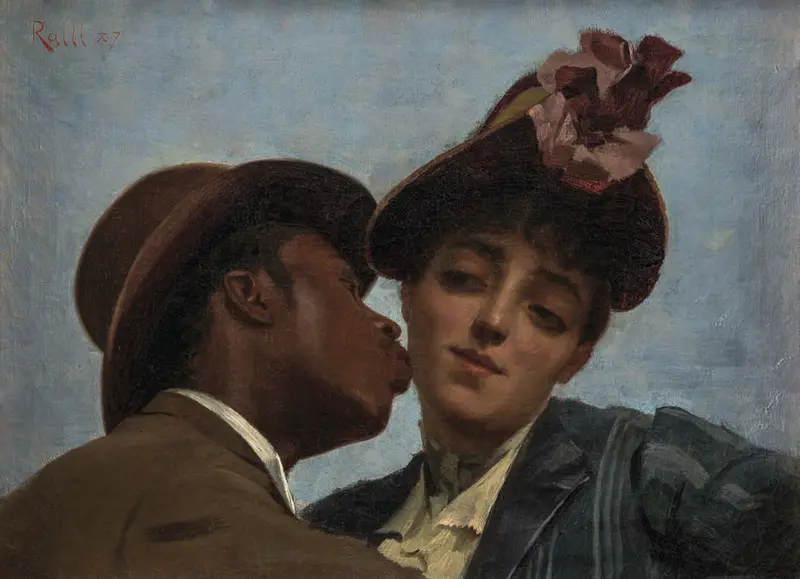
The Kiss (Ralli)
Theodoros Ralli
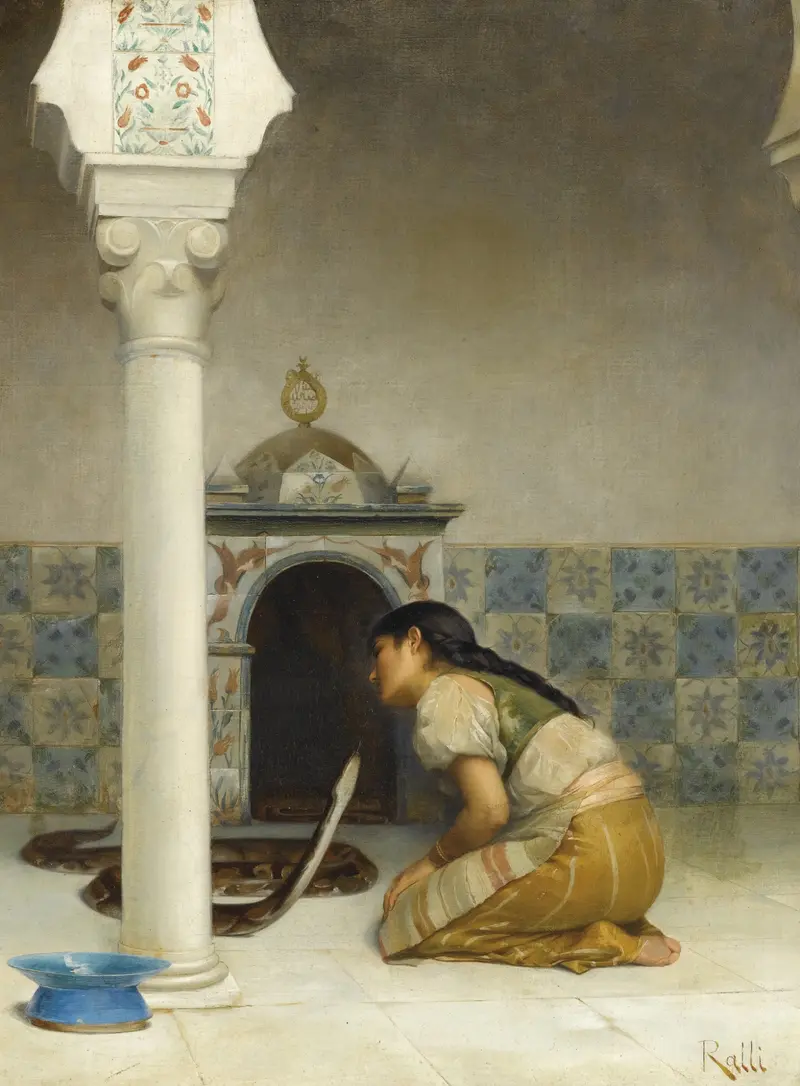
The Sacred Serpent
Theodoros Ralli
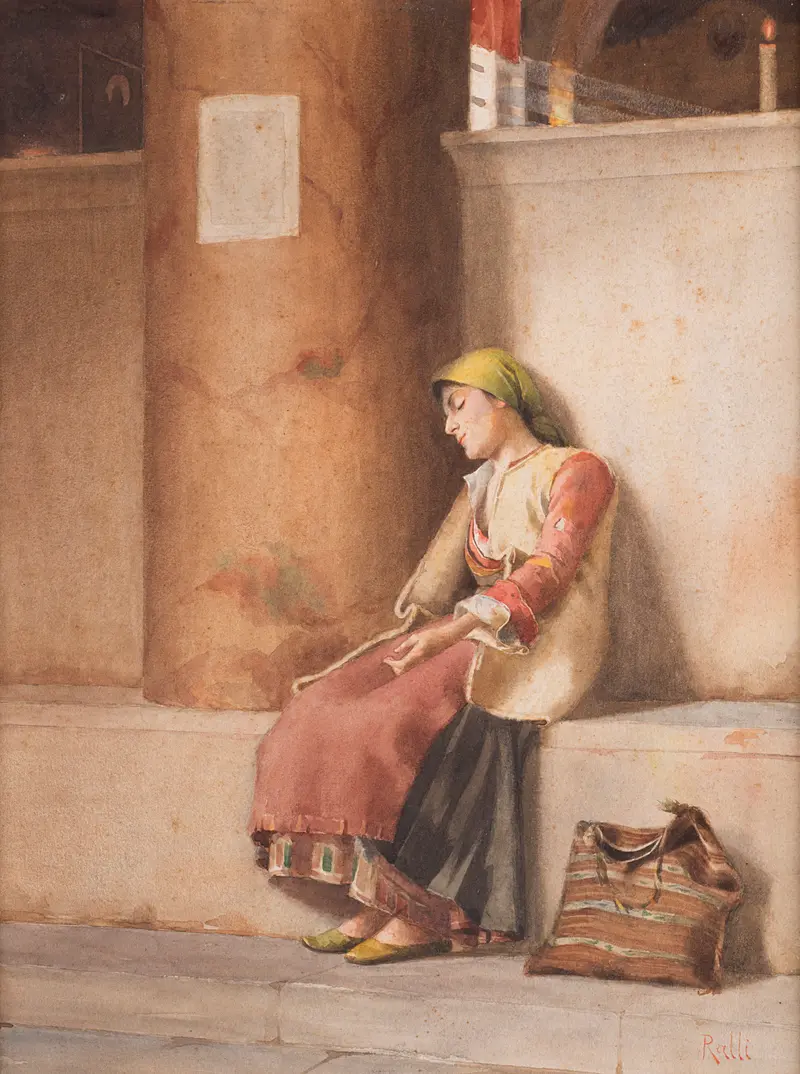
A Moment of Reflection
Theodoros Ralli
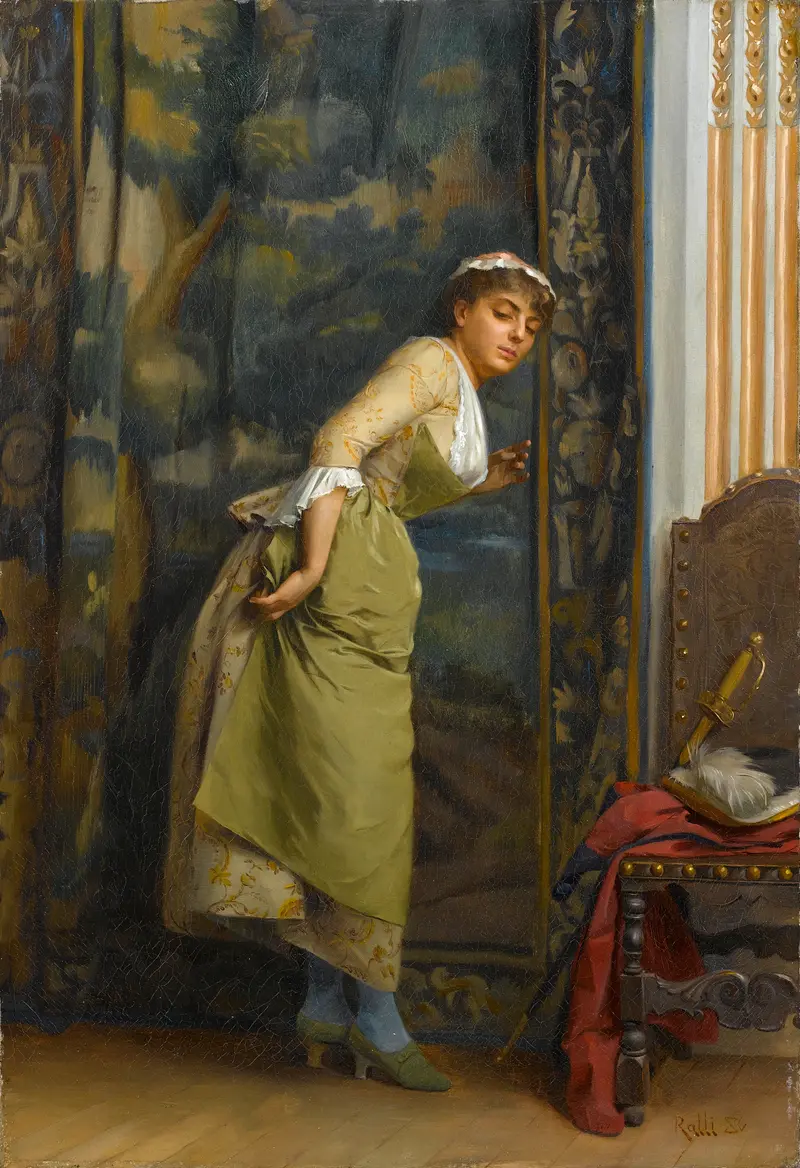
Eavesdropping (Ralli)
Theodoros Ralli
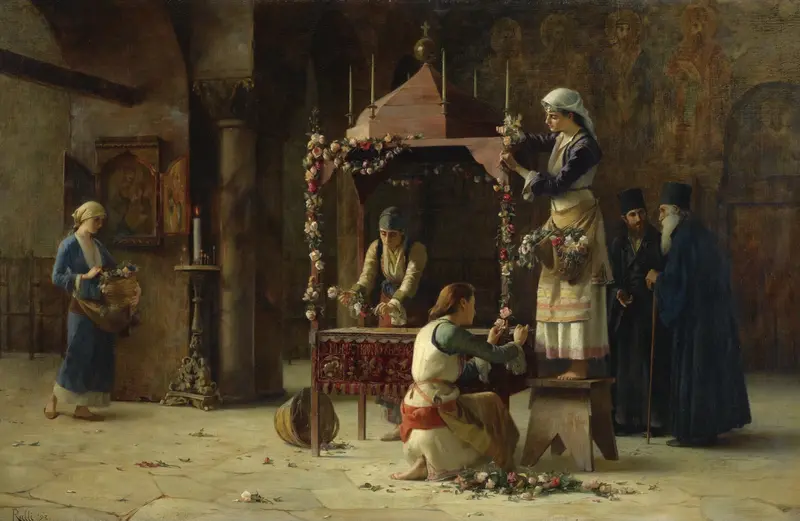
Holy Friday, Greece
Theodoros Ralli
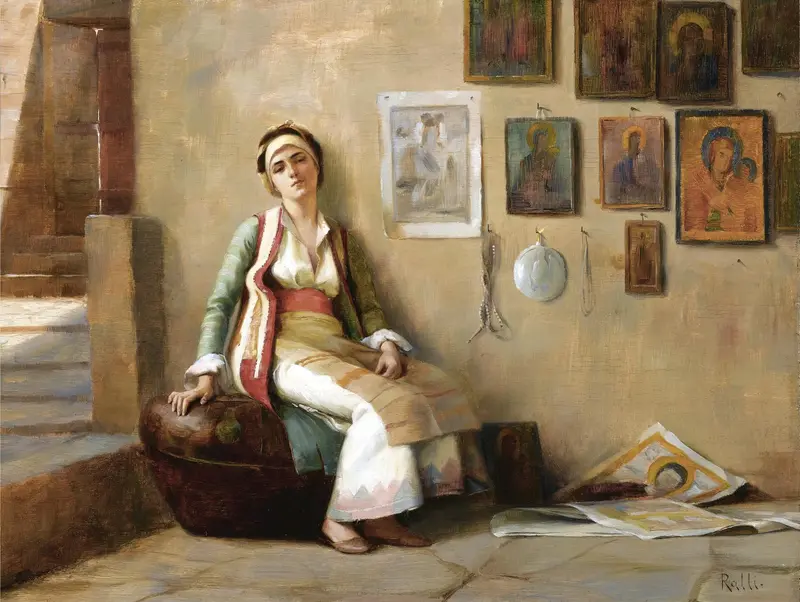
A Moment's Rest
Theodoros Ralli
More Genre Scene Art

Banquet of the Officers of the St George Civic Guard
Frans Hals

Rembrandt and Saskia in the Scene of the Prodigal Son
Rembrandt van Rijn

Bal du moulin de la Galette
Pierre-Auguste Renoir

Quadrille at the Moulin Rouge
Henri de Toulouse-Lautrec

A Burial at Ornans
Gustave Courbet

When Will You Marry?
Paul Gauguin