
The Bath of the Alhambra — History & Facts
What draws the eye first in The Bath of the Alhambra is the quiet intimacy between the two women, set against the cool, bare geometry of the bathhouse walls. One figure leans over the edge of the bath, her body forming a gentle arc that leads us to the relaxed gaze of her companion, half-submerged in water. The light, filtered and soft, caresses the skin and stone alike, blurring the boundary between the human and the architectural.
The only objects breaking the stillness are a pair of wooden bath clogs, placed neatly side by side, signaling both the ritual and the pause of bathing. The muted palette—ochres, creams, and the faintest blush of flesh—creates a hush, as if the air itself is thick with steam and secrets. Painted in 1886 by Theodoros Ralli, this work belongs to a moment when European artists were fascinated by the so-called “Oriental” world, often depicting imagined scenes of daily life in places like the Alhambra. Such paintings, popular among collectors and salons, offered a blend of sensuality and exoticism that was both fashionable and controversial.
Ralli, a Greek artist active in Paris, was part of this movement, though history has kept few traces of the specific journeys of this painting or its early owners. What remains is the sense of private ritual, the echo of water and whispered conversation, inviting us to linger and wonder what stories these walls might have heard.
More Artworks by Theodoros Ralli

The Sleeping Concubine
Theodoros Ralli
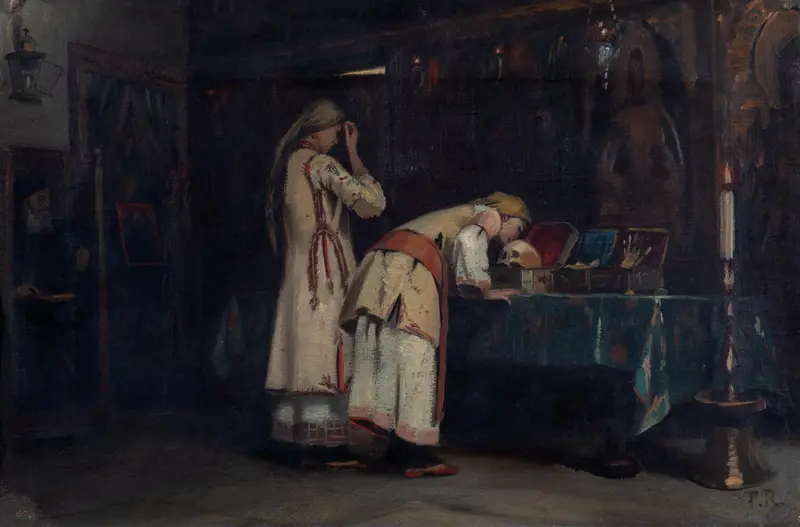
Holy Relics
Theodoros Ralli
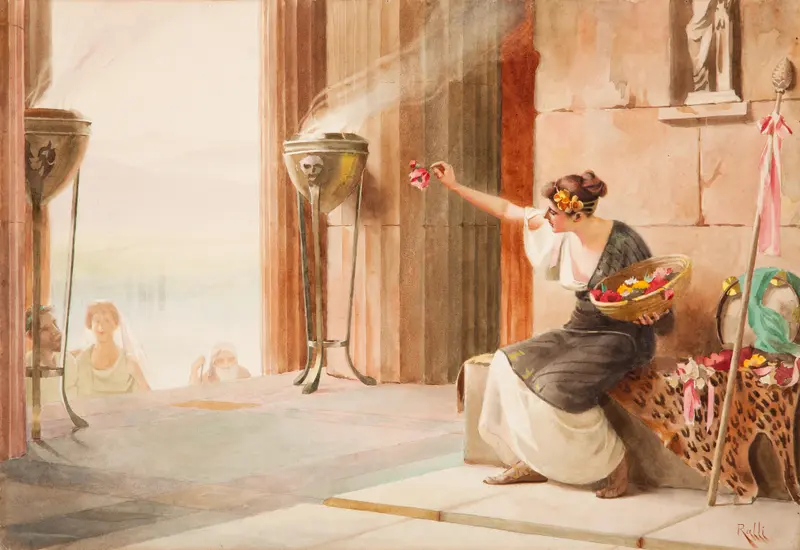
Flower Seller at the Parthenon
Theodoros Ralli
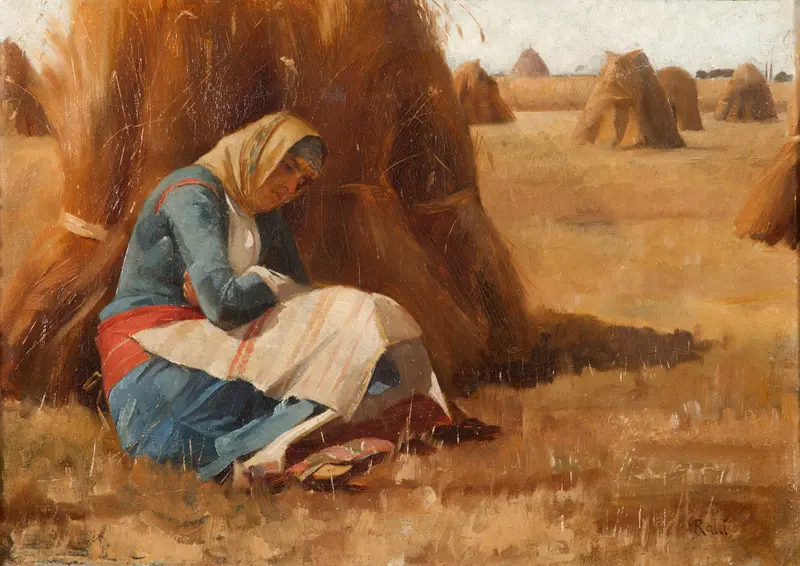
Resting by a Haystack
Theodoros Ralli
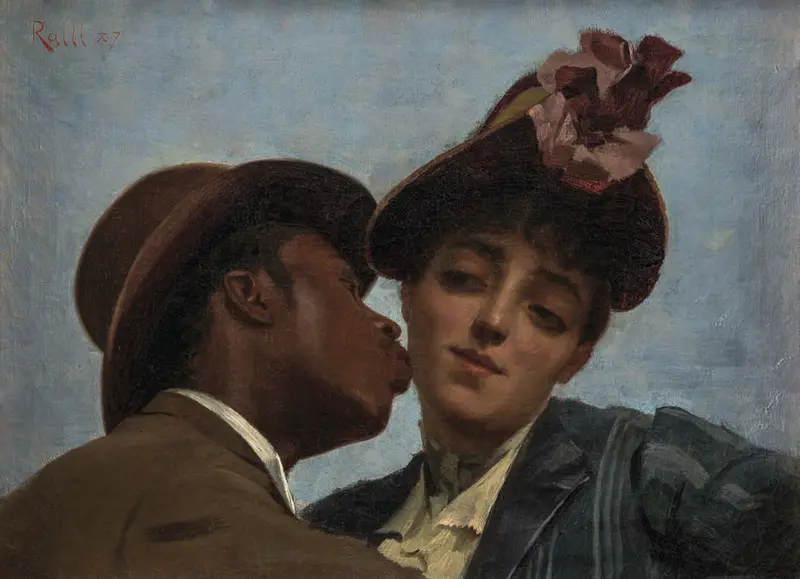
The Kiss (Ralli)
Theodoros Ralli
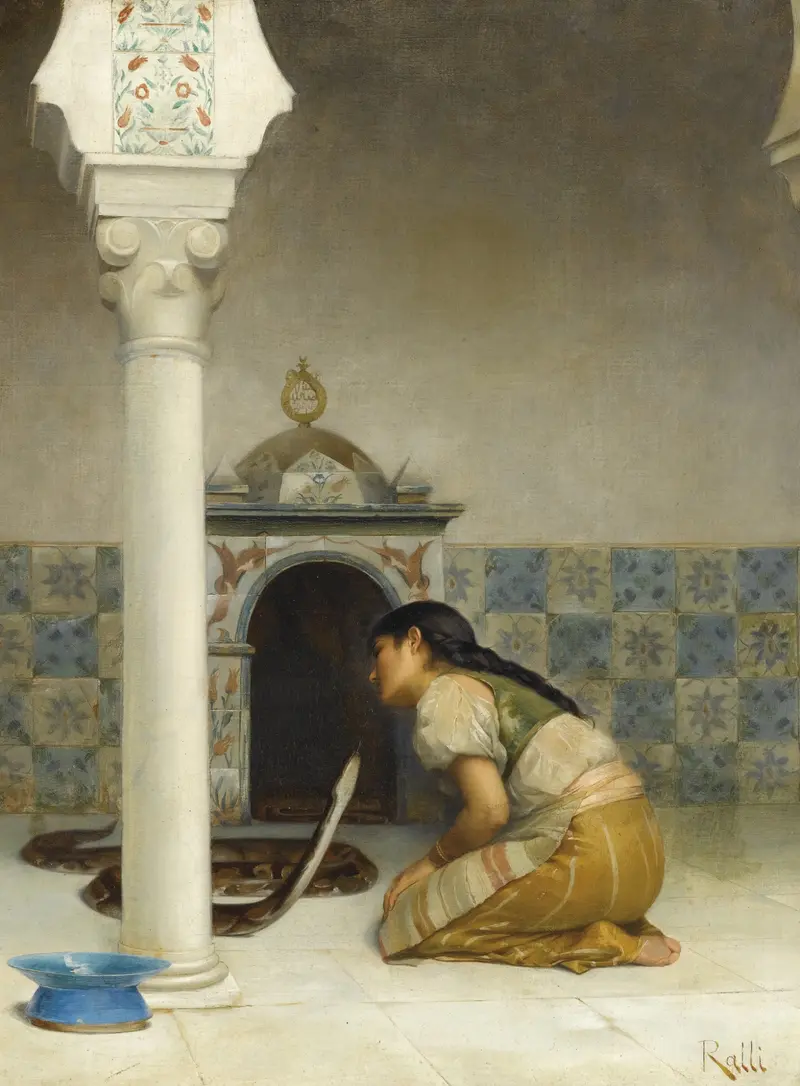
The Sacred Serpent
Theodoros Ralli
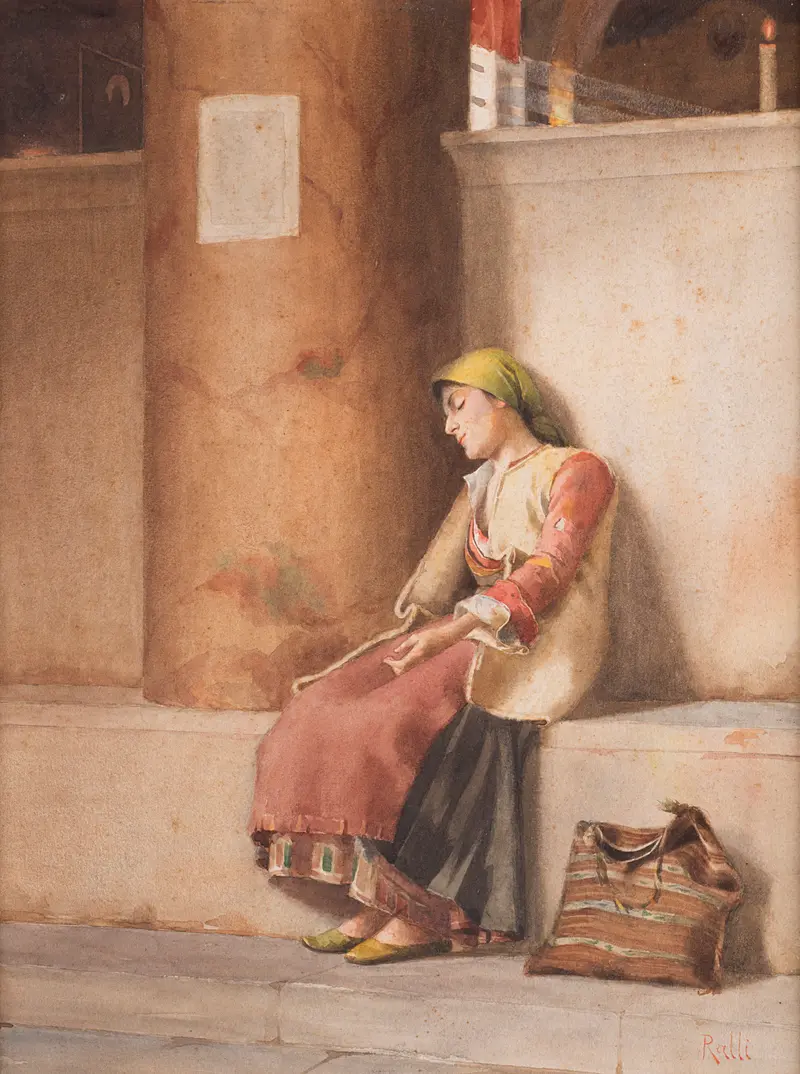
A Moment of Reflection
Theodoros Ralli
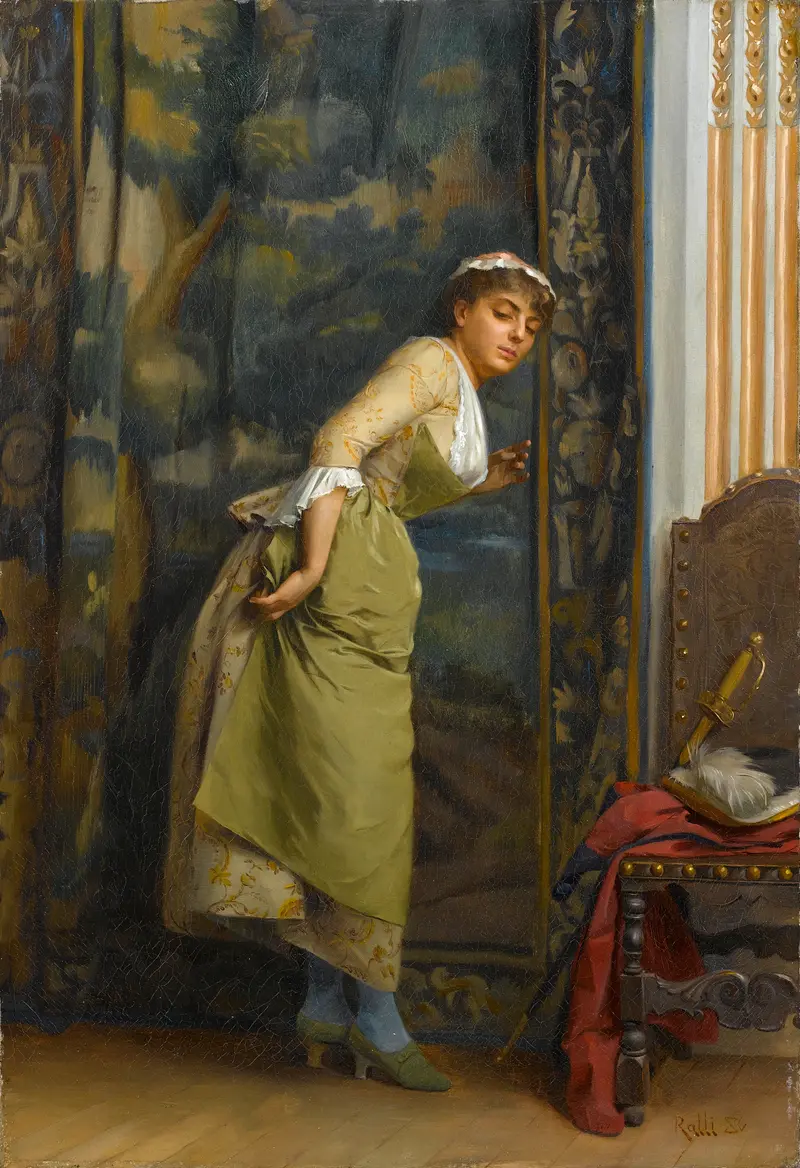
Eavesdropping (Ralli)
Theodoros Ralli
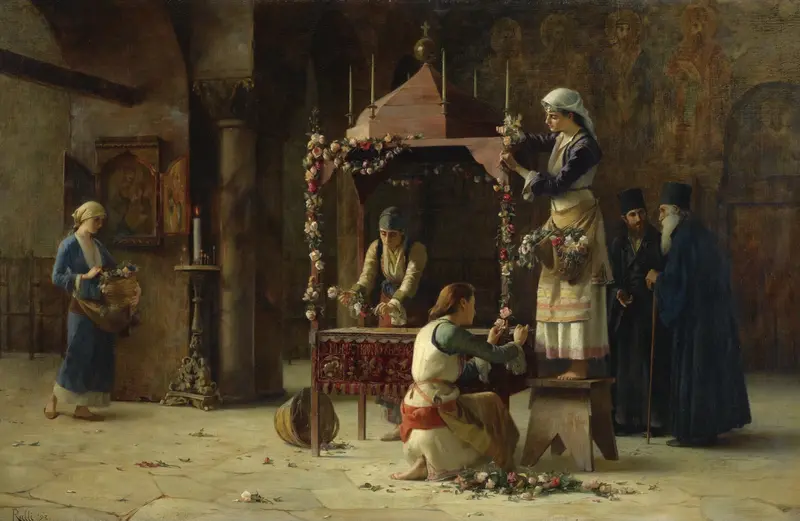
Holy Friday, Greece
Theodoros Ralli
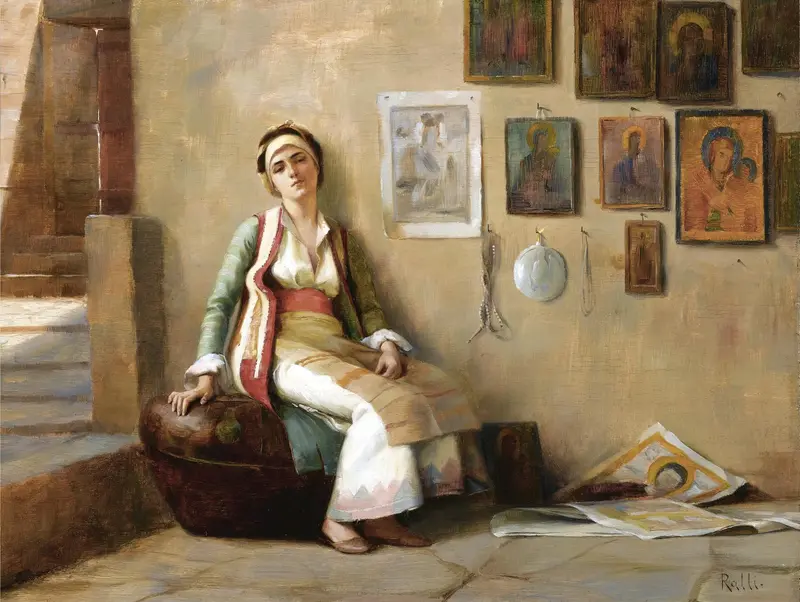
A Moment's Rest
Theodoros Ralli
More Genre Scene Art

Banquet of the Officers of the St George Civic Guard
Frans Hals

Rembrandt and Saskia in the Scene of the Prodigal Son
Rembrandt van Rijn

Bal du moulin de la Galette
Pierre-Auguste Renoir

Quadrille at the Moulin Rouge
Henri de Toulouse-Lautrec

A Burial at Ornans
Gustave Courbet

When Will You Marry?
Paul Gauguin