
The Battle of the Archangel Michael with Satan — History & Facts
When Tintoretto painted The Battle of the Archangel Michael with Satan in the final years of his life, he was already renowned for his daring compositions and theatrical use of light. What makes this work especially compelling is that it stands among the last great religious canvases he completed before his death in 1594, marking the culmination of a career spent reimagining sacred drama for the Venetian public. While the exact details of its commission remain uncertain, the painting is often cited as a testament to the late Mannerist taste for dynamic, spiraling forms and heightened emotion, a style Tintoretto made his own. At the center of the canvas, the Archangel Michael descends in a torrent of golden light, his armor flashing as he drives Satan down into shadow.
Michael’s outstretched arm, bearing a sword or spear, captures the decisive moment when good triumphs over evil—a theme drawn from the Book of Revelation. The writhing figure of Satan, monstrous and contorted, tumbles beneath the angel’s feet, his chains a symbol of defeat and subjugation. The swirling clouds and dramatic contrasts of light and darkness intensify the sense of cosmic struggle, a visual language that recalls Tintoretto’s earlier Paradise in the Doge’s Palace, but here the focus is more intimate, the conflict more personal.
Unlike Raphael’s serene Saint Michael Vanquishing Satan, Tintoretto chooses chaos and energy, inviting the viewer into the heart of the battle. The painting’s subsequent history is less well documented than some of Tintoretto’s public commissions. It is generally believed to have been created for a Venetian confraternity or private chapel, reflecting the late sixteenth-century appetite for bold, emotionally charged religious imagery. Over the centuries, the work has passed through several private collections, and its attribution was at times debated among scholars, though consensus now firmly credits Tintoretto.
Today, The Battle of the Archangel Michael with Satan is recognized as a powerful example of the artist’s late style, and it continues to inspire viewers with its vision of spiritual conflict rendered in paint.
More Artworks by Tintoretto
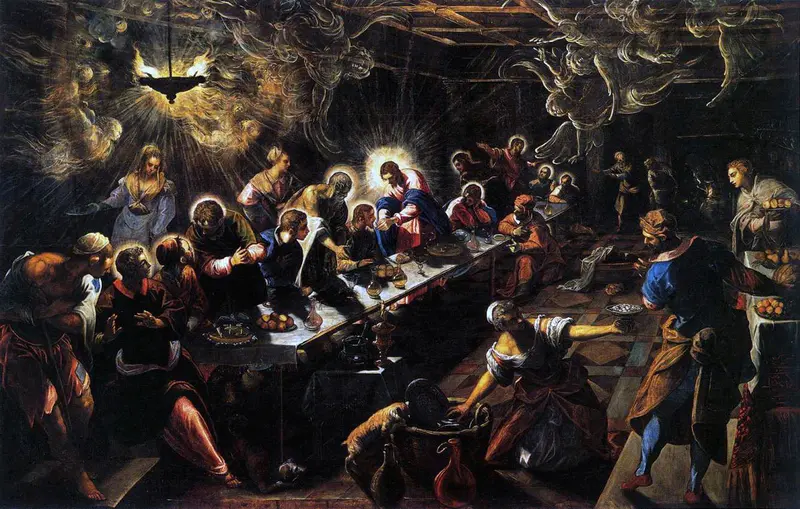
The Last Supper
Tintoretto
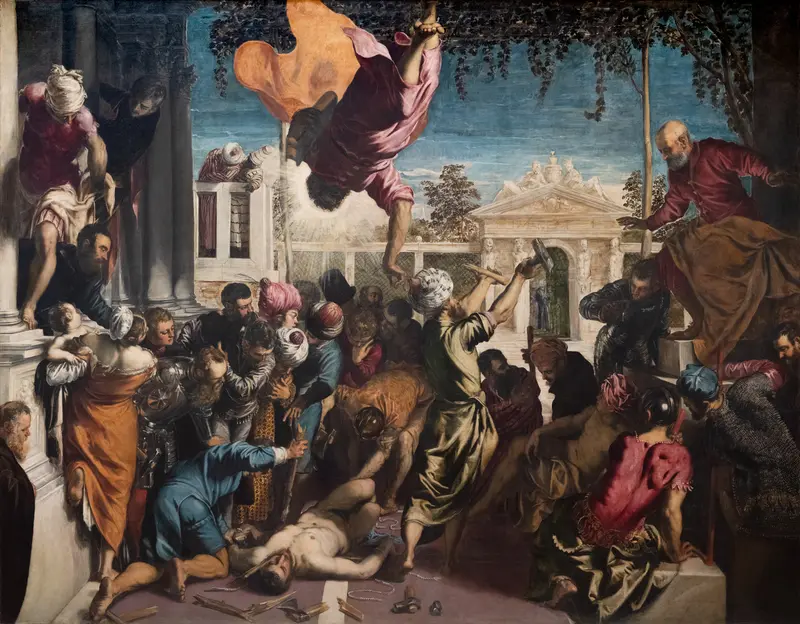
The Miracle of the Slave
Tintoretto
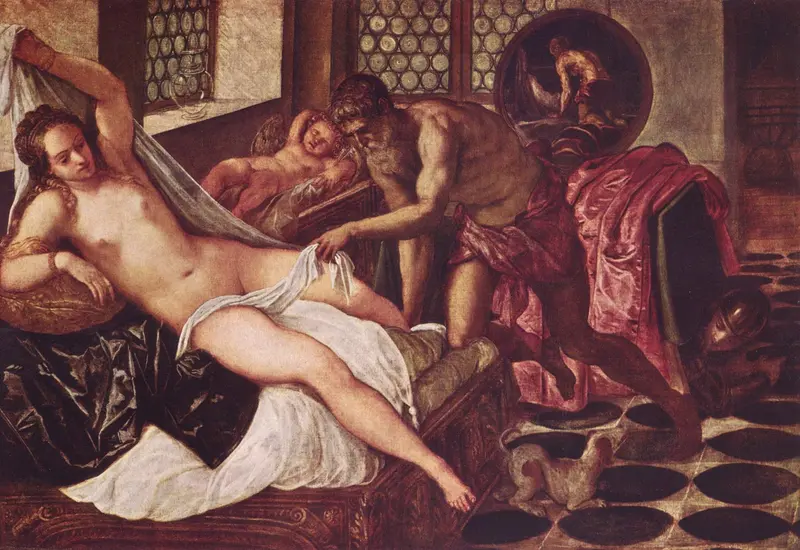
Venus and Mars Surprised by Vulcan
Tintoretto

Adoration of the Shepherds
Tintoretto
Adoration of the Magi
Tintoretto
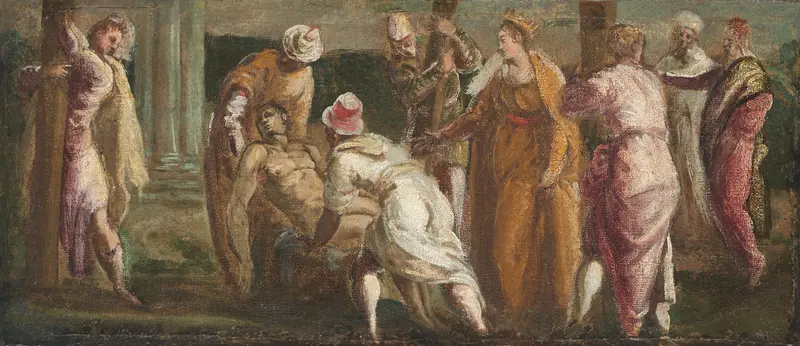
Saint Helen Testing the True Cross
Tintoretto
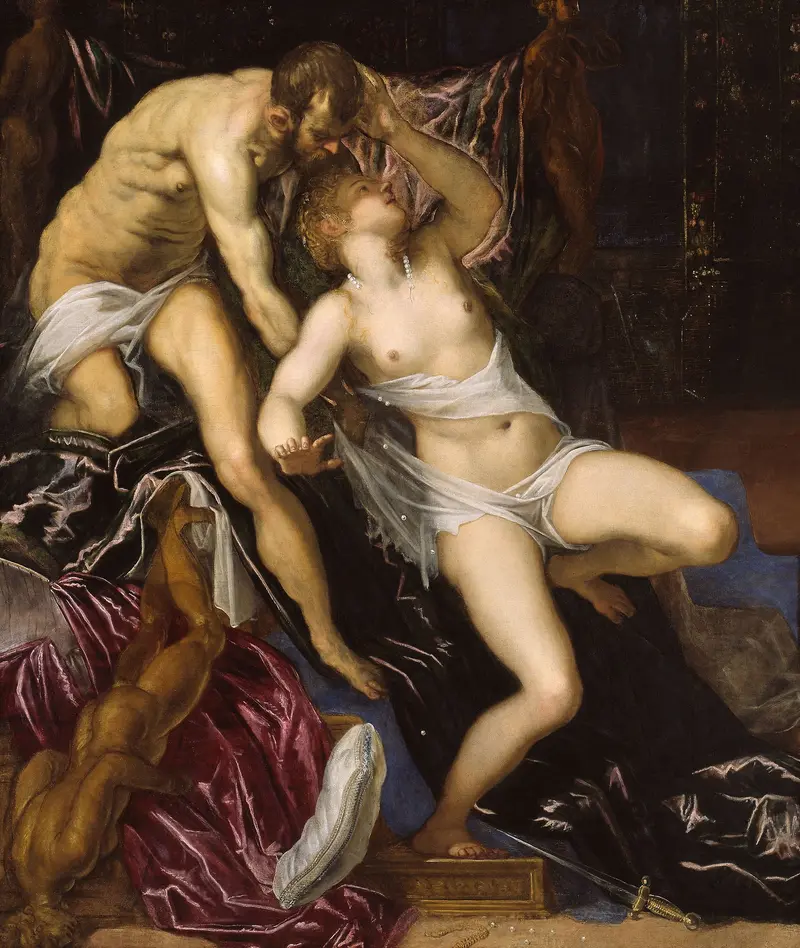
Tarquin and Lucretia
Tintoretto
Two Male Figures in Motion (verso)
Tintoretto
A Female Nude [verso]
Tintoretto
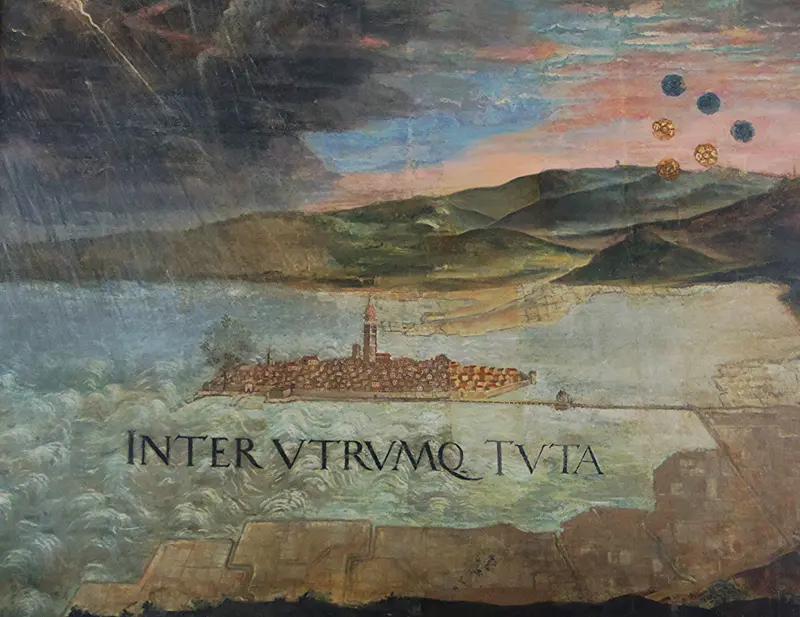
Veduta Kopra
Tintoretto





