
The Beach at Trouville — History & Facts
Where does light end, and longing begin? In the sweeping embrace of a sunlit beach, the boundaries dissolve, surrendering to the dance of color and emotion. Look to the left at the figures dotting the sandy shore, their silhouettes captured mid-motion, as they embody a moment of leisure and joy. Notice how the light falls upon the gentle waves, inviting the eye to trace the rich blues and soft whites that merge seamlessly into the horizon. The brushstrokes are alive, vibrant, almost musical, creating a rhythm that pulls the viewer into the very essence of summer.
The pastel hues blend harmoniously, evoking a sense of warmth and nostalgia, while the presence of the distant sailboats adds a layer of peaceful activity to the scene. Yet, within this idyllic setting, there lies a subtle tension. The expanse of sky hints at the vastness of dreams unfulfilled, while the scattered figures represent humanity's fleeting moments of happiness. Each person, seemingly immersed in their own world, serves as a reminder of the solitary nature of longing, highlighting a contrast between collective joy and individual introspection.
The juxtaposition of vibrant activity against the tranquil backdrop invites reflection on the transient nature of time and experiences at the beach. In 1869, Eugène Boudin painted this masterpiece during a period of artistic transformation in France, where the Impressionist movement was beginning to take shape. Working in Trouville, a coastal town that attracted artists and holiday-goers alike, he was deeply engaged with the natural light and its effects on the landscape. His innovative techniques laid the groundwork for future generations of painters, capturing the ephemeral beauty of life along the shoreline.
More Artworks by Eugène Boudin
Browse all →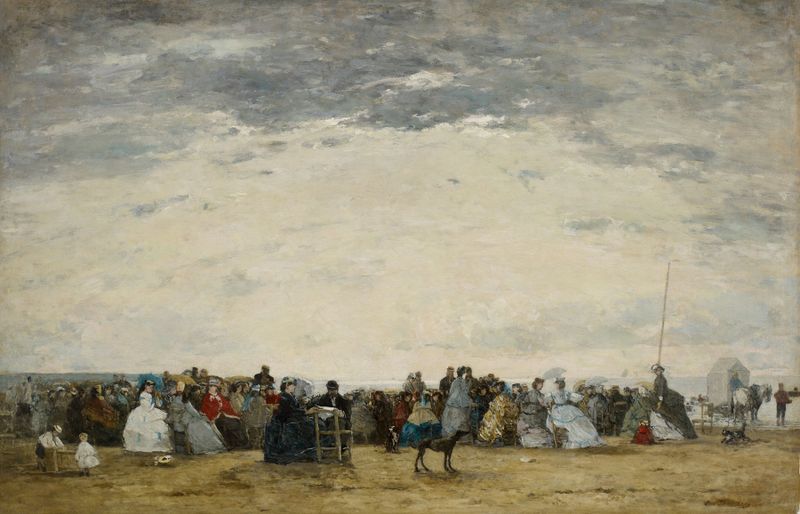
Vacationers on the Beach at Trouville
Eugène Boudin

Washerwoman near Trouville
Eugène Boudin
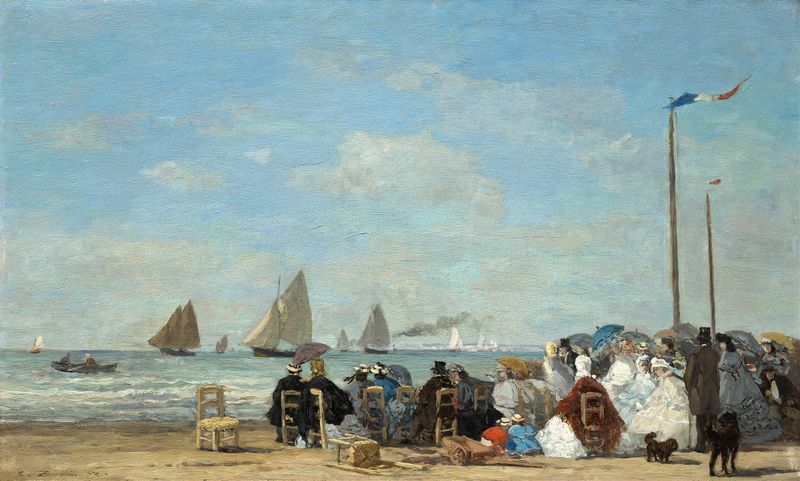
Beach Scene at Trouville
Eugène Boudin

Port aux environs d’Honfleur
Eugène Boudin

Le Faou, un coin du village
Eugène Boudin
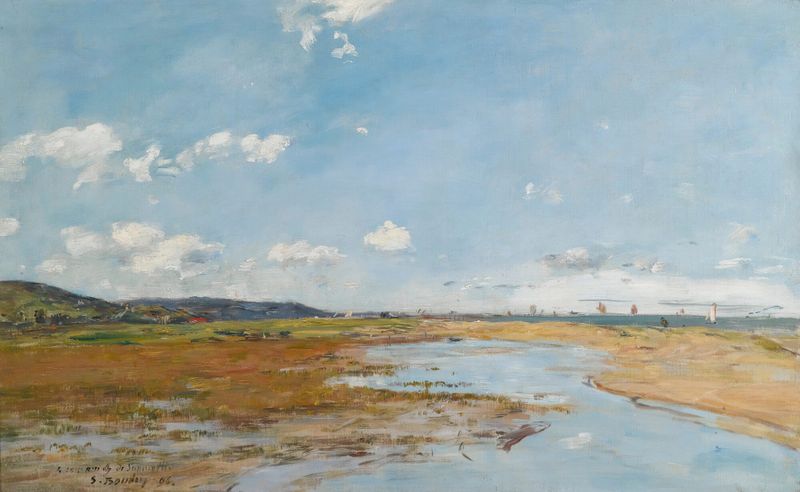
Deauville. Le Rivage
Eugène Boudin
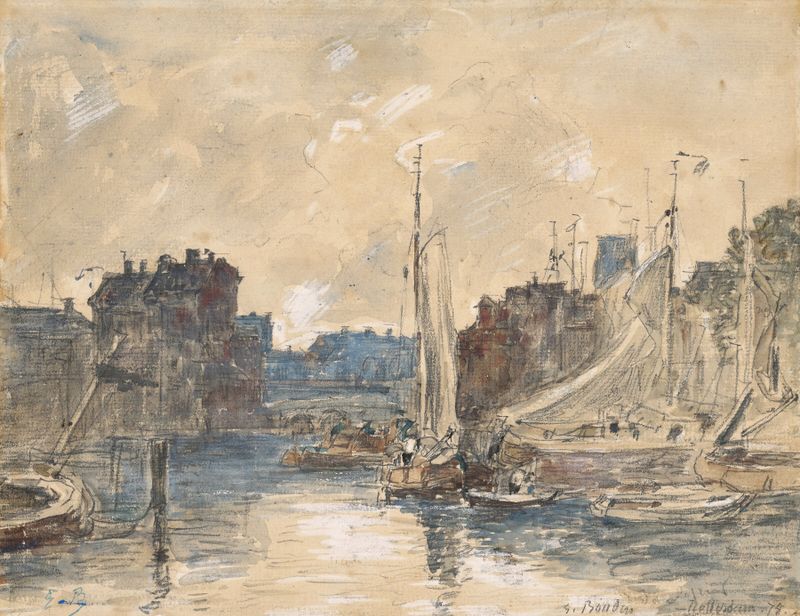
Port de Rotterdam
Eugène Boudin

View of Bordeaux, from the Quai des Chartrons
Eugène Boudin

Trouville, Scène De Plage
Eugène Boudin

Trouville, Le Port
Eugène Boudin





