
The Beach at Villerville — History & Facts
What if silence could speak through light? In The Beach at Villerville, the gentle waves and muted sky whisper of faith in the unfathomable vastness of the sea. Look to the horizon, where the soft blend of azure and pearl creates a serene backdrop. The composition draws the viewer’s gaze along the sand, dotted with small figures and colorful sails, a testament to the human presence amid nature's grandeur. Notice how the delicate brushstrokes capture the rippling motion of the water, the light shimmering across its surface, infusing the scene with an ethereal quality that breathes life into each sandy grain. Boudin explores the tension between man and nature, highlighting the fragility of existence through tiny details—the distant fishermen casting nets, their silhouettes mere whispers against the expansive sea.
The interplay of light and shadow suggests a deeper spiritual reflection, an invitation to contemplate the transient beauty of life itself. The soft tones evoke a sense of nostalgia, while the expansive sky hints at the infinite possibilities that lie beyond the observable world. In 1864, Eugène Boudin painted this scene in Villerville, a coastal town in France, during a period when he was exploring the effects of natural light on landscapes. This work emerged at a time when Impressionism was beginning to take shape, and Boudin was influenced by the burgeoning movement that sought to capture the essence of fleeting moments, paving the way for future artists to express their own visions of light and color.
More Artworks by Eugène Boudin
Browse all →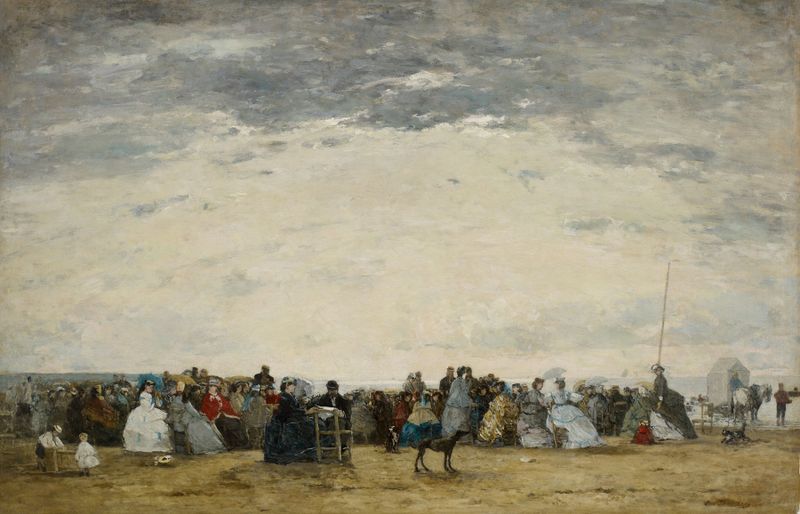
Vacationers on the Beach at Trouville
Eugène Boudin

Washerwoman near Trouville
Eugène Boudin
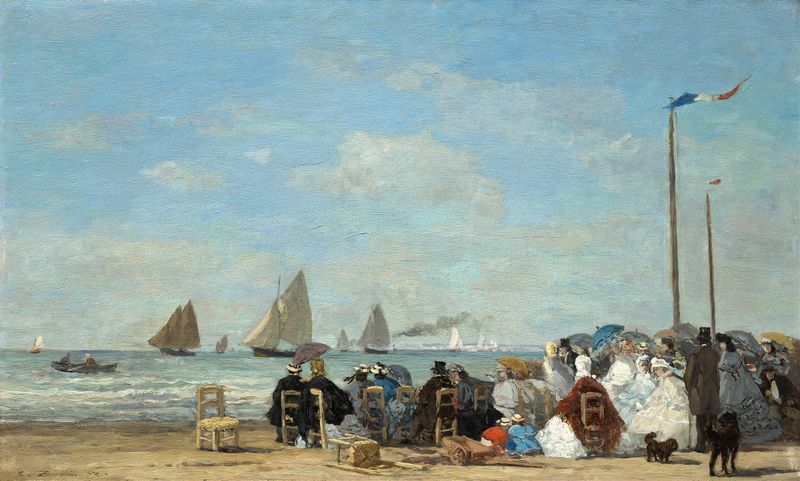
Beach Scene at Trouville
Eugène Boudin

Port aux environs d’Honfleur
Eugène Boudin

Le Faou, un coin du village
Eugène Boudin
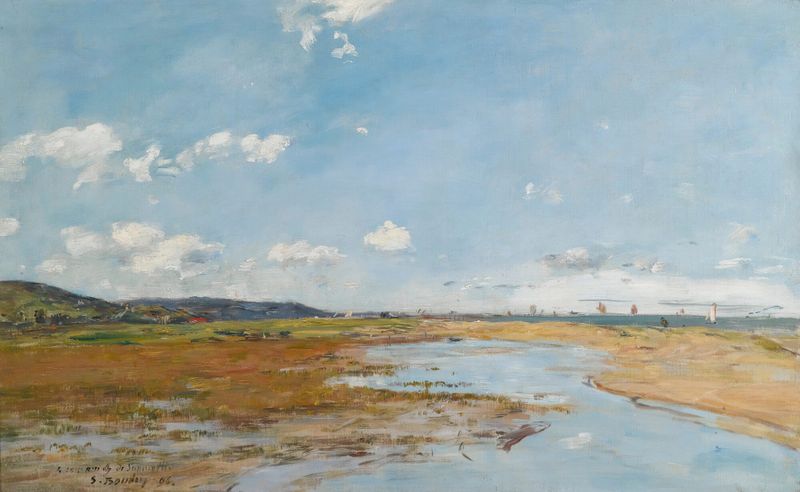
Deauville. Le Rivage
Eugène Boudin
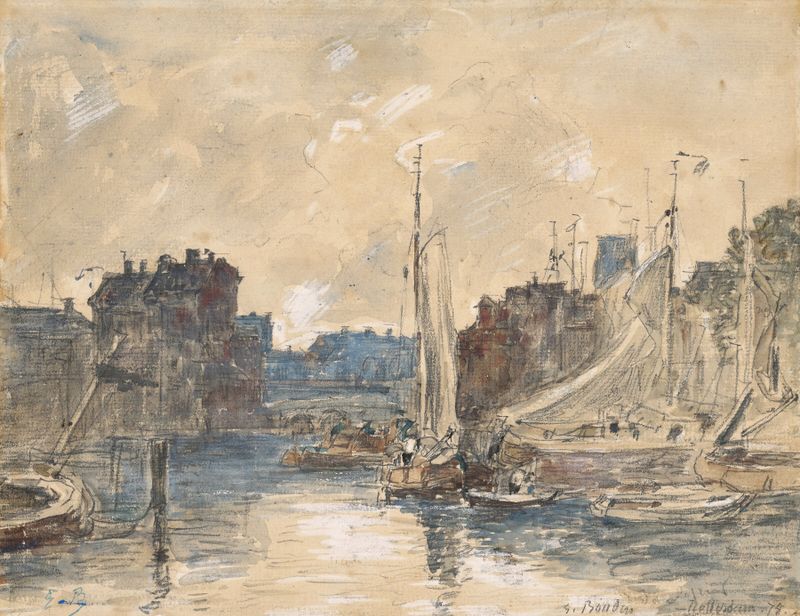
Port de Rotterdam
Eugène Boudin

View of Bordeaux, from the Quai des Chartrons
Eugène Boudin

Trouville, Scène De Plage
Eugène Boudin

Trouville, Le Port
Eugène Boudin





