
The Beach near Trouville — History & Facts
In every brushstroke lies the weight of legacy, echoing the beauty and transience of life at the shore. Look to the left at the gentle curves of the sandy beach, where figures flit about like whispers in the wind. The muted palette of pastel blues and soft whites creates a serene backdrop, allowing the delicate nuances of human interaction to unfold in the foreground. Notice how the light dances on the water, illuminating the rolling waves that cradle the scene, each ripple a testament to the passage of time and the relentless embrace of nature. Emotional tensions arise in the contrast between the carefree vacationers and the eternal landscape that surrounds them.
The figures, absorbed in their own worlds, are ephemeral against the timeless sea, reminding the viewer of life's fleeting moments. The distant horizon hints at infinite possibilities, while the figures remain grounded in the present, captured in a moment that will soon fade like the tide. Eugène Boudin painted this work during the late 19th century, a pivotal time for Impressionism as it began to take hold in France. Working in Trouville, a popular seaside resort, he focused on capturing the transient effects of light and atmosphere.
His experiences as one of the early proponents of plein air painting positioned him as a bridge between classical techniques and the emerging modern art movement, influencing many artists, including Monet.
More Artworks by Eugène Boudin
Browse all →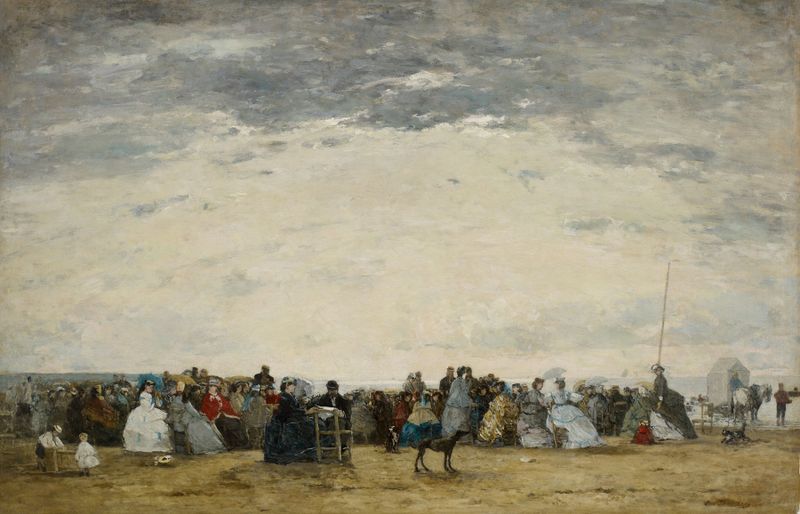
Vacationers on the Beach at Trouville
Eugène Boudin

Washerwoman near Trouville
Eugène Boudin
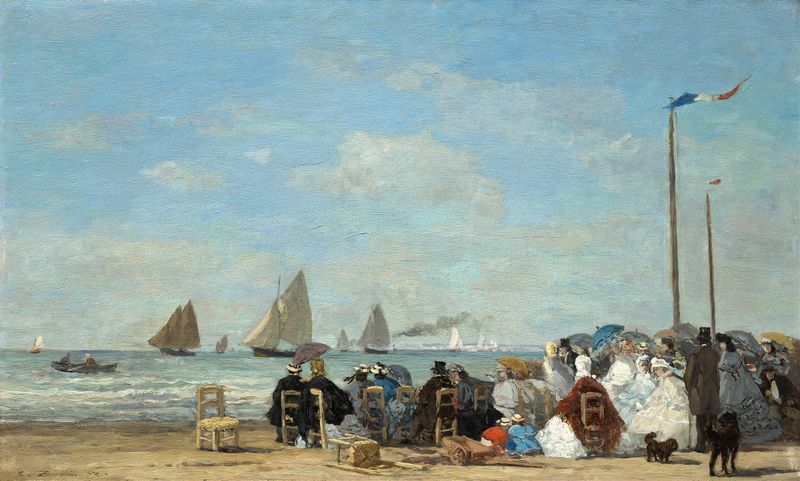
Beach Scene at Trouville
Eugène Boudin

Port aux environs d’Honfleur
Eugène Boudin

Le Faou, un coin du village
Eugène Boudin
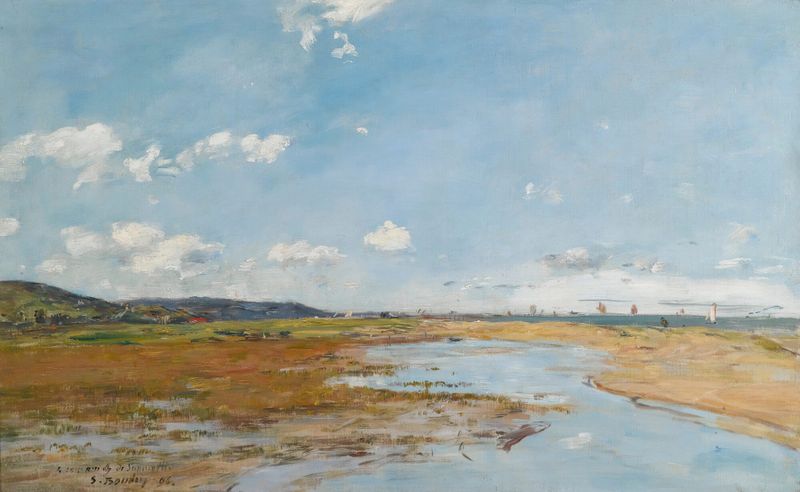
Deauville. Le Rivage
Eugène Boudin
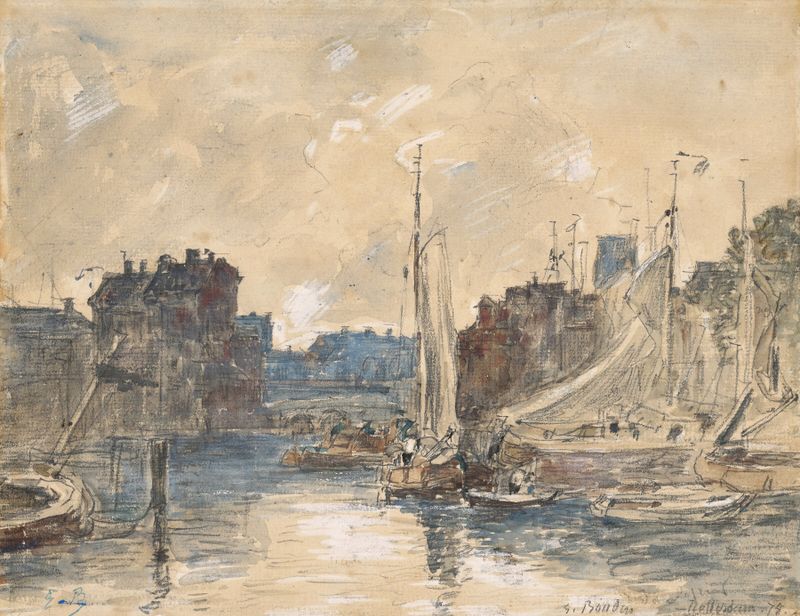
Port de Rotterdam
Eugène Boudin

View of Bordeaux, from the Quai des Chartrons
Eugène Boudin

Trouville, Scène De Plage
Eugène Boudin

Trouville, Le Port
Eugène Boudin





