
The Blue Wheel, final state — History & Facts
A great blue wedge turns at the heart of this painting, commanding the eye with its bold geometry and solid color. The Blue Wheel, final state by Fernand Léger is a puzzle of forms and rhythms, where circles and rectangles interlock like the machinery of a city that never quite reveals its purpose. The blue, yellow, and white sections of the wheel slice through a field of mechanical shapes, their crisp edges and industrial palette suggesting the pulse of early twentieth-century innovation.
The light, cool and even, flattens the space so that every shape jostles for attention on the same plane, while the black lines act as scaffolding, binding the composition together with the logic of a blueprint. Painted in 1920, this work emerges from the world of Cubism and Purism, movements that sought to capture the energy and order of the modern age. Léger, fascinated by machines and the new urban landscape, often painted objects as if they were parts of a greater mechanical organism. Here, the wheel is not just a literal object but a symbol of progress, motion, and the relentless turning of modern life.
History has kept few traces of the specific journey of this painting, but its presence in a major collection and its date place it squarely in the feverish years when artists and engineers alike were reimagining what it meant to build, to move, and to see. The longer you look, the more the wheel seems to turn, drawing you into the machinery of Léger’s vision.
More Artworks by Fernand Léger

The Tugboat Bridge
Fernand Léger
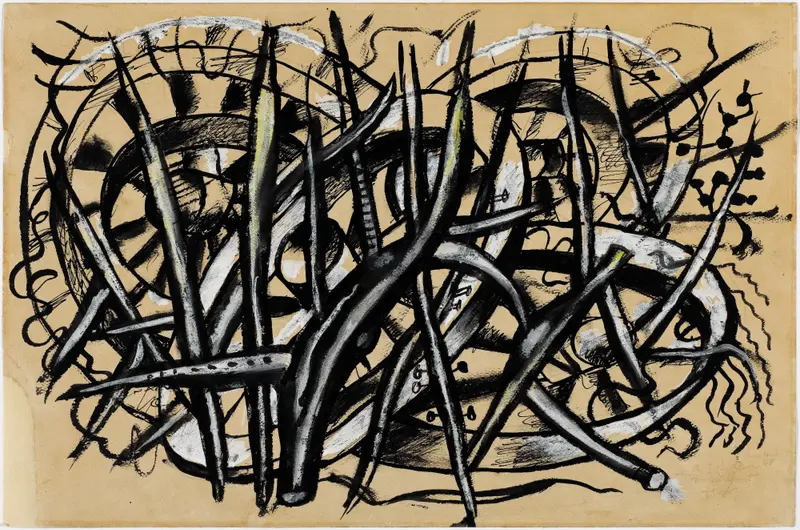
The Wheels
Fernand Léger

Le Cirque Médrano
Fernand Léger
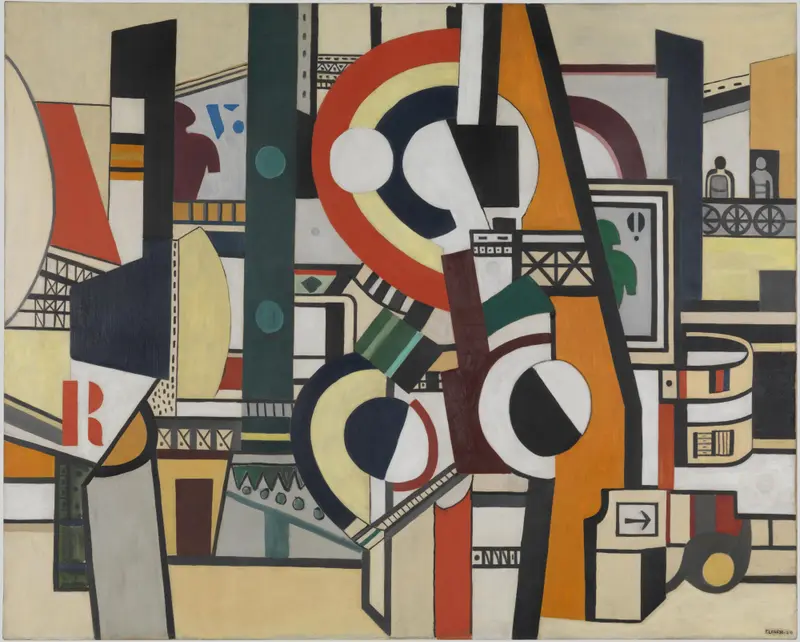
The Disks in the City
Fernand Léger
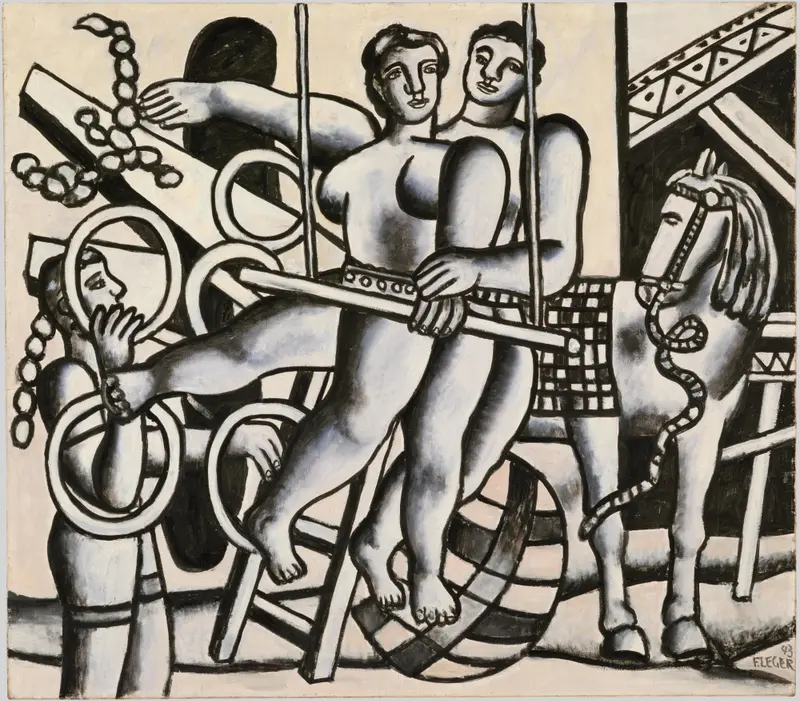
Le Jongleur et les acrobates
Fernand Léger
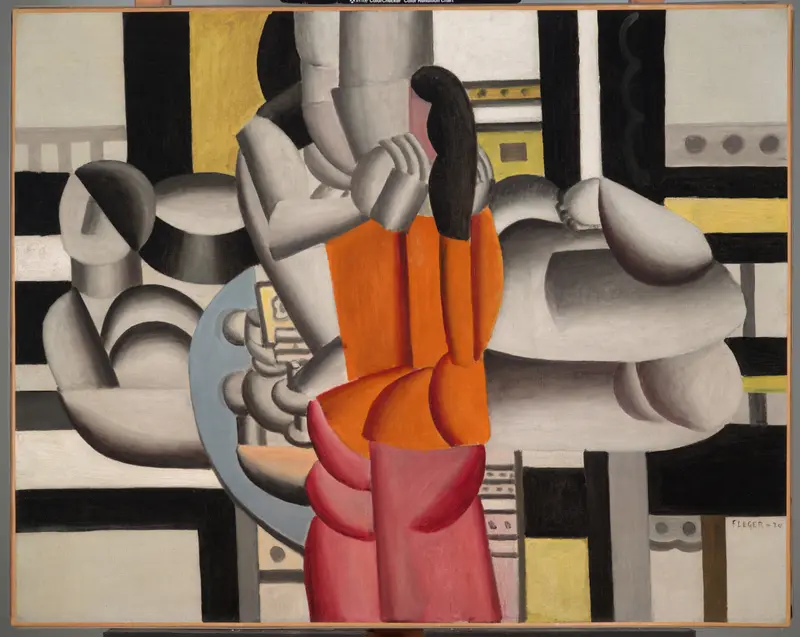
Three Women and Still Life (Déjeuner)
Fernand Léger
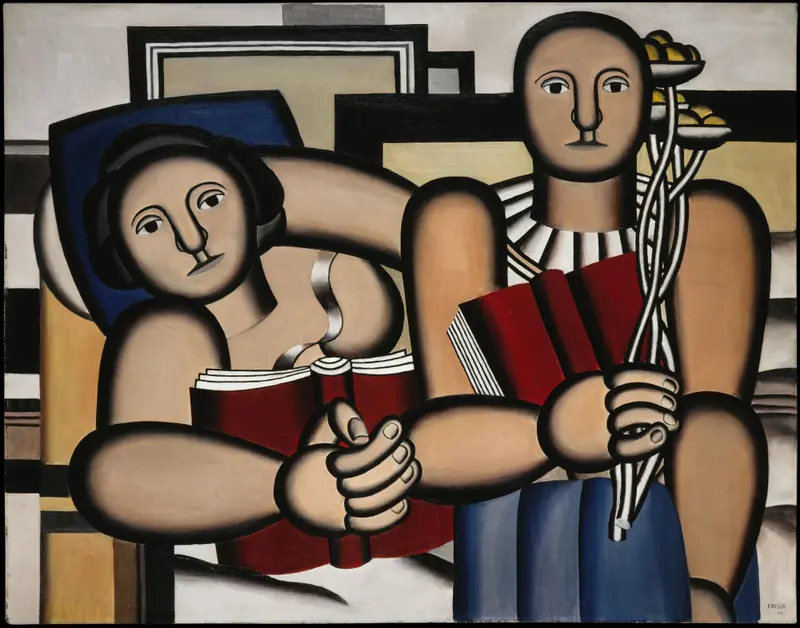
Reading
Fernand Léger
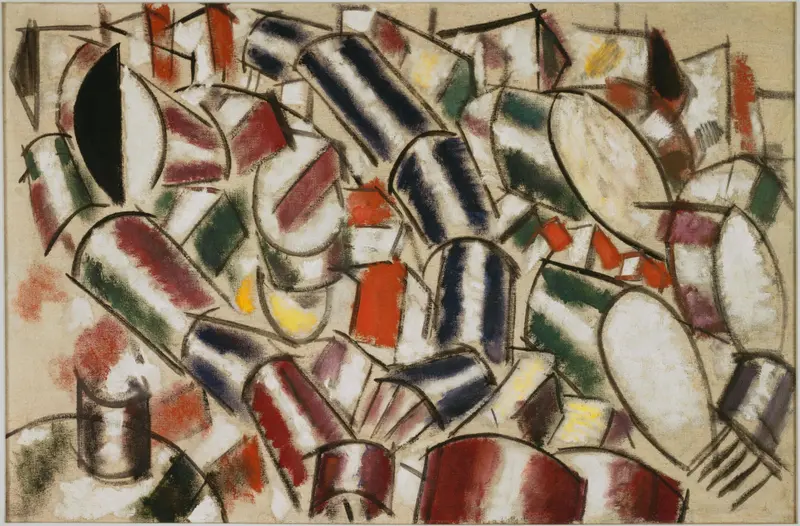
Femme couchée
Fernand Léger
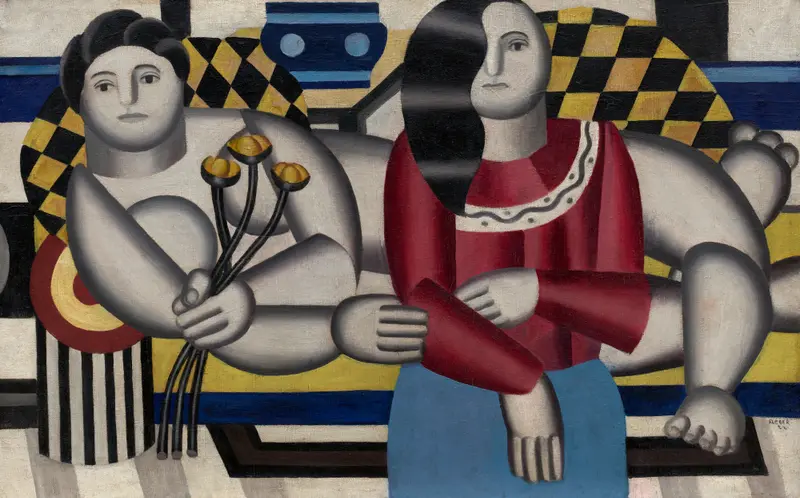
Woman holding flowers
Fernand Léger
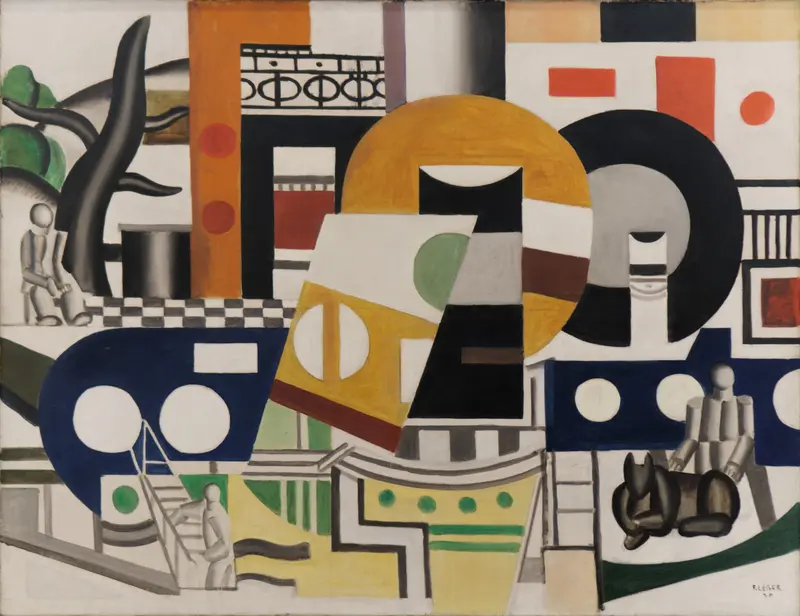
The Tug
Fernand Léger





