
The Boulder and the Flume — History & Facts
In The Boulder and the Flume, a moment of serene capture invites contemplation of nature's grandeur and the turbulence that lies beneath its surface. Look to the center of the canvas where a massive boulder, stoic and imposing, commands attention against a backdrop of flowing water. The gentle cascade of the flume glimmers with golden hues, reflecting the light while suggesting movement and life. Notice the interplay of shadows and highlights — the dark, rough surface of the rock contrasts sharply with the delicate ripples of the stream, creating a visual tension that pulls the eye from one element to the other. Here, the juxtaposition of stability and fluidity evokes a sense of struggle; the rock symbolizes permanence amid the incessant motion of the water.
This tension hints at deeper themes of resilience and vulnerability, as nature's elements coalesce in a dance of beauty and threat. The warm palette melds with the cooler tones, embodying the emotional conflict that arises from a harmonious yet disruptive environment. Ralph Albert Blakelock painted this work in 1878 during a period of personal turmoil and artistic exploration. Living in New York, he was influenced by the burgeoning Hudson River School, yet sought to diverge from their romanticism, seeking a more introspective and moody representation of landscapes.
As his mental health declined, his art became a refuge, reflecting both the beauty of the natural world and the complexity of his own emotional landscape.
More Artworks by Ralph Albert Blakelock
Browse all →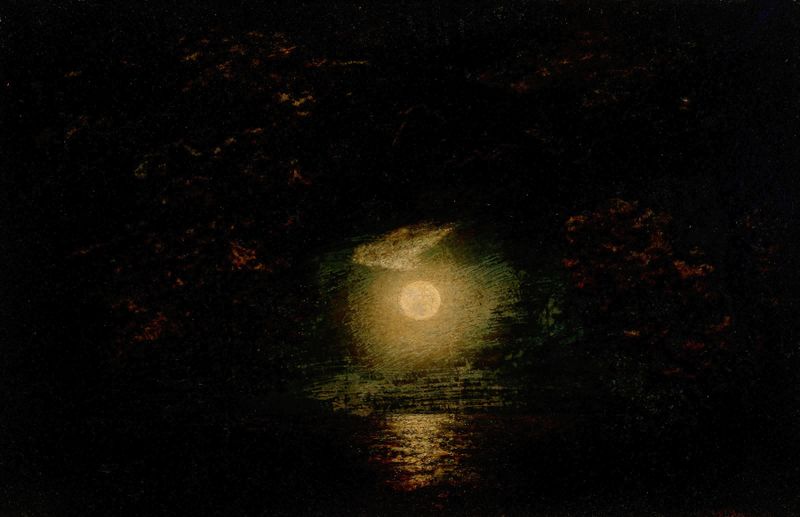
Moonlight
Ralph Albert Blakelock

Ghost Dance (The Vision of Life)
Ralph Albert Blakelock
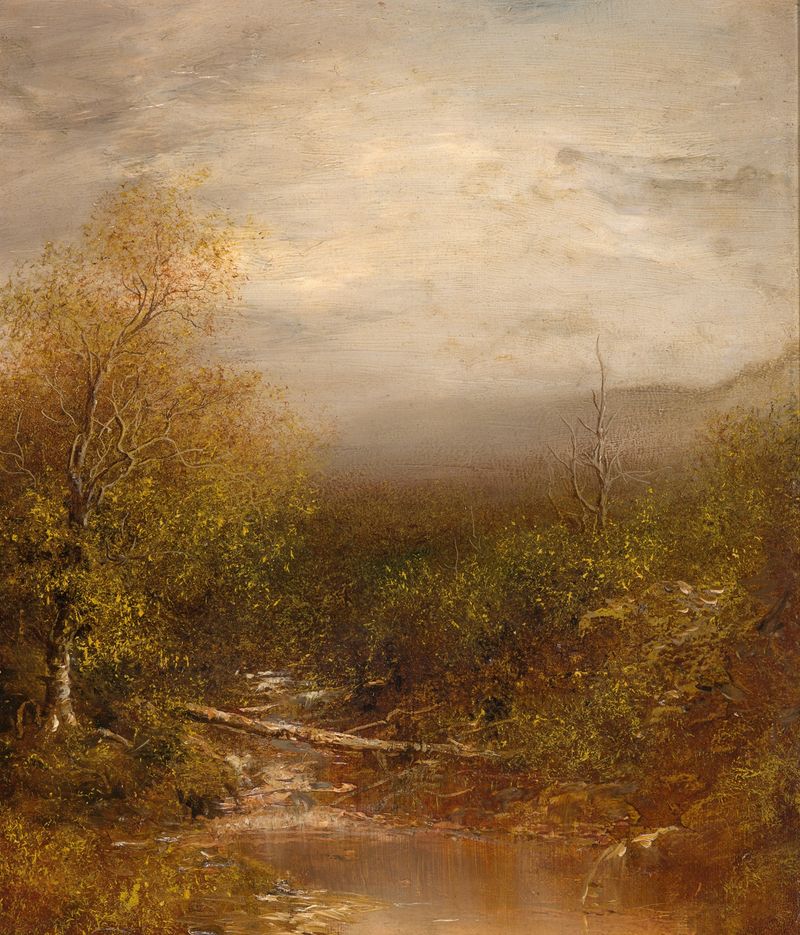
Pool in the Adirondacks
Ralph Albert Blakelock

Encampment at Sunset
Ralph Albert Blakelock
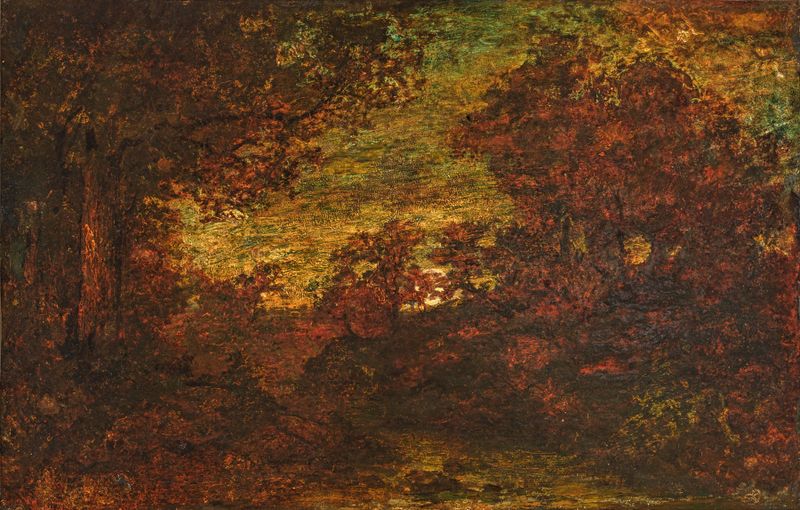
Moonrise
Ralph Albert Blakelock

Moonlight
Ralph Albert Blakelock

Indian Encampment
Ralph Albert Blakelock

Moonlight, Indian Encampment
Ralph Albert Blakelock

Moonlit Landscape with Indians
Ralph Albert Blakelock

Landscape with Trees
Ralph Albert Blakelock





