
The Bridge — History & Facts
This sentiment echoes in each color and contour, speaking of a world where nature and the divine entwine. Focus first on the arch of the bridge that spans across the canvas, its elegant curve drawing the eye toward the horizon. Notice how the interplay of light and shadow dances upon the surface, creating a palpable sense of depth. The warm hues of sunset bleed into the sky, while the rich greens of the landscape promise both serenity and mystery, inviting viewers to step into this liminal space. As you explore further, consider the figures at either end of the bridge—each a representation of humanity caught between realms.
Their gestures betray a yearning, a silent conversation with the divine that lingers just beyond the horizon. The bridge itself becomes a metaphor, a lifeline connecting earthly existence to something transcendent, and the lush surroundings cradle this moment, imbuing it with a sense of reverence. In 1804, John Varley painted this piece while residing in London, drawing inspiration from the Romantic movement sweeping through Europe. This era was marked by a profound connection to nature and an exploration of spirituality in art.
Varley, known for his landscapes and watercolors, found a unique voice during a time when artists sought to capture the sublime, reflecting the wonders of both the physical world and the ethereal beyond.
More Artworks by John Varley
Browse all →
Knaresborough on the River Nidd, Yorkshire
John Varley

Kirkstall Abbey near Leeds
John Varley

Bamborough Castle from the Northeast, with Holy Island in the Distance, Northumberland
John Varley
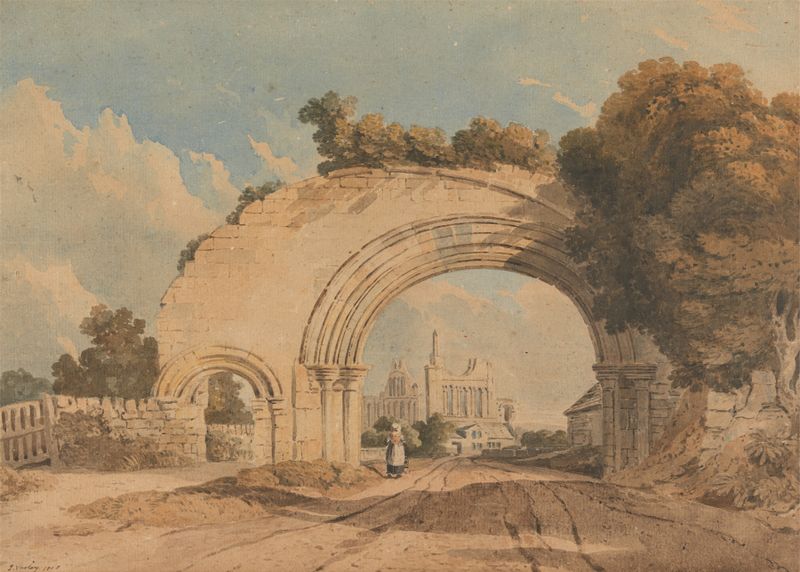
Byland Abbey, Yorkshire
John Varley

View of Conwy Castle, North Wales
John Varley
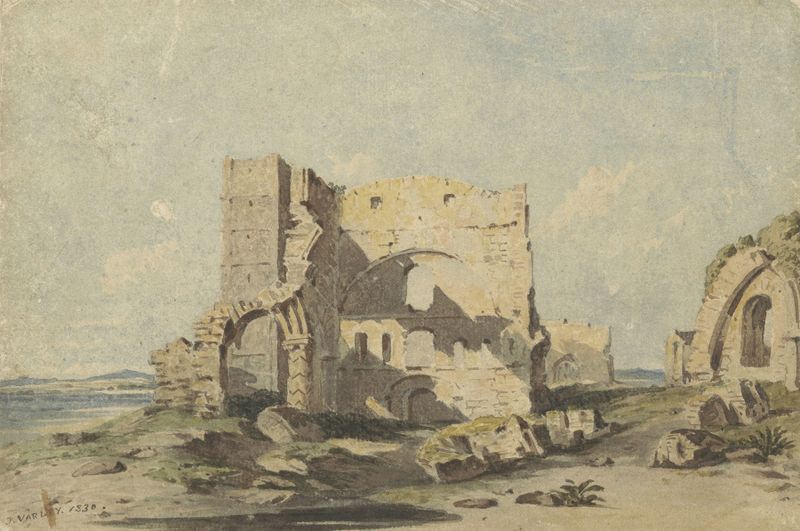
Lindisfarne Abbey op Holy Island, Northumberland
John Varley
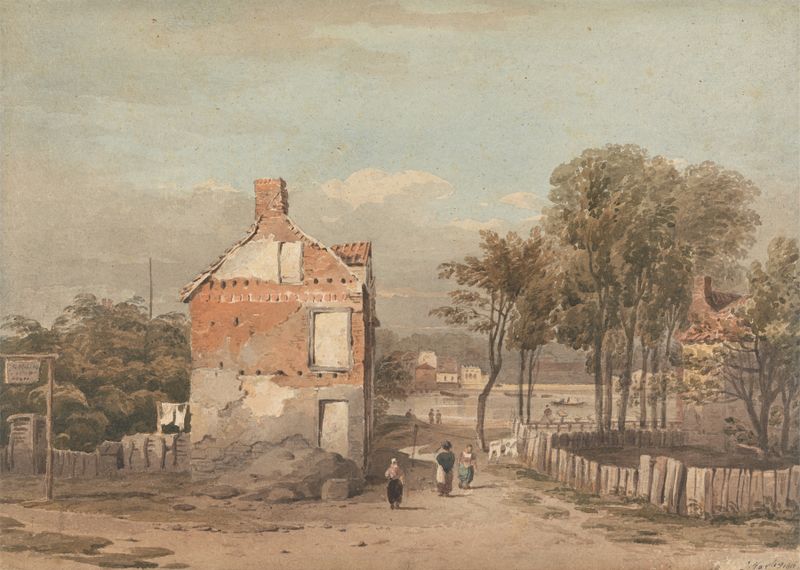
The Thames Near the Penitentiary, Millbank, London
John Varley

Vale of Clwyd, Wales
John Varley

A View along the Thames towards Chelsea Old Church
John Varley

The Thames at Windsor
John Varley





