
The Subjugation of Mara — History & Facts
The Subjugation of Mara is a 10th-century banner painting executed in ink and color on silk by an unknown artist. The work is associated with the Buddhist cave temples of Dunhuang and is now held in the Musée Guimet. The composition centers on the Buddha seated in meditation, surrounded by a dense array of figures and supernatural beings. The image depicts the moment of the Buddha’s enlightenment, with Mara and his retinue attempting to disturb his meditation.
The Buddha sits on a lotus throne, encircled by a radiant mandorla, while chaotic scenes of Mara’s army fill the surrounding space. The painting uses vivid reds, greens, and golds, with intricate detailing in the depiction of demons, celestial beings, and attendants. Vertical borders contain smaller images of seated figures, likely bodhisattvas or monks, set against a green ground. This type of banner painting was common in Dunhuang during the 10th century, serving both devotional and didactic purposes in Buddhist practice.
Such works were typically commissioned for temple use, intended to illustrate key episodes from the Buddha’s life. The painting’s iconography and style reflect the cosmopolitan influences present in Dunhuang, a major center of Buddhist art along the Silk Road. The Musée Guimet holds this example, which is representative of the religious and artistic traditions of its time and place.
More Artworks by Unknown Artist

The Tale of Genji Scroll: Yadorigi
Unknown Artist
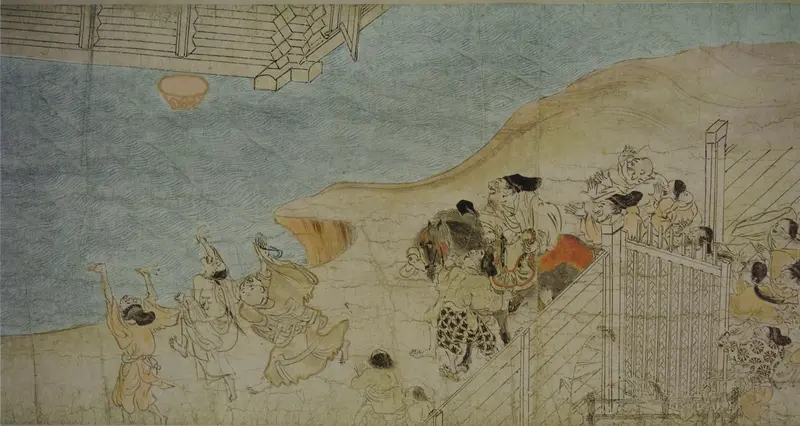
Legends of Mount Shigi: The Flying Granary
Unknown Artist
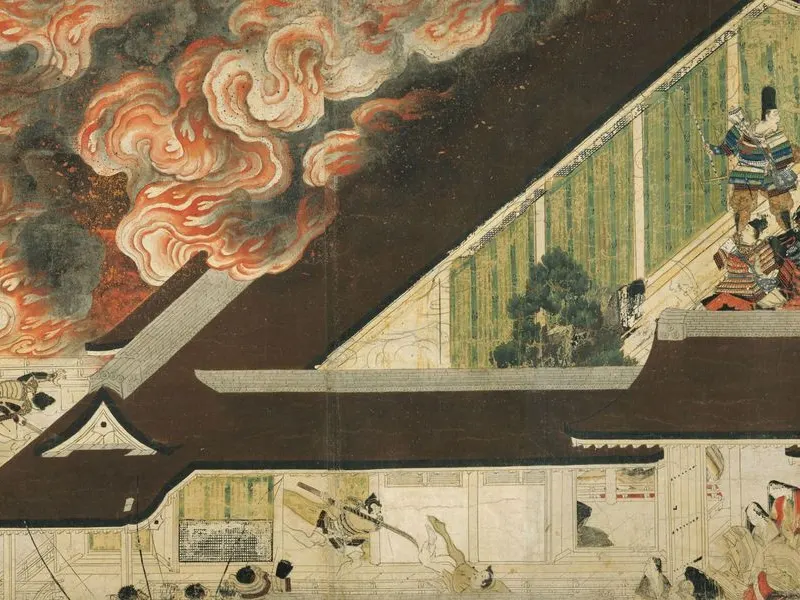
Night Attack on the Sanjō Palace
Unknown Artist
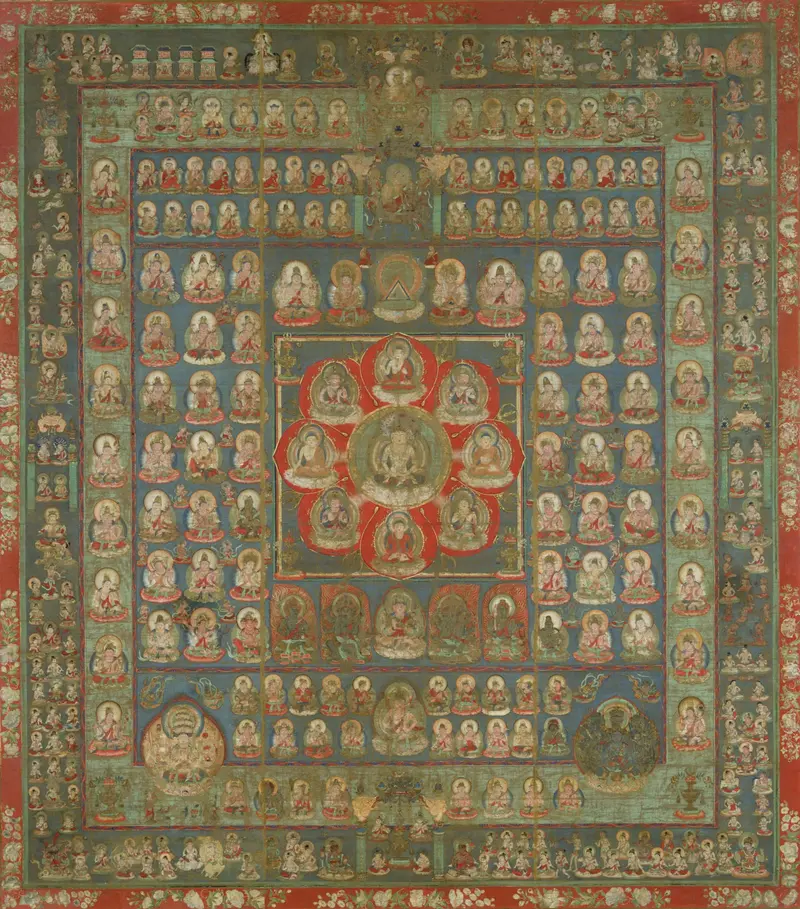
Womb World Mandala (Mandala of the Two Realms)
Unknown Artist
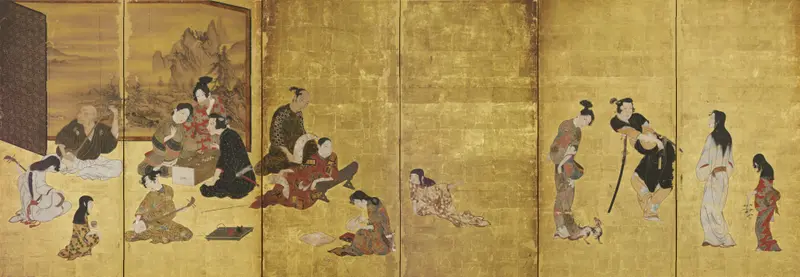
Hikone Screen
Unknown Artist
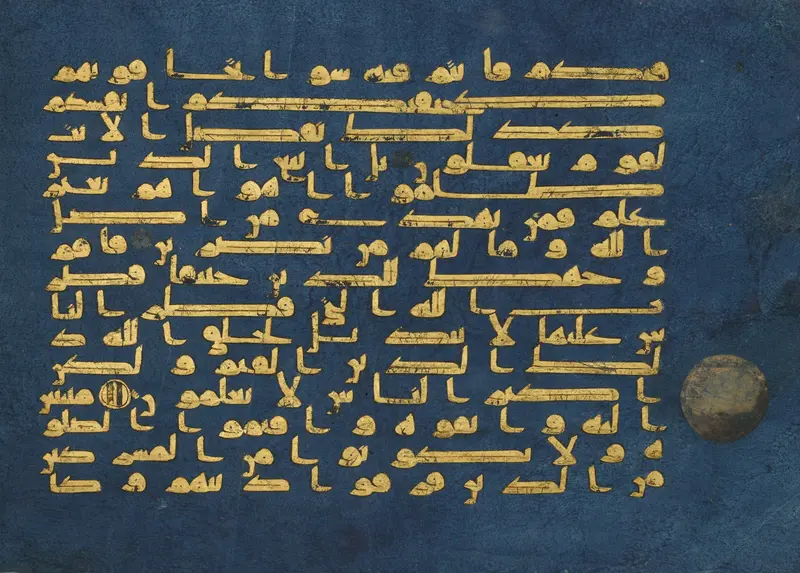
Folio from the Blue Qur'an
Unknown Artist
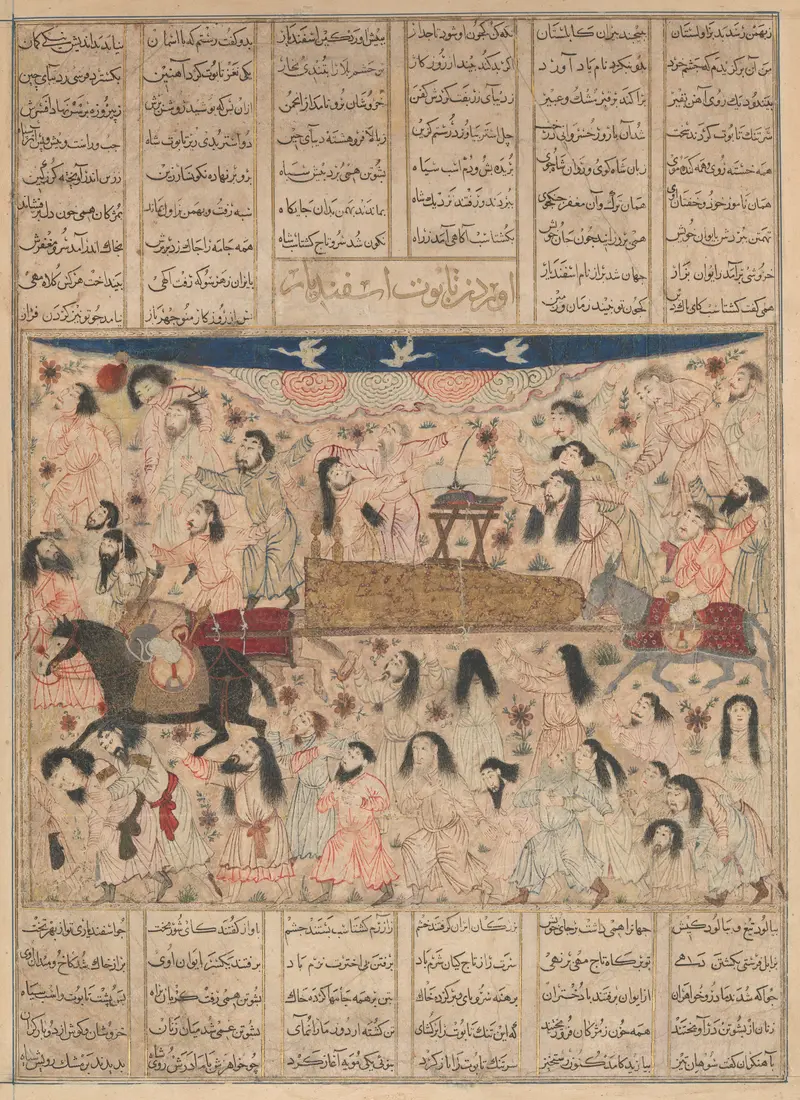
The Funeral of Isfandiyar (Great Mongol Shahnama)
Unknown Artist

The Ideal City
Unknown Artist
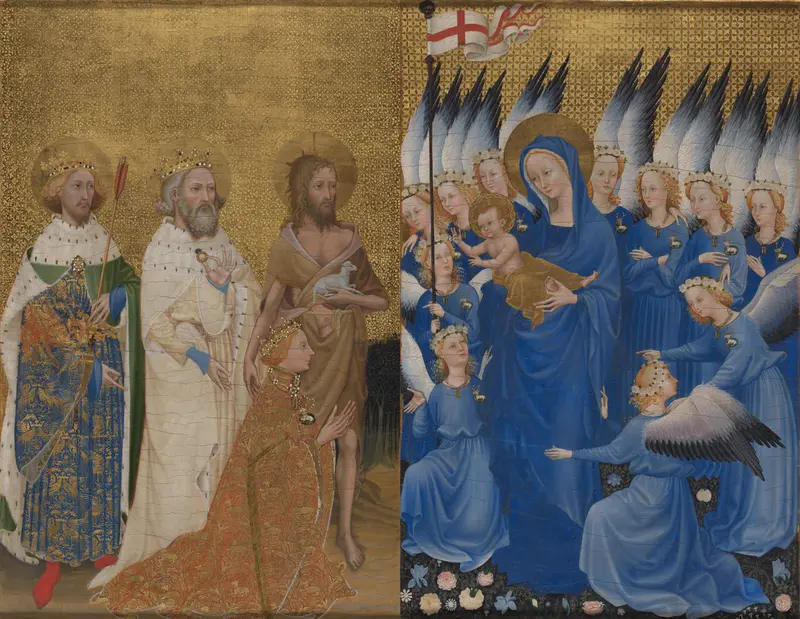
The Wilton Diptych
Unknown Artist

Ridder, Dood en Duivel
Unknown Artist





