
The Caller at the Mill — History & Facts
Can beauty exist without sorrow? In The Caller at the Mill, the duality of life and the tension of a changing world unfold before us, inviting contemplation on the nature of existence itself. Look to the left, where the mill stands robust yet somber against a muted backdrop. The muted hues of ochre, gray, and deep green engage in a delicate dance, illuminating the toil of rural life. Notice the figures—one figure poised at the threshold, another receding into the background.
Their postures convey a complex narrative of arrival and departure, hinting at the cycles of hope and despair that permeate the scene. The soft brushwork lends a dreamlike quality, blurring the lines between reality and memory. Beneath the surface, the painting captures the emotional weight of a world on the brink of transformation. The mill, a symbol of industry and stagnation, stands as a reminder of the past, while the characters embody the tension of impending revolution.
This juxtaposition amplifies the sense of longing; the viewer can almost feel the breath of change whispering through the air, evoking both nostalgia and a yearning for progress. The muted color palette suggests a melancholic beauty, inviting us to ponder what lies beyond the frame—a world of uncertainty and potential. Between 1918 and 1919, Bevan created this work during a period marked by the aftermath of World War I, a time of upheaval in society and artistic expression. Living in England, he was influenced by the Post-Impressionist movement, capturing the essence of life as it teetered between remembrance and renewal.
This painting reflects not only his personal evolution as an artist but also the collective consciousness of a generation grappling with the complexities of modernity.
More Artworks by Robert Polhill Bevan
Browse all →
Landscape with Three Trees
Robert Polhill Bevan
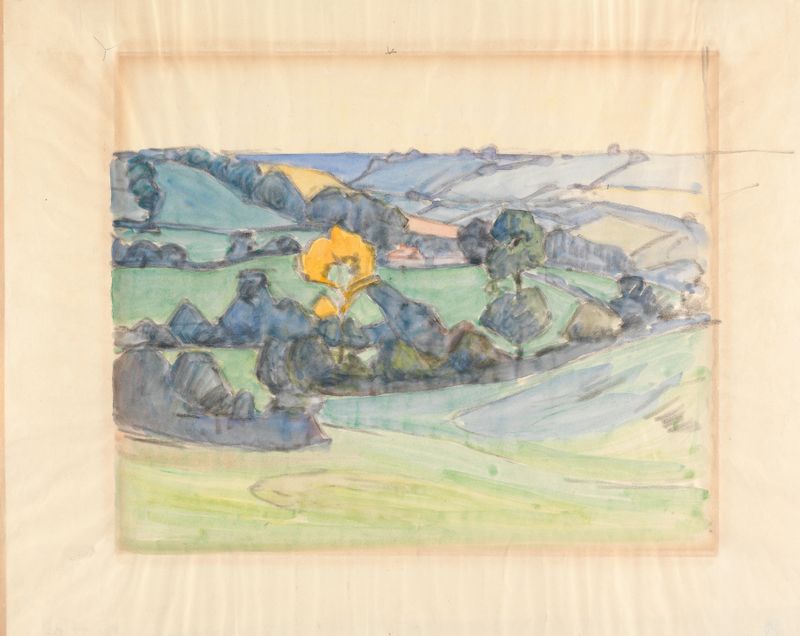
Near Brimley Hill
Robert Polhill Bevan
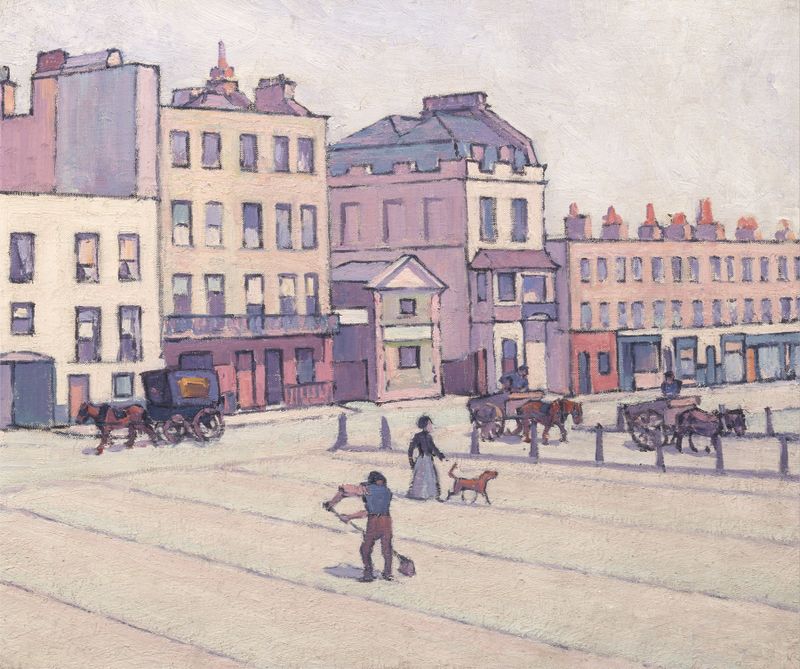
The Weigh House, Cumberland Market
Robert Polhill Bevan

Le Grand Chemin
Robert Polhill Bevan
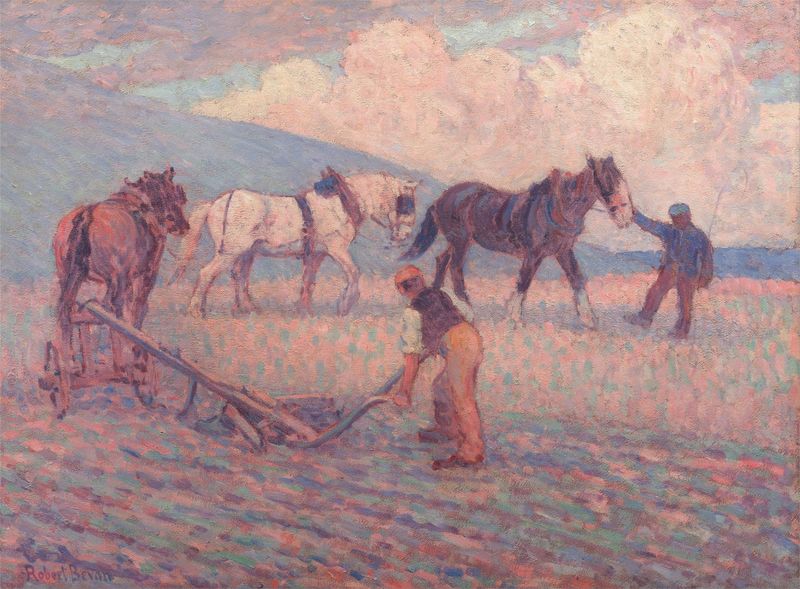
The Turn Rice-Plough, Sussex
Robert Polhill Bevan

Hay Carts, Cumberland Market
Robert Polhill Bevan

A Village in the Sussex Downs
Robert Polhill Bevan

Corn Stooks, Poland
Robert Polhill Bevan

The Ford
Robert Polhill Bevan
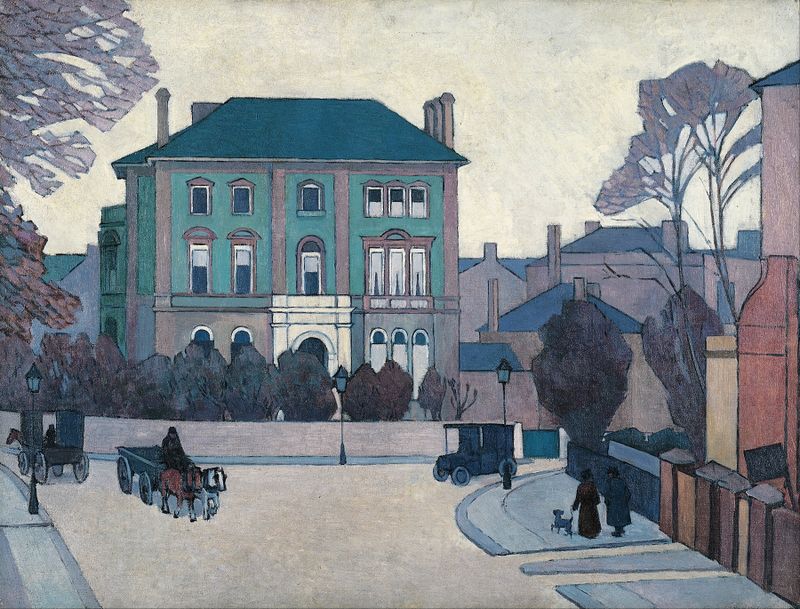
The green house, St John’s Wood
Robert Polhill Bevan





