
The Castle on the Hill — History & Facts
What if beauty was never meant to be finished? In a world where chaos reigns, moments of clarity emerge, capturing our gaze and beckoning us to explore the boundaries of existence. Focus your attention on the tumultuous sky at the top of the canvas, where swirling clouds create an electrifying contrast to the serene, yet rugged, landscape below. The hues of deep indigo and vibrant gold collide—a dance of light that draws your eye toward the distant castle, seemingly at once a part of and apart from the chaotic world around it. The interplay of shadows on the hill underscores the duality of isolation and grandeur, inviting viewers to ponder the stories hidden within its walls. Delve deeper into the details; notice how the castle is both fortified and fragile, its stones weathered by time yet standing resolutely against nature’s fury.
The surrounding landscape—the wild growth of trees and brush—yields a sense of untamed beauty, as if the land itself is reclaiming its space. This tension between the manicured and the wild encapsulates the artist’s commentary on the fragility of human constructs amid the relentless forces of chaos. During the time Varley created The Castle on the Hill, he was navigating the shifting tides of British Romanticism, which emphasized the sublime beauty of nature. The painting, likely conceived in the early 19th century, reflects contemporary preoccupations with the natural world, evoking both admiration and trepidation as industrialization began to alter the landscape.
Varley, as an artist and a visionary, utilized this turmoil to explore themes of beauty and impermanence, marking a significant moment in his artistic journey.
More Artworks by John Varley
Browse all →
Knaresborough on the River Nidd, Yorkshire
John Varley

Kirkstall Abbey near Leeds
John Varley

Bamborough Castle from the Northeast, with Holy Island in the Distance, Northumberland
John Varley
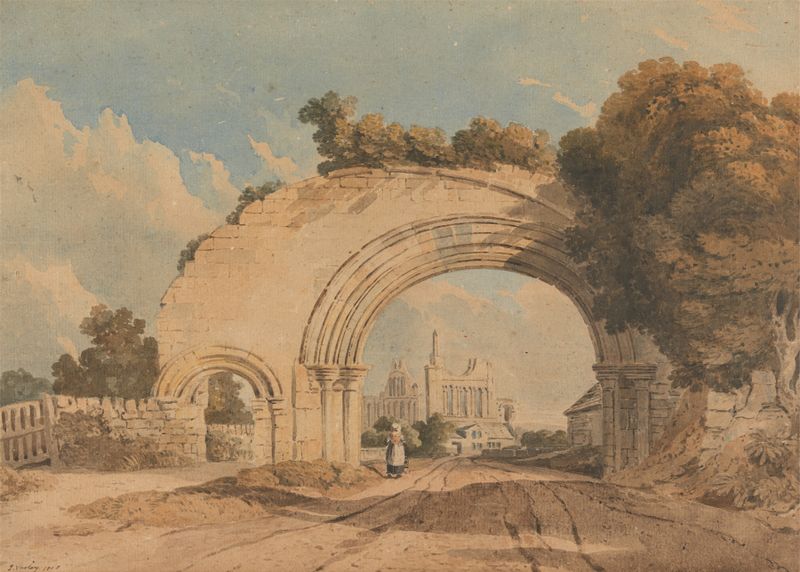
Byland Abbey, Yorkshire
John Varley

View of Conwy Castle, North Wales
John Varley
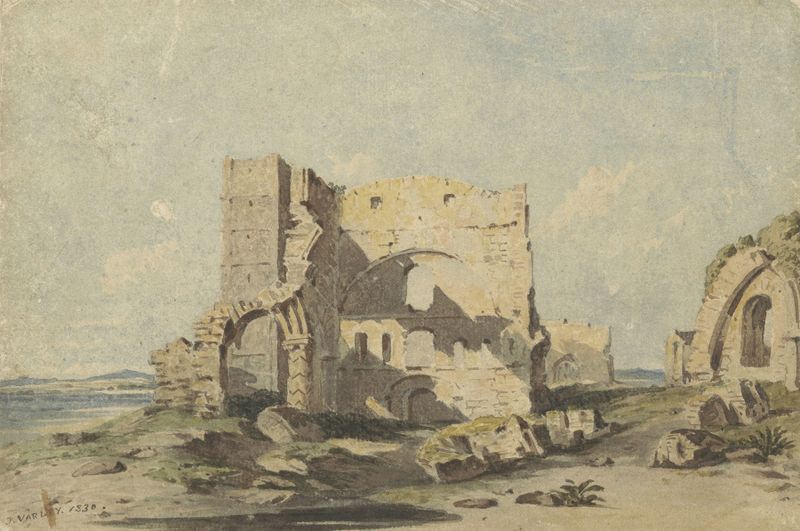
Lindisfarne Abbey op Holy Island, Northumberland
John Varley
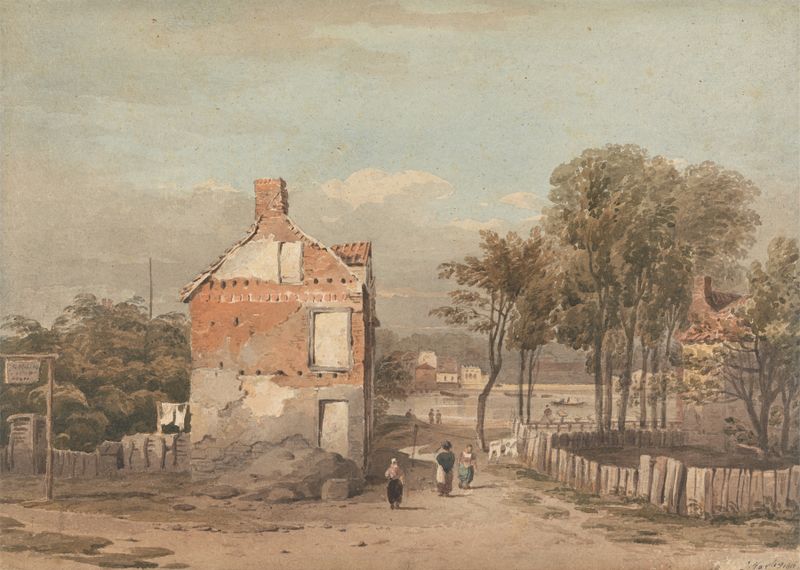
The Thames Near the Penitentiary, Millbank, London
John Varley

Vale of Clwyd, Wales
John Varley

A View along the Thames towards Chelsea Old Church
John Varley

The Thames at Windsor
John Varley





